Exosome Procedures: A Complete Analysis of 3 Principles and 7 Types
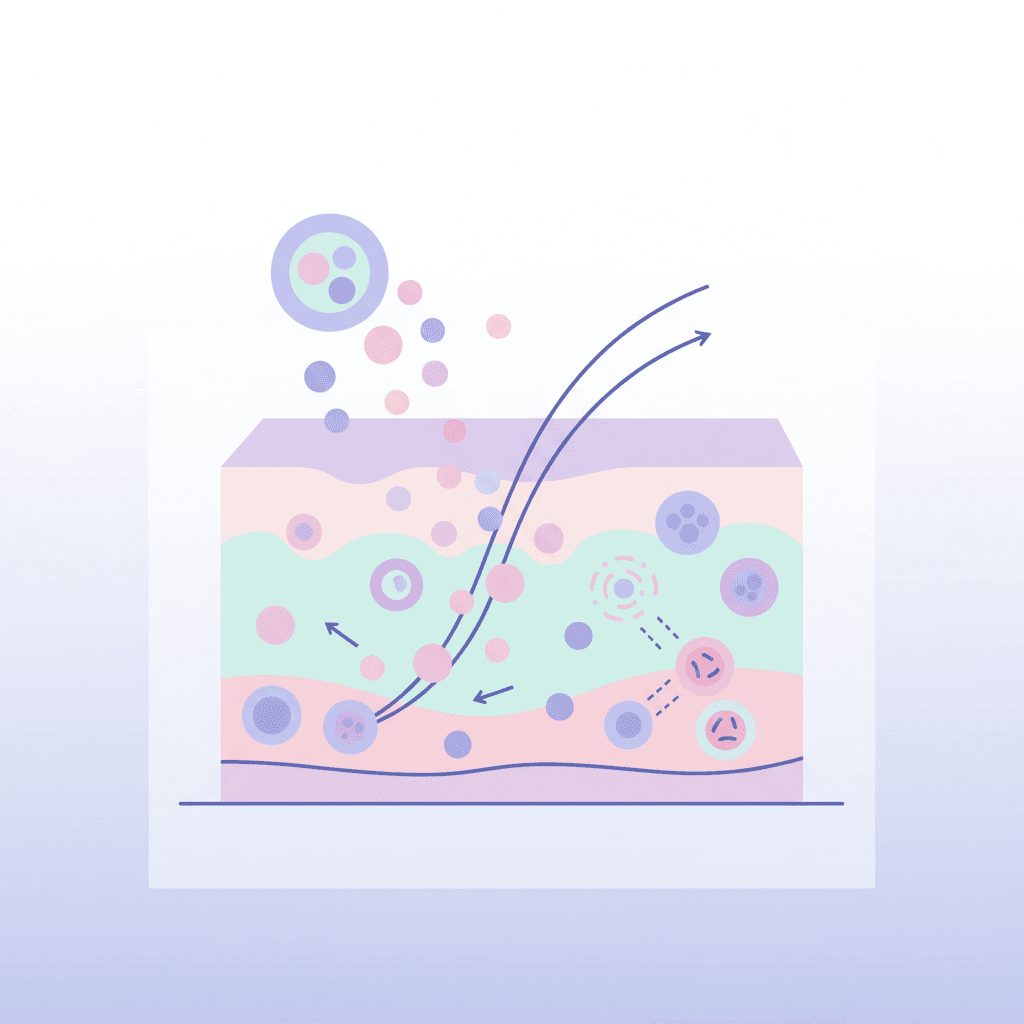
Exosomes are nanovesicles, 30–150 nm in size, secreted by cells that induce skin regeneration by directly delivering proteins, mRNA, and growth factors. There are seven types, including stem cell-derived, placenta-derived, and plant-derived forms, and the concentration and duration of growth factors vary by two to three times depending on the cell origin. Because it is a method of cell signal reprogramming rather than simple nutrient supply, laser…
Exosomes Explained by a Specialist
- Intercellular Signaling Nanoparticles 30-150nm
- Stem Cell-Derived Exosomes FDA Approved in Regenerative Medicine in 2018
- Clinical Reports: Average 12% Increase in Skin Thickness
Why Exosomes Are Not 'Nutritional Injections'
The most frequently asked question in the clinic is, 'What is the difference between exosomes and salmon injections?' To start with the conclusion, exosomes are not a method of 'filling' nutritional components.
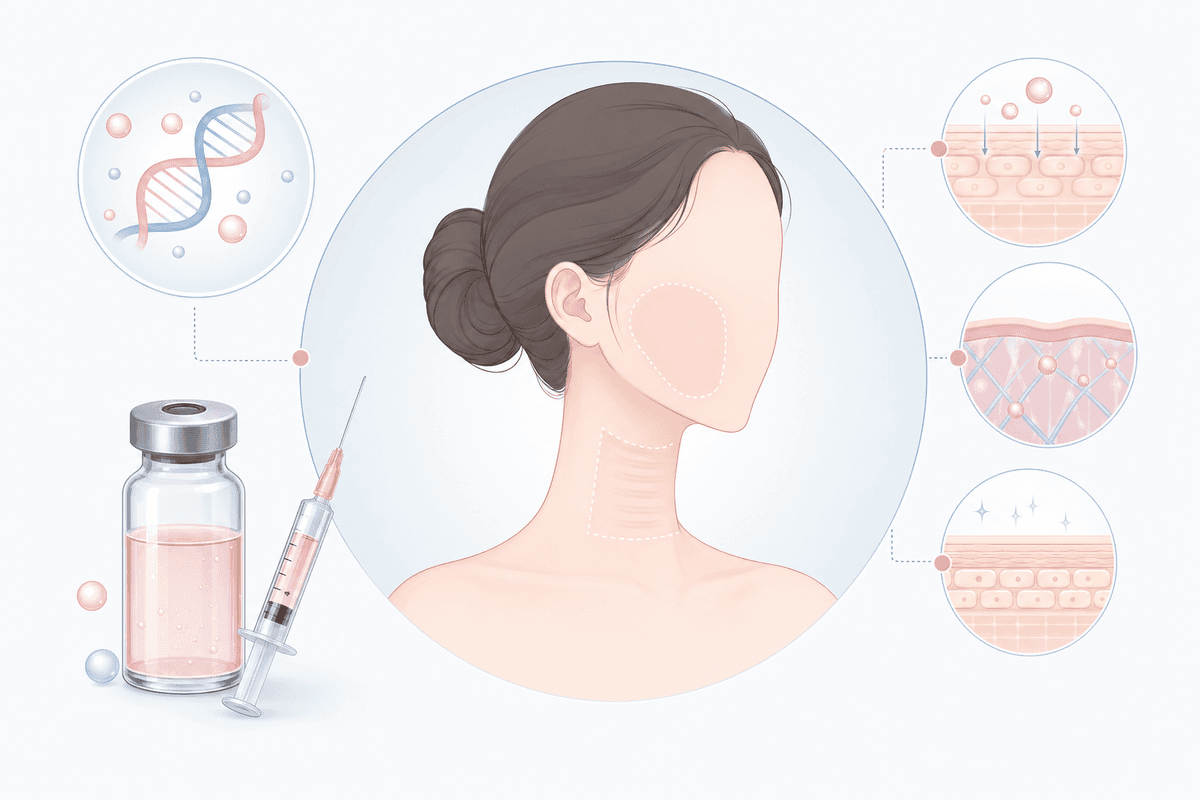
Exosomes are nanovesicles, 30-150nm in size, secreted by cells. It is not just small in size; it contains proteins, mRNA, microRNA, and growth factors inside. When this vesicle fuses with the skin cell membrane, the genetic information and signaling substances contained within are directly delivered into the recipient cell. This is a method of reprogramming cell signaling pathways. In 2018, the FDA classified stem cell-derived exosomes as a new technology in the field of regenerative medicine, and in Korea, products approved by the Ministry of Food and Drug Safety have been introduced to dermatology and plastic surgery clinics since 2020. While existing growth factor ampoules (EGF, bFGF) bind to cell surface receptors to provide indirect stimulation, exosomes enter the cell and deliver signals all the way to the nucleus. The depth of action is different. Key Point: Exosomes are cell-to-cell signaling carriers. It is a mechanism that induces cells to receive regeneration signals on their own, rather than replenishing nutrients.
- Exosome size: 30-150nm (smaller than viruses)
- Internal substances: Over 4,400 types of proteins and over 1,900 types of mRNA reported
- Direct intracellular delivery via cell membrane fusion
3 mechanisms of action: regeneration, anti-inflammation, and signal regulation
The core action of exosomes is divided into three pathways. First is the induction of collagen and elastin synthesis. Growth factors such as TGF-β and PDGF within exosomes directly stimulate fibroblasts.
Second is anti-inflammatory action. Anti-inflammatory cytokines such as IL-10 and TGF-β1 suppress inflammatory responses, making them effective for soothing redness or acne inflammation after laser treatments. Third is the regulation of intercellular signaling. MicroRNAs within exosomes (such as miR-21 and miR-146a) inhibit cellular aging pathways and activate regeneration pathways. According to a 2021 study by Seoul National University College of Medicine, when stem cell-derived exosomes were applied to the skin, Collagen I synthesis increased by an average of 28%, while melanin production decreased by 19%. Because these three mechanisms act simultaneously, it offers 'combined improvement' compared to single-component treatments (e.g., Botox, fillers). Effects are reported.
| Mechanism of Action | Major Substances | Clinical Effects | Duration |
|---|---|---|---|
| Collagen Synthesis | TGF-β, PDGF | Increase in Skin Thickness 12% | 8-12 weeks |
| Anti-Inflammation Regulation | IL-10, TGF-β1 | Flush Relief Within 72 Hours | 4-6 weeks |
| Cells Signal | miR-21, miR-146a | Sustained inhibition of aging pathways | 12-16 weeks |
- Average 28% increase in collagen I synthesis (Seoul National University College of Medicine 2021)
- 19% decrease in melanin production reported
- Anti-inflammatory cytokine concentrations 2.3 times higher than laser
7 Types of Exosomes and Differences by Origin Cell
Exosomes differ completely in composition and effect depending on their origin cell. They are broadly divided into three categories: stem cell-derived, placenta/amniotic membrane-derived, and plant-derived.
Stem cell-derived exosomes are extracted from adipose, bone marrow, and umbilical cord blood stem cells. Representative products are ASCE+ (adipose tissue) and Exosome Regenerative Complex (umbilical cord blood). They have the highest concentration of growth factors and powerful regenerative effects. Placenta and amniotic membrane derived products are extracted from placental tissue after childbirth. Rich in anti-inflammatory and immune-regulating substances, they are preferred for atopic and sensitive skin. The representative product is Benev Exosome. Plant-derived products are exosome analogs (ELVs) extracted from ginseng, grape, and rose stem cells. While there are no allergy concerns associated with animal-derived products, the concentration of growth factors is about one-third that of human stem cells. Products approved by the Ministry of Food and Drug Safety in Korea are mainly stem cell-derived. As of 2023, there are 12 approved brands, and each product has different exosome concentrations (number of particles/ml) and growth factor profiles. Even with the same cell origin, VEGF and HGF concentrations within exosomes can differ by more than twofold depending on culture conditions (hypoxia/normal oxygen), so it is important to verify clinical data by brand. Even among stem cell-derived exosomes, the composition of growth factors varies depending on the source, such as fat, umbilical cord blood, or bone marrow. Consult with a dermatologist to select a product suitable for your skin type.
- Adipose stem cell derived: High concentrations of VEGF and bFGF
- Umbilical cord blood derived: Rich in anti-inflammatory cytokine IL-10
- Plant derived: Low allergy risk but 1/3 level of growth factors
Suitable Targets: Who Should Choose Exosomes
Exosomes are the top priority in cases requiring 'accelerated recovery after laser treatments or procedures.' Applying exosomes within 48 hours after Fraxel or Pico laser treatments speeds up epidermal regeneration by an average of 1.5 times.
Second, it improves pore enlargement and skin texture. In people over 30, a decrease in collagen density causes pores to enlarge into an oval shape; however, exosomes induce collagen synthesis in the dermis, reducing pore diameter by an average of 0.2 mm. Third is pigmentation, melasma, and PIH (post-inflammatory hyperpigmentation). There are reports that antioxidant enzymes (SOD, catalase) within exosomes inhibit the melanin production pathway, resulting in pigmentation improvement twice as fast compared to IPL alone. Conversely, if 'immediate volume' is needed, fillers are more suitable than exosomes. Exosomes do not directly fill volume but induce cells to produce collagen, so the effects appear over 4 to 8 weeks. If you have healthy skin in your early 20s, you may have an excess of exosomes. If your skin has sufficient regenerative capacity, basic moisturization and UV protection alone are sufficient, while exosomes show noticeable effects in those over 30 or on damaged skin.
Tip If you receive laser treatments frequently, it is efficient to use exosomes in conjunction as a 'recovery booster'. Find a clinic at K-Dia that offers a post-laser exosome care program.
- Epidermal regeneration speed after laser treatment increased 1.5 times (Yonsei University Department of Dermatology 2022)
- Average pore diameter decreased by 0.2 mm (observed for 12 weeks)
- Pigmentation improvement speed increased 2 times compared to IPL alone
Treatment methods: Topical application, MTS, injection, and laser combined
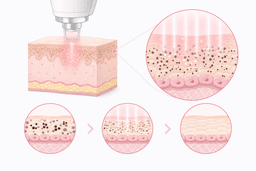
There are four methods of exosome delivery. First is the topical method. Microchannels are created using a laser, exosome ampoules are applied, and LED irradiation is used to aid absorption. While this is the most non-invasive method, the absorption rate is only around 30%. Second is the combination with MTS (Microneedle Therapy System). If exosomes are applied after creating micro-holes in the dermis layer with 0.5-1.0mm needles, the absorption rate rises to 60%. Third is direct injection. Directly injecting exosomes into the dermis layer, similar to a hyaluronic acid injection, results in an absorption rate of over 90%, but the cost of the procedure is 2-3 times higher than the topical method. Fourth is the combination with lasers. If exosomes are applied immediately after high-intensity laser treatments such as Fraxel or Potenza, the absorption rate is maximized through the microchannels created by the laser. In domestic dermatology clinics, the combination of laser and exosome topical application is the most common, with a cost of 150,000 to 300,000 won per session. The injection method costs between 300,000 and 500,000 won, and 3 to 5 sessions at 4-week intervals are recommended.
Delivery Method Absorption Rate Pain Cost (Per Session) Topical Application (After Laser) 30-40% Almost None 150,000-200,000 won Combined with MTS 60% Mild 200,000-300,000 Won Direct Injection Over 90% Moderate 300,000-500,000 Won Combined with Laser 500,000-70% Laser Level 250,000-400,000 Won
- Topical absorption rate 30%, 60% when combined with MTS
- Injection method absorption rate over 90%
- Recommended interval 4 weeks, total 3-5 times
Duration of Effect and Management Points
Exosome effects do not appear immediately No. It takes an average of 4 weeks from cell signaling to collagen synthesis. The first changes occur in the order of skin tone evening (2 weeks), pore reduction (4-6 weeks), and elasticity improvement (8-12 weeks). The duration of effects is 12-16 weeks. This is 1.5 times longer compared to conventional PRP (autologous platelet-rich plasma), which lasts 8-10 weeks. This is because mRNA within the exosomes continuously produces proteins within the cells. For maintenance, an additional treatment every 3-4 months is recommended. However, the basic protocol initially is 3 treatments at 4-week intervals, and the intervals are extended during the maintenance phase. UV protection is key. Even if exosomes produce collagen, the effect is halved if UV rays break it down. Reapply SPF 50+ sunscreen every 2 hours. Avoid exfoliating ingredients such as retinol and AHA for one week after the exosome treatment. Using irritating ingredients in conjunction while the skin barrier is recovering doubles the risk of inflammation. Caution: The effects of exosomes are 'cumulative'. Do not expect dramatic changes from a single treatment. Statistically significant improvement is reported after accumulating at least 3 sessions.
- Onset of effect: Skin tone 2 weeks, pores 4-6 weeks, elasticity 8-12 weeks
- Duration 12-16 weeks (1.5 times better than PRP)
- Recommended protocol: Initial 3 sessions at 4-week intervals → Maintenance 1 session every 3-4 months
Exosomes vs. Conventional Regenerative Treatment Comparison
Exosomes [Cell Signaling]
- Mechanism: Direct delivery of mRNA and growth factors into cells
- Onset of effect: 4-8 weeks
- Duration: 12-16 weeks
- Cost: 150,000-500,000 KRW per session
Suitable for accelerating post-laser recovery and complex improvement
PRP (Autologous Platelet) [Growth Factor Stimulation]
- Action: Secretion of platelet growth factor
- Onset of effect: 2-4 weeks
- Duration: 8-10 weeks
- Cost: 200,000-400,000 KRW per session
No allergies as it is autologous, short duration
Growth Factor Ampoule (EGF)
Mechanism: Binding to cell surface receptors Onset of effect: 1-2 weeks Duration: 4-6 weeks Cost: 50,000-150,000 won per session Immediate effect, low duration, home care possible
Common Misconceptions
Misconception Exosomes are the same as stem cell injections
Truth They are completely different. Stem cell injections involve injecting living cells to differentiate and proliferate, and there are many restrictions under domestic medical laws. Exosomes are 'cell-secreted vesicles' that are not cells, and they deliver only signaling molecules without cells. Legal regulations are different, and the safety profile of exosomes is much clearer.
Misconception Plant-derived exosomes are safer
Truth Plant-derived exosomes have a lower risk of allergy, but their skin regeneration effects are weaker compared to human stem cell-derived exosomes. Plant exosomes have growth factor concentrations at one-third the level, and their binding affinity with human cell receptors is also lower. 'Safety' and 'efficacy' are separate concepts, and the source must be selected according to the clinical goal.
Things to Check Before Exosome Procedure
- Not recommended during pregnancy or breastfeeding due to insufficient safety data
- Patients with autoimmune diseases (Lupus, Rheumatoid arthritis, etc.) must consult a specialist due to immunomodulatory effects
- Avoid saunas, steam rooms, and high-temperature environments for 1 week after the procedure — accelerates exosome degradation
- Discontinue exfoliating ingredients such as retinol, AHA, and BHA for 1 week
- Must check the exosome product concentration (particle count/ml) and KFDA approval status — beware of the distribution of unapproved products
Frequently Asked Questions
Is it effective to receive exosomes just once?This content is for informational purposes only and does not replace medical advice. Please consult a specialist before the procedure. Find the right hospital for you at K-DiaInitial changes, such as skin tone evening, may appear within two weeks after the first session. However, since increased collagen density and pore reduction are cumulative effects, statistically significant improvement is reported only after receiving at least three sessions at four-week intervals.
Can I get exosomes and Botox together?
Yes, it is possible. Botox works by relaxing muscles, while exosomes work by regenerating skin; their mechanisms of action are different. However, ensure that injection sites do not overlap when receiving treatments on the same day, and it is safer to receive exosomes one week after Botox.
Which is better, topical exosomes or injections?
While injections have a high absorption rate of over 90%, the pain and cost are more than double. If combined with laser treatment, topical application alone can achieve an absorption rate of 50-70%, so topical application is generally recommended first.
Does receiving exosomes make pores completely disappear?
There is no treatment that 'completely eliminates' pores. Exosomes increase dermal collagen, reducing pore diameter by an average of 0.2 mm and improving enlarged, oval-shaped pores into round ones. There are individual differences, and the degree of contraction depends on the initial pore size and age.
Are there any side effects of exosomes?
Side effects reported in clinical practice are rare. The most common is temporary flushing (24-48 hours), and with the injection method, bruising and swelling may persist for 3-5 days. Although allergic reactions are extremely rare, a patch test is recommended before the procedure. How long do the effects of exosomes last? On average, it lasts 12 to 16 weeks. Since collagen decreases again afterward due to UV exposure and aging, receiving maintenance treatments every 3 to 4 months can extend the effects for a longer period. Combining this with sun protection and moisturizing care will further increase the duration.