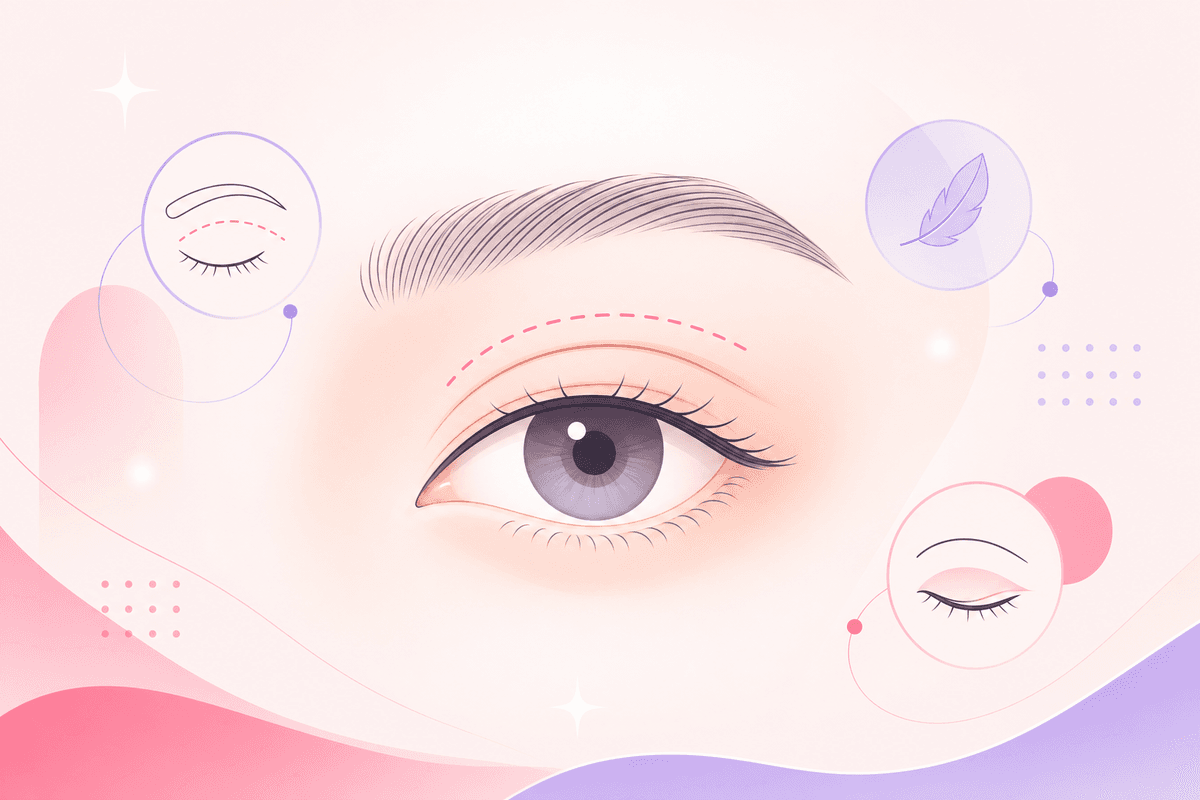
This is a representative eye surgery for middle-aged and elderly people that involves excising sagging upper eyelid skin to lighten heavy eyes and improve a stuffy impression.
Typical price ₩1,540,000 (p25–p75, ≈ $1,110) · Median ₩1,540,000 · Based on 1 listed prices from 1 clinics ·
Final price may vary after consultation · USD is an approximate reference only (rates as of 2026-08-22)
Upper eyelid blepharoplasty is a surgical procedure that involves excising and trimming the upper eyelid skin that has sagged with age. It relieves the discomfort caused by sagging skin pressing on the eyelashes and vision, and creates a sharper facial expression. While double eyelid surgery for younger generations focuses on cosmetic enhancements to create a defined line, upper eyelid blepharoplasty centers on reducing the skin sagging itself.
It is suitable for cases where sagging upper eyelid skin presses heavily on the eyes or obstructs vision, where forehead wrinkles have deepened due to straining the forehead to open the eyes, or where the double eyelid line has disappeared, covered by sagging skin. It is primarily performed on individuals in their 40s and older.
Sagging skin and excess fat or muscle are excised along the double eyelid line or below the eyebrow, followed by suturing. The location of the incision (eyelid vs. subbrow lift) is determined based on the degree of sagging and the position of the eyebrow. If ptosis is present, eye shape correction may be performed concurrently.
Sutures are removed after 5 to 7 days, and initial swelling and bruising subside over 2 to 3 weeks. The incision line fades over time, and the natural final result stabilizes after 2 to 3 months.
If the amount of resection is excessive, closing the eyes may be uncomfortable or unnatural, so a conservative design is important. Functional ptosis severe enough to obstruct vision may be partially covered by insurance, so a hospital consultation is necessary.
Double eyelid surgery is primarily for cosmetic purposes, creating a crease, whereas upper eyelid surgery focuses on improving sagging and a heavy feeling by excising excess skin. It is more suitable for middle-aged and older adults.
If skin sagging is the main issue, upper eyelid surgery is advantageous; if the eyebrows themselves droop and press down on the eyes, eyebrow lifting is recommended, and both are sometimes considered together.
Yes, it is possible. Many dermatology and plastic surgery clinics in Korea treat foreign patients, and there are also many hospitals that offer consultations or interpretation support in foreign languages such as English, Chinese, and Japanese. On K-Dia, you can compare hospital information and real reviews, and consult directly via chat before your visit.
It usually takes about 5 to 7 days to return to daily activities (after stitches are removed), and the recovery period is 5 to 7 days after stitch removal and 2 to 3 weeks for swelling. If you are traveling for a short time, it is recommended to schedule your trip with ample time to check your progress immediately after the procedure, and to discuss post-recovery care and precautions with the hospital in advance.
Costs vary significantly depending on the hospital, the scope of the procedure, the equipment and materials used, and the anesthesia method. Since Korea has a well-developed infrastructure for procedures, making consultations and price comparisons relatively easy, it is recommended to compare quotes from multiple hospitals rather than relying on just one. You can check event prices and actual reviews by hospital on K-Dia.
This information is for general understanding only and is not medical advice. Always consult a medical professional before deciding on any procedure.
