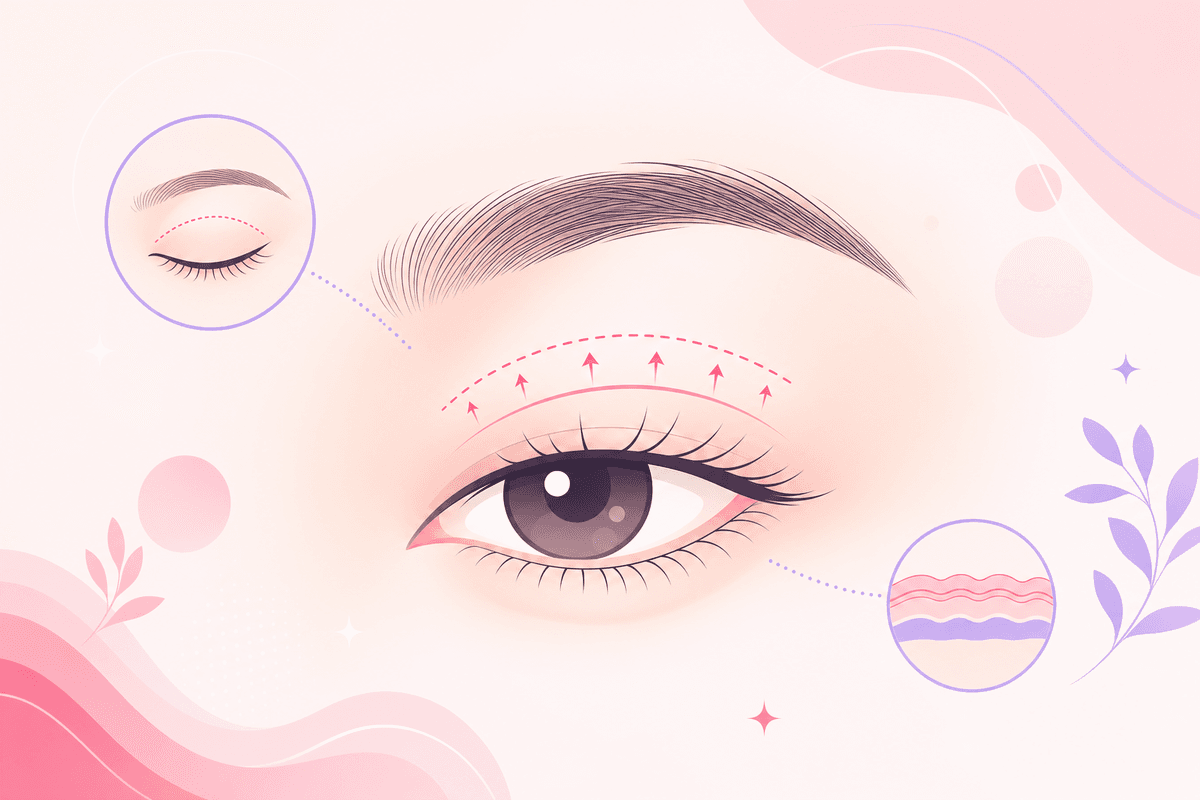
It is a combined functional and cosmetic surgery that strengthens the muscles responsible for opening the eyes to make sleepy-looking eyes appear sharper.
Typical price ₩1,306,250–₩1,718,750 (p25–p75, ≈ $940–$1,240) · Median ₩1,512,500 · Based on 2 listed prices from 1 clinics ·
Final price may vary after consultation · USD is an approximate reference only (rates as of 2026-08-22)
Eyelid correction is a surgery that strengthens the function of the muscles responsible for opening the eyes (levator palpebrae and Müller's muscle) to better reveal the pupil. It improves the sleepy and dull appearance of eyes caused by ptosis (drooping eyelids) to make them look more distinct, and is often performed in conjunction with double eyelid surgery.
It is suitable for cases where the pupil is largely covered by the upper eyelid even when the eyes are open, where one is frequently told they look sleepy, or where one has a habit of straining the forehead to open their eyes.
We approach the procedure through the double eyelid line to appropriately adjust and shorten the levator muscle. The key is fine-tuning to align the degree of eye opening on the left and right sides, and this is typically planned in conjunction with the double eyelid design.
Initially, you may experience difficulty closing your eyes or a difference between the left and right sides, but this will stabilize as the swelling subsides. The final result will be assessed after 2 to 3 months.
If the correction amount is insufficient, the effect is weak, and if it is excessive, the eyes may open too wide or be uncomfortable to close, so precise adjustment is important.
It is not mandatory, but since it is accessed via Line, it is often done together.
Functional ptosis severe enough to obstruct vision may be partially covered by insurance, so a hospital consultation is necessary.
Yes, it is possible. Many dermatology and plastic surgery clinics in Korea treat foreign patients, and there are also many hospitals that offer consultations or interpretation support in foreign languages such as English, Chinese, and Japanese. On K-Dia, you can compare hospital information and real reviews, and consult directly via chat before your visit.
It usually takes about 5 to 7 days to return to daily activities, and the recovery period for swelling is 2 to 4 weeks. If you are traveling for a short time, it is recommended to schedule your trip with ample time to check your progress immediately after the procedure, and to discuss post-recovery care methods and precautions with the hospital in advance.
Costs vary significantly depending on the hospital, the scope of the procedure, the equipment and materials used, and the anesthesia method. Since Korea has a well-developed infrastructure for procedures, making consultations and price comparisons relatively easy, it is recommended to compare quotes from multiple hospitals rather than relying on just one. You can check event prices and actual reviews by hospital on K-Dia.
This information is for general understanding only and is not medical advice. Always consult a medical professional before deciding on any procedure.
