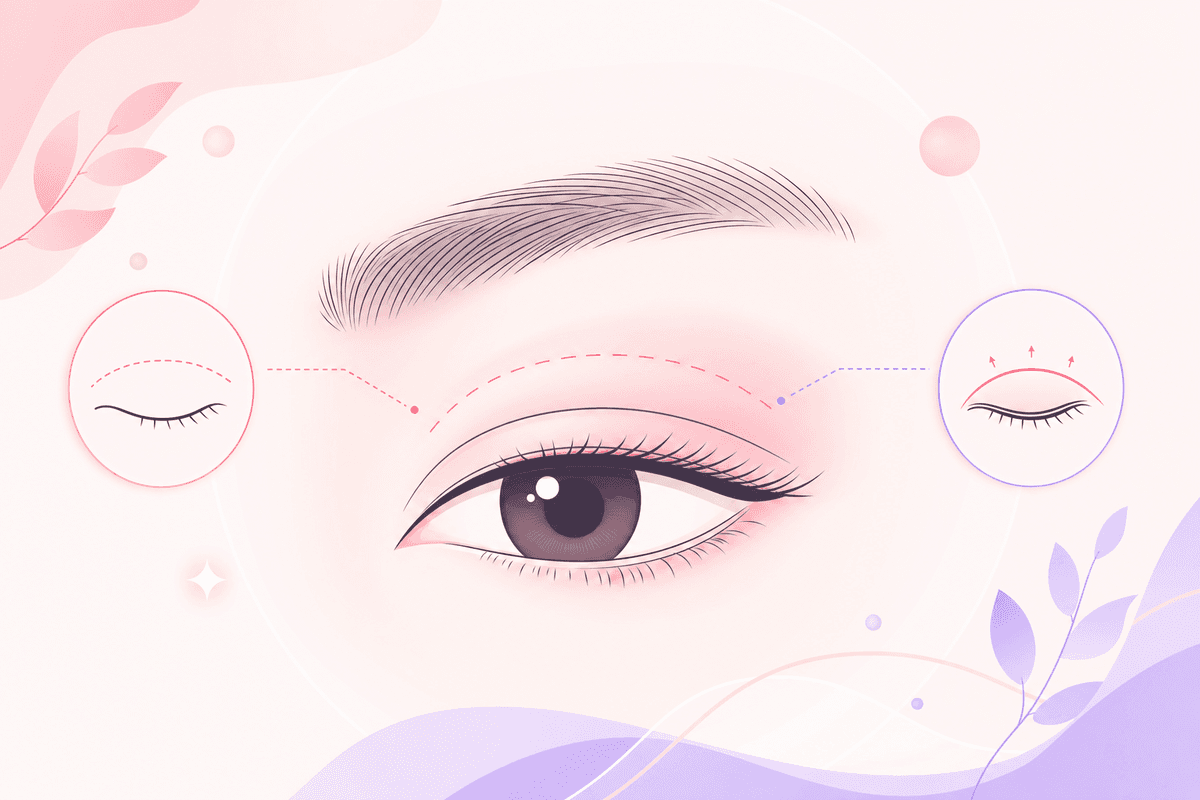
A non-incisional method that fixes the double eyelid line with threads without cutting the skin. Recovery is fast and natural.
Typical price ₩1,100,000–₩1,430,000 (p25–p75, ≈ $790–$1,030) · Median ₩1,210,000 · Based on 3 listed prices from 2 clinics ·
Final price may vary after consultation · USD is an approximate reference only (rates as of 2026-08-22)
The buried suture method is a non-incisional surgery that creates a double eyelid line by tying the upper eyelid skin and the levator muscle (the muscle that opens the eye) together in several places with thin threads. Because it does not involve incisions, there is less swelling and scarring, and recovery is faster, making it the most commonly performed procedure for younger patients with minimal skin sagging.
It is suitable for cases where the eyelid skin is thin, sagging is minimal, and there is no excessive fat. It is recommended for those who desire a natural line, want a short recovery period, or wish to leave open the possibility of future line adjustments.
After designing the line, it is secured in 2 to 6 places with sutures following local anesthesia. The risk of loosening and line clarity vary depending on the number and location of the knots. The commonly used continuous knot (double fixation) method is designed to maintain the line even if one knot comes undone.
Reduce swelling with cold compresses for 2 to 3 days after surgery, and you can resume your normal daily activities around one week later. Initially, the lines may appear dark and thick, but they gradually become more natural as the swelling subsides.
If there is significant skin sagging or thick fat, the incisional method is recommended as the suture line may loosen or fade with the buried suture method alone. Revision surgery may be necessary as the line may loosen over time.
Yes, the line may fade if the knot comes undone. The chance of it coming undone increases if you rub your eyes frequently or have thick skin.
The buried suture method is fixed with sutures without incisions, allowing for faster recovery but lower longevity, whereas the incisional method carries a greater burden of scarring and recovery but provides permanent lines and allows for fat and skin trimming.
Yes, it is possible. Many dermatology and plastic surgery clinics in Korea treat foreign patients, and there are also many hospitals that offer consultations or interpretation support in foreign languages such as English, Chinese, and Japanese. On K-Dia, you can compare hospital information and real reviews, and consult directly via chat before your visit.
You can usually return to your daily routine within 1 to 3 days, and the recovery period is 1 to 2 weeks for natural swelling. If you are traveling for a short time, it is recommended to schedule your trip with ample time to check your progress immediately after the procedure, and to discuss post-return care methods and precautions with the hospital in advance.
Costs vary significantly depending on the hospital, the scope of the procedure, the equipment and materials used, and the anesthesia method. Since Korea has a well-developed infrastructure for procedures, making consultations and price comparisons relatively easy, it is recommended to compare quotes from multiple hospitals rather than relying on just one. You can check event prices and actual reviews by hospital on K-Dia.
This information is for general understanding only and is not medical advice. Always consult a medical professional before deciding on any procedure.
