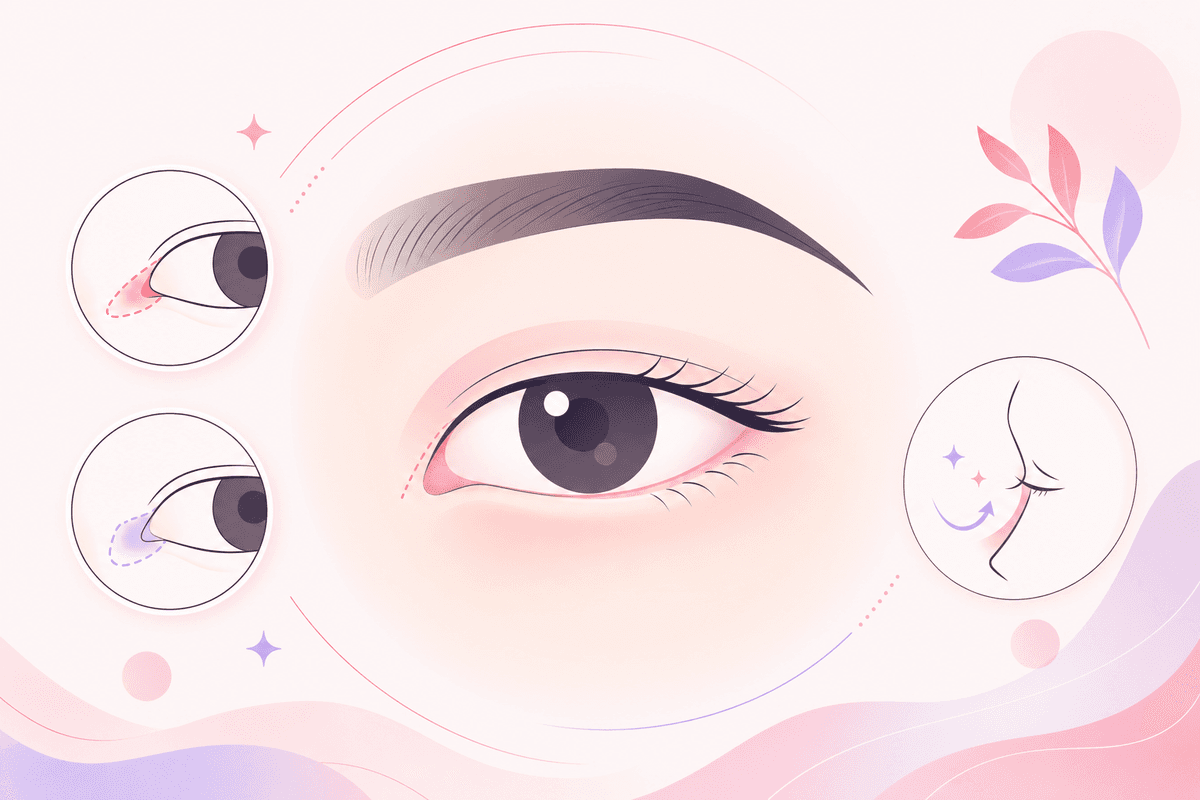
A procedure that increases the size and horizontal length of the eye by making incisions at the front, back, and bottom of the eye. It is frequently performed in conjunction with double eyelid surgery.
Typical price ₩1,498,750–₩2,090,000 (p25–p75, ≈ $1,080–$1,500) · Median ₩1,980,000 · Based on 8 listed prices from 3 clinics ·
Final price may vary after consultation · USD is an approximate reference only (rates as of 2026-08-22)
Eye widening surgery is a procedure that makes the eyes appear larger and more open by smoothing out the epicanthal fold at the inner corner (medial canthoplasty), extending the outer corner (lateral canthoplasty), or lowering the eyelid (lower canthoplasty). It improves the impression of eyes that are far apart or look stifled.
Epicanthoplasty smooths the epicanthal fold to narrow the distance between the eyes and create a sharper impression. Lateral canthoplasty extends the outer corner of the eye to increase its horizontal width, while lower eyelid surgery extends it downwards to soften the eye shape.
It is suitable for cases where thick epicanthal folds make the eyes look stuffy, when the eyes are far apart, or when you want a refreshing eye look along with double eyelids.
Excessive canthoplasty can cause exposure of the inner and outer mucous membranes, scarring, and irreversible changes in appearance, so a conservative design is safer. Lateral and lower eyelid canthoplasty tend to revert in some cases.
It is possible, but it is easier to achieve harmonious results when designed in conjunction with double eyelid surgery.
Epicanthoplasty may leave a fine scar at the inner corner of the eye, but it fades over time. Scar management is important.
Yes, it is possible. Many dermatology and plastic surgery clinics in Korea treat foreign patients, and there are also many hospitals that offer consultations or interpretation support in foreign languages such as English, Chinese, and Japanese. On K-Dia, you can compare hospital information and real reviews, and consult directly via chat before your visit.
It usually takes about 5 to 7 days to return to daily activities, and the recovery period is 5 to 7 days for stitch removal and several weeks for redness. If you are traveling for a short time, it is recommended to schedule your trip with ample time to check your progress immediately after the procedure, and to discuss post-recovery care methods and precautions with the hospital in advance.
Costs vary significantly depending on the hospital, the scope of the procedure, the equipment and materials used, and the anesthesia method. Since Korea has a well-developed infrastructure for procedures, making consultations and price comparisons relatively easy, it is recommended to compare quotes from multiple hospitals rather than relying on just one. You can check event prices and actual reviews by hospital on K-Dia.
This information is for general understanding only and is not medical advice. Always consult a medical professional before deciding on any procedure.
