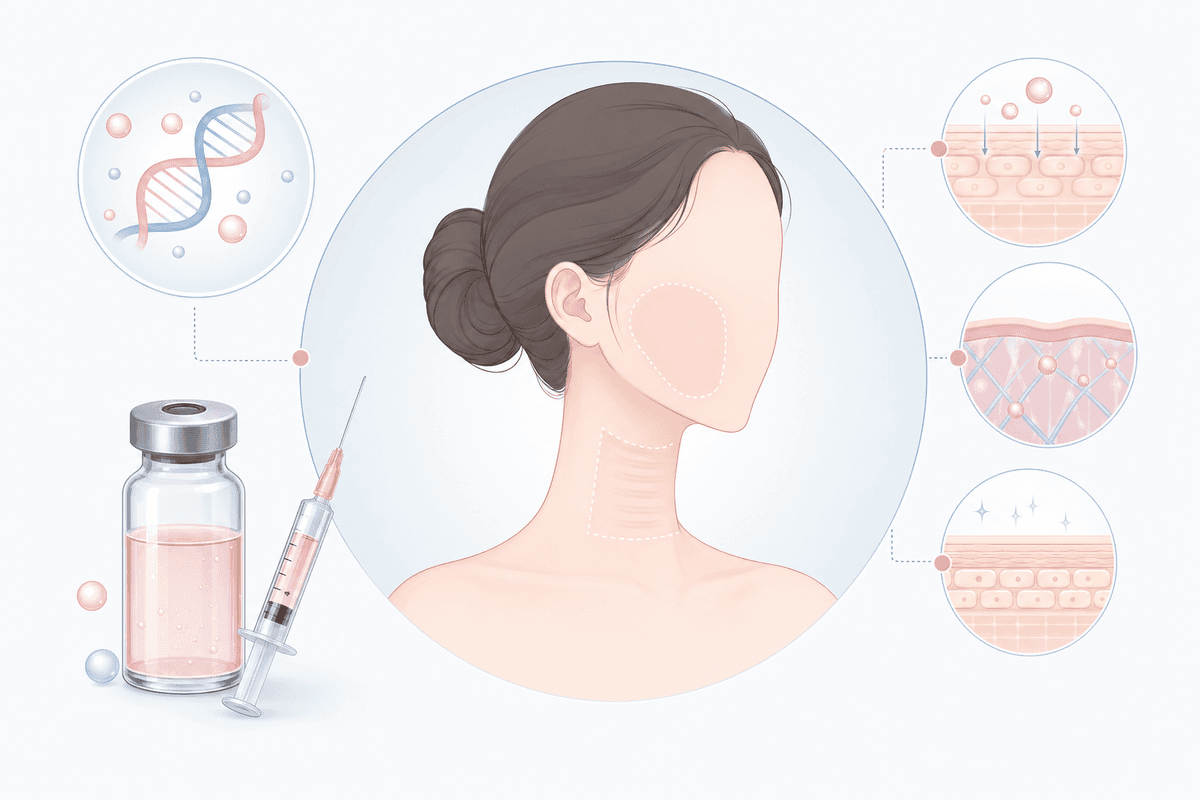
How Exactly Do Filler Effects Last? A Complete Analysis of Duration by Body Part

Even with the same hyaluronic acid filler, duration is 6–9 months for the lips and 12–18 months for the chin — determined by muscle movement and molecular bonding strength. The most efficient time for re-treatment is at the '70% mark before complete loss' — restoration is possible with a smaller amount because the underlying bone structure remains. There is an average gap of 3–5 months between the 12-month data based on KFDA approval standards and actual patient follow-up studies.
6 Months to 24 Months, The Secret Behind the Difference
- Duration Differences by Area, Up to 4 Times
- 7 Indicators for Determining the Optimal Time for Re-treatment
- 12 Factors Affecting the Rate of Decomposition
“They said it would all dissolve in 3 months” — This single misunderstanding doubles the need for re-treatments
The most frequent complaint heard in the clinic is, “It disappeared faster than I expected.” However, actual measurements show that in most cases, more than 70% of the filler itself remains. The problem is that people mistake the decrease in initial volume as the swelling subsides for it being “completely gone.” According to studies that performed volume measurements (CT/MRI) in clinical settings, the actual filler retention rate averaged 68–74% at the point when patients felt that the volume had "lost about half." The key to duration is the "hyaluronic acid molecular binding structure." Each brand, such as Restylane, Juvederm, and Belotero, uses a different cross-linking method. For example, Juvederm Voluma uses Vycross technology to mix high and low molecules to slow down the access of degradation enzymes. In 18-month follow-up data submitted at the time of FDA approval, a retention rate of over 70% in the jaw area was reported. In contrast, products with lower binding levels drop to below 50% at the 6-month mark. Another factor often overlooked is "injection depth and layer." Fillers placed on the periosteum beneath the muscle layer move less and last an average of 1.5 times longer. In areas where muscles come into direct contact, such as the lips, the rate of breakdown accelerates due to chewing and speaking. According to data presented by the Korean Society of Aesthetic Plastic Surgery in 2021, even with the same product, there were differences: 9 months for nasolabial folds (muscle layer), 12 months for the cheeks (fat layer), and 16 months for the chin (above the periosteum). Key Point: There is an average gap of 3 to 4 months between the 'point of effect loss' perceived by the patient and the actual time of filler breakdown. This gap makes it difficult to determine the timing for re-treatment.
- Hyaluronic acid molecular weight: High molecular weight (20-30 MDa) vs. Low molecular weight (0.5-2 MDa)
- Average duration increases by 1.8 months for every 10% increase in cross-linking density
- Degradation rate in muscle contact areas is 1.6 times faster than in non-contact areas
Actual data on duration by area — Lips vs. Chin, why is there a 2x difference?
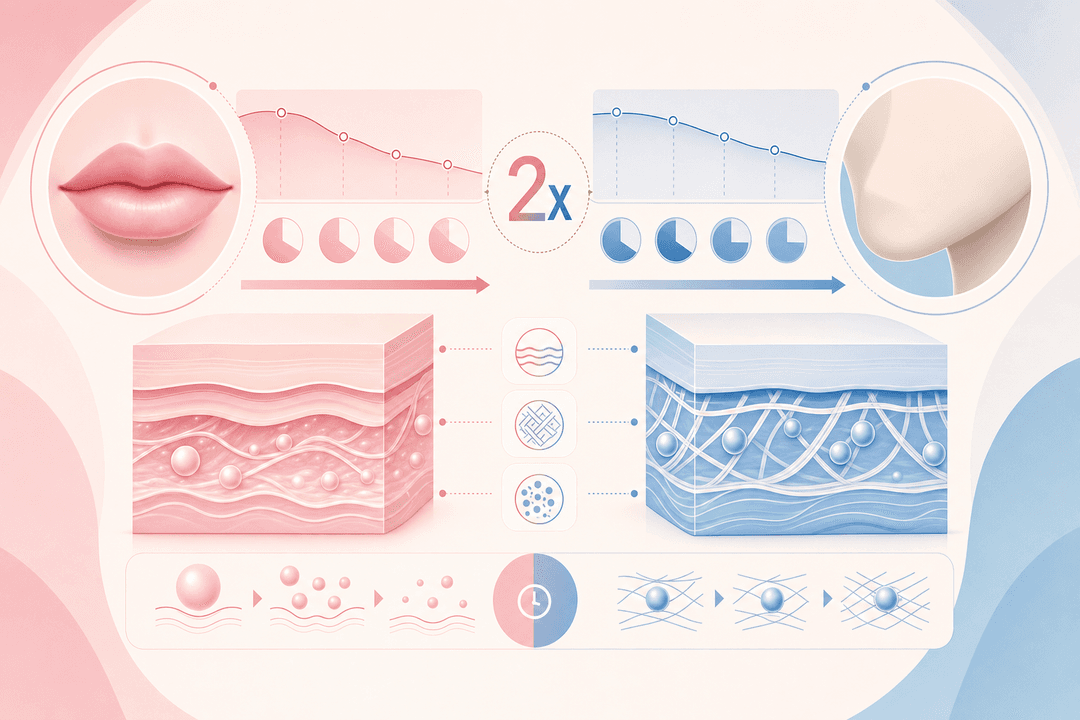
The average duration for lip fillers is 6-9 months, for cheeks and nasolabial folds 9-12 months, and for the chin and forehead 12-18 months. This difference is not simply due to 'varies by area,' but is caused by three biological factors. First is muscle activity. The lips move more than 15,000 times a day on average (eating and pronunciation). When muscles contract, mechanical pressure pushes out the filler gel, and increased local blood flow supplies more hyaluronidase. Second is the density of blood vessel distribution. The lips and nasolabial folds have a high concentration of blood vessels, resulting in a faster metabolic rate. A 2019 study in the Journal of Cosmetic Dermatology showed that MRI follow-up results six months after the same 1cc injection revealed an average retention rate of 42% for the lips and 73% for the chin. Third is the injection depth. The chin is located above the supraperiosteal layer with minimal movement, whereas the lips are situated between muscle layers at the vermilion border and undergo continuous deformation. There are also differences depending on the brand. Restylane Kysse (for lips only) uses XpresHAn technology to enhance flexibility and follow lip movements, but it also breaks down faster (average 6-8 months). On the other hand, Juvederm Volux (for the jaw) has strong shape retention due to its high cohesivity, lasting for 14 to 18 months. Based on KFDA approval data, Volux submitted data showing a patient satisfaction rate of over 85% at the 12-month mark. Clinical Study: Even within the same area, a variation of ±3 months occurs depending on an individual's muscle usage frequency, metabolic rate, and immune response. Smokers break down an average of 20% faster.
| Area | Average Duration | Recommended Time for Re-treatment | Major Breakdown Factors |
|---|---|---|---|
| Lips | 6-9 months | 5-6 months | Muscle Movement (15,000 times/day) |
| Nasolabial Folds | 9-12 months | 8-9 months | Expression Muscles·Blood Vessels Density |
| Cheeks/Cheekbones | 10-14 months | 9-11 months | Moderate movement |
| Jaw/Jawline | 12-18 months | 11-14 months | Periosteal fixation/Low movement |
| Forehead | 12-16 months | 10-12 months | Expression muscles (forehead is the only exception) |
“Waited until 100% melted” — Why this is actually inefficient
The optimal timing for re-treatment is the '70% mark before complete loss.' If the filler completely disappears, the tissue returns to its original state, requiring volume to be filled from scratch again; however, if added when 70% remains, it utilizes the existing structure to restore volume with a smaller amount. The 2020 guidelines of the American Academy of Dermatology (AAD) also recommend this method as a 'strategy for maintaining cumulative volume.'
In actual clinical practice, we compared a patient who received an additional 0.5cc at the 70% retention point (12 months) after a 1.5cc chin filler injection with a patient who received a 1.5cc re-injection after complete loss (18 months). The former maintained a cumulative volume of 2cc for 18 months, while the latter maintained 1.5cc for only 12 months.
In other words, adjusting the timing can lead to a 20-30% reduction in costs in the long run. However, 're-treatment too early' actually increases the risk of side effects. Re-injecting into the same area within 6 months increases local inflammatory responses, and rarely, raises the incidence of granulomas. The 2022 report by the Korean Dermatological Association recommends a minimum interval of 8 to 9 months. An increasing number of clinics are checking the amount of remaining filler using ultrasound before re-treatment; this method prevents unnecessary over-injection. Tip Curious how much filler you have left? Find clinics offering ultrasound filler tracking services on K-Dia. You can scientifically determine the timing for re-treatment. Care methods to extend duration by 30% — from 72 hours to 6 months Care during the first 72 hours after the procedure determines 20-30% of the final duration. First, avoid excessive heat exposure. Saunas, steam rooms, and high-temperature yoga cause a surge in blood flow, accelerating the breakdown rate. In a 2018 study, the group exposed to high temperatures within 2 weeks of the procedure had a 12% lower retention rate at the 6-month mark. Second, avoid excessive pressure or massage. Strong pressure before the filler settles into the injection layer (average 5-7 days) can cause migration or deformation. In the long term, 'managing skin turnover speed' is key. Vitamin A derivatives (retinol) or high-concentration AHA peels promote epidermal regeneration, but excessive use can also activate dermal metabolism, potentially accelerating filler degradation. Conversely, moderate moisturization (ceramide and hyaluronic acid serums) maintains moisture levels in surrounding tissues, enhancing the structural stability of the filler gel. Smoking has a clear adverse effect. Nicotine constricts microvessels and, over the long term, increases inflammatory mediators, thereby boosting the activity of hyaluronic acid-degrading enzymes. In a comparative study of smokers versus non-smokers, the filler retention rates at the 12-month mark were 52% versus 68%, respectively. If quitting smoking is difficult, it is recommended to stop for at least two weeks after the procedure. Finally, sun protection is also important. UV does not directly break down hyaluronic acid, but it causes collagen damage, weakening the support of the tissue where the filler is placed. Caution Avoid strenuous exercise (high-intensity interval training, boxing, etc.) for one week after the procedure. When heart rate spikes, facial blood flow increases 2-3 times, hindering initial settlement.- Exposure to a sauna within 72 hours of the procedure reduces the average 6-month retention rate by 12%
- Filler duration in smokers is shortened by an average of 20% compared to non-smokers
- The group maintaining adequate hydration shows a 9% increase in volume retention rate at the 8-month mark compared to the control group
20s vs. 40s: Why is the duration different for the same filler?
Because skin metabolic rates and tissue elasticity differ depending on age, the duration varies even with the same product and amount. In the 20s, collagen and elastin densities are high, allowing the filler to be well fixed within the supporting structure. On the other hand, for those 40 and older, the dermis layer thins, causing the filler to be relatively 'floating' and becoming vulnerable to movement. In fact, the average duration of effect for the patient group in their 40s was 10-15% shorter compared to those in their 20s. However, paradoxically, satisfaction is higher among those aged 40 and older. This is because the filler effect is more dramatic when skin sagging is severe. Additionally, since the regeneration rate is slower for those aged 40 and older, swelling subsides quickly, making it easier to achieve natural results without initial overcorrection. On the other hand, those in their 20s already have sufficient volume, so over-injection immediately reveals an "unnatural appearance." Recommended strategies also differ by age group. For those in their 20s, a small amount of injection is sufficient for "point volume" areas such as the lips and jawline. Even about 0.5cc of Restylane Kysse produces a noticeable effect. For those in their 40s and older, a 'multi-layer volume strategy' that comprehensively approaches the cheeks, nasolabial folds, and chin is necessary, and the Juvederm Voluma (chin) + Volbella (nasolabial folds) combination is frequently used. According to the Ministry of Food and Drug Safety approval standards, Voluma is approved for the indication of improving jaw volume in patients aged 35 and older.
7 Must-Check Checklist Items Before Re-treatment

First, check if the previous filler has completely broken down. In rare cases, residual filler may remain for 2-3 years; if new filler is layered on top of it, lumps or asymmetry may occur. This can be confirmed via ultrasound examination. Second, decide whether to use the same brand as before or switch. Mixing products with different cross-linking methods can result in uneven degradation rates. Third, you must inform your doctor of any history of inflammation or infection. If swelling persisted for more than two weeks after a previous procedure or if hard nodules were palpable, a lower concentration or selection of a different area may be necessary for the next treatment. Fourth, share your history of recent skin treatments (laser or peeling). The risk of an inflammatory reaction increases if the interval between treatments is less than two weeks. Fifth, consider the season and your schedule. High temperatures and UV rays in the summer hinder initial settling, while dryness in the winter accelerates moisture loss from the filler gel. Sixth, weigh the duration against insurance coverage and cost. While low-cost products last 6-8 months and premium products last 12-18 months, the price difference is approximately 1.5 times. In the long run, the premium option can be cost-effective. Seventh, check the practitioner's experience and the follow-up management system. A place that systematically manages 6-month and 12-month follow-up photos is advantageous for determining the timing for re-treatment. Q&A If you want to find a clinic with a systematic follow-up management and a re-treatment strategy that suits you? Compare clinics running the 'Filler Long-term Care Program' on K-Dia.
Comparison of duration by filler brand (based on chin area)
Juvederm Voluma [Premium]
- Average duration: 14-18 months
- Technology: Vycross (high-low molecular weight blend)
- Cohesion: High (excellent shape retention)
- FDA data: 70% retention at 18 months
Suitable for structural volumes like the chin and cheekbones
Restylane Lyft [Intermediate]
- Average Duration: 12-15 months
- Technology: NASHA (Stabilized Hyaluronic Acid)
- Cohesion: Medium
- MFDS Approval: Based on 12 months
General use for middle areas such as cheeks and nasolabial folds
Belotero Volume [Flexible]
- Average Duration: 10-12 months
- Technology: CPM (Multi-density Cohesion)
- Cohesion: Low (Natural Description)
- Features: Excellent skin integration
Choose when naturalness is prioritized
Common misconceptions
Misconception Fillers must be injected every 6 months without exception
Truth There is a large variation, ranging from 6 to 18 months, depending on the area, product, and individual metabolism. Since chin fillers last an average of 12 to 16 months, re-injecting every 6 months results in overcorrection and wasted costs. Re-treatment is most efficient when performed after ultrasound confirmation at the point where 70% of the filler has been lost.
Misconception It is safe to wait until the filler is completely gone
Truth If you re-inject after complete loss, the tissue reverts to its original state, requiring a larger amount. If you add it when 70% remains, you can achieve the same effect with 20-30% less by utilizing the existing structure. However, you must observe a minimum interval of 8-9 months to avoid the risk of inflammation.
Absolutely forbidden actions to shorten filler duration
- Sauna, steam room, or high-temperature yoga within 2 weeks after the procedure (accelerates breakdown due to increased blood flow)
- After the procedure Strong facial massage or pressure for 1 week (filler migration or deformation) High-concentration retinol or AHA peeling on the treated area (avoid for 6 weeks) Continued smoking (20% increase in nicotine decomposition enzyme activity) Excessive alcohol consumption (hinders initial settlement due to vasodilation) Neglecting UV protection (reduced support due to collagen damage)
Frequently Asked Questions
It seems like my lip filler has completely disappeared after 3 months. Is this normal?
It is highly likely that the volume has decreased as the initial swelling subsided. In actual MRI measurements, it is common for 60-70% to remain even at the 3-month mark. Since the lips have a lot of muscle movement, the average is 6-9 months, but due to individual differences, the perceived effect may decrease after 4-5 months. Ultrasound confirmation is recommended before re-procedure. Is it true that chin fillers last for over 2 years? Clinically, high-cohesion products like Juvederm Voluma have been reported to last 18–24 months. This is possible when injection above the periosteum, low muscle movement, and an individual's low metabolic rate are combined. However, the average is 12–16 months, and it is shortened if you have smoking, exposure to high temperatures, or excessive exercise habits. When can I start exercising after getting fillers? Light walking is recommended from the same day, moderate-intensity aerobic exercise (jogging, cycling) after 3 days, and high-intensity interval training and weight training after 1 week. A sudden increase in heart rate increases facial blood flow by 2-3 times, hindering initial settlement and worsening bruising and swelling.
Can I have the procedure done with a different brand than before?
It is possible, but it is recommended to wait until the previous filler has completely broken down. Mixing products with different cross-linking methods can result in uneven breakdown rates, which may cause asymmetry or lumps. When changing brands, you must inform your doctor of the previous product name and the time of injection.
How long does it take for the filler to completely dissolve?
Hyaluronic acid fillers usually completely break down within 12 to 24 months. This varies depending on the area, product, and individual metabolism, and in rare cases, they may remain for more than 3 years. If you desire rapid removal, over 80% can be removed within 24–48 hours using a hyaluronidase dissolving injection. What care is important to maintain the filler effect for a long time? The key is to avoid high temperatures, pressure, and alcohol for two weeks after the procedure; in the long term, quitting smoking, protecting against UV rays, and maintaining proper hydration are essential. The duration of the effect is 20% shorter in smokers compared to non-smokers, and UV exposure weakens tissue support. Additionally, timely re-treatment when 70% of the effect has been lost increases cumulative efficiency.