Complete Step-by-Step Guide to Teeth Whitening Procedure (Including Estimated Time)
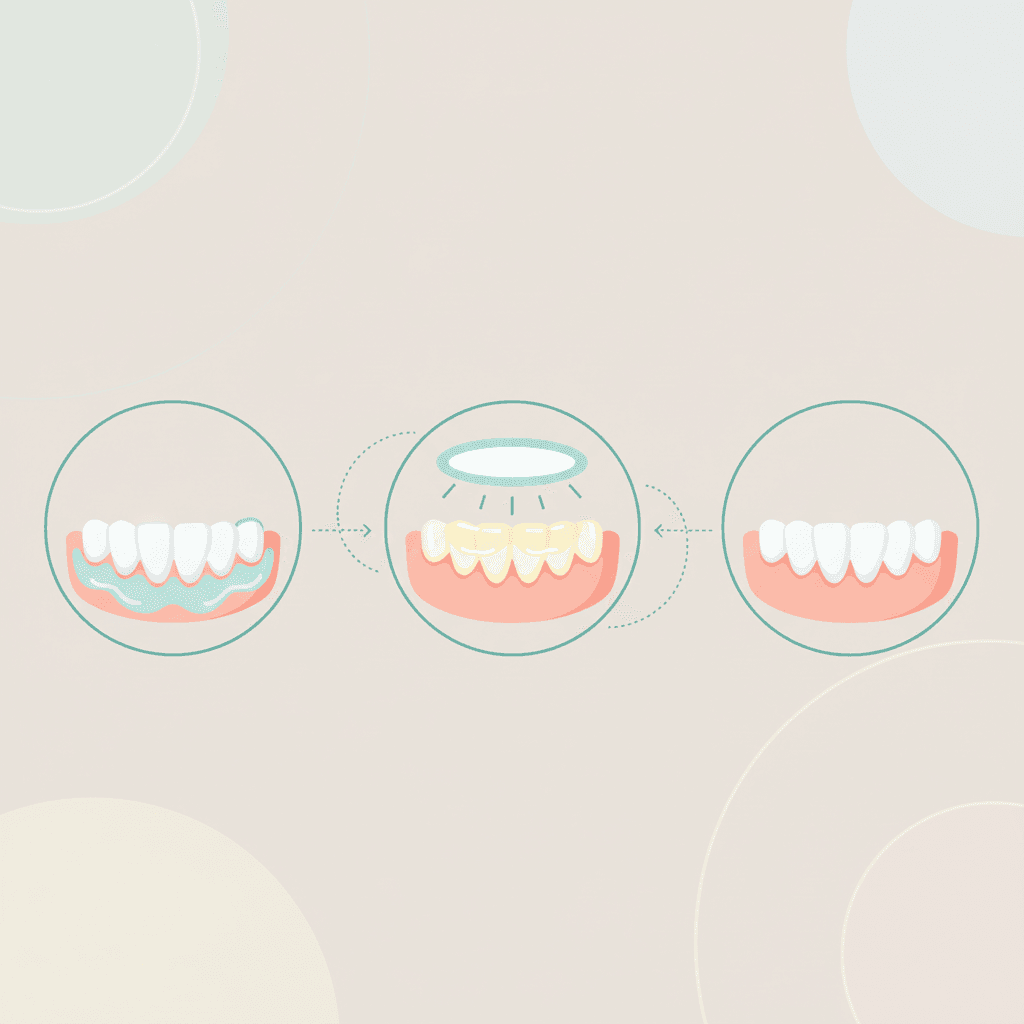
Teeth whitening is not simply 'applying medicine' — it involves 7 steps from pre-treatment to post-treatment, with each step influencing the result by 20–30%. Systems like Zoom WhiteSpeed and Philips Zoom are FDA-approved for a 25% hydrogen peroxide concentration, while in Korea, products approved by the Ministry of Food and Drug Safety are used within the 15–35% range. Office whitening…
Step-by-step time requirements and practical tips from a dental specialist with 15 years of experience
- Professional whitening: 60-90 minutes per session
- Average color improvement: 3-8 steps
- Lasts 2-3 weeks when combined with home whitening
Essential pre-whitening check-up — 30 minutes determines the results
The most frequently asked question in the clinic is 'Can I get whitening right away?' In reality, about 40% of patients are unable to receive treatment that can be done on the same day.
The pre-whitening oral examination takes 30 minutes and checks for cavities, periodontitis, and enamel cracks. Even if the crack exceeds just 0.3mm, the whitening agent can penetrate the dentin and cause severe sensitivity. The 2019 FDA guidelines mandated the application of a gingival shield before using 35% hydrogen peroxide products. In Korea, if resin fillings are present, the possibility of color mismatch is disclosed in advance. X-ray imaging is used to check for internal tooth discoloration (history of tetracycline antibiotic use). In such cases, standard whitening is limited to a 2-3 degree improvement, and the use of veneers is discussed. Caution: Pregnant or breastfeeding patients, as well as those under the age of 15, are excluded from the procedure due to issues with enamel maturity. In this case, home whitening is also not recommended.
- Examination duration: Average 30 minutes
- Percentage of cases where treatment cannot be performed on the same day: Approximately 40%
- Enamel crack threshold: Increased risk of sensitivity if greater than 0.3mm
Step 1: Scaling and Shade Recording (15-20 minutes)
The first step on the day of whitening is scaling. If tartar and plaque remain, the penetration rate of the whitening agent drops by 30%.
After scaling, record the current shade using the Vita Shade Guide. Out of 16 levels from A1 to D4, the average for Koreans is A3-A3.5. This reference point is necessary to objectively measure the degree of improvement after the procedure. Some clinics use a digital shade meter (ShadeEye NCC, released in 2018) to quantify the results using L*a*b* values. In this case, if the ΔE value is 3 or higher, the difference can be perceived visually. After recording the shade, the tooth surface is polished with a fine abrasive. Removing organic deposits during this process accelerates the reaction speed of the whitening agent.
- Scaling duration: 15-20 minutes
- Average Korean shade: A3-A3.5 (Vita standard)
- Visible color difference: ΔE 3 or greater
Step 2: Gingival protection and whitening agent application (20 minutes)
Apply a light-curing resin dam (Opaldam, Ultradent) to the gums. This protective layer hardens within 10 seconds of UV irradiation and blocks the whitening agent from coming into contact with soft tissue.
The whitening agent is in the form of a 25-35% hydrogen peroxide or 15% carbamide peroxide gel. Philips Zoom helps remineralize enamel by combining 25% H₂O₂ + ACP (amorphous calcium phosphate). Apply the gel evenly to the tooth surface to a thickness of 1-2 mm. Uneven application may result in color staining, so operator skill is important. Some systems contain pH regulators to maintain acidity at 6.5-7.0. This is designed to minimize enamel demineralization. Key Point: There is a risk of gum burns if the protective film is missing. If you feel a stinging sensation during the procedure, you must inform the practitioner immediately.
| Types of Whitening Agents | Concentration | Features |
|---|---|---|
| Hydrogen Peroxide (H₂O₂) | 25-35% | Immediate oxygen release, focused on office whitening |
| Carbamide Peroxide | 15-22% | Slowly decomposes, for home whitening |
| ACP Complex | 25% + ACP | Remineralization Ingredients included, Philips Zoom, etc. |
- Film curing time: UV irradiation 10 seconds
- Gel application thickness: 1-2 mm
- pH retention range: 6.5-7.0
Step 3: LED/UV irradiation — 15 minutes × 3 cycles
Photoactive systems like Zoom WhiteSpeed use 480 nm wavelength LEDs. This light decomposes hydrogen peroxide into free radicals to oxidatively bleach organic pigments.
One cycle is 15 minutes, and a total of 3 cycles (45 minutes) of irradiation is standard. A fresh whitening agent is applied during the 5-minute break between cycles. While there are methods that rely solely on chemical reactions without light irradiation, a 2020 study in the Journal of Dentistry reported that photoactive whitening resulted in an average shade improvement of 1.5 steps greater. Tooth temperature may rise by 5-7°C during the procedure. The latest systems feature built-in cooling fans to keep the temperature rise below 3°C. Clinical If sensitivity is severe during a cycle, the irradiation intensity may be lowered or the number of cycles reduced to two. The result is a decrease of 0.5-1 step, but discomfort is significantly reduced.
- LED Wavelength: 480nm (Blue Light)
- Cycle Time: 15 min
- Total Irradiation Time: 45 min (3 cycles)
- Tooth Temperature Elevation: 5-7°C (less than 3°C with cooling system)
Step 4: Post-treatment and Fluoride Application (10 min)
After the light irradiation is finished, the whitening agent and protective film are removed. At this time, the tooth surface is temporarily dehydrated and appears white; this is called the 'immediate whitening effect'.
After 24 hours, when moisture is reabsorbed, the color tone returns to 0.5-1 step. Therefore, the color tone is lighter immediately after the procedure than the final result. Fluoride varnish (5% NaF) is applied to promote enamel remineralization and alleviate sensitivity. The fluoride is kept on for 30 minutes and then spit out; food intake is prohibited for 2 hours thereafter. Some hospitals additionally prescribe ACP-containing gel (MI Paste Plus). Calcium and phosphorus ions fill the micropores of the enamel, reducing pigment re-deposition.
- Post-treatment time: 10 minutes
- Fluoride retention time: 30 minutes
- Tone reversal: 0.5-1 step (after 24 hours)
- Food restriction period: 2 hours (fluoride), 48 hours (pigmented foods)
Combined home whitening — 2-week protocol doubles results
Starting home whitening one week after office whitening extends the color retention period from 6-8 months to 12-18 months. This is a clinical report from the Korean Academy of Conservative Dentistry in 2021.
A custom tray is fabricated and 10% carbamide peroxide gel is injected. The standard usage is 2-4 hours per day for 2 weeks; excessive use may cause gum irritation. Tray fabrication takes 3-5 days after impression taking. After taking a mold of the tooth shape with silicone impression material, a 0.5mm thick tray is made using a vacuum forming machine. If sensitivity occurs during home whitening, take a 1-day break and resume. Studies show that using fluoride toothpaste (1,450ppm) in combination reduces symptoms by 40%. Tip: The home whitening tray is reusable. If the color returns after 6 months, simply purchase additional gel and repeat the procedure for 3-5 days. Find a clinic with systematic home whitening care at K-Dia.
| Category | Office Whitening | Home Whitening |
|---|---|---|
| Concentration | 25-35% H₂O₂ | 10-22% Carbamide |
| Duration per session | 60-90 minutes | 2-4 hours/day |
| Total Duration | Same Day | 2-3 Weeks |
| Tone Improvement | 3-8 Steps | 2-5 Steps |
| Maintenance Period | 6-8 Months | 4-6 Months |
| Maintenance When Used in Concurrently | - | 12-18 Months |
- Start of Home Whitening: 1 Week After Office Whitening
- Usage Time: 2-4 Hours a Day
- Duration of Use: 2 weeks
- Tray production time: 3-5 days
- Fluoride toothpaste sensitivity relief effect: 40%
Comparison of major office whitening systems
Philips Zoom WhiteSpeed [Photoactive]
- 25% H₂O₂ + ACP
- 480nm LED light source
- 3 cycles 45 minutes
- Average 6-step improvement
Contains remineralization ingredients, high domestic market share
Opalescence Boost PF [Chemical Activity]
- 40% H₂O₂
- No light irradiation required
- Apply 3 times, 20 minutes each
- Average 5-level improvement
Contains fluoride and potassium nitrate, alternative for patients with photosensitivity
Laser Whitening [Laser Activity]
- 35% H₂O₂
- Diode Laser
- 4-6 irradiations
- Average 7-8-level improvement
Most powerful, but frequency of sensitivity High
Common Misconceptions
Misconception One whitening treatment keeps the skin permanently white
Truth When using office whitening alone, the skin tone gradually returns after 6-8 months. Depending on the frequency of consuming pigmented foods such as coffee and wine, it may return by 1-2 shades in as little as 3 months. If combined with home whitening and touch-ups every 3-6 months (a 30-minute re-treatment), the results can be maintained for 12-24 months.
Misconception Whitening weakens and damages teeth
Truth When performed within the FDA-approved concentration range, changes in enamel structure are not observed even at the electron microscope level. Microporosis may occur due to temporary dehydration, but it is remineralized by saliva within 48 hours. However, there is a risk of enamel damage if performed with excessive frequency (more than once a month) or if high-concentration, unauthorized products are used.
Frequently Asked Questions
Can I go to work on the day of the procedure?
Yes, it is possible. There are no cosmetic issues immediately after the procedure, but some patients may experience tooth sensitivity for 2-3 hours. If you have an important meeting, it is recommended to schedule an appointment for late in the afternoon. Can I absolutely not drink coffee after whitening? It is strictly prohibited for 48 hours. After that, consumption is permitted; however, using a straw to minimize tooth contact and rinsing with water immediately after consumption can reduce pigment re-discoloration by 30%. Will resin fillings also turn white? No. Whitening agents only work on natural teeth. If you have resin fillings on your front teeth, replacement may be necessary due to color mismatch after whitening. This must be confirmed during the pre-examination. How long does sensitivity last? It disappears within an average of 24 to 48 hours. In severe cases, it can last up to 72 hours, but the duration is reduced by half when using fluoride varnish and ACP gel. If the whitening effect persists for more than one week, a follow-up visit to the dentist is required. What is the difference between this and home whitening strips? Commercial strips have a concentration of 6-10%, which is less effective than the 25-35% concentration used in dental clinics. Also, since they are not custom trays, the gel may run onto the gums and cause irritation. Color improvement averages 2-3 shades, which is half the level of office whitening. Can implants or crowns be whitened? No. Prosthetics such as ceramic and zirconia do not react to whitening agents. Since only natural teeth are whitened, a color difference may occur between the prosthetics and the teeth; in this case, replacement of the prosthetics should be considered.