Acne Scar Treatment 2025: The Secret to Reducing Laser Sessions from 3 to 1
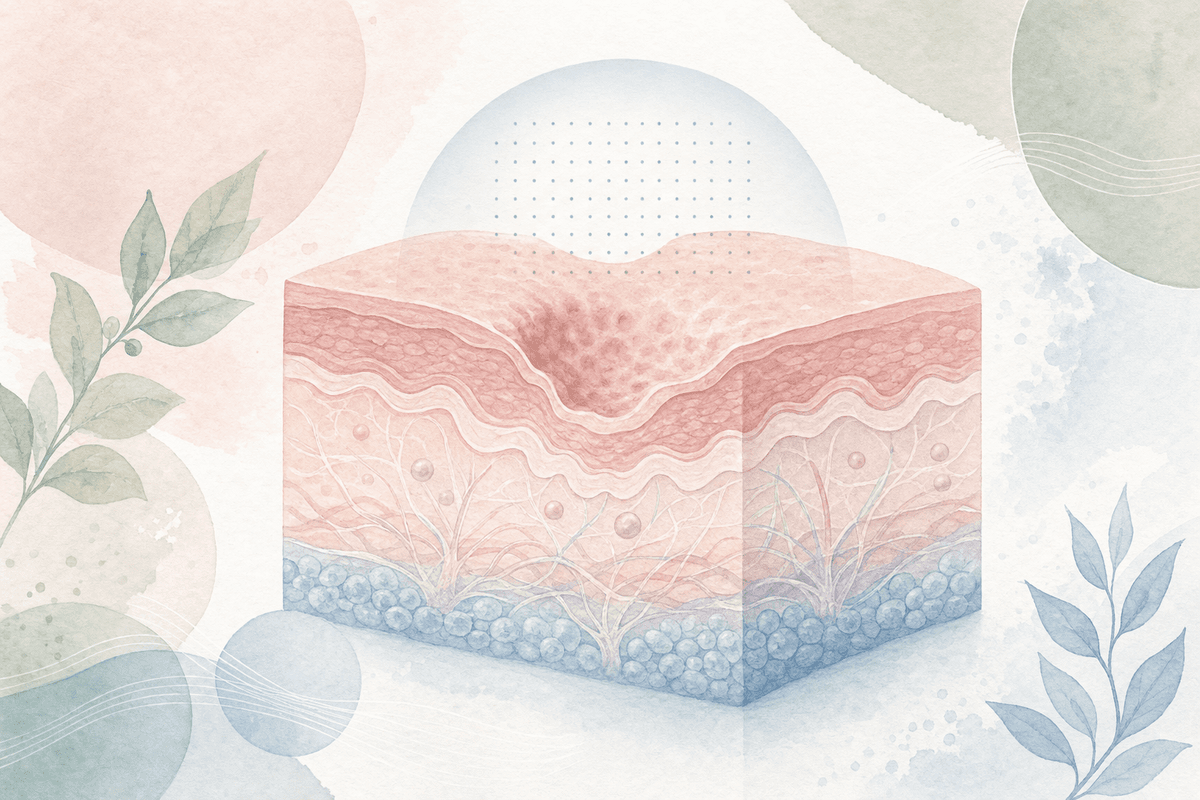
- How a combination of Pico and radiofrequency treatments reduced a scar that previously required three fractional laser sessions by half
- Since 2022, Pico laser and radiofrequency microneedling technology has shortened recovery time by 40% compared to traditional fractional laser treatments alone.
- Customized protocols that combine equipment based on scar types—rolling, boxcar, and ice pick—are set to become the standard by 2025.
Information as of August 2026
From Fractional to Radiofrequency
- 41% increase in treatment demand compared to 2023
- Average number of radiofrequency microneedling sessions shortened from 5 to 3
- Pico laser scar mode FDA approved in 2022
Is Fractional Laser Enough? Only Half the Story
If you thought acne scars could be completely resolved with just a few sessions of fractional laser, you're only half right. Until 2020, the standard approach was 5-7 sessions of fractional laser alone. However, the landscape shifted dramatically after the pico laser scar mode received FDA approval in 2022, followed by updates to radiofrequency microneedling (RF Microneedling) protocols.
According to the Korean Dermatological Association's 2024 Clinical Report, the group that combined pico laser and radiofrequency microneedling saw their average treatment sessions reduced from 5 to 3 compared to fractional laser alone, with a 40% shorter downtime. The percentage of patients with over 30% improvement in scar depth also increased from 52% with monotherapy to 78% with combination therapy.
Why the sudden change? While equipment advancements play a role, it's primarily due to the establishment of protocols that match devices to specific scar types. For rolling scars, subcision and radiofrequency; for boxcar scars, high-fluence fractional lasers; for ice pick scars, TCA CROSS — this combination approach allows for simultaneous treatment of multiple depths.
Key Takeaway The core of scar treatment in 2025 isn't 'repeated use of a single device' but rather 'a single session combining devices tailored to scar type.' Recent clinical conclusions indicate that receiving subcision + pico + radiofrequency in one session is more effective for collagen regeneration than undergoing multiple sessions of the same laser.
Pico Laser Scar Mode: How Does It Differ from Traditional Fractional Lasers?
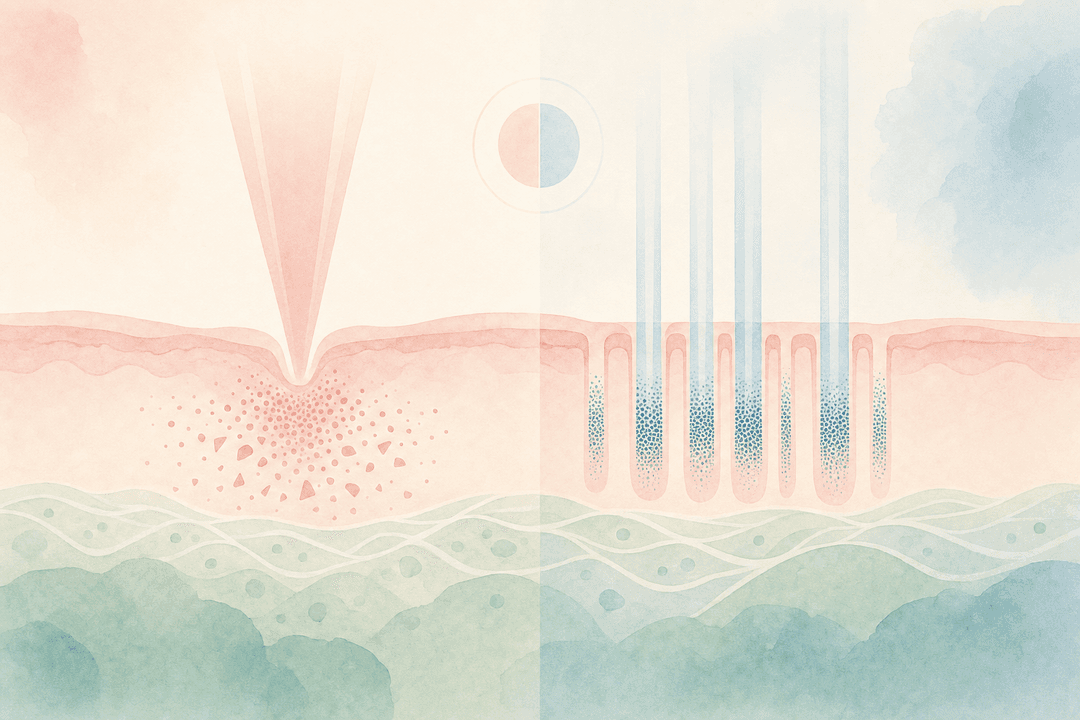
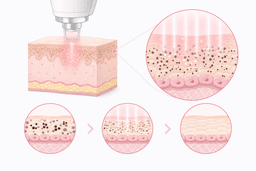
Fractional lasers work by creating microscopic channels in the skin to induce regeneration. However, significant thermal damage led to 5-7 days of recovery and a risk of post-inflammatory hyperpigmentation. Pico lasers, emitting pulses in one trillionth of a second (picoseconds), minimize thermal damage while stimulating collagen in the dermis.
Devices like the Cynosure PicoSure Focus lens or Cutera enlighten SR mode are prime examples. These devices utilize the LIOB (Laser-Induced Optical Breakdown) effect to specifically induce collagen remodeling in the upper dermis, at depths of 1-2mm. During the 2022 FDA approval trials, an average scar depth improvement of 28% and downtime of 3 days were reported.
However, pico lasers alone have limitations for deep boxcar or ice pick scars. Therefore, a two-stage protocol is increasingly common: using pico lasers to treat the epidermis and superficial dermis, followed by high-fluence fractional lasers (e.g., CO2 fractional) or radiofrequency microneedling for deeper layers.
- Pico laser scar mode FDA approval: 2022 (PicoSure Focus, enlighten SR)
- Incidence of hyperpigmentation compared to fractional laser alone: Decreased from 12% to 3% (Korean Dermatological Association, 2023)
- Downtime: Fractional 5-7 days vs. Pico 2-3 days
True or False Quiz
Pico lasers cause less thermal damage than fractional lasers, reducing the risk of hyperpigmentation.
Check Answer
True Pico lasers have pulse durations in the picosecond range (one trillionth of a second), leaving virtually no time for heat to spread to surrounding tissues. Fractional lasers operate in the millisecond range, causing significant thermal damage and a 4x higher incidence of hyperpigmentation (12% vs. 3% for pico).
Radiofrequency Microneedling: Now Called 'Less Painful Subcision'
For types like rolling scars, where the skin is pulled downwards, lasers alone have limitations. The fibrous bands tethering the skin deep in the dermis need to be released, a procedure traditionally done with subcision (using a needle to cut the fibrous bands). This method often resulted in significant bruising and a long recovery period.
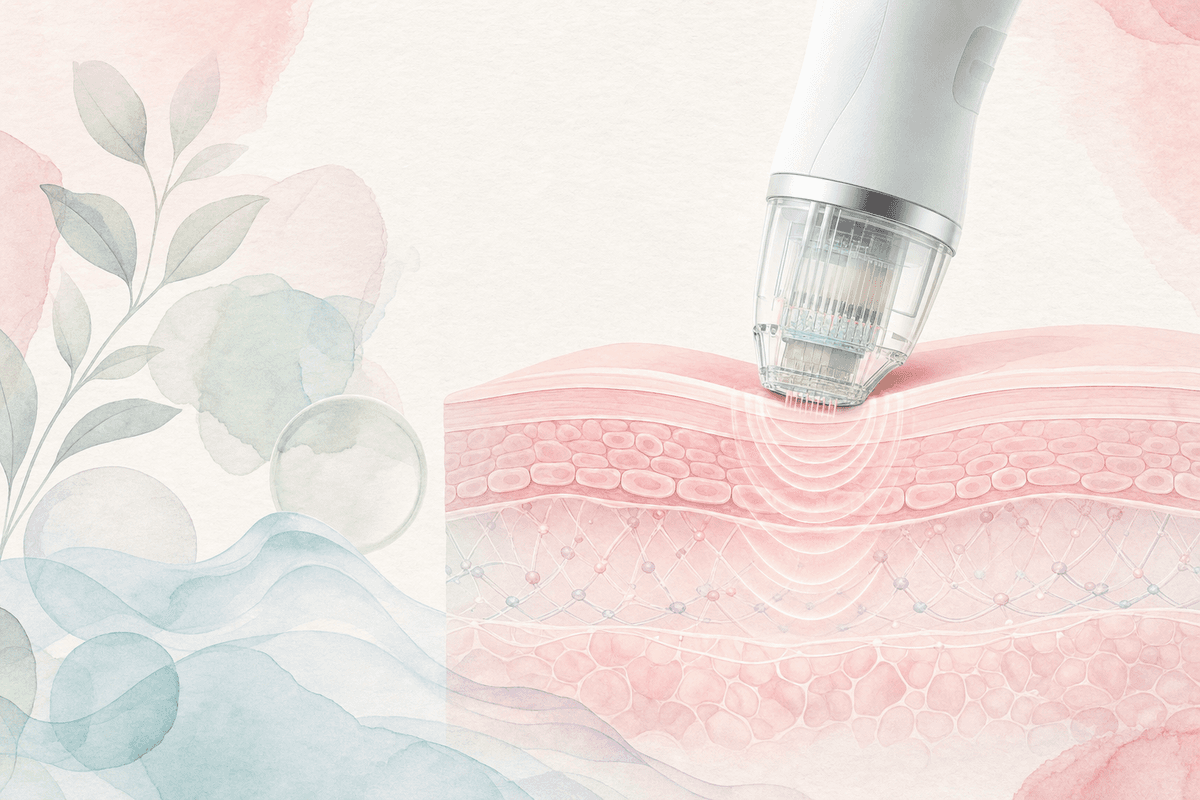
Radiofrequency (RF) microneedling delivers RF energy through microneedles. Devices such as Lutronic INFINI, Sylfirm X, and Potenza are prominent examples. With adjustable needle depths from 0.5mm to 3.5mm, they release the fibrous bands of rolling scars while simultaneously stimulating collagen regeneration.
A 2024 study from Seoul National University Hospital's dermatology department reported that 3 sessions of RF microneedling improved rolling scar depth by an average of 42%, outperforming subcision alone (35%). The recovery time was also significantly shorter, 4-5 days compared to 7-10 days for subcision. Frankly, RF microneedling is now the first-line treatment for rolling scars.
Clinical Insight The effectiveness of RF microneedling varies with needle depth. For rolling scars, depths of 2.0-2.5mm are optimal, while 1.0-1.5mm is suitable for pores and shallow scars. Do not confuse this with derma rollers, which lack depth control; the principles are entirely different.
Combinations by Scar Type: Here's How They Vary

Acne scars are broadly categorized into three types: rolling (gentle U-shape), boxcar (sharp U-shape), and ice pick (V-shaped, needle-like). Most individuals have a combination of these scar types on their face. Therefore, the current trend is combining multiple devices in a single session.
For rolling scars, the standard combination is RF microneedling at 2.0mm plus subcision, releasing the tethering bands and filling the resulting space with collagen. For boxcar scars, high-fluence CO2 fractional lasers (10-20mJ) are used to ablate the edges, or if necessary, punch elevation (a minor surgical procedure to lift the scar base) followed by fractional laser treatment.
Ice pick scars are too deep and narrow for lasers alone. The standard approach involves TCA CROSS (applying trichloroacetic acid directly into the scar) or punch excision (removing the scar and suturing) followed by pico laser treatment for refinement. By 2025, these phased combination protocols are becoming the near-standard.
| Scar Type | Primary Device | Secondary Device | Average Sessions |
|---|---|---|---|
| Rolling (U-shape) | RF Microneedling 2.0-2.5mm | Subcision or Filler | 3-4 sessions |
| Boxcar (Sharp U) | CO2 Fractional High-fluence | Pico Laser or Punch Elevation | 4-5 sessions |
| Ice Pick (V-shape) | TCA CROSS | Pico Laser or Punch Excision | 5-6 sessions |
Number of sessions may vary depending on scar depth, area, and clinic protocol.
The Key to Reducing Sessions: The 'Multi-Layer Single Session' Protocol
While previously patients underwent 5-7 sessions of fractional laser, the current trend involves receiving multiple devices layered on different depths in a single visit. For example, a single session might include 'subcision (releasing deep bands) + RF microneedling at 2.0mm (stimulating collagen) + pico laser (epidermal refinement)'—completing three stages at once.
A 2023 protocol from Yonsei University Severance Hospital's dermatology department reported that this approach reduced the average treatment duration from 6 months to 3-4 months. By targeting multiple depths simultaneously, collagen regeneration occurs concurrently, leading to increased efficiency.
However, this protocol also increases downtime proportionally. While standalone treatments typically have 3-5 days of downtime, multi-layer treatments require 7-10 days. Nevertheless, the reduction in total sessions means the cumulative downtime is similar or even shorter in the long run. For working professionals, taking a few days off and completing treatment in one go might be a more practical option.
- Average treatment duration for multi-layer protocol: 3-4 months (compared to 6 months for standalone therapy)
- Downtime per session: 7-10 days (compared to 3-5 days for standalone)
- Total cumulative downtime: 3 multi-layer sessions (21-30 days) vs. 5 standalone sessions (15-25 days) — similar in the long term
Scar Treatment in 2025: Just Remember This

Ultimately, the key is to accurately identify your scar type and find the appropriate device combination. Sticking solely to fractional lasers or only receiving pico treatments is a method from before 2020. If rolling scars are predominant, opt for RF + subcision; for boxcar scars, high-fluence fractional lasers; and for ice pick scars, start with TCA CROSS. Not knowing this sequence will only lead to more sessions.
Furthermore, there's an aspect not often disclosed in advertisements: it's impossible to completely fill scars by 100%, regardless of the device's quality. In clinical terms, 'improvement' means becoming 30-50% shallower. Achieving over 70% improvement is rare and typically only possible for very shallow scars or with long-term combination therapies. Setting realistic expectations is crucial to avoid disappointment.
- Average scar depth improvement: Rolling 40-50%, Boxcar 30-40%, Ice Pick 20-30%
- Cases with over 70% improvement: Less than 15% of all patients (shallow scars + long-term treatment)
- Primary reason for treatment discontinuation: Unrealistic expectations (Korean Dermatological Association survey, 2024)
Comparison of Key Devices for Scar Treatment in 2025
Pico Laser (PicoSure Focus) [Epidermis-Superficial Dermis]
- Pulse: Picosecond (1 trillionth of a second)
- Downtime: 2-3 days
- Average Sessions: 3-4 sessions
- Hyperpigmentation Risk: Low
Effective for shallow rolling scars and pigmentary issues. Limited for deep scars.
RF Microneedling (Potenza, INFINI) [Deep Dermis]
- Depth Control: 0.5-3.5mm
- Downtime: 4-5 days
- Average Sessions: 3-4 sessions
- Rolling Scar Improvement Rate: 40-50%
First-line treatment for rolling scars. Can substitute subcision.
CO2 Fractional (High-fluence) [Epidermis-Mid Dermis]
- Output: 10-20mJ
- Downtime: 5-7 days
- Average Sessions: 4-5 sessions
- Boxcar Scar Improvement Rate: 30-40%
Effective for ablating the edges of boxcar scars. Caution regarding hyperpigmentation.
Which Combination is Right for My Scars?
Rolling scars constitute over 80%, moderate depth
RF Microneedling at 2.0mm + Subcision combination for 3-4 sessions
It's efficient to release fibrous bands and stimulate collagen regeneration simultaneously.
Mixed boxcar and ice pick scars, fewer than 10 scars
TCA CROSS (for ice pick) + CO2 Fractional (for boxcar) combination
For a small number of scars, targeted treatment with TCA followed by fractional laser for surrounding areas is a clean approach.
Unable to take more than 7 days of downtime
Pico laser monotherapy for 4-5 sessions, spaced 4 weeks apart
While less effective than combinations, it allows for a faster return to daily life and has a lower risk of hyperpigmentation.
Budget under 2 million KRW, seeking maximum efficiency
1st session: Multi-layer treatment (Subcision + RF + Pico) + 2-3 subsequent sessions of Pico laser alone
Investing heavily in the first session and then focusing on maintenance can reduce the total number of treatments.
Common Misconceptions
Misconception Pico laser drastically improves scars after just one session.
Truth Pico lasers are effective for shallow scars and pigmentary issues, but deep rolling or boxcar scars require 3-4 or more sessions. The average improvement after one session is around 15-20%.
Misconception Fractional lasers are outdated and no longer used.
Truth High-fluence CO2 fractional lasers are still necessary for treating boxcar scars and ablating deeper layers. They serve a different purpose than pico lasers and are often used in combination rather than being replaced.
Important Considerations Before Scar Treatment
- Discontinue retinol, AHA/BHA products 2 weeks prior to treatment (exfoliating ingredients can irritate the treatment area).
- Mandatory use of SPF 50+ sunscreen for at least 3 months post-treatment (to prevent hyperpigmentation).
- Avoid saunas, alcohol, and strenuous exercise for 48 hours after RF microneedling (risk of worsening inflammation).
- Refrain from facial massages or applying pressure for 1 week after subcision (to prevent re-adhesion of fibrous bands).
- Treatment is recommended to be postponed for pregnant or breastfeeding individuals, those with a history of keloids, or active acne.
Frequently Asked Questions
Can I go to work the day after RF microneedling?
It depends on the needle depth. For 1.0-1.5mm depths, makeup is possible after 2-3 days. However, for depths of 2.0mm or more, swelling and redness can persist for 4-5 days, making it difficult to return to work. It's safer to schedule treatment on a Friday and recover over the weekend.
What should I do if I get new acne breakouts during scar treatment?
If you have 5 or more active acne lesions, treatment should be paused to address the inflammation first. Treating over active acne can lead to new scars. The principle is to resume treatment after managing acne with dermatological medications (e.g., isotretinoin).
What is the cost difference between fractional and pico lasers?
CO2 fractional laser treatments typically range from 200,000 to 400,000 KRW per session, while pico laser scar mode treatments cost between 400,000 to 700,000 KRW. Although pico lasers are more expensive per session, the reduced downtime and number of sessions can make the overall cost comparable or even lower in the long run.
How long does bruising last after subcision?
Bruising typically lasts for 5-7 days, and in some cases, up to 10 days. This is due to micro-bleeding that occurs when the fibrous bands are severed with the needle. Bromelain supplements or cold compresses can help with bruise recovery.
What are the potential side effects or complications of scar treatment?
The most common side effect is temporary hyperpigmentation (appearing 2-3 weeks post-treatment, naturally resolving within 3-6 months). Rarely, worsening of keloids (in susceptible individuals), infection (if post-treatment care is neglected), or burns (if excessive energy is used) have been reported. Patch testing before treatment and verifying the practitioner's experience are important.
Does combining multiple devices in one session truly multiply the results?
It's not a simple addition. The effectiveness increases significantly when devices with different functions work synergistically, such as subcision to release bands followed by RF to build collagen. Overlapping treatment of the same depth with multiple devices can actually increase damage.
Lumi's Take
Scar treatment is a marathon, not a sprint. Expecting drastic improvement in one go can lead to burnout. Even a 30% improvement can be a significant change when looking in the mirror. Accurately identify your scar type, find the right device combination, and start treatment when you can manage the downtime. It becomes enjoyable once you start seeing gradual progress.
This content is for informational purposes only and does not substitute for medical advice. Always consult with a specialist before undergoing any procedure.