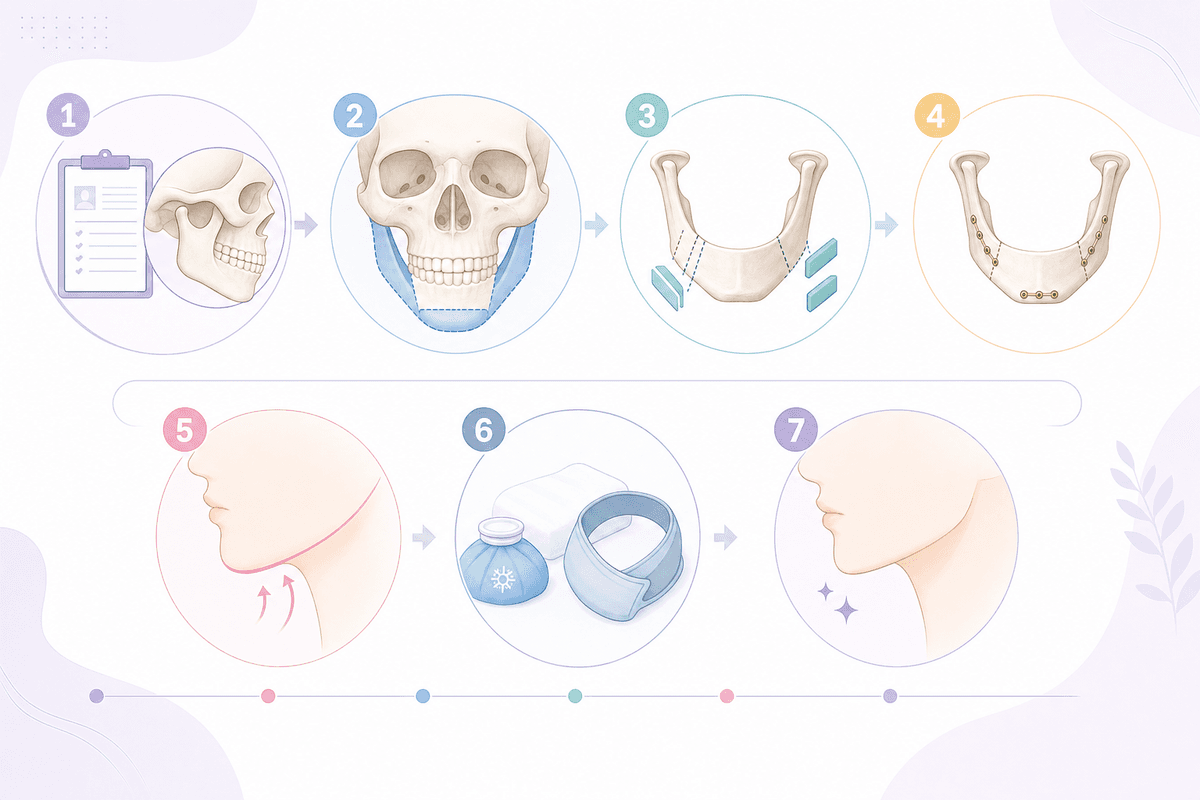
3 Things a Doctor Checks on the Day of a Facelift Surgery
- The items you check on the morning of your surgery can make all the difference.
- What to prepare step-by-step, from consultation to suture removal.
- The first 72 hours post-surgery are crucial for determining recovery speed.
Information as of July 2026
The Actual Process from Consultation to Recovery
- Average surgery time: 3-4 hours
- 2-hour wait in recovery room after general anesthesia
- Stitch removal: Days 10-14
The Decision Made in Front of the Mirror
Every time I look in the mirror, I see my jawline becoming less defined. When I take a side profile picture, sagging cheeks are the first thing that catches my eye. From the moment you decide on a facelift to the moment you're on the operating table, a longer journey than you might expect begins.
The facelift process is broadly divided into three stages: consultation, examination, and surgical preparation (2-4 weeks); the day of surgery (4-6 hours); and the recovery and management period (3-6 months). This article outlines what actually happens at each stage and what you need to prepare.
What the doctor first looks at during the consultation is not skin elasticity. They check the degree of laxity in the fascia layer (SMAS, the thin membrane covering the muscles beneath the skin) and palpate fat distribution. This is because, even at the same age, the incision area and the degree of tightening will vary significantly depending on these two factors.
Key Takeaway What to prepare for your consultation: A list of medications you are currently taking (especially anticoagulants/aspirin), your history of previous facial procedures, and whether you have a keloid tendency. These three factors will determine the surgical method.
2 Weeks Before Surgery: When Test Results Arrive
It typically takes 3-5 days for blood test, electrocardiogram, and chest X-ray results to come back. During this period, an additional consultation with the anesthesiologist is conducted. They assess the risks of general anesthesia and finalize the fasting period (8 hours) and medications to be discontinued on the day of surgery.
Aspirin, Omega-3, and Vitamin E should be discontinued starting 2 weeks before surgery. This is because they increase bleeding time and delay recovery. High blood pressure medication can be taken until the morning of surgery, but diabetes medication should be discontinued — this will be individually instructed by the anesthesiologist.
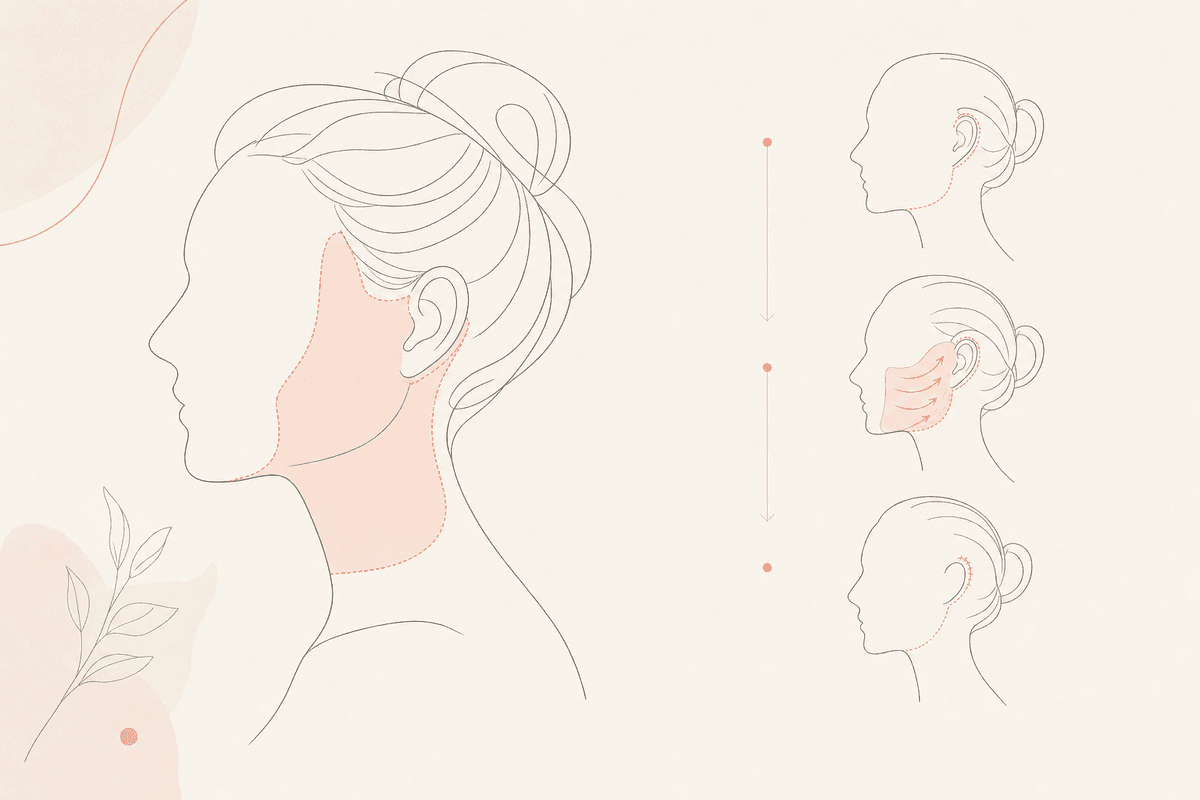
At this time, the surgical method is finalized. You will choose from a traditional SMAS facelift (incision from temple to in front of and behind the ear), a mini lift (incision only in front of the ear), or an endoscopic facelift, and the incision design will be simulated in photos.
| Surgical Method | Incision Area | Surgery Time | Recovery Period |
|---|---|---|---|
| Traditional SMAS Facelift | Temple - In front of and behind ear | 3.5-4 hours | 2-3 weeks |
| Mini Lift | 5cm in front of ear | 2-2.5 hours | 10-14 days |
| Endoscopic Facelift | 3-4 incisions within the scalp | 2.5-3 hours | 7-10 days |
Surgery time may vary depending on the extent and additional procedures (e.g., fat grafting).
True or False Quiz
The swelling is most severe immediately after a facelift surgery.
Check the answer
False The peak swelling occurs on days 2-3 after surgery. Immediately after surgery, swelling is suppressed by compression bandages. After the drainage tubes are removed, gravity causes the swelling to move downwards, reaching its highest point. After this period, it rapidly decreases.
The Morning of Surgery: 3 Things the Doctor Checks First

Upon arriving at the clinic 2 hours before surgery, the anesthesiologist and the operating surgeon will conduct final checks in order. The three things checked at this time will determine whether the surgery can proceed on the day.
First, adherence to fasting instructions. If even a sip of water has been consumed within 2 hours, the surgery will be postponed due to the risk of aspiration pneumonia during anesthesia. In fact, about 30% of all postponements are due to this reason.
Second, skin condition. If there is significant swelling due to drinking alcohol or lack of sleep the previous day, or if there is an increased tendency to bleed due to the start of menstruation, the schedule will be adjusted. It is safer for women to schedule surgery avoiding ±3 days around their expected period.
Third, your condition on the day. If you have cold symptoms (cough, runny nose), the risk of complications during intubation increases, and a 2-week postponement is recommended. If your body temperature was 37.5℃ or higher the day before surgery, it will be re-measured on the morning of surgery to make a decision.
Caution What to avoid the day before surgery: Alcohol (starting 72 hours prior), overeating (delays stomach emptying), wearing contact lenses (increases intraocular pressure), nail art/polish (interferes with oxygen saturation measurement).
Inside the Operating Room: What Actually Happens
Induction of general anesthesia takes about 10-15 minutes. A sedative (propofol) is administered intravenously, a tube is inserted into the airway, and then switched to an inhaled anesthetic (sevoflurane). After this, the patient remains completely unconscious.
Disinfection and marking take 20-30 minutes before the incision. The area from the hairline to the neck is disinfected with povidone (betadine), and the incision lines and dissection areas are marked with a surgical pen. For a SMAS facelift, which involves separating and lifting three layers—skin, fat, and fascia—this marking is crucial for ensuring symmetry in the results.
The actual surgery time is an average of 3-4 hours. It proceeds in the following order: skin incision (30 minutes) → SMAS layer dissection and fixation (1.5-2 hours) → removal of excess skin and closure (1-1.5 hours). An electric cautery device is used to minimize bleeding, and major nerves (temporal and zygomatic branches of the facial nerve) are identified using a microscope.
The closure is a two-layer structure. The inner layer uses dissolvable sutures (Vicryl 4-0) to distribute tension, and the outer layer uses non-dissolvable sutures (Nylon 5-0) for precise finishing. These outer sutures are the ones removed after 10-14 days.
- The standard SMAS layer pull angle is 45 degrees — pulling more than 60 degrees can create an unnatural appearance.
- The probability of facial nerve damage is less than 0.5% for experienced surgeons.
- Average blood loss during surgery is 50-100cc; blood transfusions are rarely necessary.
Until You Wake Up in the Recovery Room

It takes about 30 minutes to 1 hour to wake up from anesthesia after the surgery ends. The airway tube is removed, a transition is made to an oxygen mask, and once consciousness returns, you are moved to the recovery room. Nausea and vomiting are common during this period; do not try to endure it and inform the nurse immediately to reduce pressure on the incision site.
You will be observed in the recovery room for 2-3 hours while your blood pressure, pulse, and drainage volume are monitored. Accumulated blood and exudate drain through the surgical drains inserted into the surgical site, typically amounting to 50-100cc. If the drains become blocked, the risk of hematoma increases significantly, so you must have assistance from a nurse when changing positions.
Whether you are discharged the same day or stay overnight depends on your condition and the clinic's policy. Mini lifts can often be done as an outpatient procedure, but for traditional SMAS facelifts, an overnight stay is recommended for monitoring. You will wear a compression bandage before discharge and receive prescriptions for painkillers, antibiotics, and anti-inflammatory drugs.
Clinical Insight The most important thing in the recovery room is to keep your 'head elevated above your heart.' Maintaining a bed angle of 30-45 degrees allows swelling to drain due to gravity. Watching TV or using your smartphone while lying flat can delay swelling recovery by 2-3 days.
The First 72 Hours: The Period That Determines Recovery Speed
The peak of swelling occurs 3 days after surgery. Management during this period can shorten the final recovery time by 1-2 weeks. Cold compresses should only be applied for the first 48 hours; starting on the third day, switch to warm compresses. Do not apply ice packs directly; place two layers of gauze between the pack and your skin, repeating 20 minutes of cold compress followed by 20 minutes of rest.
Alcohol, smoking, and saunas are prohibited for at least 2 weeks. Vasodilation increases the risk of bleeding and infection by more than 5 times. In fact, 70% of cases requiring revision surgery due to hematoma are caused by violations of these prohibitions during this period.
Drainage tubes are removed on days 2-3. They are removed when the drainage volume decreases to less than 30cc per 24 hours. The removal is virtually painless and takes less than 5 seconds. Even after removal, the compression bandage must be worn for another week to allow the skin to adhere to the SMAS layer.
Washing your face and showering are possible from the 3rd day, but avoid getting the incision sites wet. Protect the sutures behind your ears with gauze and only allow light cleansing with lukewarm water. Shampooing is possible after stitch removal on day 7.
After Stitch Removal: Real Recovery Begins

Stitch removal on days 10-14 is the first milestone. Stitches are removed in the order of in front of the ear, behind the ear, and temple area, taking about 15-20 minutes. There is a slight stinging sensation during removal, but it is manageable as numbing cream is applied.
Even after removing the stitches, swelling can persist for another 4-6 weeks. The point where you feel '80% recovered' is typically around 1 month, and it takes 3 months to look completely natural. The difference in this period can be more than 2 weeks, depending on individual skin healing ability and how well you manage swelling.
Scar management officially begins from the 1-month mark. Applying silicone gel sheets (Cica-Care, Dermatix) to the incision lines for more than 12 hours a day can reduce scar width by an average of 40% after 6 months. Laser treatments (Fractional CO2) can be considered after 3 months.
The timeline for returning to daily life is as follows: light office work can resume after 2 weeks, face-to-face work after 3-4 weeks, and strenuous exercise after 6 weeks. Makeup is possible the day after stitch removal, but avoid the area within 1cm of the incision lines.
- Recovery speed is more influenced by skin thickness than age — thinner skin tends to have faster swelling reduction.
- Compression bandage wear time: 24 hours for the first week, only at night during the second week, optional wear during the third week.
- Final result assessment is at 6 months post-surgery — comparing photos from earlier stages is not meaningful.
Comparison of Recovery Periods by Surgical Method
Traditional SMAS Facelift [Long-lasting Results]
- Stitch Removal: 14 days
- Return to Work: 3-4 weeks
- Resume Exercise: 6 weeks
- Full Recovery: 3 months
Most anticipated results, but also the longest recovery period.
Mini Lift [Quick Recovery]
- Stitch Removal: 10 days
- Return to Work: 2 weeks
- Resume Exercise: 4 weeks
- Full Recovery: 6 weeks
Suitable for moderate sagging, lasts 5-7 years.
Endoscopic Facelift [Minimal Incision]
- Stitch Removal: 7 days
- Return to Work: 10-14 days
- Resume Exercise: 3 weeks
- Full Recovery: 4 weeks
Minimal scarring due to incisions within the scalp; limited effectiveness for mid-face sagging.
Criteria for Choosing the Right Surgical Method for You
If you are considering a facelift for the first time and are in your early to mid-40s
Start with a Mini Lift
At this age, SMAS laxity is not severe, so a mini lift can provide results for 5-7 years. A traditional facelift is best saved as an option for revision surgery after age 50.
If you are concerned about neck wrinkles and jawline sagging simultaneously
The Traditional SMAS Facelift is the answer
A mini lift's incision in front of the ear is insufficient to lift the neck. Treatment of the platysma muscle is necessary, making an incision behind the ear essential.
If you need to reduce your recovery period to within 2 weeks
Consider an Endoscopic Facelift or Thread Lift
However, endoscopic procedures primarily affect the mid-face (cheeks-nasolabial folds), and thread lifts last only 1-2 years. For significant improvement, it's better to adjust your timing.
If scarring is your biggest concern
Request a method that includes incisions within the hairline
While an incision in front of the ear is unavoidable, moving the temporal incision 1cm further into the scalp can minimize visible scarring from the front.
Misconceptions Debunked
Misconception Your face becomes smaller immediately after surgery.
Truth For the first 2 weeks, your face may actually appear larger due to swelling. The definition of your jawline becomes noticeable after 1 month, and the final size is only confirmed after 3 months. Many people are disappointed when they look in the mirror initially, but this is a normal part of the recovery process.
Misconception Everything is over once the stitches are removed.
Truth Stitch removal only addresses the outer layer of sutures; internal adhesion continues for 3 months. If you move too vigorously the day after stitch removal, the skin and SMAS layer can separate, leading to the recurrence of sagging.
What to Check Before Surgery
- Provide detailed information about past facial procedures (fillers, Botox, thread lifts) — this affects the dissection area.
- Smokers must quit at least 4 weeks prior — risk of skin necrosis increases 5-fold.
- If you are taking anticoagulant medication, switch to an alternative drug after consulting with a cardiologist.
- Take Vitamin C and iron supplements starting 1 week before surgery — promotes collagen synthesis.
- A guardian must accompany you on the day of surgery — driving or making important decisions is prohibited for 24 hours after general anesthesia.
Frequently Asked Questions
I'm afraid of general anesthesia. Is it impossible with local anesthesia?
A traditional SMAS facelift takes 3-4 hours, making it difficult with local anesthesia alone. A mini lift can be performed with a combination of sedation and local anesthesia, but most clinics recommend general anesthesia due to the risk of nerve damage if the patient moves. It is safe to proceed at a clinic with an on-site anesthesiologist.
How many days until I can go back to work after surgery?
Remote work can resume after 1 week, and face-to-face work after 2-3 weeks. While the removal of the compression bandage (7-10 days) is a benchmark, it takes about 2 weeks for residual swelling and bruising to subside to a level that can be covered with makeup. If you have important meetings, allow at least 3 weeks.
Does it hurt when stitches are removed?
It's a slight stinging sensation. The area behind the ear is less sensitive, so you'll barely feel it, while the front of the ear might have a brief pricking sensation. Numbing cream is applied, so it's manageable and takes about 15 minutes.
What are the potential side effects after a facelift?
The most common side effect is temporary numbness (around the ears and cheeks), which recovers over 3-6 months. Facial nerve damage is less than 0.5% but can cause drooping of the mouth corners or difficulty closing the eyes if it occurs. Hematoma (2-3%) requires surgical removal within 48 hours, so contact us immediately if you experience sudden unilateral swelling.
How long do the results last?
A traditional SMAS facelift lasts an average of 10-15 years, and a mini lift lasts 5-7 years. However, skin aging continues, so it's not about returning to your pre-surgery state, but rather about maintaining a look that is '10 years younger for your age.' Sun protection and quitting smoking can extend the duration of results by 2-3 years.
What is the approximate cost?
Traditional SMAS facelifts range from 8 to 15 million KRW, mini lifts from 5 to 8 million KRW, and endoscopic facelifts from 6 to 10 million KRW. Costs vary significantly depending on the clinic's location (Gangnam vs. other regions), anesthesia method, and whether additional procedures (fat grafting, neck lift) are included. Request a detailed quote during your consultation.
Lumi's Note
Simply knowing the surgical process in advance can reduce your anxiety by half. Mark the recovery timeline on your calendar and observe your gradual improvement each day. In 3 months, you will possess a different confidence in front of the mirror.
This content is for informational purposes only and does not substitute medical advice. Always consult with a specialist before undergoing any procedure.