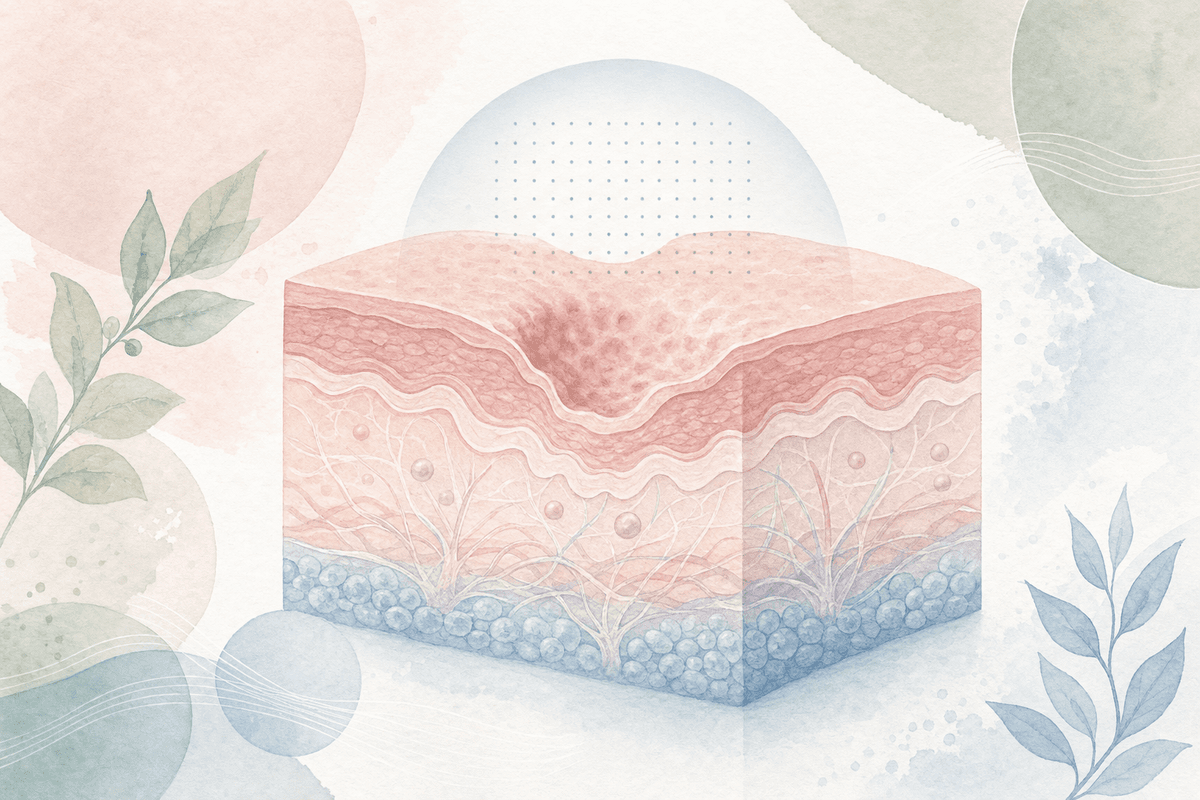
Skin Booster Aqua Peel vs. Hydra Facial vs. ⟦GO⟧, How Are They Different?
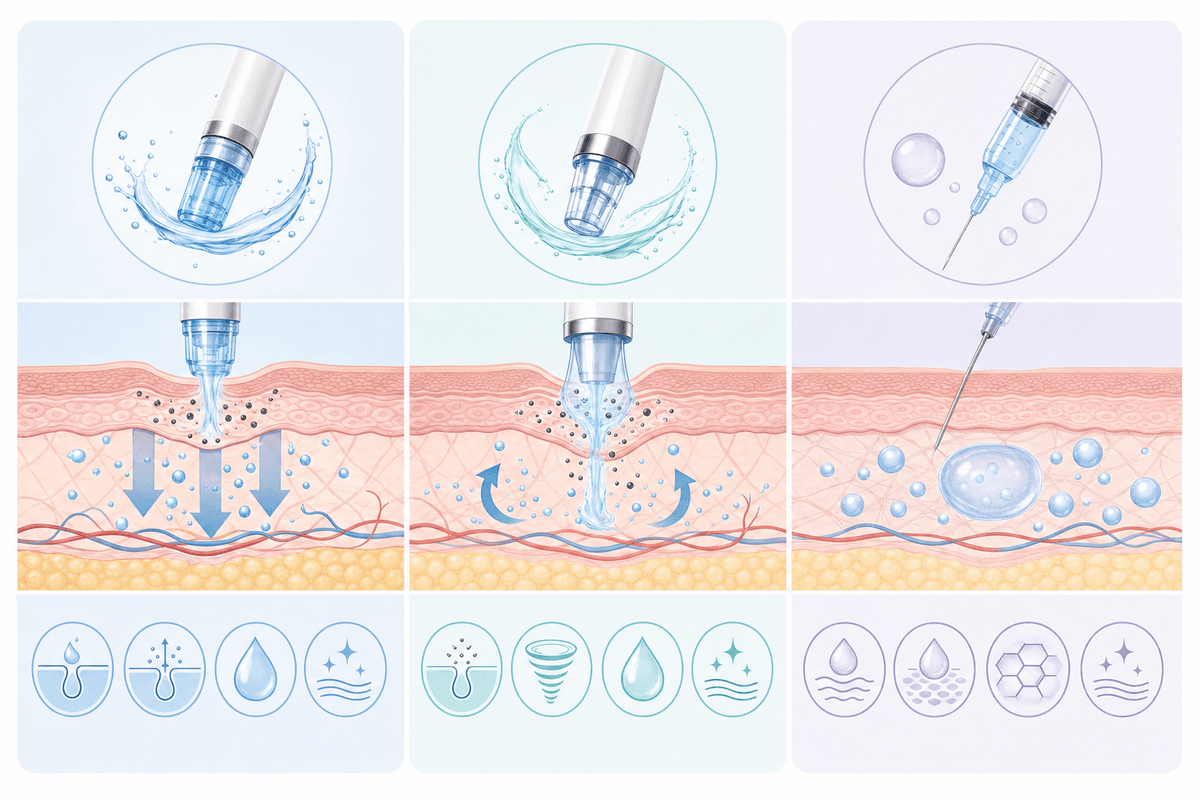
Even though they are all classified as 'hydration treatments,' their depth of action and mechanisms differ completely. Aqua Peel involves exfoliating the epidermis, Water Glow Injection involves injecting hyaluronic acid into the dermal layer, and Hydra Facial combines vacuum suction with peeling. Selection criteria by purpose: Aqua Peel/Hydra Facial target dead skin cells and pores, and Water Glow Injection for dryness and fine lines. When combining treatments, the order and intervals affect the results by 30%. National…
Comparative Analysis of 3 Hydration Treatments
- Treatment Depth: 0.05mm to 1.3mm difference
- Duration: 3 days to 4 weeks
- Recovery Time: 0 to 24 hours
Why the Difference in 'Hydration' Treatments? — They Work Differently from the Start
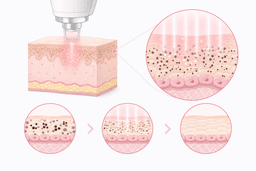
The most common question we hear in clinics is, "Aren't they all hydration treatments?" To put it simply, these three treatments target different layers of the skin structure. Aquapeel works on the stratum corneum (0.05mm), HydraFacial on the epidermis and pores (0.1-0.2mm), and Aqua Shine (Water Glow Injection) on the upper dermis (0.8-1.3mm).
Aquapeel combines micro-exfoliation with the penetration of water-soluble solutions. Its rotating tip removes dead skin cells while spraying a glycolic acid (AHA 5-10%) solution to dissolve impurities deep within the pores. Its operating principle is similar to the 'Hydrafacial MD' series of devices approved by the Ministry of Food and Drug Safety, but it differs in the combination of solutions and suction pressure.
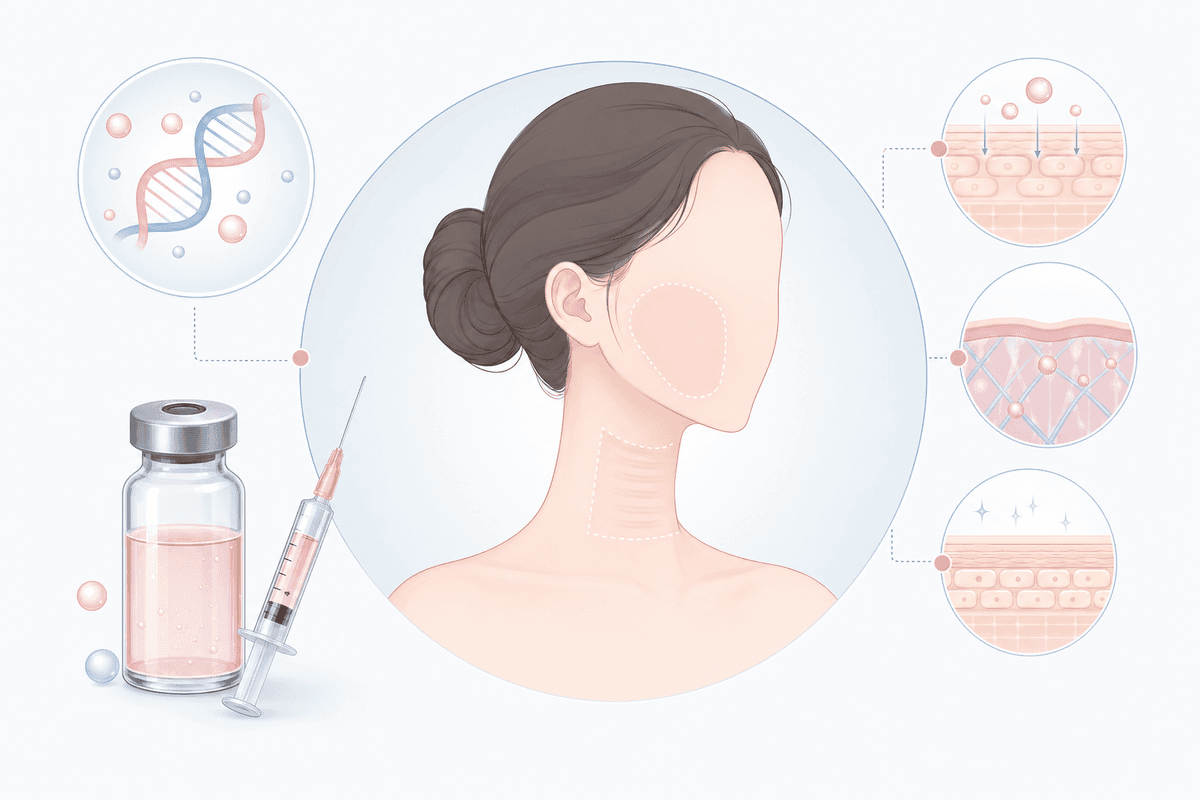
Aqua Shine directly injects 0.5-1cc of hyaluronic acid (HA) into the dermis. This utilizes HA's property of attracting 6 liters of water per gram, plumping the skin from within. In Korea, combination formulations mixed with vitamin C, glutathione, and other ingredients are mainstream.
HydraFacial uses the 'HydraFacial MD' device from Edge Systems in the US, combining vacuum suction with glycolic and salicylic acid peels. Since its FDA approval in 2016, it has been performed in 87 countries worldwide, and was fully introduced in Korea in 2018.
Key Takeaway The core difference between these three treatments is 'depth.' For dead skin cells and pores, targeting the epidermis (Aquapeel/HydraFacial) is most effective, while for dryness and fine lines, targeting the dermis (Aqua Shine) is necessary.
- Aquapeel Depth of Action: Epidermal stratum corneum, 0.05mm
- Aqua Shine Injection Depth: Upper dermis, 0.8-1.3mm
- HydraFacial Suction Pressure: Average 20-30mmHg
Effect Duration: 3 Days to 4 Weeks — Why Such a Difference?
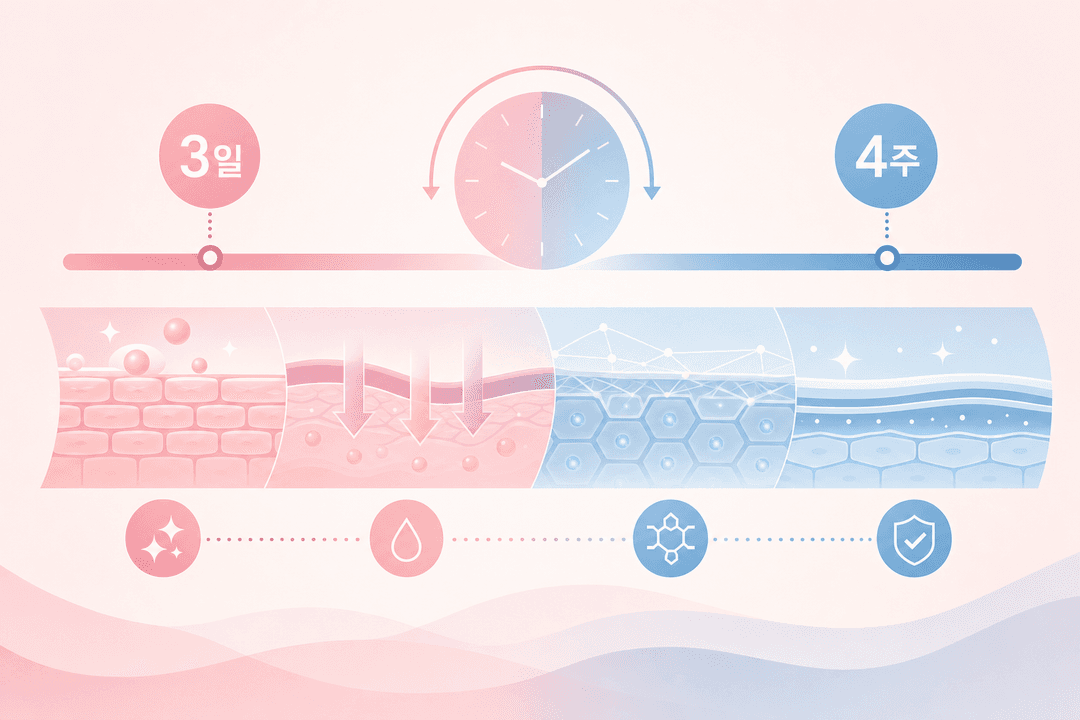
The effects of Aquapeel last an average of 3-7 days. While the exfoliation effect is immediate, it only covers the first quarter of the skin's turnover cycle (28 days) before new dead skin cells form. Pore improvement is noticeable right after the treatment but gradually returns to its original state starting on day 3.
Aqua Shine lasts for 2-4 weeks. The injected hyaluronic acid is gradually broken down by enzymes in the body (hyaluronidase), causing the effect to naturally diminish. This varies greatly by individual; those in their 20s with higher metabolism tend to maintain the effects for 2 weeks, while those in their 40s and older with slower metabolism may see results for up to 4 weeks.
HydraFacial lasts for 5-10 days. While the exfoliation and hydration effects are similar to Aquapeel, the deep pore cleansing achieved through vacuum suction lasts 2-3 days longer. However, for oily skin with high sebum production, the skin may return to its original state within 5 days.
A clinical study (Journal of Cosmetic Dermatology, 2021) reported that repeated Aqua Shine treatments up to 4 times can extend the effects for 6-8 weeks due to HA accumulation. In contrast, repeated Aquapeel and HydraFacial treatments do not extend the duration itself, only leading to cumulative effects (pore reduction, improved skin texture).
Clinical Insight According to the Ministry of Food and Drug Safety's guidelines, Aqua Shine is reported to achieve optimal results with 3-5 repeated sessions at 2-3 week intervals. Satisfaction after a single session is typically below 40%.
| Treatment | Immediate Effect | Duration | Cumulative Effect with Repetition |
|---|---|---|---|
| Aquapeel | Immediate exfoliation | 3-7 days | Cumulative pore reduction (4+ sessions) |
| Aqua Shine | Radiance after 24 hours | 2-4 weeks | HA accumulation (extended to 6-8 weeks) |
| HydraFacial | Clarity immediately post-treatment | 5-10 days | Cumulative skin texture improvement |
Selection Criteria ① Matching Skin Concerns — Where Does My Problem Start?
If your primary concerns are dead skin cells and pores, choose Aquapeel or HydraFacial. Both treatments combine physical exfoliation and chemical peeling to accelerate dead skin cell turnover and directly remove sebum and impurities from pores. The difference lies in the suction method, with HydraFacial using stronger vacuum pressure (20-30mmHg) for deeper extraction.
Dryness, fine lines, and lack of radiance fall under the domain of Aqua Shine. Injecting hyaluronic acid into the dermis replenishes moisture from within, and the expansion around collagen fibers smooths out fine lines. Surface-level treatments like peels cannot address internal dryness.
For complex concerns (e.g., dead skin cells + dryness), consider combination treatments. The Korean Dermatological Association's guidelines (2022) recommend the sequence of 'Aquapeel → Aqua Shine after 2 weeks.' This is because clearing dead skin cells first increases the absorption rate of the injected solution by 15-20%.
Sensitive skin requires careful selection. Aquapeel and HydraFacial involve physical stimulation, which may cause redness lasting 1-2 hours immediately after treatment. Aqua Shine can leave red dots for 12-24 hours due to needle stimulation. All three treatments should be avoided during acute flare-ups of atopic dermatitis or seborrheic dermatitis.
Tip Clinical experience suggests that individuals in their 20s with oily skin often find Aquapeel alone satisfactory. Those in their 30s with combination skin benefit from a HydraFacial + Aqua Shine combination, while those in their 40s with dry skin tend to have the highest satisfaction with Aqua Shine-focused programs.
- Target for Dead Skin Cells & Pores: Aquapeel/HydraFacial
- Target for Dryness & Fine Lines: Aqua Shine
- Combined Treatments Increase Solution Absorption by 15-20% (Peel first, then inject)
Selection Criteria ② Scenario-Based Matching — What About 2 Weeks Before a Wedding?
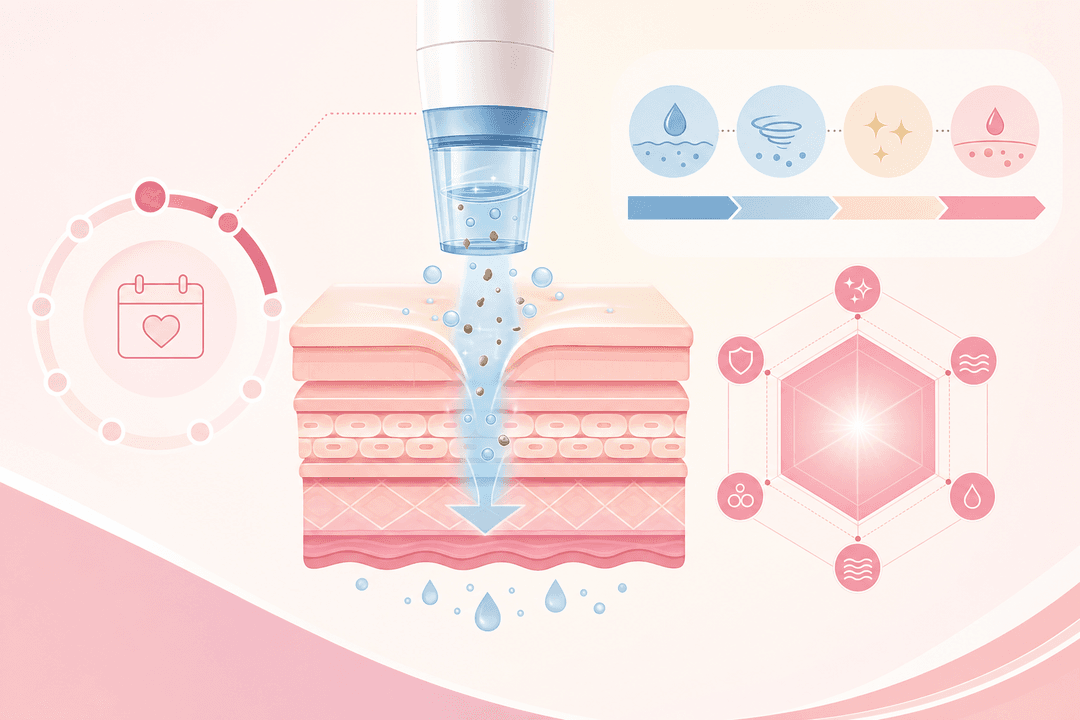
For an important event just one week away, HydraFacial is a safe choice. It has zero downtime, and makeup can be applied immediately after the procedure. Aqua Shine leaves needle marks for 12 hours, and Aquapeel can cause redness for 1-2 hours, potentially affecting your schedule for the day.
If you have 2-3 weeks before a wedding, a two-pronged strategy is effective: start with Aqua Shine for internal radiance, and finish with HydraFacial a week prior to refine the surface by addressing dead skin cells and pores. This is a common combination in Korean wedding skincare programs.
For regular maintenance, Aquapeel once a month is the most economical option. At 70,000-120,000 KRW per session, it's the most affordable, and managing dead skin cells and sebum alone can improve skin texture by over 50%. Cumulative effects like reduced pore size become noticeable after 3 months.
If accompanied by acne scars or hyperpigmentation, consider combining treatments with lasers. Aquapeel and HydraFacial target only the epidermis and do not reach the depth of scars. In such cases, a fractional laser followed by Aquapeel for dead skin cell removal 2 weeks later is recommended.
Caution Avoid receiving a new treatment for the first time just 2-3 days before an important event. Predicting individual reactions (prolonged redness, delayed healing of needle marks) carries significant risk.
Cost and Value — Why a 3x Price Difference for the Same 'Hydration'?
As of 2024 in Gangnam, Seoul, Aquapeel costs 70,000-120,000 KRW, HydraFacial 150,000-250,000 KRW, and Aqua Shine 200,000-350,000 KRW. The price difference stems from equipment costs, consumables, and procedure time. HydraFacial uses genuine tips from the US headquarters (80,000-100,000 KRW per session), and Aqua Shine incurs additional medication costs (HA formulations, 30,000-50,000 KRW).
The non-covered medical fee disclosure system (Health Insurance Review & Assessment Service) shows significant variations between clinics. HydraFacial prices can range from the high 100,000s to 400,000 KRW, a threefold difference attributed to the authenticity of the equipment and additional medication options. Ensure you check for the genuine certification mark (HydraFacial logo).
While package deals offer 20-30% discounts, cheaper isn't always better. If you pay for a 4-session package upfront and your skin reacts poorly, the remaining sessions are wasted. It's safer to pay for the first 1-2 sessions individually to gauge your skin's reaction, and then consider a package if you're satisfied.
In terms of value for money, Aquapeel is excellent. For dead skin cell and pore management, it's sufficient for under 100,000 KRW per month, with guaranteed cumulative effects after 3 months. However, its effectiveness for dryness and fine lines is limited, so you need to consider both your goals and budget.
Tip Compare cost ranges by region on K-Dia. Treatments in Gangnam and Nonhyeon are typically 30% more expensive on average, while those in Sinchon and Hongdae tend to be 15-20% cheaper.
| Treatment | Average Cost | Duration | Cost-Effectiveness per Session |
|---|---|---|---|
| Aquapeel | 70,000-120,000 KRW | 15-20 minutes | |
| HydraFacial | 150,000-250,000 KRW | 30-40 minutes | |
| Aqua Shine | 200,000-350,000 KRW | 20-30 minutes |
The Pitfall of Combination Treatments — Order and Intervals Change Results
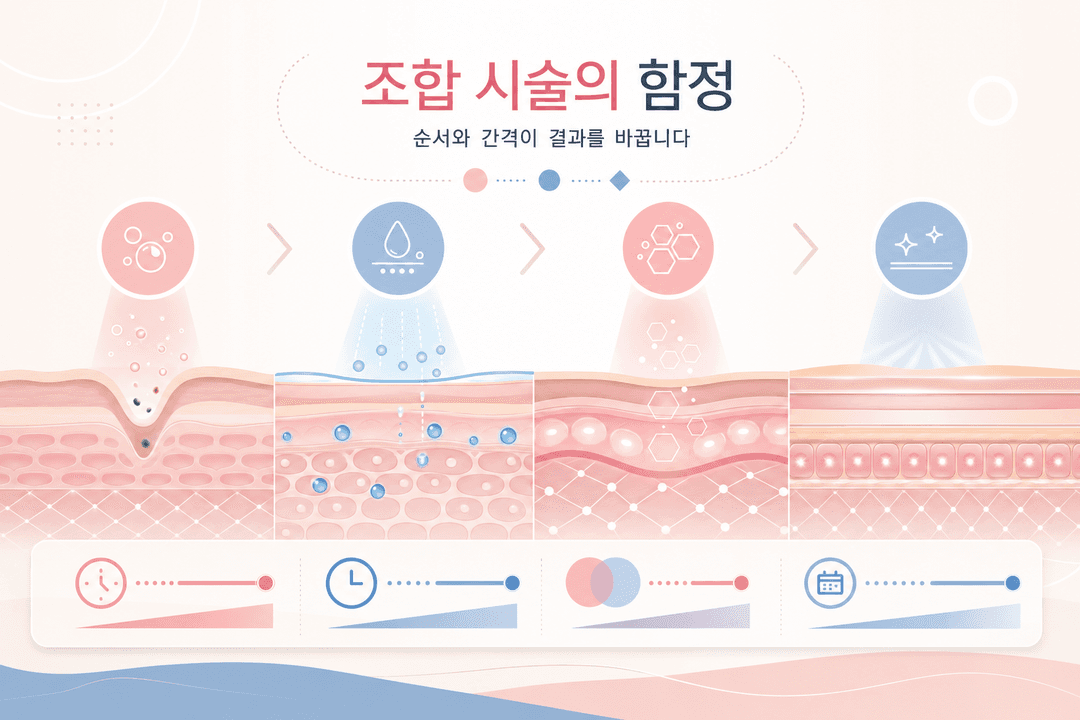
Do not undergo Aquapeel and Aqua Shine on the same day. Puncturing the dermis immediately after exfoliation can double the inflammatory response and cause the injected solution to leak through the open pores. Maintain an interval of at least one week, preferably two.
The correct order is 'Peel → Inject after 2 weeks.' Removing dead skin cells first enhances skin absorption and promotes collagen production as the micro-irritation from the peel heals. The reverse order (inject → peel) is inefficient as the injection's effect is halved by the peeling.
When combining HydraFacial with laser treatments, the order is even more critical. Performing exfoliation immediately after strong lasers (IPL, fractional) increases the risk of post-inflammatory hyperpigmentation by 30%. The recommended sequence is Laser → HydraFacial after 7-10 days, performed after the laser-induced thermal damage has healed.
The Korean Dermatological Association's guidelines (2022) recommend 'no more than 2 exfoliation sessions per month.' Excessive dead skin cell removal can damage the skin barrier, leading to increased sensitivity and post-inflammatory hyperpigmentation. Adhering to proper intervals is more crucial than combining too many treatments.
Caution Some clinics offer 'same-day 3-in-1 packages,' but these are not recommended by dermatologists. They are likely excessive treatments for short-term revenue.
- Peel → Inject sequence increases solution absorption by 15-20%
- Exceeding 2 exfoliation sessions per month increases risk of skin barrier damage by 30%
- Performing exfoliation immediately after laser increases the incidence of post-hyperpigmentation by 30%
3 Hydration Treatments at a Glance
Aquapeel [Focus on Dead Skin Cells & Pores]
- Depth: Epidermis 0.05mm
- Duration: 3-7 days
- Cost: 70,000-120,000 KRW
- Recovery: Redness 1-2 hours
Ideal for monthly maintenance. Effective for oily skin and pore concerns.
HydraFacial [Deep Cleansing of Dead Skin Cells & Pores]
- Depth: Epidermis + Pores 0.1-0.2mm
- Duration: 5-10 days
- Cost: 150,000-250,000 KRW
- Recovery: 0 hours (immediate makeup possible)
Recommended right before important events. Targets deep pores with vacuum suction.
Aqua Shine [Internal Hydration for Dryness & Fine Lines]
- Depth: Dermis 0.8-1.3mm
- Duration: 2-4 weeks
- Cost: 200,000-350,000 KRW
- Recovery: Needle marks 12-24 hours
Cumulative effects with 3+ repetitions. Internal moisture replenishment with HA.
Common Misconceptions
Myth Since all three are 'hydration treatments,' their effects are similar, and only the price differs.
Truth The depth of action varies completely, from the epidermis at 0.05mm to the dermis at 1.3mm. Dead skin cell issues require exfoliation, while internal dryness needs injection. Receiving a treatment that doesn't match your needs can lead to satisfaction rates below 40%. A survey by the Korean Dermatological Association (2022) found that 70% of 'expectation mismatches' were due to incorrect treatment selection.
Myth More expensive is always better. HydraFacial or Aqua Shine is superior to Aquapeel.
Truth The cost difference is solely due to variations in equipment and medication costs, not a measure of superior effectiveness. If your target is only dead skin cells and pores, Aquapeel offers excellent value. Dryness and fine lines can only be addressed by Aqua Shine. Choosing an expensive treatment without a clear purpose can lead to unnecessary expenses.
Before Your Treatment, Be Sure to Check
- Same-day 3-in-1 packages (Aquapeel + Aqua Shine + Laser, etc.) are not recommended by dermatologists due to increased risk of inflammatory reactions.
- A mandatory 7-10 day interval is required between laser treatments and exfoliation procedures. Immediate combination increases the risk of post-hyperpigmentation by 30%.
- All three treatments are contraindicated during acute phases of atopic dermatitis or seborrheic dermatitis, and during active herpes simplex outbreaks.
- Expecting 'permanent results' from a single Aqua Shine session is unrealistic. The standard protocol involves 3-5 repeated sessions at 2-3 week intervals.
- Ensure the authenticity of HydraFacial equipment. Using non-genuine tips carries a risk of infection and skin damage.
Frequently Asked Questions
Which of the three treatments is the least painful?
HydraFacial and Aquapeel have minimal pain (VAS scale 1-2). Aqua Shine involves needle stimulation, scoring 3-4 on the VAS scale, but most find it tolerable with 20 minutes of numbing cream. If you are highly sensitive, exfoliation treatments are more comfortable.
Can I wear makeup on the day of the treatment? Can I apply makeup immediately afterward?
Aquapeel and HydraFacial require cleansing before the procedure, so coming without makeup is more convenient. Only HydraFacial allows immediate makeup application post-treatment. For Aquapeel, it's recommended to wait 1-2 hours, and for Aqua Shine, 12 hours.
I'm in my early 20s, can I get Aqua Shine? Isn't it too early?
It's effective regardless of age if you have severe dryness or dead skin cells. However, in your 20s, with higher sebum production, Aquapeel alone is often sufficient. First, observe your skin's reaction after 1-2 exfoliation sessions, and consider adding Aqua Shine if improvement is insufficient.
Can I receive these treatments while pregnant or breastfeeding?
Aquapeel and HydraFacial can be performed during pregnancy, but the concentration of active ingredients (AHA, BHA) may need to be adjusted. Aqua Shine's suitability depends on the specific formulation, so consultation with a specialist is essential. While all three treatments are generally considered safe during breastfeeding, individual variations exist, so prior consultation is necessary.
If I get all three treatments at once, will the effect be tripled?
Absolutely not. Combining exfoliation and injection on the same day can double the inflammatory response and actually decrease the absorption rate of the solutions. A sequential combination, with injection 2 weeks after exfoliation, is safe. Exfoliation should not exceed twice a month to prevent skin barrier damage.
The cost difference is threefold, does that mean the effect is also threefold?
The cost is proportional to equipment and medication expenses and procedure time, not a multiplier of the effect. If your goal is dead skin cells and pores, the 70,000 KRW Aquapeel is sufficient. Internal dryness can only be addressed by Aqua Shine, which costs around 300,000 KRW. Matching the treatment to your goal, not the price, determines satisfaction.
This content is for informational purposes only and does not substitute medical advice. Always consult with a dermatologist before undergoing any treatment. The possibility and effectiveness of treatments may vary depending on individual skin conditions, medical history, and current medications.