Laser Toning, Pico Toning, IPL: Which is right for my pigmentation?
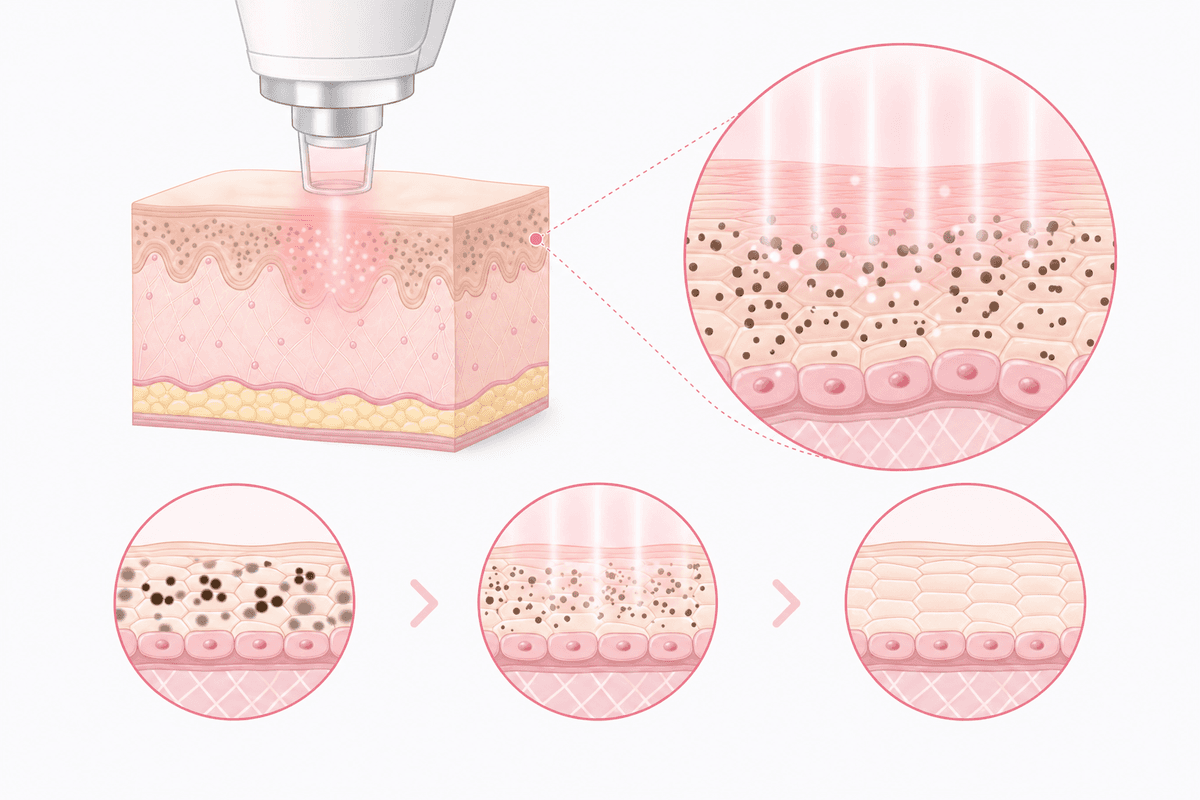
- Laser toning, pico toning, and IPL differ in wavelength and pulse width, resulting in different target pigments, depths, and ranges of thermal damage.
- Long Nd:YAG 1064nm pulses selectively destroy dermal pigments, while short picosecond (10⁻¹² seconds) pulses selectively destroy epidermal scars and tattoo particles.
- IPL uses broadband light rather than a single wavelength to simultaneously improve redness, blood vessels, and superficial pigmentation, but it is limited in its effectiveness against deep melasma.
Information as of June 2026
Comparison of Wavelength, Pulse Width, and Target Differences
- 3 Laser Wavelengths 532nm/755nm/1064nm
- Pulse Width Difference Up to 1000 Times
- Target Depth 0.1mm~3mm
The moment you search for 'vs' ahead of laser
Ahead of a dermatology consultation appointment, 'Laser Toning If you are searching for 'differences in Pico Toning,' you have likely already read the basic information but haven't found the criteria to determine which laser is right for your pigmentation. In this article, I will kindly summarize the operating principles and selection criteria for these three procedures based on wavelength, pulse width, and target depth. While Laser Toning, Pico Toning, and IPL all share the common goal of 'lightening pigmentation with light,' the reactions of the target pigmentation and surrounding tissues differ completely depending on the wavelength range and irradiation time. The 2024 Korean Dermatological Association Guidelines for Pigmentary Disorders also classify these three procedures as 'separate treatments with overlapping indications but different priorities.' If you do not properly understand these differences, you may end up wasting your budget and recovery time, only to have your pigmentation remain the same or even darken, leading to a frustrating situation. Now, let's compare the three procedures in detail at the cellular level. Key Points The FDA approved laser toning (Q-switched Nd:YAG) and pico lasers as devices with different mechanisms. Even though they share the same name 'toning,' the methods of melanin particle destruction are divided into thermal coagulation and photoacoustic effects.
Wavelength difference determines target depth
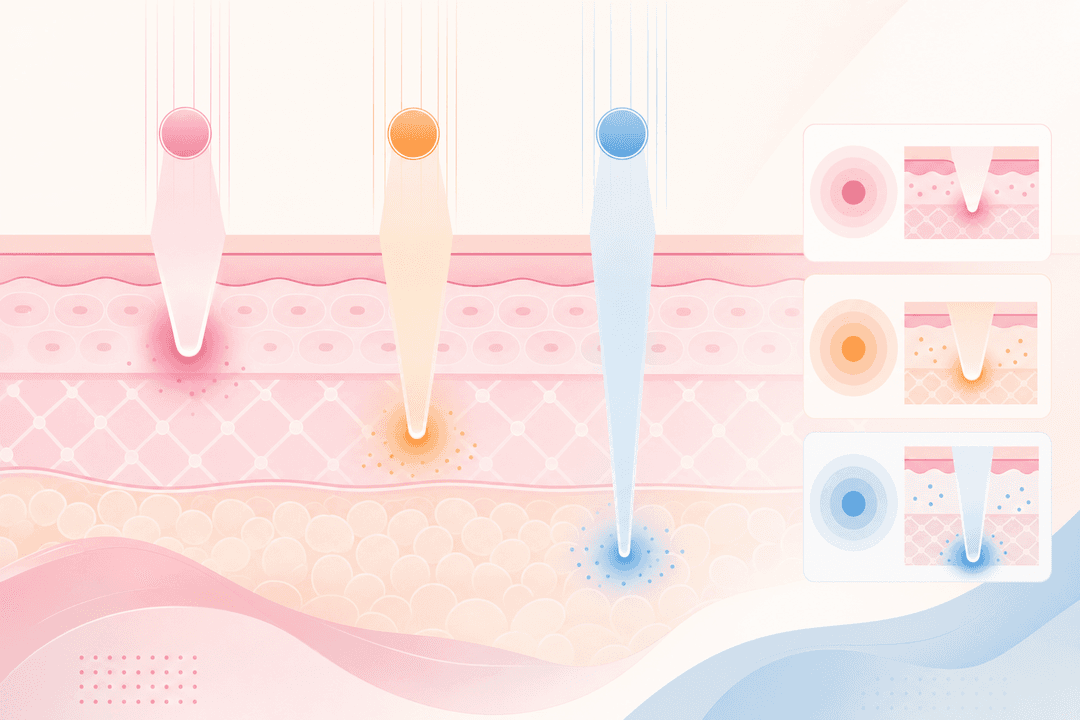
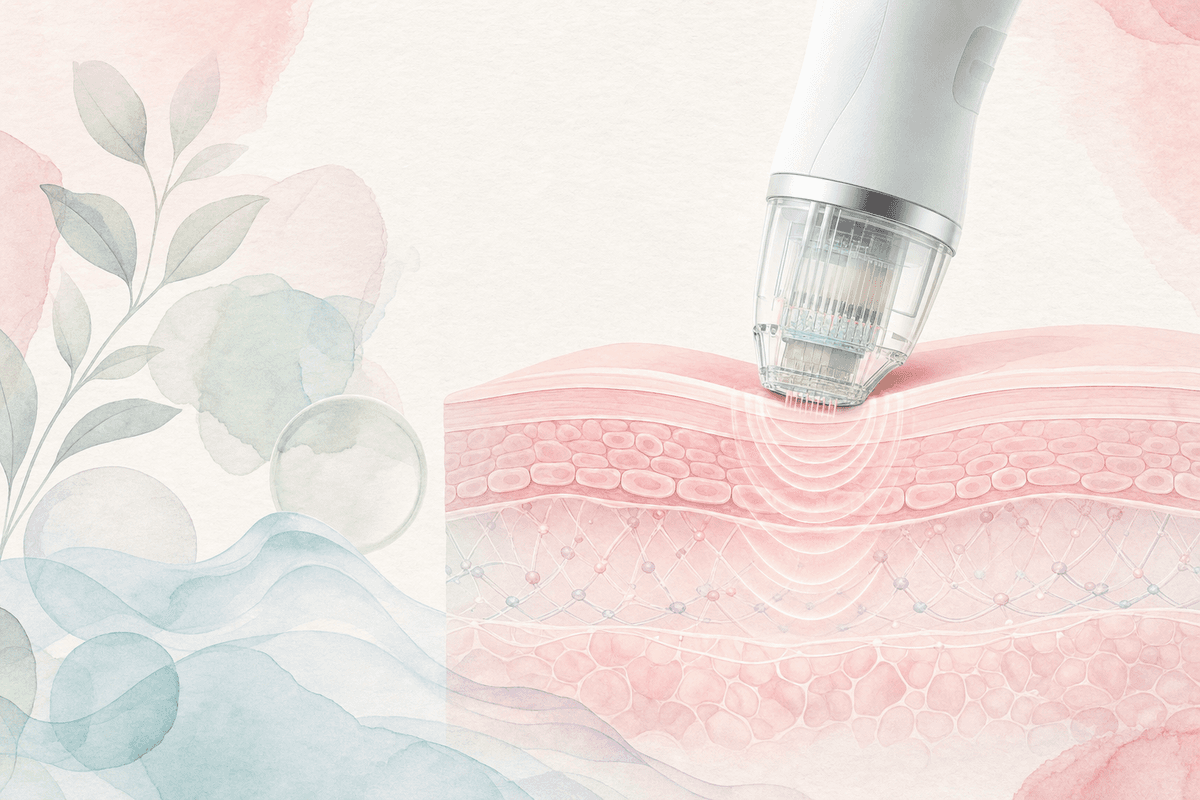
Laser Toning uses Nd:YAG 1064nm It uses wavelengths. These long wavelengths reach a depth of 2–3 mm in the dermis layer of the skin, targeting dermal pigments such as deep melasma and nevus of Ota. Devices like Cutera’s Excel V+ are representative examples. For Pico Toning, you can select 532 nm (KTP), 755 nm (Alexandrite), or 1064 nm depending on the device. Cynosure’s PicoSure uses 755 nm for epidermal scars and freckles, and 1064 nm for tattoo removal. The shorter the wavelength, the more energy is concentrated on the epidermis, and the weaker the penetration into deep pigments. IPL (Intense Pulsed Light) irradiates broadband light ranging from 500 to 1200 nm simultaneously, rather than a single wavelength. It filters out specific wavelengths to simultaneously target blood vessels (absorbing red light) and melanin (absorbing brown light), but because the energy is dispersed, its effectiveness on deep melasma may be limited. Nd:YAG 1064nm has a low hemoglobin absorption rate, so it can selectively destroy only dermal pigments without damaging blood vessels. 755nm has a melanin absorption rate about 3 times higher than 1064nm, so it tends to act strongly on epidermal pigments. The wavelength bandwidth of IPL is 100 times wider than that of lasers, so simultaneous action on multi-layered lesions can be expected. Pulse width distinguishes thermal damage and destruction method. The Q-switched pulse of laser toning is Clinical In a 2018 paper in the Journal of Cosmetic Dermatology, pico lasers required an average of 30% fewer treatment sessions to achieve the same pigment removal rate compared to Q-switched lasers, and the incidence of PIH was less than half.
| Procedure | Pulse Width | Destruction Method | PIH Risk |
|---|---|---|---|
| Laser Toning | 5~10ns | Heat Coagulation | Moderate |
| Pico Toning | 350~750ps | Photoacoustic | Low |
| IPL | 2~20ms | Thermal Diffusion | Low~Moderate |
Even with the same melasma, the top priority differs by type
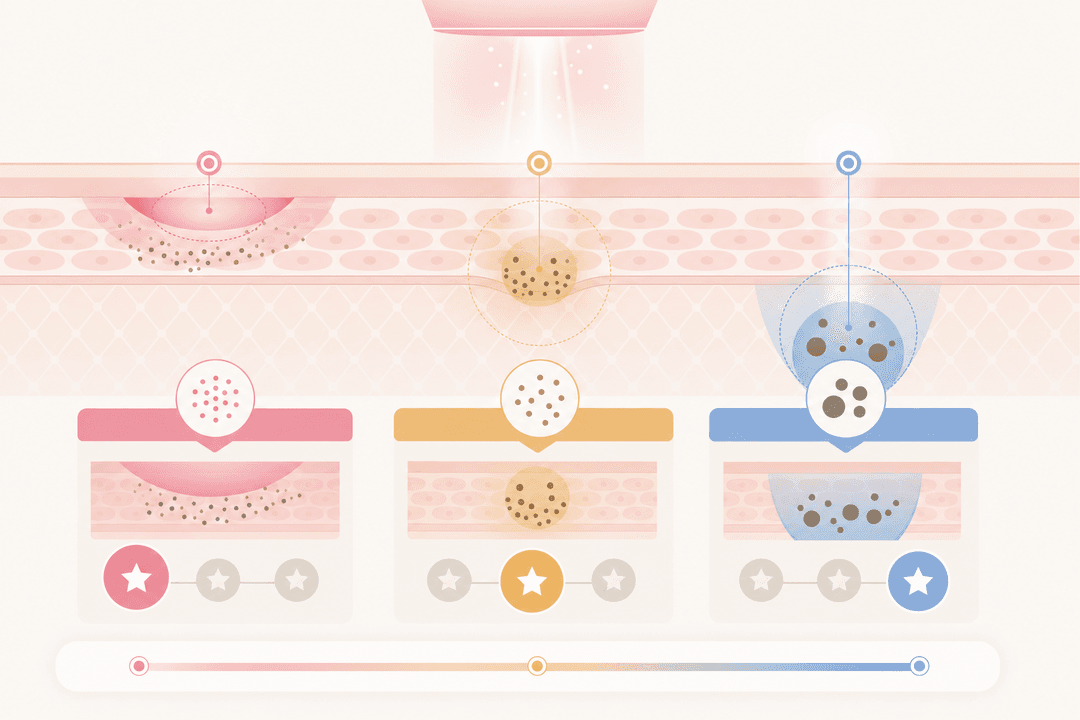
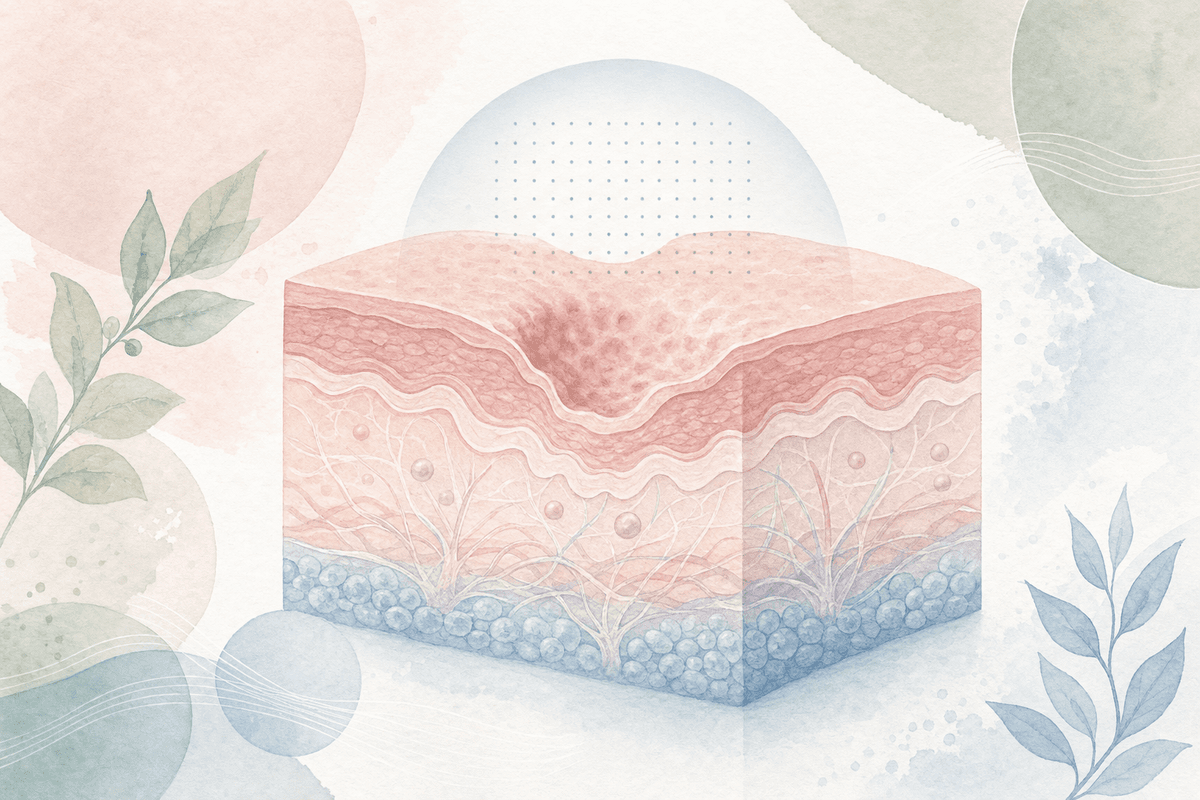
For epidermal melasma(stratum corneum to basal layer), Pico Toning 532nm or 755nm is the top priority. Because it selectively breaks down only epidermal melanin with short pulses without delivering heat to the dermis, the risk of PIH is relatively low. Laser toning is also an option, but if the energy setting is too high, melasma may darken. For dermal melasma or mixed types, 1064nm laser toning is the priority. This is because a wavelength that reaches 2 to 3 mm into the dermis is required. Although 1064nm can also be used with picosecond lasers, the Korean Ministry of Food and Drug Safety has granted more indications for dermal pigmentation to Q-switched lasers. IPL is suitable for complex lesions involving shallow fine lines, freckles, and vascular dilation (rosacea) simultaneously. While multiple wavelengths target different areas with a single irradiation, its effectiveness may be weaker compared to lasers when used for melasma treatment alone. The Korean Dermatological Association guidelines also recommend IPL as an 'adjunctive treatment'. Epidermal melasma is distributed within a skin thickness of 0.1 to 0.3 mm, and the 755 nm wavelength shows the highest absorption rate. Dermal melasma has pigmentation at a depth of 1 to 3 mm, and only 1064 nm can effectively reach it. Mixed type accounts for about 60% of all melasma, and low-power multiple laser toning therapy is the conventional method. Recovery Period and Management Difficulty For laser toning, there is redness for about 30 minutes to 1 hour immediately after the procedure, and washing your face and applying makeup are possible on the same day. However, using SPF50+ sunscreen is essential for 2 weeks after the procedure, and you must strengthen hydration with a regenerating cream to prevent PIH. Typically, 5 to 10 sessions are required at 2-week intervals. Pico Toning causes minimal heat damage, so redness disappears within 10 to 20 minutes, and showering and applying makeup are possible on the same day. However, micro-petechiae may occur immediately after the procedure, so it is advisable to avoid it 2 to 3 days before important events. The average is 3 to 6 sessions at 3 to 4-week intervals. With IPL, flushing lasts for 2 to 4 hours, and if micro-scabs form on the treated area, they will naturally fall off within 3 to 5 days. Forcibly removing the scabs is strictly prohibited as it can cause hyperpigmentation. It is recommended to have 3 to 5 sessions at intervals of 4 to 6 weeks, and it is known that the procedure is safer during the winter. Caution: Saunas and steam rooms are strictly prohibited for 48 hours immediately after laser toning. If heat stimulation is added, melanocytes are reactivated, which may cause melasma to become darker than before the procedure.
Calculation of Cost and Actual Total Amount
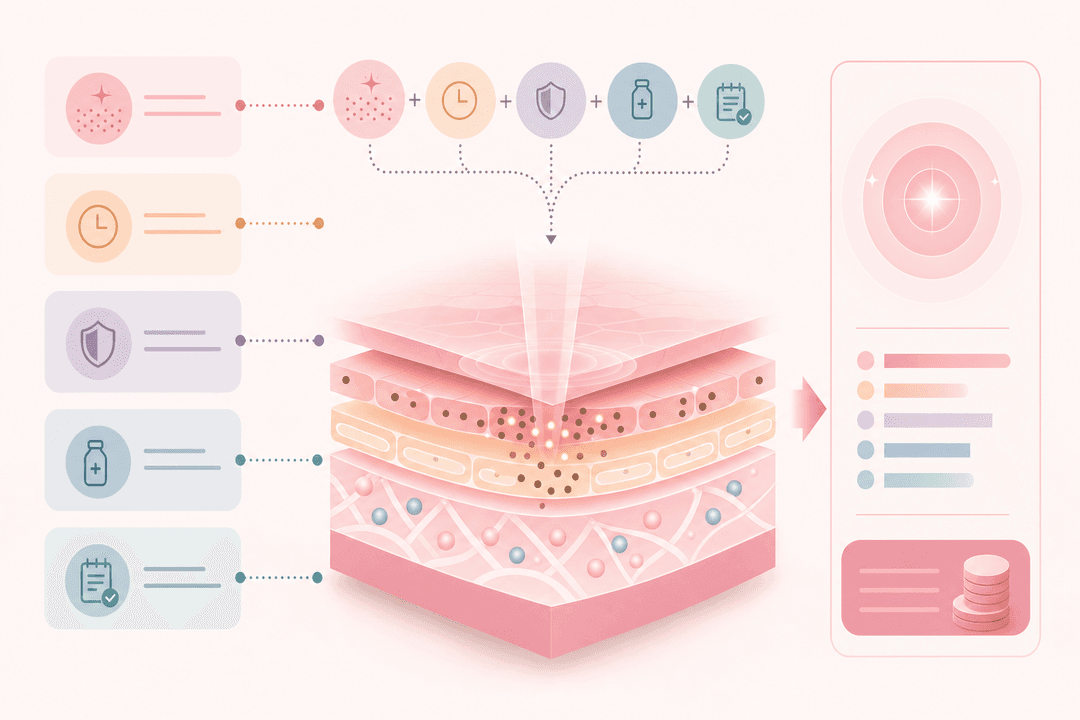
Laser Toning is 1 session
| Procedure | Cost per session | Average number of sessions | Estimated total cost |
|---|---|---|---|
| Laser Toning | 50,000~150,000 won | 5~10 sessions | 250,000~1,500,000 won |
| Pico Toning | 150,000~300,000 won | 3~6 sessions | 450,000~1,800,000 Won |
| IPL | 100,000~200,000 Won | 3~5 Sessions | 300,000~1,000,000 Won |
Costs may vary depending on the area, scope, and medical institution.
- Laser toning has a low cost per session, but the total amount may increase with the cumulative number of sessions.
- Pico toning has a high initial cost, but it has the advantage of saving time and transportation costs because it requires fewer sessions.
- IPL shows strengths in complex lesions, but there is a possibility that the number of sessions may increase when used for single pigment treatment.
Comparison of Key Specs of Three Procedures
Laser Toning [Specializing in Dermal Pigmentation]
- Wavelength: 1064nm (Nd:YAG)
- Pulse Width: 5~10ns
- Target: Dermal Melasma · Nevus of Ota
- PIH Risk: Moderate
- Recovery: Wash face possible on the same day, sun protection required for 2 weeks
Deep Pigmentation + Budget Savings First
Pico Toning [Epidermal Pigmentation + Tattoo]
- Wavelength: Select 532nm/755nm/1064nm
- Pulse Width: 350~750ps
- Target: Epidermal lesions · Tattoo ink
- PIH Risk: Low
- Recovery: Redness disappears within 10 minutes, micro-petechiae possible
Time saving + PIH minimization priority
IPL [Simultaneous improvement of complex lesions]
- Wavelength: 500~1200nm broadband
- Pulse Width: 2~20ms
- Target: Flushing · Vascular · Superficial pigmentation
- PIH Risk: Low to Moderate
- Recovery: Micro-scabs form in 3–5 days, winter treatment recommended
Wishing for simultaneous treatment of pigmentation + rosacea
Selection that fits your pigmentation, budget, and schedule
If your main concern is melasma deep in the dermis and you want to split your budget
Laser Toning 1064nm Low-Power Multi-Session Therapy
The wavelength reaching 2–3mm into the dermis is only 1064nm, and since the cost per session is low, it is possible to split the treatment into 5–10 sessions.
If you have many epidermal scars and freckles and want to reduce the number of treatment sessions
Pico Toning 755nm
It selectively destroys only epidermal pigments with short pulses, and since it is completed in an average of 3 to 6 sessions, you can save time and transportation costs.
If you have both melasma and rosacea (capillary dilation) and want to improve them in a single session
IPL Broadband Treatment
Multiple wavelengths are irradiated simultaneously, allowing for the improvement of complex pigment and vascular lesions in a single session It is available.
If you want tattoo removal or deep pigmentation plus fast recovery
Pico Laser 1064nm High-Power Mode
It physically destroys tattoo ink using photoacoustic effects, and since there is minimal thermal damage, you can return to your daily life on the same day.
Common Misconceptions
Misconception Pico Laser is unconditionally better than Laser Toning
Truth For dermal melasma, reaching the 1064nm wavelength is important; a short pulse width does not automatically make it superior. The Korean Ministry of Food and Drug Safety has also assigned more indications for dermal pigmentation to Q-switched lasers. Please remember that the priority varies depending on the depth and type of pigmentation. Misconception: IPL is weaker than lasers and therefore ineffective. Truth: Although IPL has a lower energy density than single-wavelength lasers, it can target blood vessels and pigments simultaneously due to its broadband characteristics. For complex lesions accompanied by flushing and vasodilation, IPL can actually be the first choice.
Absolutely Prohibited Actions Before and After Procedure
- !!Saunas and steam rooms within 48 hours after laser toning — Heat stimulation can reactivate melanin!!
- !!Picking off micro-scabs with your hands after IPL — Can cause hyperpigmentation!!
- !!Using high-concentration retinol or AHA cosmetics immediately after Pico toning — Can accelerate skin barrier damage!!
- Do not use SPF50+ sunscreen for 2 weeks after the procedure — The incidence of PIH may increase twofold.
- IPL procedures during the summer — High melanin activity may reduce effectiveness or increase the risk of side effects.
Frequently Asked Questions Question
Can I alternate between Laser Toning and Pico Toning?
It is possible, but not recommended. Because the two procedures use different methods of pigment destruction (thermal coagulation vs. photoacoustics), mixing them on the same area makes it difficult to predict skin reactions and can increase the risk of PIH. It is safer to evaluate the effects after performing one procedure 3 to 5 times.
I heard that IPL is not a laser; is its effect weak?
IPL is not a laser (single-wavelength focused light), but rather broadband light (500~1200nm). Although the energy density is low, multiple wavelengths act simultaneously, making it strong for complex lesions. However, as a standalone treatment for deep melasma, the effect may be weaker compared to lasers.
Is the Pico Laser treatment completed in a single session?
No. On average, the Pico Laser also requires 3 to 6 repetitions. However, compared to Q-switched lasers (5 to 10 sessions), the number of sessions is about 30% less, and recovery is known to be faster because the risk of PIH is relatively low.
Which of the three procedures is the least painful?
IPL is the mildest. With long pulses (2 to 20ms), the heat spreads slowly, so it feels only like a stinging sensation. Pico Toning provides instantaneous stimulation with short pulses, and with Laser Toning, depending on the output, there may be a prickling sensation. All of them are tolerable even without anesthetic cream.
Can pigmentation become darker as a side effect after the procedure?
PIH (Post-inflammatory Hyperpigmentation) is the most common side effect. With laser toning, it occurs in about 10–15% of cases during high-power treatments or UV exposure, whereas with Pico toning, it is relatively low at less than 5%. With IPL, the risk may increase during summer treatments due to higher melanin activity. It is essential to use SPF50+ sunscreen and a regenerating cream for 2 weeks after the procedure.
Laser toning 5 sessions vs. Pico toning 3 sessions, are the results similar?
It depends on the type of pigmentation. Pico toning 3 sessions may be more effective for epidermal melasma, while laser toning 5 to 10 sessions may be necessary for dermal melasma. Matching wavelength, pulse width, and pigment depth is much more important than simply comparing the number of sessions.
Can I alternate between Laser Toning and Pico Toning?
It is possible, but not recommended. Because the two procedures use different methods of pigment destruction (thermal coagulation vs. photoacoustics), mixing them on the same area makes it difficult to predict skin reactions and can increase the risk of PIH. It is safer to evaluate the effects after performing one procedure 3 to 5 times.
I heard that IPL is not a laser; is its effect weak?
IPL is not a laser (single-wavelength focused light), but rather broadband light (500~1200nm). Although the energy density is low, multiple wavelengths act simultaneously, making it strong for complex lesions. However, as a standalone treatment for deep melasma, the effect may be weaker compared to lasers. Is the Pico Laser treatment completed in a single session? No. On average, the Pico Laser also requires 3 to 6 repetitions. However, compared to Q-switched lasers (5 to 10 sessions), the number of sessions is about 30% less, and recovery is known to be faster because the risk of PIH is relatively low. Which of the three procedures is the least painful? IPL is the mildest. With long pulses (2 to 20ms), the heat spreads slowly, so it feels only like a stinging sensation. Pico Toning provides instantaneous stimulation with short pulses, and with Laser Toning, depending on the output, there may be a prickling sensation. All of them are tolerable even without anesthetic cream. Can pigmentation become darker as a side effect after the procedure? PIH (Post-inflammatory Hyperpigmentation) is the most common side effect. With laser toning, it occurs in about 10–15% of cases during high-power treatments or UV exposure, whereas with Pico toning, it is relatively low at less than 5%. With IPL, the risk may increase during summer treatments due to higher melanin activity. It is essential to use SPF50+ sunscreen and a regenerating cream for 2 weeks after the procedure. Laser toning 5 sessions vs. Pico toning 3 sessions, are the results similar? It depends on the type of pigmentation. Pico toning 3 sessions may be more effective for epidermal melasma, while laser toning 5 to 10 sessions may be necessary for dermal melasma. Matching wavelength, pulse width, and pigment depth is much more important than simply comparing the number of sessions.
This content is for informational purposes only and does not replace medical advice. Always consult a specialist before the procedure.