PDRN, Exosomes, and PRP: All for Regeneration? 3 Key Differences
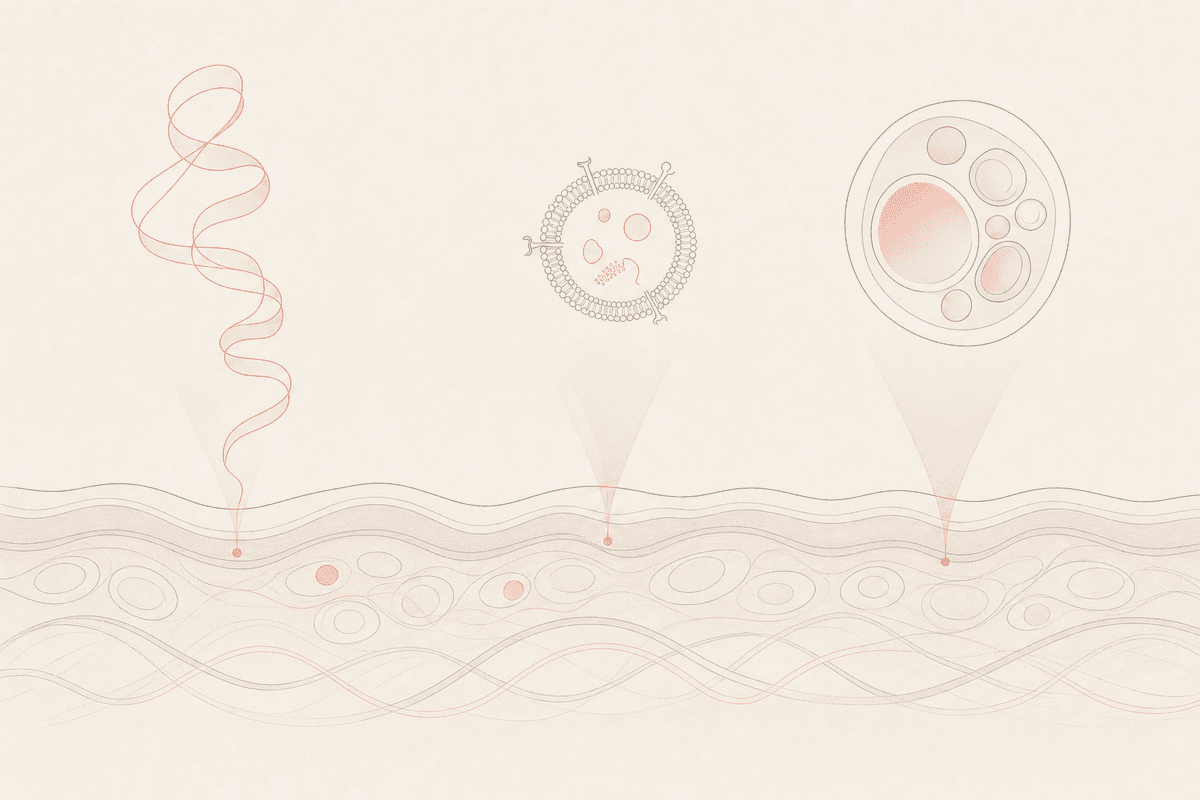
- The reason why the same regenerative injection can have a 2x price difference lies in molecular size.
- PDRN, exosomes, and PRP differ in their depth of action and target cells.
- Selection criteria vary depending on skin concerns.
Information as of July 2026
Molecular Size Dictates Efficacy
- 1/50,000 difference in molecular weight
- Penetration depth: Dermis to basal layer
- Duration: 3-6 months dispersion
The Injection That Didn't Work: Re-evaluate the Type First
If you gave up on regenerative injections because you saw no skin improvement, you need to check the type first. While PDRN, exosomes, and PRP all claim to be 'regenerative,' their molecular sizes, penetration depths, and target cells are completely different. According to a 2023 report by the Korean Dermatological Association, 42% of patients misunderstood these three treatments as being the same.
This article summarizes the mechanisms of action, duration of effects, and selection criteria for each treatment based on clinical data. The reason for the 100,000-fold difference in molecular weight directly translates to the results you'll see on your skin.
- PDRN molecular weight: 50-1,500 Da, penetrates to mid-dermis
- Exosome diameter: 30-150 nm, direct intracellular delivery
- PRP: Platelet-rich plasma, localized release of growth factors
Different Molecular Sizes: PDRN vs. Exosomes vs. PRP
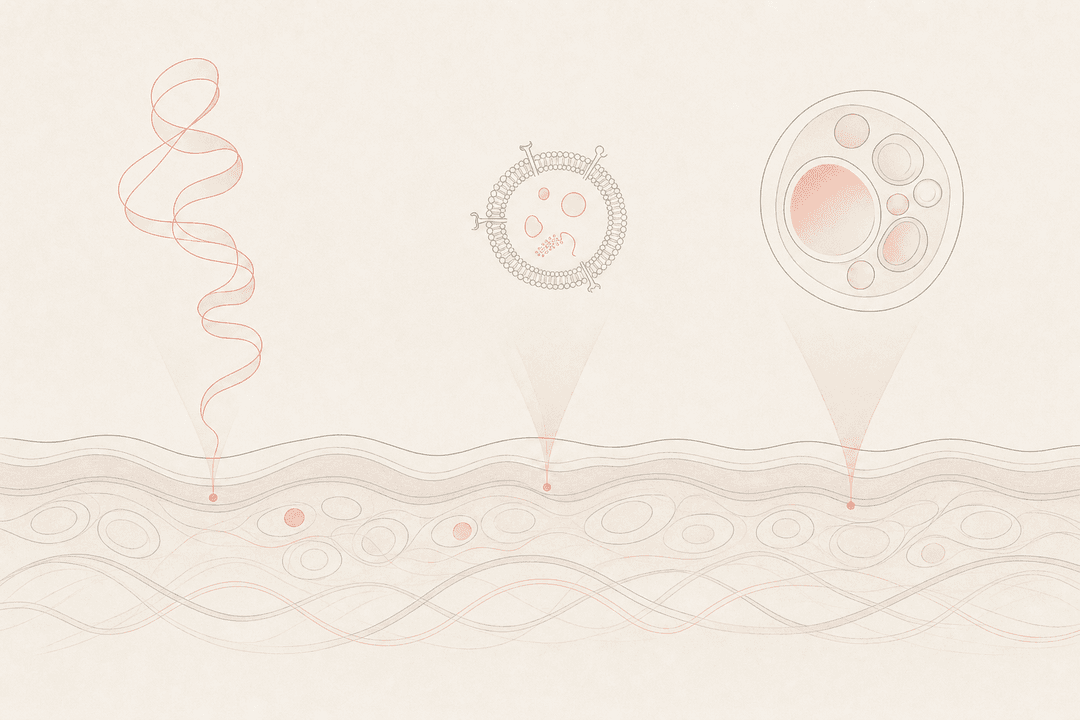
PDRN (Polydeoxyribonucleotide) is a DNA fragment extracted from salmon milt. Its molecular weight ranges from 50-1,500 Da (Daltons), penetrating to the mid-dermis to stimulate fibroblasts. Products approved by the Ministry of Food and Drug Safety (MFDS) include Rejuran and PINKcell.
Exosomes are nano-sized vesicles secreted by stem cells, with a diameter of 30-150 nm. While larger than PDRN, they are characterized by their ability to directly cross cell membranes and deliver growth factors into cells. In 2021, the FDA recognized them only for cosmetic use, and there are no KFDA-approved products in Korea yet.
PRP (Platelet-Rich Plasma) is a concentrated platelet solution obtained by centrifuging the patient's own blood. Platelet concentration is 3-5 times higher than in normal blood, and growth factors like PDGF and VEGF are locally released at the injection site. While the risk of foreign body reactions is low due to using autologous blood, there is a significant concentration variability depending on the extraction process.
Clinical Study A 2022 study by Seoul National University Hospital researchers reported that PDRN accelerated fibroblast proliferation by 2.3 times within 72 hours. Exosomes increased the expression of the collagen synthesis gene (COL1A1) by 1.8 times in the same period, but clinical efficacy data is still limited.
| Treatment | Molecular/Particle Size | Penetration Depth | Primary Target |
|---|---|---|---|
| PDRN | 50-1,500 Da | Mid-to-upper dermis | Fibroblasts |
| Exosomes | 30-150 nm | Intracellular | Cytoplasm/Nucleus |
| PRP | Platelet-rich plasma | Localized at injection site | Wound healing pathways |
- PDRN molecular weight is about 1/50,000 that of exosomes
- Only exosomes can cross the cell membrane for direct signaling
- PRP concentration can vary by ±40% depending on centrifuge RPM
True or False Quiz
Among PDRN, exosomes, and PRP, only PDRN has products approved by the MFDS.
Check the Answer
True PDRN (like Rejuran) is an MFDS-approved medical device. PRP is a procedure using autologous blood and is not subject to separate approval. Exosomes currently have no FDA or MFDS approved products.
When Do Results Appear and How Long Do They Last?
With PDRN, skin elasticity improves starting 2-3 weeks after injection, as fibroblasts need time to synthesize new collagen. The effects typically last for 4-6 months, with cumulative effects reported after 3-4 repeat treatments.
Exosomes facilitate rapid cell signaling. Anti-inflammatory effects appear immediately after injection, and many patients notice improvements in skin tone within 1-2 weeks. However, data on duration is still limited. Some studies suggest around 3 months, but there's significant variability depending on the product and concentration.
PRP's growth factors are released immediately by platelets. Wound healing accelerates within 1 week of injection, and pore reduction is noticeable after 2-3 weeks. The duration is 3-4 months, and since it uses autologous blood, there are fewer restrictions on repeat treatments.
Tip A 2020 clinical report indicates that combining PRP with laser treatments immediately after can reduce recovery time by an average of 2.4 days. PDRN administered two weeks before laser treatment can help buffer thermal damage.
- PDRN: Onset 2-3 weeks, duration 4-6 months
- Exosomes: Tone improvement in 1-2 weeks, duration data limited
- PRP: Wound healing in 1 week, duration 3-4 months
Selection Criteria by Skin Concern: What the Data Says
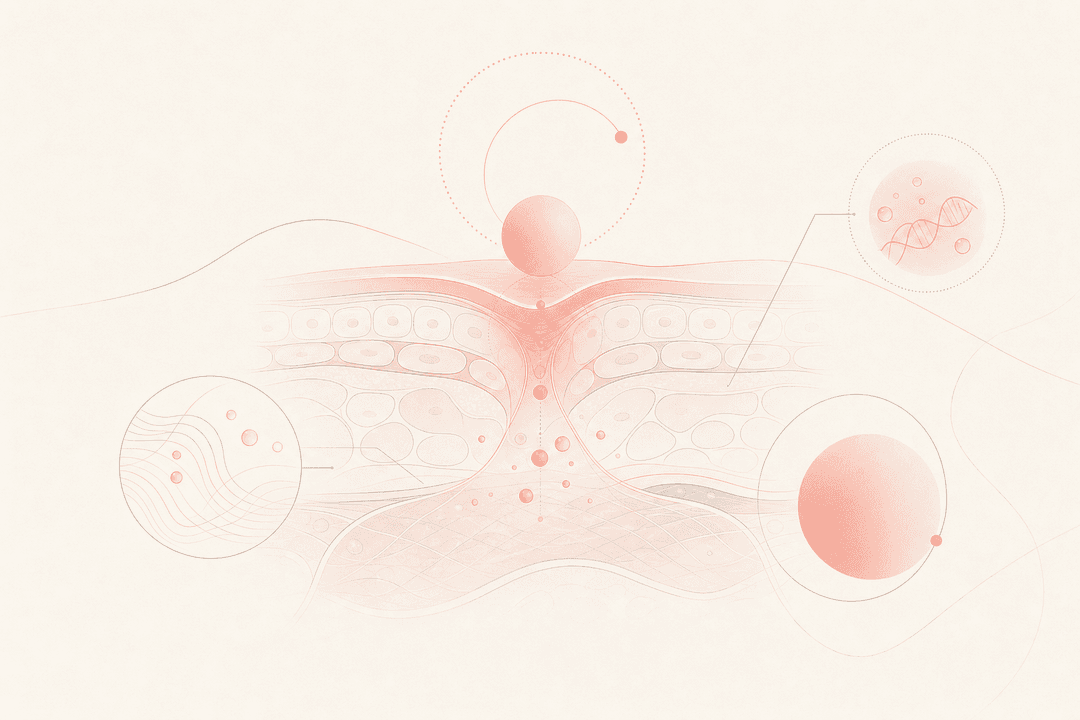
If you are concerned about pores and scars, PRP is the first choice. A 2019 study published in the Korean Journal of Dermatology found that pore area decreased by an average of 28% after 3 PRP treatments. It can also be safely used for inflammatory acne scars due to its autologous nature.
For loss of elasticity and fine wrinkles, PDRN is suitable. It promotes long-term collagen synthesis, and a 2022 multi-center Korean study showed a 19% improvement in elasticity (measured by cutometer) in women in their 40s after 12 weeks. Low-molecular-weight products like Rejuran I are used for fine wrinkles around the eyes.
Exosomes are fast-acting for pigmentation and uneven skin tone. Stem cell-derived growth factors help with melanin excretion, and some clinical studies show an average 4.2% increase in skin brightness (L* value) within 2 weeks. However, since there are no FDA-approved products, they are distributed in Korea only as 'research grade' or 'cosmetic ingredient' grade.
| Concern | 1st Choice Treatment | Mechanism of Action | Onset of Effect |
|---|---|---|---|
| Pores/Scars | PRP | Localized growth factor release | 1-2 weeks |
| Elasticity/Fine Wrinkles | PDRN | Collagen synthesis promotion | 2-3 weeks |
| Tone/Pigmentation | Exosomes | Melanin excretion signaling | 1-2 weeks |
Individual results may vary. Consultation with a specialist is recommended before treatment.
- PRP: 28% reduction in pore area (based on 3 treatments)
- PDRN: 19% improvement in elasticity (after 12 weeks)
- Exosomes: 4.2% increase in skin brightness (within 2 weeks)
Cost and Treatment Intervals: Why Are Exosomes Twice as Expensive?
The cost for one PDRN treatment ranges from an average of 150,000 to 250,000 KRW. Since it's an MFDS-approved product, there's less price variation, and 3 repeat treatments are recommended at 3-4 week intervals.
PRP treatments cost around 200,000 to 300,000 KRW per session, including the process of collecting and centrifuging autologous blood. The double-spin method, which increases platelet concentration, adds about 50,000 KRW. The treatment interval is 4 weeks.
Exosome treatments are the most expensive, ranging from 300,000 to 500,000 KRW per session. This reflects the costs associated with stem cell culture and purification. However, as there are no FDA or MFDS approved products, they are often administered using personally imported or research-grade products, making it difficult to verify concentration and purity.
Caution Some exosome products label stem cell culture medium as 'exosomes.' The actual exosome content can vary by more than 100 times between products. It is essential to check the manufacturer and purity certification before treatment.
- PDRN: 150,000-250,000 KRW, 3-4 week intervals
- PRP: 200,000-300,000 KRW, 4 week intervals
- Exosomes: 300,000-500,000 KRW, no approved products
Key Takeaway: Molecular Size Determines Your Choice
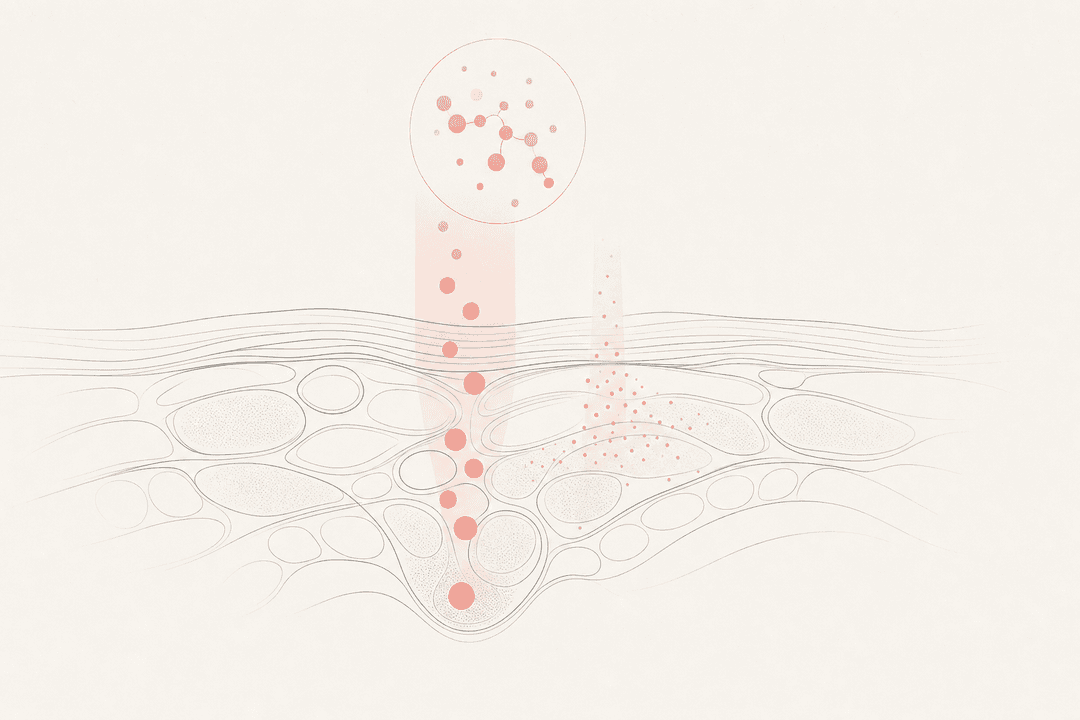
While all three treatments aim for 'regeneration,' they differ in molecular size and mechanism of action. PDRN promotes collagen synthesis, exosomes deliver direct cell signals, and PRP releases growth factors locally. Your choice should consider your skin concerns, budget, and treatment intervals.
Also, check for MFDS approval. PDRN is an approved medical device, and PRP is a safe autologous blood procedure. Exosomes are still in the research phase.
- For pores, choose PRP; for elasticity, PDRN; for tone, exosomes are prioritized.
- Exosomes have no approved products – manufacturer verification is essential.
- For repeat treatments, PDRN and PRP show cumulative effects, while exosome data is limited.
Comparison of Key Specs for the Three Treatments
PDRN [Elasticity/Fine Wrinkles]
- Molecular weight: 50-1,500 Da
- Onset: 2-3 weeks
- Duration: 4-6 months
- Cost: 150,000-250,000 KRW
MFDS approved, promotes collagen synthesis
Exosomes [Tone/Pigmentation]
- Diameter: 30-150 nm
- Onset: 1-2 weeks
- Duration: Around 3 months
- Cost: 300,000-500,000 KRW
No FDA/MFDS approved products, significant purity variation
PRP [Pores/Scars]
- Platelet-rich plasma
- Onset: 1 week
- Duration: 3-4 months
- Cost: 200,000-300,000 KRW
Autologous blood, ±40% concentration variability
Selection Guide by Situation
Early 30s, primary concerns are pores and sebum
PRP, 3 sessions
Growth factors reduce pore area by 28%, and autologous blood minimizes inflammation risk.
40s, fine lines around eyes + overall loss of elasticity
PDRN (Rejuran), 4 sessions
Collagen synthesis is sustained for 12 weeks, and eye-specific products (Rejuran I) can be used concurrently.
Pigmentation + accelerated recovery after laser treatment
Exosomes, 1-2 sessions
Rapid inflammation reduction and noticeable tone improvement within 2 weeks; manufacturer verification is crucial.
Budget under 500,000 KRW, results within 3 months
PDRN, 3 sessions OR PRP, 2 sessions
More affordable than exosomes and safety is verified with MFDS approval.
Common Misconceptions
Misconception Exosomes are the latest technology and therefore the most effective.
Truth While exosomes offer rapid cell signaling, data on their long-term effects is less robust than PDRN. The lack of FDA/MFDS approved products also leads to significant variations in purity and concentration.
Misconception PRP is less effective because it uses autologous blood.
Truth PRP has a platelet concentration 3-5 times higher than normal blood and has demonstrated clear clinical effects, such as a 28% reduction in pore area. Its effectiveness is sufficient when the concentration is properly managed.
Pre-Treatment Checklist
- !!For exosome products, always check the manufacturer and purity certificate!! — Some products label culture medium as exosomes.
- PRP concentration can vary by ±40% depending on centrifuge RPM and time — Inquire about equipment specifications.
- Avoid alcohol and saunas for 2-3 days after PDRN treatment — This can prolong inflammatory responses.
- All three treatments are not recommended during pregnancy or breastfeeding.
- If you are taking immunosuppressants, consult with a specialist before PRP or exosome treatments.
Frequently Asked Questions
Which of the three treatments is the most painful?
Pain varies depending on injection depth and needle gauge. PDRN penetrates to the mid-dermis, causing a stinging sensation. PRP involves a larger volume, which can feel like pressure. Exosomes are generally injected more superficially, with many reports of less pain.
Which treatment has the longest-lasting effects?
PDRN lasts the longest at 4-6 months, followed by PRP at 3-4 months, and exosomes around 3 months. However, cumulative effects are reported for PDRN and PRP after 3-4 repeat treatments, while long-term data for exosomes is still limited.
Can I receive all three treatments simultaneously?
Yes, it is possible. Some clinics administer PDRN and PRP on the same day to different areas, or combine exosomes with post-laser treatments. However, simultaneous injection into the same area is not recommended due to the risk of inflammation.
How can I check the PRP concentration?
Before treatment, ask your medical provider about the centrifuge RPM (revolutions per minute) and time. Typically, 1,500 RPM for 10 minutes is standard, and double-spin further increases concentration. Some clinics provide platelet count results.
What are the side effects?
For all three treatments, swelling, bruising, and redness at the injection site may occur for 2-3 days. Allergic reactions are rare with PRP due to its autologous nature, but there is a risk of infection if the centrifuge process is contaminated. Immune responses have been reported with exosomes if product purity is low.
Should people in their 20s get these treatments?
In their early to mid-20s, collagen synthesis is active, so the effects of regenerative injections may not be significant. However, if you have severe acne scars or enlarged pores, PRP can be considered. For pigmentation concerns, exosomes can be selectively considered.
Lumi's Note
Regenerative injections work by altering pathways within the skin, even with slight molecular differences. The key isn't which is 'better,' but which is 'right for my concerns.' If you have questions about a specific treatment, feel free to visit again!
This content is for informational purposes only and does not substitute for medical advice. Always consult with a specialist before undergoing any procedure.