3 Methods of Lower Blepharoplasty: Which One Is Right for My Under-Eyes?
K-Dia Editor4,53722 min read
▸Lower blepharoplasty is divided into three methods: transconjunctival fat repositioning, incisional fat excision, and fat grafting. Selection criteria include skin elasticity, age, and the location of the under-eye bags.
▸Transconjunctival repositioning is suitable for over 90% of patients in their 20s and 30s, but incisional fat grafting is necessary for patients in their 40s or older with skin sagging.
▸Repositioning offers a fast recovery period of 5 to 7 days, but combining it with fat grafting is effective if the protrusion is severe; however, making the wrong choice can result in a twofold difference in the rate of revision surgery.
Information as of July 2026
Criteria for Selecting Fat Repositioning, Excision, or Fat Grafting
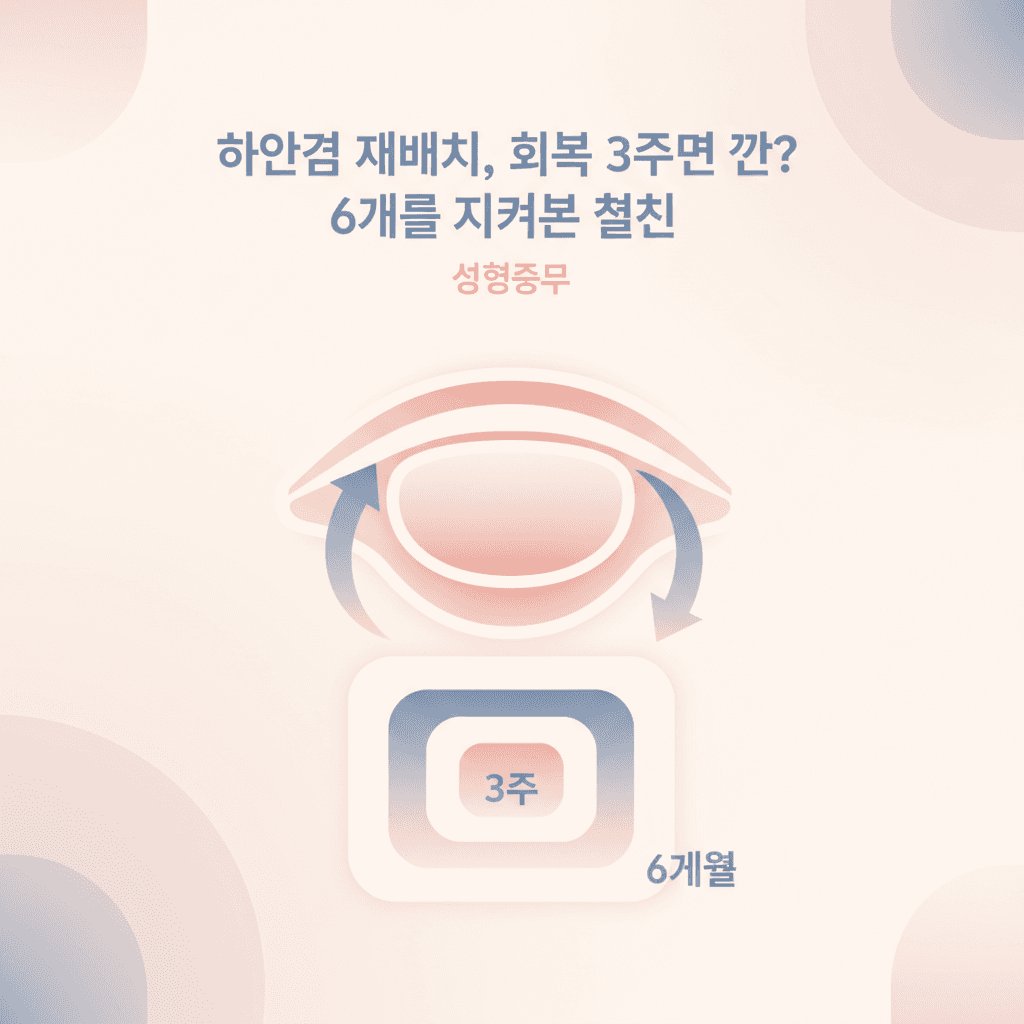
Transconjunctival Recovery 5-7 Days
Skin Incision Recovery 10-14 Days
Reoperation Rate: Repositioning 8% vs. Excision 15%
“They say you have to remove all the under-eye fat” If you thought, "You must remove under-eye fat to achieve a clean look," you are only half right. In fact, lower blepharoplasty is broadly categorized into three types depending on how the fat is handled. It is not just about removing it; it can also involve relocating or filling it.
According to statistics from the Korean Society of Plastic and Reconstructive Surgeons in 2023, 92% of patients in their 20s and 30s chose fat redistribution. For those 40 and older, the trend reversed, with 68% opting for combined skin incision. This means the optimal solution varies completely depending on age and skin condition.
In this article, I will cover the three methods—transconjunctival fat redistribution, skin incision fat excision, and fat grafting—from selection criteria to recovery differences and costs. Find the option that fits your under-eyes.
3 Methods of Lower Blepharoplasty, What Are the Differences?
Plastic Surgery Info — 3 Methods of Lower Blepharoplasty, What Are the Differences?AI Generated Illustration
Lower blepharoplasty is divided according to the approach and the method of fat treatment. The transconjunctival approach (incision inside the conjunctiva) leaves no visible external scar, whereas the skin incision approach allows for the removal of excess skin by making an incision just below the eyelashes.
Transconjunctival fat repositioning is a method of moving and fixing protruding fat to the hollow area under the eye (tear trough) without removing it. It utilizes fat as a resource. On the other hand, liposuction literally cuts out protruding fat, while fat grafting fills in deficient areas with autologous fat.
The 2021 FDA-approved clinical guidelines for lower eyelid blepharoplasty recommend transconjunctival repositioning as the primary choice for patients under 40 years of age who maintain skin elasticity. Recovery is fast and the recurrence rate is low.
Key Points
The transconjunctival incision leaves no scar because it involves incising the inner mucous membrane of the eye, while the skin incision allows for the removal of sagging skin by making an incision below the eyelash line. Because the approach is different, the recovery period differs by a factor of two.
Method
Approach
Fat Removal
Recovery Period
Suitable Candidates
Transconjunctival Repositioning
Inner Conjunctiva
Repositioning
5-7 days
20s-30s, no skin sagging
Skin Incision Excision
Below the Eyelash Line
Excision + Skin Removal
10-14 days
40s and older, skin sagging
Fat Grafting
Various
Autologous Fat Injection
7-10 days
Lack of volume, hollowness
OX Quiz
Transconjunctival fat redistribution is suitable for everyone regardless of age
Check Answer
X 40 years old If there are abnormalities or skin sagging, repositioning alone is insufficient. Excess skin may remain, making it appear even more saggy, so a skin incision must be performed in conjunction. Satisfaction is highest among the group under 35 who maintain skin elasticity.
Transconjunctival Fat Repositioning: Who Is It Right for?
Transconjunctival repositioning is most effective for people in their 20s and 30s who retain skin elasticity and have only thick under-eye fat. According to 2022 data from Seoul National University Hospital, the satisfaction rate for repositioning among patients under 35 was 93.2%, which was significantly higher than that of excision (78.4%).
The surgery involves making a 5-7mm incision in the conjunctiva (inner mucous membrane of the eye) to dissect the orbital fat, and then fixing it to the periosteum above the tear trough. Absorbable sutures are used, so suture removal is not necessary. The average surgery time is 40-60 minutes.
You can return to your daily life in 5-7 days. Bruising usually subsides in 3-4 days, and swelling in 7-10 days. Since the scar is not visible on the outside, it is much easier to coordinate work and appointment schedules.
Seoul National University Hospital 2022 Study: 93.2% Satisfaction with Relocation for Patients Under 35
Average Surgery Time 40-60 Minutes, Recovery Period 5-7 Days
Recurrence Rate 8% (Lower compared to 15% for Excision)
When Should You Choose Skin Incision Liposuction?
If your skin is sagging or wrinkles are deep after your 40s, the transconjunctiva alone is insufficient. Even after transferring fat, excess skin may remain, potentially making the area appear saggy. In such cases, a skin incision is necessary.
An incision is made 1-2mm just below the eyelash line to remove the fat, and 2-3mm of excess skin is trimmed before suturing. The scar becomes almost invisible after 3-6 months as it is covered by the eyelashes. A 2023 report by the Korean Dermatological Association showed a scar satisfaction rate of 88.7% after 12 months.
Recovery typically takes about 10-14 days. Sutures are removed on days 5-7, and swelling subsides to normal levels within two weeks. Although it is longer than the transconjunctival method, the long-term effect is better because it also resolves skin sagging.
Clinical
The reoperation rate for skin incision in patients aged 40 and older is 7.2%, which is lower than that of the transconjunctival method (11.8%). Since excess skin is removed from the beginning, there is less re-sagging (Korean Society of Plastic and Reconstructive Surgeons 2021 Cohort).
Fat Grafting: When Should It Be Considered?
Consider fat grafting if the area under the eyes is sunken rather than bulging, or if the mid-face appears hollow even after repositioning. It is a method that involves purifying and injecting autologous fat harvested mainly from the abdomen or thighs.
The survival rate of the transplanted fat averages around 60-70%. Since the final volume is determined after 3 months, 10-20% more is injected initially. The 2022 guidelines of the Korean Society of Aesthetic Plastic Surgery limit the graft volume per session to 1-2cc.
Recovery takes 7-10 days, and bruising at the harvest site lasts for about a week. When combined with rearrangement, the three-dimensional effect comes alive even more, but the cost increases by about 1.5 times compared to rearrangement alone.
Remember this, 3 selection criteria
AI-generated illustration
First, Age and skin elasticity are the most important factors. If you are under 35 and the skin immediately returns to its original state when pressed with a finger, transconjunctival repositioning is suitable. If you are over 40 or have loose skin, consider a skin incision.
Second, check the location of the under-eye bags. If the under-eye bags are located below the tear trough, the fat may push the bags during repositioning, resulting in an unnatural appearance. In this case, excision or grafting is preferable. Third, consider the recovery conditions. If you need to return within a week, transconjunctival repositioning is possible; if you have two weeks, skin incision is also an option.
Under 35 + Maintaining skin elasticity → Transconjunctival repositioning is the top priority
Under-eye bags are below the tear trough → Careful consideration of repositioning
Key Comparison of Lower Blepharoplasty Methods
Transconjunctival Fat Repositioning [1st Priority for 20-30s]
Access: 5-7mm inside the conjunctiva
Recovery: 5-7 days
Scar: None
Recurrence Rate: 8%
Cost: 1.5-2.5 million KRW
Maintaining skin elasticity is essential, verifying the location of the under-eye bags
Skin Incision Liposuction [40s+ Sagging Solution]
Access: Below the lash line
Recovery: 10-14 days
Scar: Hidden by eyelashes
Recurrence Rate: 7.2%
Cost: 2-3.5 million KRW
Excess skin removal, long-term effects Excellent
Combined with Fat Grafting [Volume Enhancement]
Survival Rate: 60-70%
Recovery: 7-10 days
Grafting Amount: 1-2cc
Duration: Semi-permanent
Cost: +1-1.5 million KRW
Improvement of hollowness/sinking, adding dimensionality when combined with repositioning
Which method is right for my under-eyes?
If you are in your 20s or 30s and only the fat is bulging while the skin is firm
Transconjunctival Fat Repositioning
Fast recovery with no scarring, and satisfaction is highest at 93.2% for those under 35
If you are in your 40s or older and have both under-eye wrinkles and sagging
Skin Incision Fat Excision
Removes excess skin to prevent re-sagging, offering excellent long-term results
If the under-eyes are sunken and If you lack mid-face volume
Fat grafting alone or combined with repositioning
Restores volume with a 60-70% survival rate; significant synergy when combined with repositioning
If returning to daily life within one week is essential
Prioritize transconjunctival repositioning
Fastest recovery at 5-7 days, and no visible scars
Common misconceptions
Misconceptions Under-eye fat is always You have to remove it to get a clean look.
Truth: For those in their 20s and 30s, repositioning has a low recurrence rate (8%) and looks natural. Utilizing fat as a resource is advantageous in the long run.
Myth: Anyone can do the transconjunctival repositioning because it leaves no scars.
Truth: If there is skin sagging, repositioning alone is insufficient. For those aged 40 and older, the rate of concomitant skin incision is 68%.
Precautions Before and After Lower Blepharoplasty
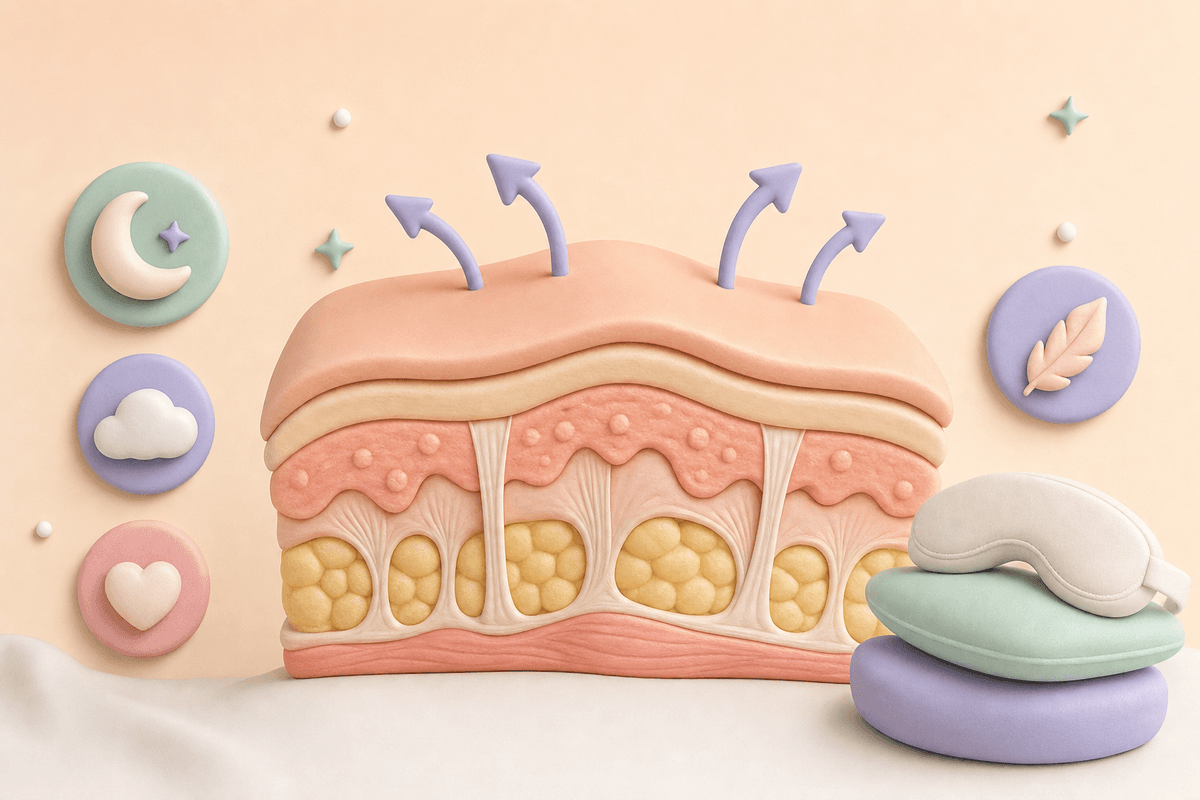
AI Generated Illustration
!!Starting 2 weeks before surgery, take aspirin, Omega 3, Vitamin E, etc. Discontinuation of anticoagulants is mandatory!!
!!Do not wear contact lenses on the day of surgery; only glasses are allowed!!
Apply cold compresses for 48 hours after surgery, switch to warm compresses from the 3rd day to promote bruise recovery
Avoid bending your head down, lifting heavy objects, or strenuous exercise for 1 week
!!Absolutely do not rub your eyes or rub against strong friction when washing your face (sutures may separate)!!
In the case of a skin incision, minimize contact with water until stitches are removed on days 5-7
Frequently Asked Questions
Is there a difference in recurrence rates between repositioning and excision?
The recurrence rate for transconjunctival repositioning is 8%, and for excision it is 15%. Repositioning fixes the fat to the periosteum, minimizing re-protrusion, whereas with excision, the remaining fat may shift back over time.
When can I wear makeup and contact lenses after surgery?
You can do so after 5-7 days for transconjunctival surgery and after suture removal (day 7) for skin incisions. Contact lenses are recommended after 2 weeks, and eye makeup after 1 week.
Can the under-eye bags disappear?
If the fat shifts during repositioning, the under-eye bags may appear temporarily dull. Most cases recover after 3 months as the fat stabilizes, but if the under-eye bags are located below the tear trough, please consult with a doctor thoroughly beforehand.
What are the side effects?
Common side effects include bruising (80%), swelling (95%), and temporary tear pooling (15%). Rarely, asymmetry (3%) and hollowing due to overcorrection (2%) occur, which can be corrected with revision surgery. Infection and bleeding occur in less than 1% of cases.
What is the cost?
Transconjunctival repositioning costs 1.5 to 2.5 million won, skin incision excision costs 2 to 3.5 million won, and combining with fat grafting costs an additional 1 to 1.5 million won. Costs may vary depending on the area, scope, and medical institution.
How long do the effects last?
Repositioning is reported to last 10-15 years, while excision is 7-10 years. However, since new sagging due to aging cannot be prevented, UV protection and moisturizing care are necessary for long-term maintenance.
A word from Lumi
There isn't just one answer to your under-eye concerns. If you choose a method that suits your skin elasticity and lifestyle, recovery will be faster and satisfaction will be higher. If you've been hesitating while looking in the mirror, take a step forward based on the criteria summarized today. Come visit again if you have any questions about the procedure!
This content is for informational purposes only and does not replace medical advice. Be sure to consult a specialist before the procedure.
Find the right hospital for you at K-Dia