Fat Grafting vs. Fillers: We Compare Them Based on 5 Criteria
K-Dia EditorLast updated · 46 minutes ago4,68036 min read
▸While the engrafted fat grafts provide semi-permanent results, the survival rate after a single session is only 60-70%, making secondary procedures possible; fillers offer immediate effects with no recovery, but require re-injection every 6 to 18 months.
▸For those in their 20s and under, fillers are recommended to start and test the results, whereas for those in their 30s or older, or when a large volume is required, fat grafting is more advantageous in terms of long-term cost.
▸Fat grafting requires scarring at the donor site (abdomen or thighs) and a recovery period of 2 to 3 weeks, whereas fillers allow for an immediate return to daily life, but managing the risk of vascular embolism is critical.
Information as of June 2026
Finding the Right Volume Treatment for You
Average fat engraftment rate 60-70%
Filler duration 6-18 months
Cost difference up to 4 times
Volume Procedures: Why Do People Only Consider One of the Two?
When you open the consultation room door, nine out of ten times this question comes up first. "Isn't fat grafting better than continuing to get fillers?" Conversely, “I’m worried about the recovery from fat grafting; are there limitations to fillers?” Both fat grafting and fillers add volume to the face, but they differ completely in materials, duration, cost, and recovery process. In this article, I will compare the two procedures based on five criteria and summarize the key points for finding the right choice for you.
First, let me give you the conclusion. Fat grafting is a method of harvesting fat from one's own body and transplanting it to the face; while the engrafted portion is semi-permanent, the engraftment rate for a single treatment averages 60-70%, so a second procedure is possible. On the other hand, fillers involve injecting hyaluronic acid (HA) or calcium (CaHA) components; while the effects are immediate, they are absorbed after 6-18 months, requiring re-injection.
These two are not simply a matter of ‘temporary vs. permanent.’ The answer varies depending on your age, injection site, lifestyle, and budget structure. Let's break it down one by one.
The survival rate of fat grafts varies significantly, ranging from 50% to 80%, depending on the site, age, and the skill of the practitioner.
Only FDA-approved fillers are authorized for domestic distribution, and as of 2024, major brands include Restylane, Juvederm, and Radiesse.
The average cost per fat graft is 2 to 4 million won, while fillers cost 500,000 to 1.5 million won per site, but this can be reversed when comparing cumulative costs over two years.
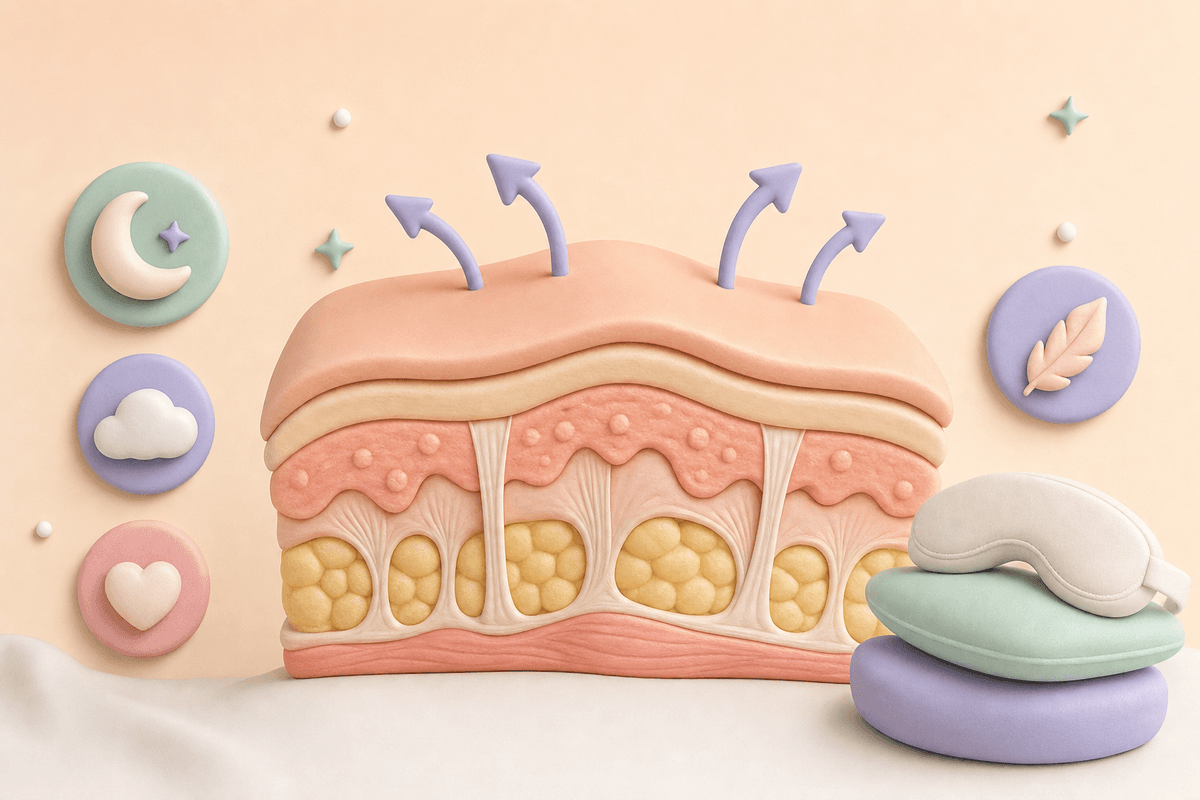
Materials and Mechanisms of Action: How They Differ
AI-Generated Illustration
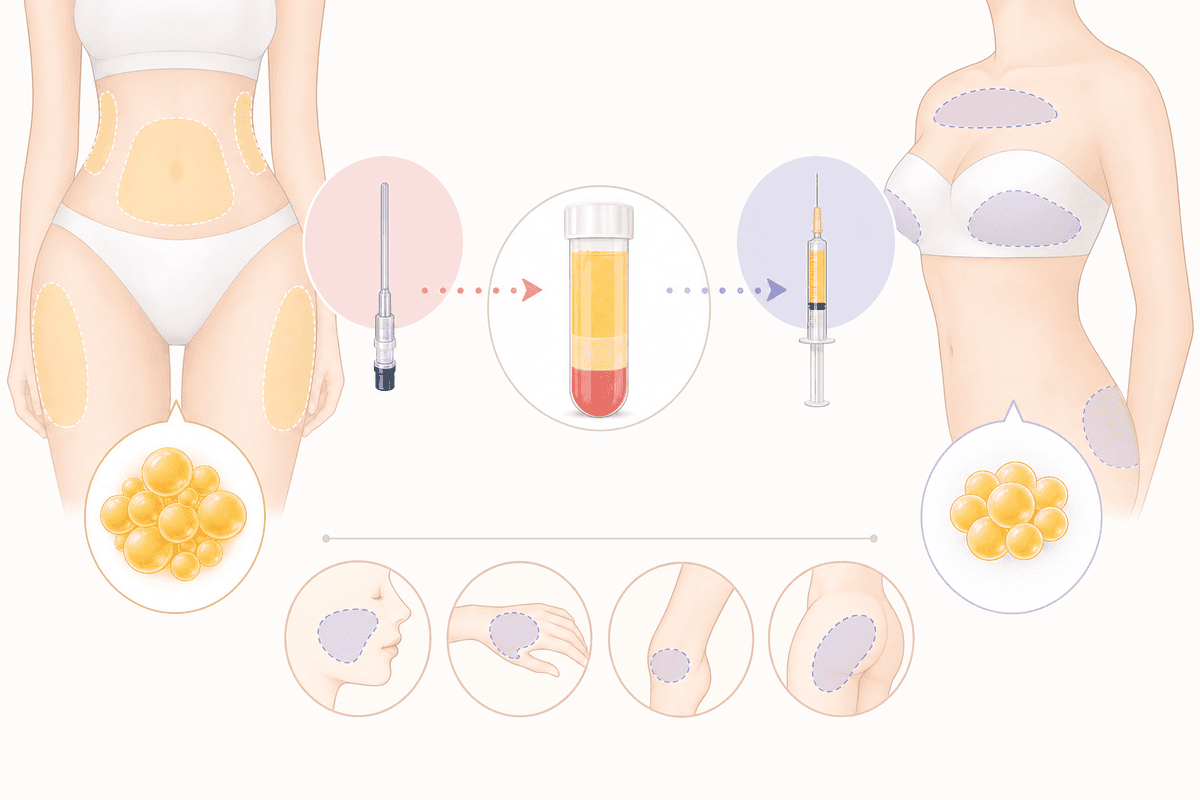
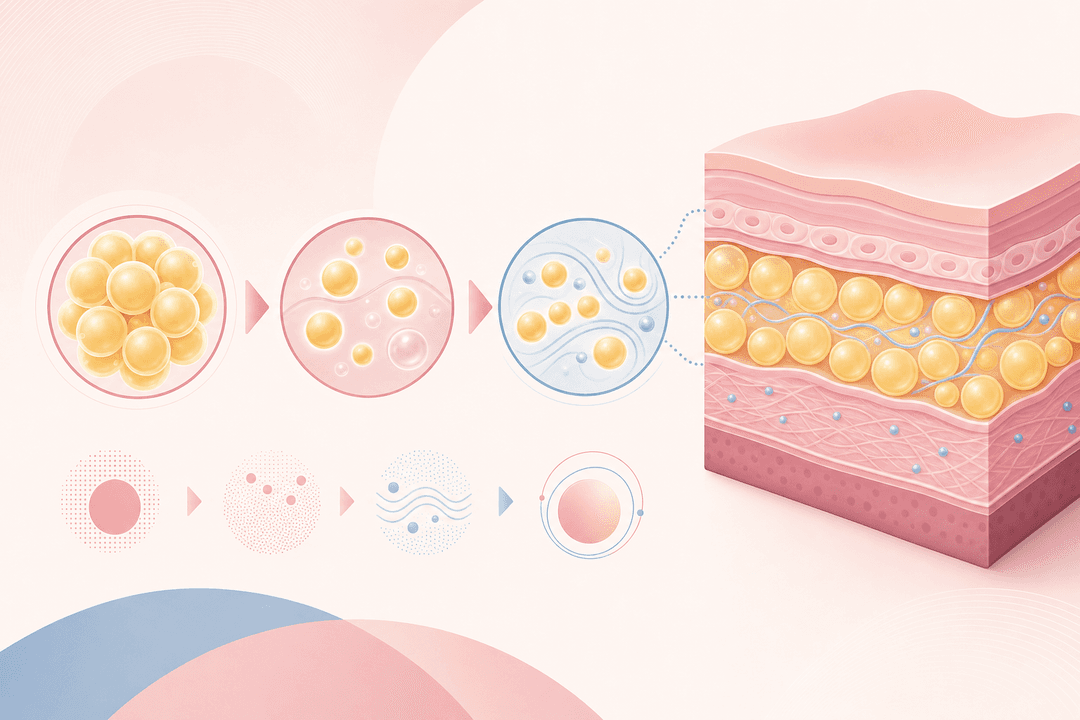
Fat grafting is an autologous tissue transplant that transfers your own body's fat cells as they are. Fat is harvested from the abdomen or thighs, pure fat is extracted through centrifugation, and then finely injected into the face. Among the transplanted fat cells, the parts with newly connected blood vessels (engraftment) remain semi-permanently, but cells without blood supply are absorbed within 2-3 months. According to a 2018 report in the Journal of the Korean Society of Plastic and Reconstructive Surgeons, the average engraftment rate is 60-70%, with 30-40% being naturally absorbed.
Fillers are foreign substances that decompose within the body after a certain period. The most common hyaluronic acid (HA) fillers are components naturally present in the dermis layer of the skin, so they cause minimal foreign body reactions and are broken down by hyaluronidase enzymes over 6-18 months. Calcium (CaHA) fillers, such as Radiesse, last for 12-18 months and also have the effect of stimulating collagen production. Fillers provide immediate volume, but they are 100% absorbed over time, making re-injection essential for maintenance.
In other words, fat grafting is based on the concept of "transplanting one's own cells," whereas fillers are based on the concept of "temporarily filling with external substances." This difference completely alters the structure regarding duration, cost, and side effects.
Clinical The key to increasing the engraftment rate of fat grafts is the injection depth and amount. If an excessive amount is injected in one spot, the central cells do not receive blood supply and undergo necrosis; therefore, 'micro fat grafting,' which involves dispersing the injection in 0.1cc increments, is used. There are results from a 2020 study in Plastic and Reconstructive Surgery indicating that the technique increases the engraftment rate by 10-15%.
Hyaluronic acid fillers are classified into thin, mid, and thick types based on molecular weight (particle size); larger particles last longer and are injected into deeper layers.
During fat grafting, the centrifugation speed is typically 3,000 rpm for 3 minutes — too strong a speed destroys fat cells, while too weak a speed mixes impurities.
1cc of filler immediately fills a volume of about 1g, whereas fat grafting injects 1.3 to 1.5 times the target volume, taking into account a 30% absorption rate.
Duration, Re-treatment Cycle, and Long-term Cost Structure
Fat grafting While the grafted area is semi-permanent, it is rare for the target volume to be 100% achieved with a single treatment. Given a graft survival rate of 60-70%, a second treatment is required in 30-40% of cases to achieve the desired volume. Since swelling subsides and the final results appear within the first three months, the second treatment is usually performed 4-6 months later.
Fillers last for 6-18 months depending on the product type and injection site. It is generally 6-9 months for thin lips and under-eyes, and 12-18 months for cheeks and nasolabial folds. High-molecular-weight products like Juvederm Voluma are reported to last up to 24 months, but individual differences are significant, and most people consider re-injection within one year.
Let's calculate the long-term costs. If the average cost for one fat grafting session is 3 million won (4.5-5 million won including a second session) and fillers are 1 million won per area, then 2-3 re-injections over 2 years would cost 2-3 million won. If you want to maintain the results for more than 3 years, fat grafting surpasses fat grafting in terms of total cost. However, even with fat grafting, if fat is lost due to aging, reinforcement may be necessary after 5-10 years.
Tip: The timing for filler re-injection is when 70-80% remains, rather than after it has completely worn off. It is more economical to add more. If you refill after it has been completely absorbed, you need a full dose every time, but adding a small amount on top of the remaining volume reduces maintenance costs by 30-40%.
Procedure
Cost per session
Duration
Cumulative cost over 3 years
Fat Grafting
2-4 million KRW
Semi-permanent (for areas where the fat has taken root)
4.5-5 million KRW (including 2nd session)
HA Filler
500,000-1.5 million KRW per area Won
6-18 months
3-4.5 million won (2-3 sessions)
CaHA Filler
800,000-1.8 million won per area
12-18 months
2.4-3.6 million won (2 sessions)
Costs may vary depending on the area, scope, and medical institution.
Fat graft engraftment proceeds for up to 3 months, and if weight is maintained within ±3kg thereafter, the engrafted area lasts for 5-10 years or more
For fillers, people with a fast metabolism achieve over 50% within 6 months Since it can be absorbed, the re-injection cycle is personalized based on the progress after the first procedure.
For the second fat grafting procedure, the donor site harvested during the first procedure cannot be reused, so additional harvesting from a different area is required.
Recovery Period and Return to Daily Life: Things You Must Remember
AI Generation
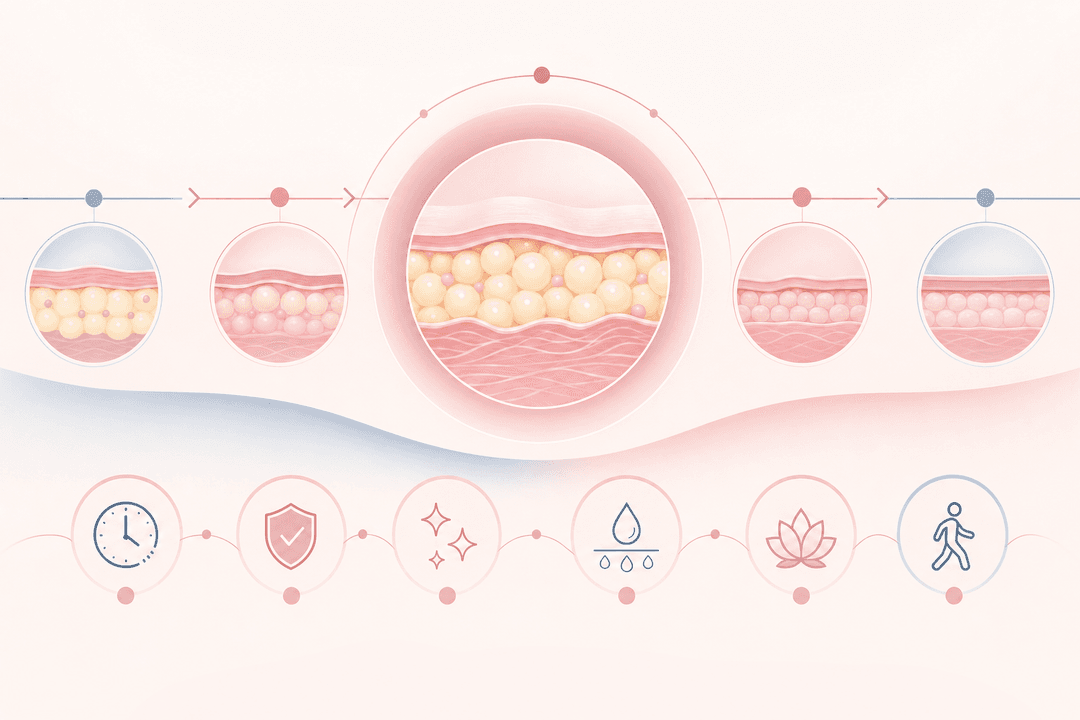
A 2-3 week recovery period is essential for fat grafting.The harvesting sites (abdomen and thighs) will leave a 5-7mm incision scar, and wearing a compression garment for 2 weeks is recommended. For the face, severe swelling lasts for 3-5 days before gradually subsiding over 2 weeks. Bruising lasts for 1-2 weeks, and the final results are confirmed after 3 months. You can usually return to work after 7-10 days, but if you have a job where facial swelling is noticeable (broadcasting or service industry), it is safer to take a 2-week leave of absence.
You can return to your daily life immediately with fillers. There may be minor bruising or swelling at the injection site for 1-3 days, but it is at a level that can be covered with makeup, and most people return to work on the same day. However, saunas, alcohol consumption, and strenuous exercise are prohibited for 48 hours on the day of the procedure — as increased blood flow can cause bruising to spread.
Fat grafting is significantly more painful. Muscle-like pain persists at the harvesting site for 3-5 days, and pressure at the injection site on the face remains for about a week. With fillers, there is almost no discomfort other than a stinging sensation at the moment of injection. There is also a difference in anesthesia; fat grafting requires general anesthesia or local anesthesia plus sedation, while fillers are sufficient with anesthetic cream or the lidocaine contained in the product.
Caution Rapid weight changes during the 3 months following fat grafting reduce the survival rate. Since fluctuations of ±3kg or more can cause the transplanted fat cells to shrink or expand, please maintain a consistent weight before and after the procedure. If you have a diet plan, the principle is to undergo the procedure after reaching your target weight.
The incision scar at the harvest site during fat grafting is 5-7mm; it fades after 6-12 months but does not disappear completely.
You should avoid excessive use of facial muscles for 2-3 hours immediately after filler injection — the filler has not yet fixed to the tissue and may shift immediately after injection.
Smoking after fat grafting reduces blood flow by 30-40%, lowering the survival rate, so quitting smoking is essential from 2 weeks before the procedure until 4 weeks after.
I will honestly compare the side effects and risks.
The biggest risks of fat grafting are failure of engraftment and calcification. If the engraftment rate is lower than expected, unevenness or asymmetry may occur, and if necrotic fat cells calcify (form hard nodules), the texture becomes abnormal. Calcification occurs with a probability of 1-5%, and in severe cases, surgical removal is required. Additionally, in cases of overcorrection, there is a problem where the face appears excessively swollen for the first three months.
The fatal risk of fillers is vascular occlusion. If the filler enters a blood vessel or compresses it to block blood flow, it can lead to skin necrosis or even blindness. The glabella, nose, and forehead are particularly dangerous due to their complex blood vessel network, and according to a 2019 report by the Korean Dermatological Association, vascular embolisms account for 0.5–1% of filler complications. In such cases, the filler must be dissolved by immediate hyaluronidase injection, making the practitioner's anatomical knowledge a lifeline.
The risk of infection is less than 1% for both, but fat grafting is slightly higher. This is because an abscess can develop if sterile management is neglected even once during the harvesting and grafting process. Since fillers are administered as a single injection, the probability of infection is relatively low, but the risk of foreign body granulomas increases sharply when non-genuine (smuggled) fillers are used. Make sure to check if the product is approved by the Ministry of Food and Drug Safety.
Caution: If severe pain, skin discoloration (pale/blue), or blurred vision occur after a filler procedure, these are suspected symptoms of a vascular embolism. You must immediately contact the hospital where the procedure was performed or go to the emergency room; the golden time is within 4-6 hours.
Calcified nodules after fat grafting can be detected early with ultrasound examination; nodules smaller than 0.5cm may be naturally absorbed, but those larger than 1cm require surgical removal.
To prevent filler vascular embolism, an aspiration test before injection and small-volume dispersed injection are essential — the principle is not to inject more than 0.1cc at a time.
The SVF (stromal vascular fraction) technique, which involves adding stem cells to the harvested fat during fat grafting, increases the engraftment rate by 5-10%, but it is still in the research stage in Korea and is not covered by insurance.
Choose the Procedure Right for You Like This
AI-Generated Illustration
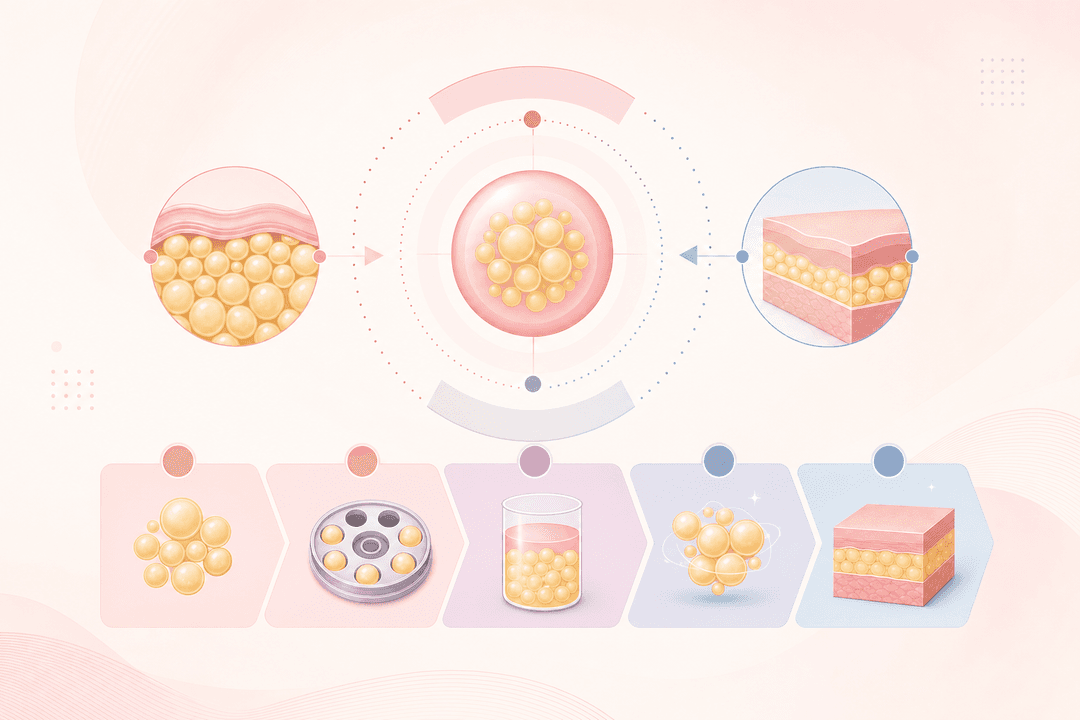
Fat grafting is advantageous for those in their 30s or older, when significant volume is needed, or when long-term maintenance is desired. In cases requiring more than 5cc at a time, such as for the entire forehead, sunken cheekbones, or severe cheek hollowing, using fillers entails high costs and the burden of re-injection. It is also suitable for people who have a stable weight and can spare 2-3 weeks for recovery. Conversely, if you are in your 20s or younger, or if this is your first procedure, it is safer to start with fillers to test the results before considering fat grafting.
Choose fillers when immediate effects and a low recovery burden are your priorities. Fillers are the answer if you have important events coming up, such as a wedding or job interview, or if your profession prevents you from taking a long recovery period. Additionally, fillers are much more precise for correcting small areas (lips, under-eyes, nose tip), and they have the advantage of being able to be dissolved with hyaluronidase if you are not satisfied.
There are also many strategies that combine the two. For example, fat grafting is used to create base volume for the cheeks and forehead, while fillers are used to refine the details for the nasolabial folds and lips. In this case, it is common to add fillers six months after the fat grafting. Regardless of the combination, the key is to make a decision by integrating your facial anatomy, lifestyle, and budget with a specialist.
Key Point: If you have been receiving repeated filler injections for more than two years and are still not satisfied, it is time to consider switching to fat grafting. If the cumulative cost of fillers exceeds the cost of 1-2 sessions of fat grafting, and the re-injection interval becomes increasingly shorter, fat grafting may be more economical and stable in the long run.
Since fat grafting requires sufficient donor fat (at least 50cc), fillers should be considered first if you are underweight with a BMI of 18 or lower.
For the first filler procedure, it is safe to fill only 70-80% of the target volume and perform a 'Stage 2 injection' two weeks later — injecting an excessive amount at once carries a high risk of vascular compression.
If volume is lost again due to aging 5-10 years after fat grafting, reinforcing with a small amount of filler may be more efficient in terms of cost and recovery than a second fat graft.
Performing fillers and fat grafting simultaneously is not recommended — as fillers can interfere with fat engraftment, a minimum interval of 6 months should be maintained. Must be done
An intermediate option between HA and fat grafting, collagen-generating effect
Guide to Choosing the Right Volume Procedure for You
For those in their 30s or older, requiring a large volume of 5cc or more for the entire forehead and cheeks, and allowing 2-3 weeks for recovery If possible
Consider fat grafting as your top priority
Long-term maintenance costs are lower than the cumulative cost of filler re-injections, and it is easier to achieve natural results for large areas
If you are in your 20s, want to test the change as it is your first procedure, or have an important event like a wedding or job interview imminent
Start with fillers
It offers immediate effects with no recovery, and if you are not satisfied, it can be reversed with hyaluronidase, so the risk is low
If you have been getting fillers repeatedly for more than 2 years, the re-injection cycle is gradually If it has shortened and the cumulative cost has exceeded 3 million won
Consider switching to fat grafting
In the long run, 1-2 sessions of fat grafting are more economical than filler re-injection, and there is no burden of maintenance after engraftment
If you are correcting only small areas such as the lips, under the eyes, or the tip of the nose, or if you have insufficient donor fat with a BMI of 18 or lower
Fillers are the only option
For small areas, fillers are much more precise, and fat grafting requires harvesting at least 50cc, making it impossible for underweight individuals
Misconceptions Common Sense
Misconception Fat grafting is permanent once done
Truth The grafted portion is semi-permanent, but on average, 30-40% is absorbed within 3 months. A second procedure is required in 30-40% of cases to achieve the target volume. Also, since volume may decrease again after 5-10 years due to aging, it is not 'completely permanent'.
Misconception Fillers are toxic and dangerous
Truth Genuine FDA-approved hyaluronic acid fillers are non-toxic as they are a natural component of the body and are 100% biodegradable. The danger lies in vascular embolisms caused by smuggled counterfeit products or the practitioner's lack of anatomical knowledge. It is safe to use products approved by the Ministry of Food and Drug Safety and receive treatment from an experienced specialist.
Must check before volume procedures
Rapid weight changes (±3kg or more) within 3 months after fat grafting reduce the engraftment rate, so if you plan to diet, please wait until you reach your target weight before the procedure.
If severe pain, skin discoloration, or blurred vision occur during the filler procedure, suspect a vascular embolism — stop immediately and request hyaluronidase administration.
Smoking for 2 weeks after fat grafting reduces blood flow by 30-40%, causing engraftment failure, so quitting smoking is essential from 2 weeks before the procedure until 4 weeks after.
When re-injecting fillers, mixing a different brand from the previous product poses a risk of foreign body reaction, so maintain the same product or allow at least a 6-month interval.
Since a 5-7mm incision scar remains at the harvest site after fat grafting, If you frequently wear bikinis or revealing clothing, please discuss the scar location in advance.
Frequently Asked Questions
Which is more painful, fat grafting or fillers?
Fat grafting is significantly more painful. Muscle-like pain at the harvesting site (abdomen/thighs) lasts for 3-5 days, and pressure at the injection site on the face lingers for a week. With fillers, there is almost no discomfort other than a stinging sensation at the moment of injection.
Can I switch from fillers to fat grafting?
It is possible, but please leave a gap of at least 6 months. Fat grafting must be performed after the fillers have been completely absorbed for the survival rate to be normal. Injecting fat while filler remains can interfere with engraftment.
What should be done if calcification occurs after fat grafting?
While calcifications smaller than 0.5 cm may be naturally absorbed, those larger than 1 cm require surgical removal. Since early detection is possible via ultrasound, regular check-ups are recommended at 6 months and 1 year post-procedure.
What is the most dangerous side effect of fillers?
It is vascular occlusion. If filler blocks a blood vessel, it can lead to skin necrosis or even blindness. The glabella, nose, and forehead are particularly dangerous due to their complex blood vessel network; the golden time for treatment is to administer hyaluronidase within 4 to 6 hours of occurrence.
Is there a way to increase the survival rate of fat grafts?
The key is to inject in 0.1cc increments, quit smoking, and maintain your weight. Since injecting an excessive amount in one spot prevents central cells from receiving blood flow and causes necrosis, the micro-fat grafting technique increases the survival rate by 10-15%. Please maintain your weight within ±3kg for 3 months after the procedure.
If neither is satisfactory, are there other alternatives?
You can consider thread lifting or collagen booster injections. Thread lifting lifts sagging volume, while collagen boosters (such as Sculptra) gradually generate collagen and last for 18 to 24 months. However, since immediate volume is not available, the choice depends on the purpose.
This content is for informational purposes only and does not replace medical advice. Please consult a specialist before the procedure.