InMode FX and Forma are the only options? The real difference between the 5 handpieces
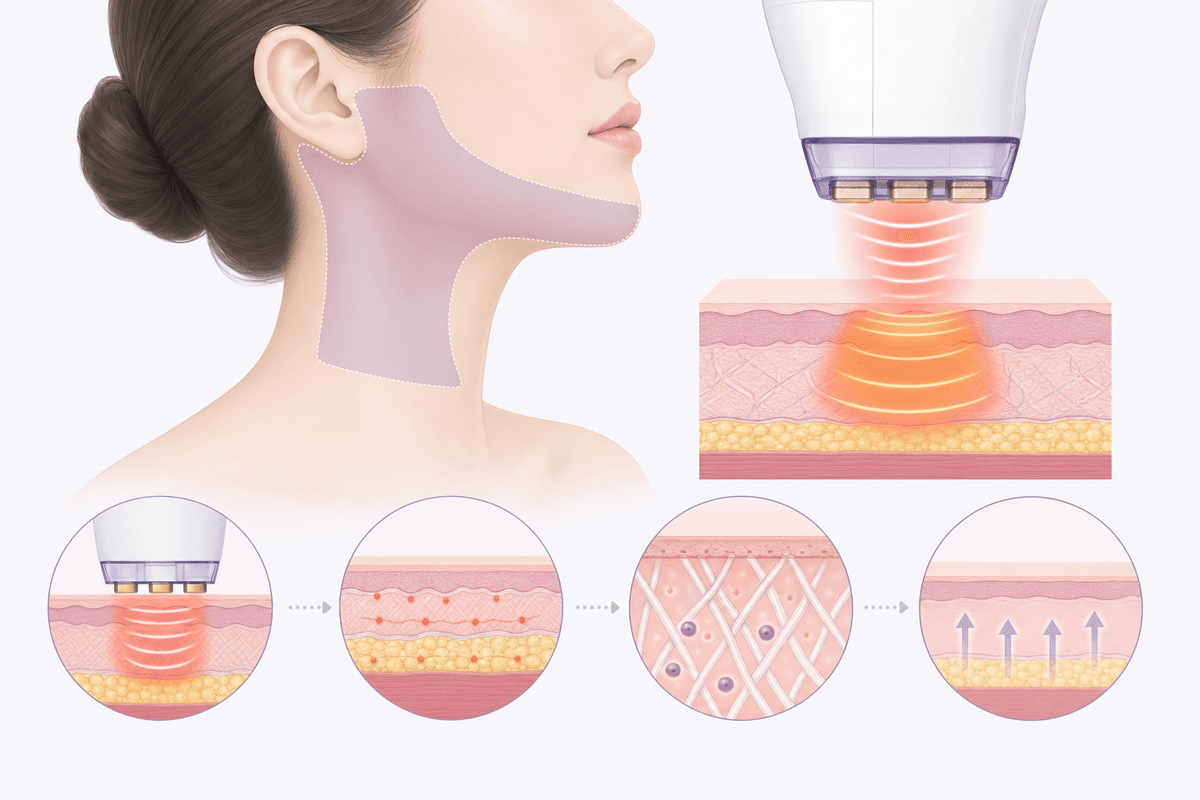
- InMode isn't a single device, but a platform that combines 5 types of handpieces by depth — knowing only FX and Forma means missing half your target audience.
- The key design is to progressively cover a range of 0.5-8mm, from the superficial dermis (Mini, Forma) to the deep fat layer (Trio).
- Even with the same 'InMode' treatment, the handpiece combination used for a 20-something's pores is completely different from that for a 40-something's sagging skin.
Information as of July 2026
Radiofrequency Depth and Target Layer Differentiation
- 5 handpieces, target depth 0.5~8mm
- FDA approved 2019, Korean MFDS approved 2020
- Average combination of 3 types for customized treatment from dermis to fat layer
Why Your Reflection Changes Daily
You wake up and your cheeks seem to have dropped, but by evening, they look fine again. Some days your makeup applies beautifully, while other days it just doesn't sit right. Why does this happen? It's because your skin is composed of multiple layers, from the surface down to the fat layer, and each layer loosens at a different rate and timing.
InMode is a platform designed to target these layer-specific differences simultaneously. It's not a single treatment but a combination of 5 handpieces used at different depths. If you've only heard of FX and Forma, you're only getting half the picture. To address everything from pores in the superficial dermis to sagging in the deep fat layer, you need to know about Mini, Forma, and Trio as well.
InMode, approved by the FDA in 2019 and by the Korean Ministry of Food and Drug Safety in 2020, is designed with a monopolar RF (unipolar radiofrequency) system. While traditional bipolar RF only heats the area between the electrodes, monopolar RF is characterized by three-dimensionally heating the entire skin to induce simultaneous collagen contraction and remodeling.
Why 5 Handpieces? Different Targets for Different Skin Layers
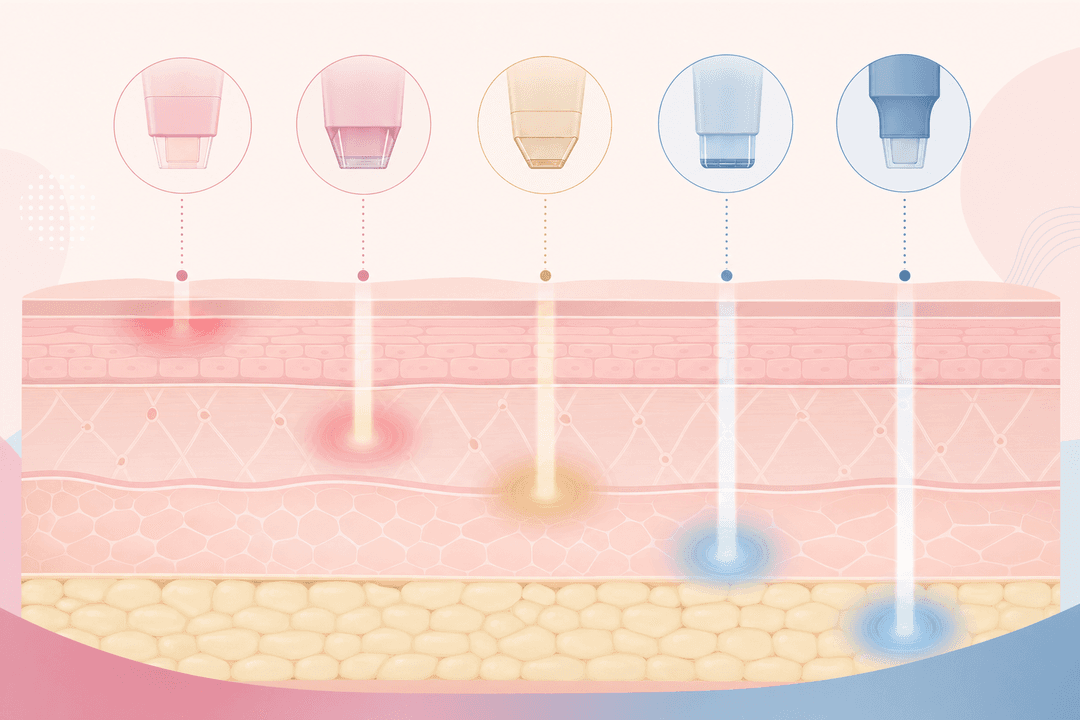
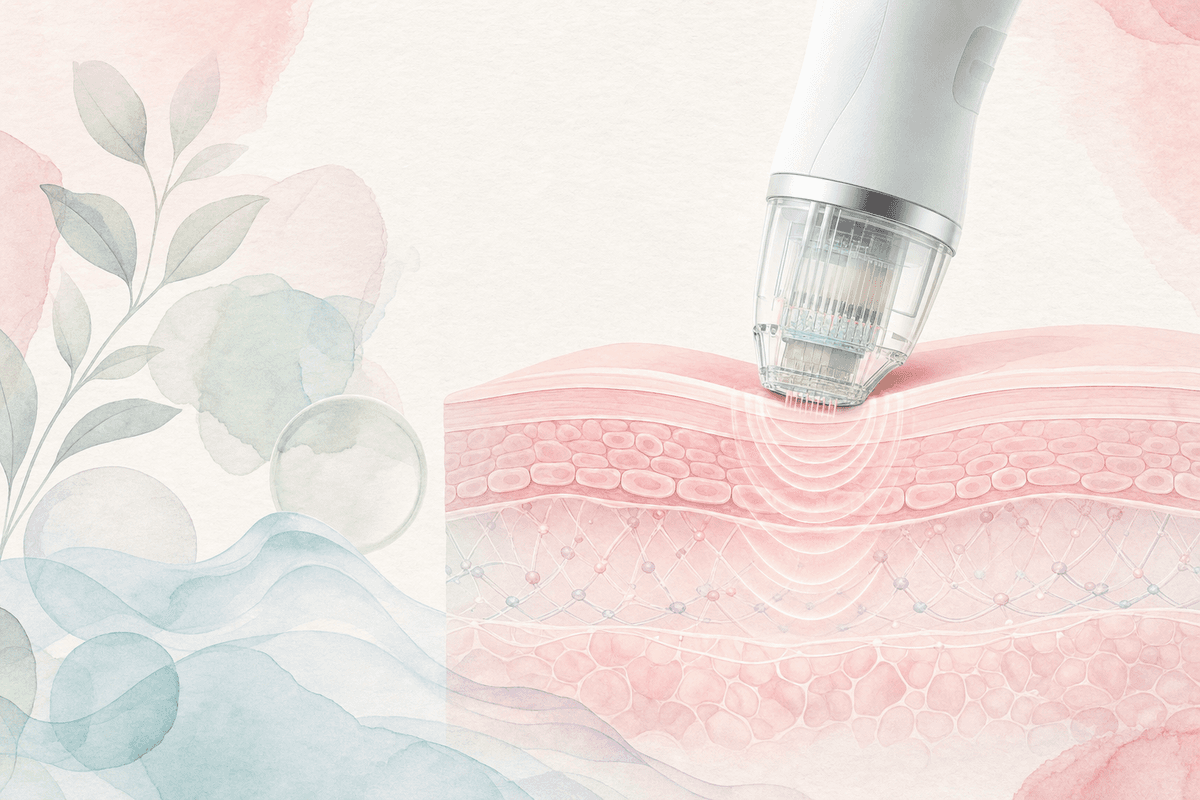
The skin layers are structured as follows: Epidermis (0.1mm) → Dermis (1~3mm) → Subcutaneous Fat (4~8mm) → Superficial Musculoaponeurotic System (SMAS, the thin membrane surrounding the muscles beneath the skin). Each layer has a different collagen density, blood vessel distribution, and fat cell size, making it physically impossible to cover all of them with a single electrode.
InMode addresses this issue by dividing the treatment by depth using 5 handpieces. This involves using smaller needles for shallower layers and larger needles and bulk RF for deeper layers. The 2021 guidelines from the Korean Dermatological Association also reported that 'customized combinations for each layer increase satisfaction by 23% compared to single-depth treatments.'
The target depths for each handpiece are as follows: **Mini (Minifx)** targets the superficial dermis at 0.5~1mm, **Forma** targets the epidermis to upper dermis non-invasively, **FX** targets the mid-dermis at 1~4mm, **Forma (Morpheus8)** targets the deep dermis to the boundary of the fat layer at 2~7mm, and **Trio (TrioFX)** targets the fat layer to just before the SMAS at 4~8mm.
Key Takeaway Even with the same 'InMode' treatment, the handpiece combinations vary by clinic. For 20-somethings concerned about pores, a Mini + FX combination is common. For 40-somethings experiencing sagging, a Forma + Trio combination is typical. When consulting, be sure to ask specifically which handpieces will be used and how many passes (number of repetitions) will be performed.
A Closer Look at the 5 Handpieces
Mini (Minifx)** uses 24 fine needles to precisely target the superficial dermis at 0.5~1mm. It's primarily used for improving pores, fine lines, and skin texture, and is often performed with just a numbing cream due to minimal pain. It's frequently chosen for preventative lifting in the early 20s or when combined with treatments for pigmentation concerns.
Forma** is a non-invasive method that delivers RF energy to the surface without needles. It's suitable for areas with thin skin, such as around the eyes and neck, where needles are difficult to use. You'll only feel a warming sensation with virtually no downtime. It's often used in conjunction with FX or Forma to enhance surface elasticity rather than as a standalone treatment.
FX** is InMode's flagship handpiece. It targets the mid-dermis at 1~4mm, inducing simultaneous contraction and new growth of collagen fibers. A 2020 study in the Journal of Cosmetic Dermatology reported an average of 31% improvement in elasticity and 87% subjective satisfaction after three sessions of FX alone.
Forma (Morpheus8)** penetrates from the deep dermis at 2~7mm to the boundary of the fat layer. It uses 24~40 needles inserted deeply to heat the upper part of the fat layer, making it powerful for concerns like sagging cheeks, double chin, and nasolabial folds, which involve 'thick layers.' However, due to the deep penetration, bruising and swelling can last 2-3 times longer than with FX, and sedation anesthesia is often recommended over numbing cream.
Trio (TrioFX)** delivers heat deep into the fat layer at 4~8mm. It uses a bulk RF method to heat a large area at once without needles, aiming to reduce fat cell size and induce fibrosis. While it doesn't reach the SMAS layer like Ultherapy or Thermage, it's the only handpiece that directly targets the fat layer itself, making it specialized for double chins and sagging cheeks.
- Mini: 24 pins, 0.5~1mm, for pore/texture improvement
- Forma: Non-invasive surface RF, for eyes/neck
- FX: 1~4mm, collagen contraction + new growth, flagship handpiece
- Forma: 2~7mm, 24~40 pins, targets deep sagging
- Trio: 4~8mm, bulk RF, specialized for fat layer
So, What's the Right Combination for Me?
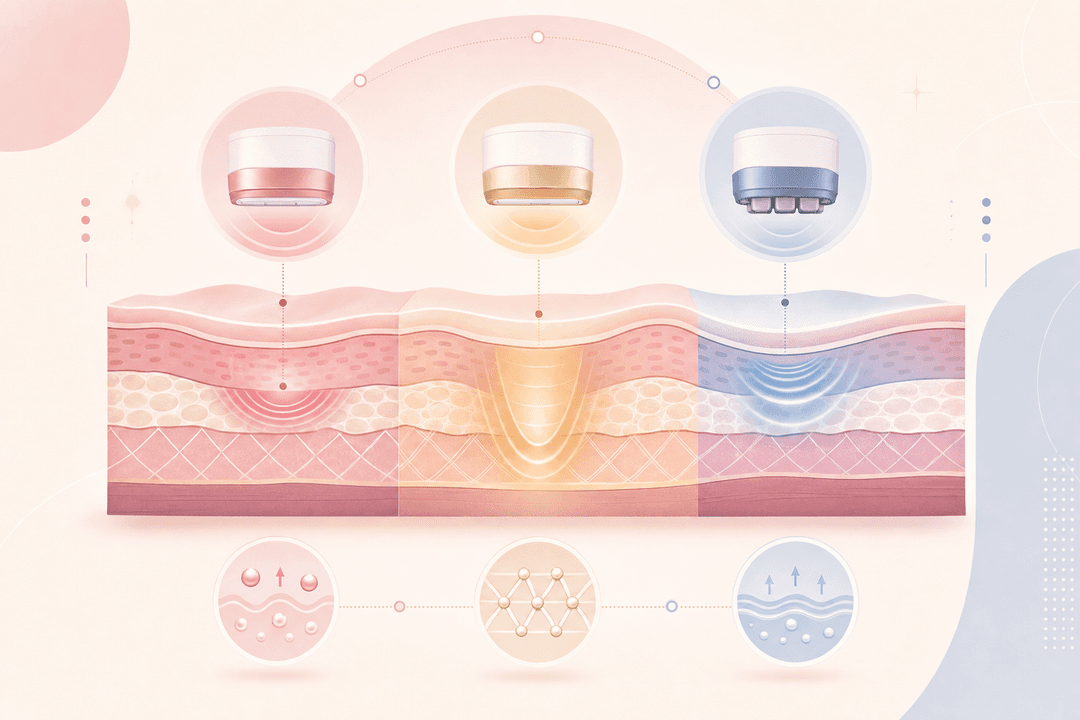
For those in their early to mid-20s, a **Mini + FX** combination is common. This approach addresses pores and superficial fine lines while providing preventative care down to the mid-dermis. Downtime is typically 3-4 days, with redness being more common than bruising.
From the late 30s onwards, the **FX + Forma** combination becomes more prevalent. This is because the mid-dermis begins to lose collagen, and the boundary of the fat layer starts to loosen. The treatment targets two distinct depths to address these changes. Bruising and swelling become more noticeable at this stage, and recovery typically takes 5-7 days.
For individuals over 40 experiencing significant sagging cheeks and double chin, Forma + Trio** is the standard. This combination provides three-dimensional heating from the deep dermis to the fat layer, maximizing lifting effects. A 2022 symposium by the Korean Society of Plastic and Reconstructive Surgeons presented findings showing that 'the combination of Forma + Trio resulted in 42% greater volume reduction compared to using either treatment alone.'
For areas like the eyes and neck where needles are sensitive, **Forma alone or in combination with FX** is a safe option. Since it only heats the surface, you can resume wearing makeup the same day without bruising. However, the lifting intensity is generally less compared to other combinations.
Tip It's common to use multiple handpieces in a single InMode session. However, the more handpieces used, the longer the treatment time (60-90 minutes) and the higher the cost (500,000 to 1.5 million KRW). Prioritize your concerns and discuss them during your consultation.
The Principle of Radiofrequency: Why Heat Stimulates Collagen Production
The monopolar RF used by InMode is a method that heats the entire skin by placing it within an electric field using unipolar radiofrequency. While bipolar RF only heated a narrow range between the two electrodes, monopolar RF uses energy from one electrode that circulates through the body to three-dimensionally heat the target layer.
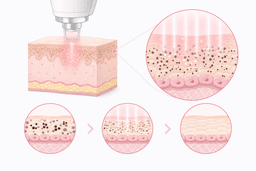
When tissue is heated, the triple helix structure of collagen contracts at 60-65°C, resulting in immediate tightening. Simultaneously, the thermal stimulus activates fibroblasts, initiating a 'remodeling' process over the next 4-12 weeks where new collagen is slowly synthesized.
A 2021 study in Lasers in Surgery and Medicine reported that 'the density of type I collagen in the dermis increased by an average of 37% at 12 weeks post-InMode treatment.' Particularly with deeper treatments like Forma, the fat cell membranes are also heated, leading to reduced cell size and promoted fibrosis, further enhancing volume reduction effects.
However, excessive heat can pose a risk of burns and scarring. Therefore, InMode is equipped with sensors that monitor needle tip temperature in real-time, and it's designed for the practitioner to adjust energy (W), time (ms), and the number of passes within a safe range.
| Stage | Temperature | Response | Duration |
|---|---|---|---|
| Immediate Contraction | 60~65℃ | Denaturation of collagen triple helix | Immediately after treatment |
| Inflammatory Response | 40~50℃ | Fibroblast activation | 1~2 weeks |
| Remodeling | Normal body temperature | Synthesis of new collagen | 4~12 weeks |
| Maintenance | - | Stabilization of collagen density | 3~6 months |
Timing and intensity may vary depending on individual differences.
Just Remember This
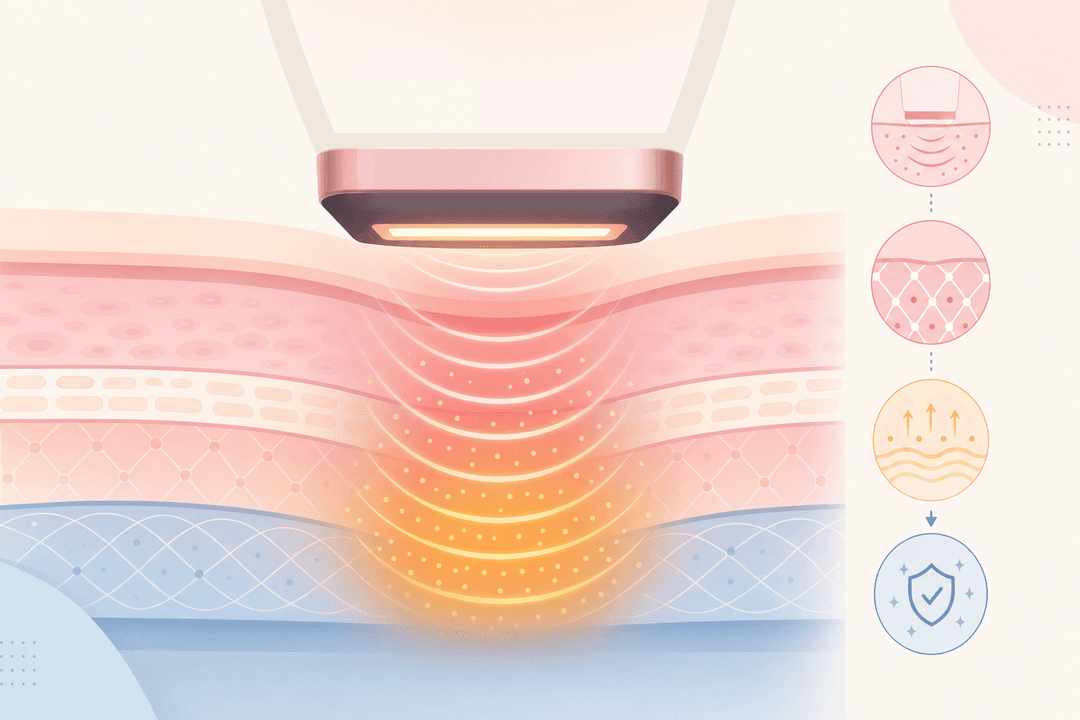
InMode is not a single treatment but a **platform that combines 5 handpieces for layer-specific treatment**. Knowing only FX and Forma means you'll miss out on treatments for the superficial dermis (Mini) and the deep fat layer (Trio). The combination of handpieces completely changes depending on whether your concern is pores or sagging, so be sure to confirm which handpieces will be used during your consultation.
Collagen contraction occurs immediately after treatment, while remodeling happens gradually over 4-12 weeks. Therefore, **results should be assessed at least 3 months later**. Don't prematurely conclude 'it's not working' after just one month.
- During consultation, ask specifically about the type of handpieces, number of passes, and energy settings.
- Results are assessed at 3 months – remodeling takes time.
- Bruising and swelling are more pronounced with Forma and Trio – allow ample recovery time.
- To prevent excessive heat, actively communicate cooling sensations and pain during the procedure.
Handpiece Comparison
Mini Minifx [Superficial Dermis]
- Depth: 0.5~1mm
- Target: Pores, texture, fine lines
- Pain: Low (numbing cream)
- Downtime: 3~4 days
Preventative care for 20s, can be combined with pigmentation treatments
FX [Mid-Dermis]
- Depth: 1~4mm
- Target: Collagen contraction + new growth
- Pain: Moderate (numbing cream)
- Downtime: 4~5 days
Most versatile, can be used alone or in combination
Forma Morpheus8 [Deep Dermis~Fat Layer]
- Depth: 2~7mm
- Target: Sagging cheeks, double chin, nasolabial folds
- Pain: High (sedation anesthesia recommended)
- Downtime: 7~10 days
Significant bruising/swelling, primary treatment for 40s+
Finding the Right Combination for You
Early to mid-20s, concerns about pores and skin texture
Mini + FX combination
Targets superficial to mid-dermis, minimizing downtime while providing preventative effects
Late 30s, beginning of elasticity loss
FX + Forma combination
Targets two layers, from mid-dermis to the fat boundary, for increased satisfaction
40s and above, significant sagging cheeks and double chin
Forma + Trio combination
Maximizes volume reduction effects through three-dimensional heating of the deep dermis to the fat layer
Areas sensitive to needles, such as eyes and neck
Forma alone or in combination with FX
Enhances elasticity without bruising using non-invasive surface RF, allowing makeup application the same day
Common Misconceptions
Misconception InMode only has FX and Forma handpieces.
Truth There are a total of 5 handpieces, including Mini, Forma, and Trio, and it's a platform that combines them for different layers. Relying only on FX and Forma means missing out on treatments for the superficial dermis and deep fat layer.
Misconception The effects are visible immediately after one treatment.
Truth Immediate contraction occurs right after the procedure, but remodeling takes 4-12 weeks. Results should be assessed at least 3 months later.
Must-Check Points Before InMode Treatment
- !!During consultation, ask specifically about the type of handpieces, number of passes, and energy settings!! — The effects and costs vary significantly depending on the combination, even for the same 'InMode' treatment.
- Bruising and swelling with Forma and Trio can last 5-10 days — Avoid scheduling important events within 2 weeks of treatment.
- If you feel excessive heat or pain during the procedure, inform your practitioner immediately to prevent burns.
- Contraindicated for pregnant or breastfeeding individuals, those with keloid tendencies, or over areas with metal implants.
- Avoid saunas, high-intensity exercise, and alcohol for 2 weeks post-treatment — risk of exacerbating inflammation.
Frequently Asked Questions
How many handpieces are typically used in one InMode session?
Typically, 2-3 handpieces are combined. For example, a 30-something might use FX + Forma, while a 40-something might use Forma + Trio. While a single handpiece can be used depending on the area and concerns, combinations are common for layer-specific targeting.
Forma and Trio both go deep; what's the difference?
Forma uses 2~7mm needles to target the dermis~fat boundary, while Trio uses 4~8mm bulk RF to target the fat layer itself. Forma focuses on collagen, whereas Trio is specialized for fat reduction.
If I had to choose between Mini and FX, which one?
If your main concern is pores and texture, Mini alone can be sufficient. However, **FX is generally more versatile**. It covers the mid-dermis up to 1-4mm, addressing elasticity, wrinkles, and pores simultaneously.
When can I expect to see results?
While immediate contraction can be felt right after the procedure, **true lifting effects gradually appear during the 4-12 week remodeling period**. Consider the 3-month mark as the standard for evaluating results.
Are there any side effects or complications?
Common side effects include bruising, swelling, and redness (lasting 3-10 days). Rarely, burns, hyperpigmentation, or scarring have been reported. Excessive energy can lead to thermal damage, so it's crucial to provide active feedback on pain during the procedure and choose an experienced medical professional.
How much does it cost?
The cost per session ranges from 500,000 to 1.5 million KRW, depending on the handpiece combination and treatment area. A single Mini session is less expensive, while a full combination of Forma + Trio is more costly. Costs vary significantly between clinics, so compare consultations from multiple places.
This content is for informational purposes only and does not substitute for medical advice. Always consult with a specialist before undergoing any procedure.