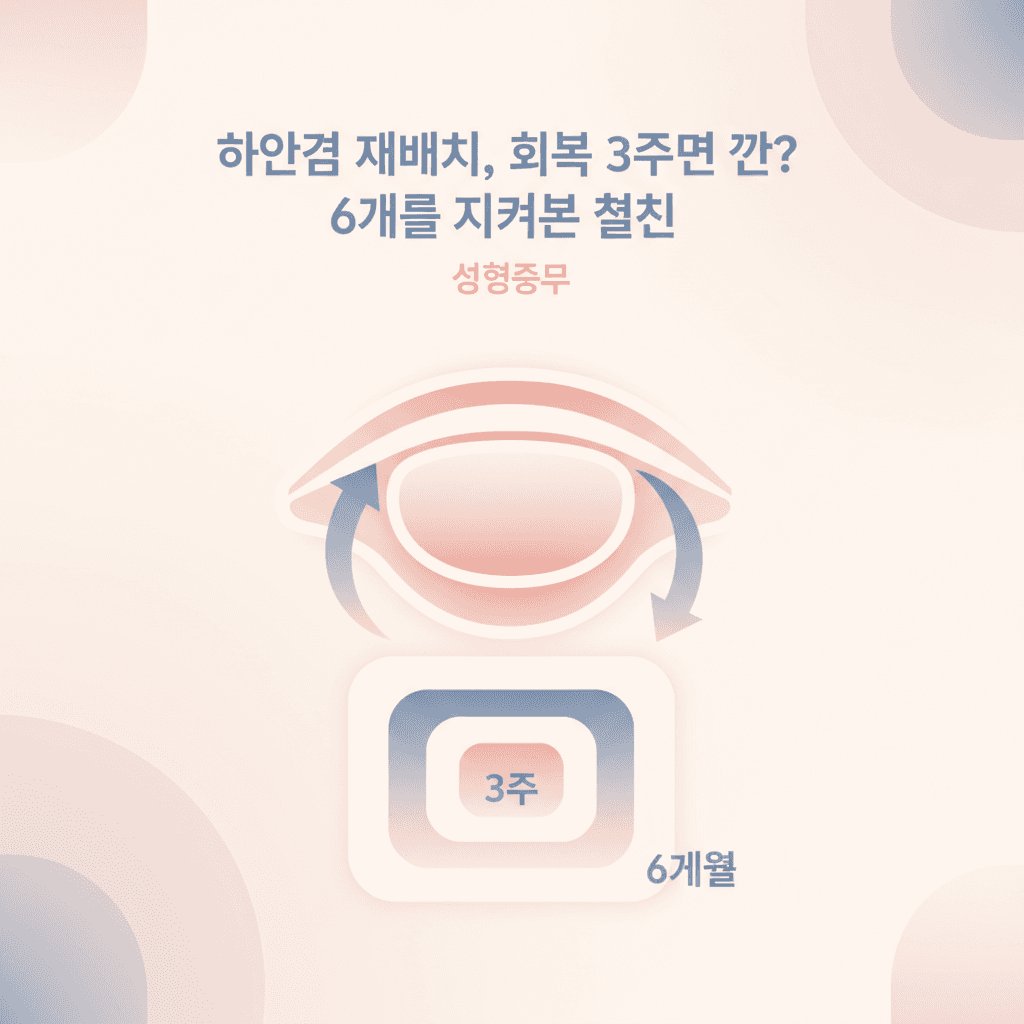
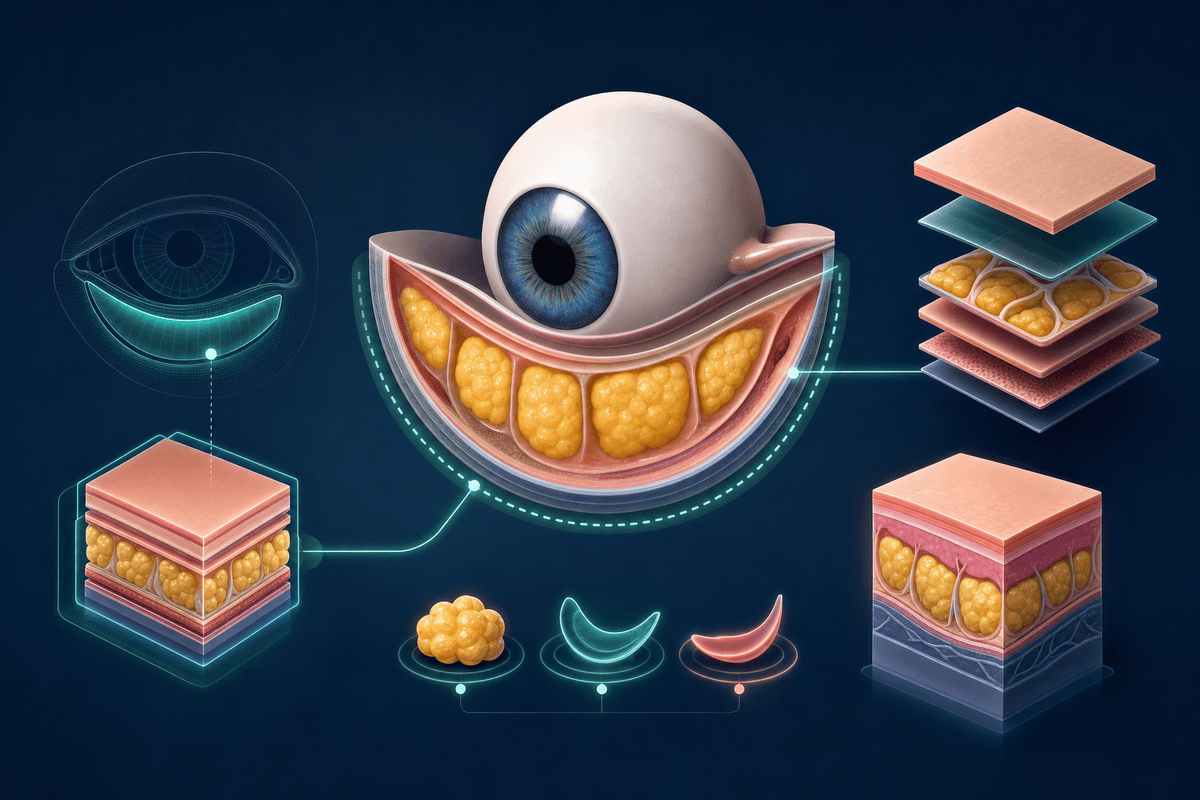
Forehead lift recovery: 7, 14, or 30 days. When can I return to work?
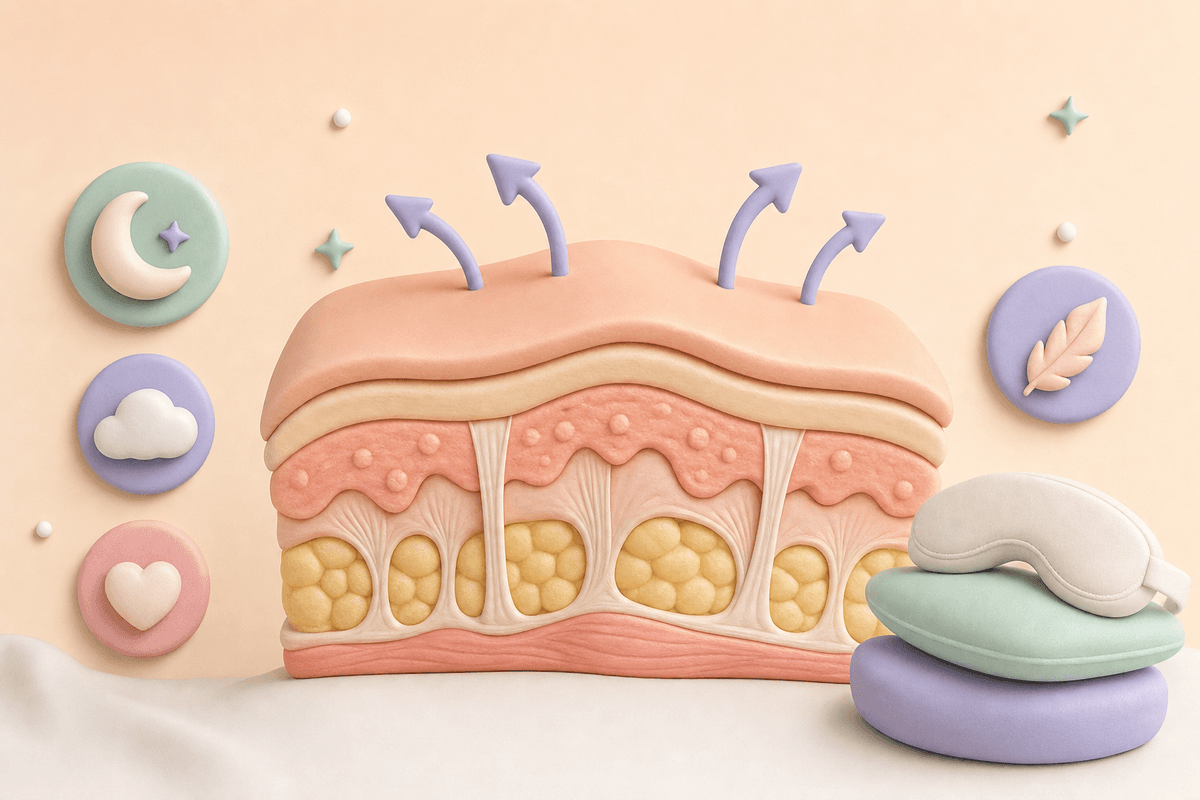
- You can return to work on the 14th day, but in reality, it varies by 7 days depending on the incision site.
- What determines recovery speed is not the surgical method but swelling management during the first 72 hours.
- 90% of swelling subsides within 2 weeks, but sensory recovery takes 3-6 months.
Information as of August 2026
Step-by-Step Measured Timeline
- Suture removal: 7-10 days
- Return to work: 14-21 days
- Full recovery: 3-6 months
Recovery Period: Check the Incision Location First
"A forehead lift takes 2 weeks" is only half true. The recovery timeline can vary by more than 7 days depending on the incision method. What truly makes the difference isn't the surgical complexity, but whether the incision is hidden within the hairline or exposed along the hairline.
The Coronal Lift involves an incision inside the scalp behind the crown, completely hiding the scar. However, because it requires dissecting a wide area, swelling and altered sensation can persist for 2-3 weeks. In contrast, the Hairline Incision is made along the border of the forehead and hairline, so most swelling subsides within a week. However, the hairline scar may be slightly visible for the first two weeks.
Endoscopic Lift uses only 4-5 small incisions of about 1 cm in the scalp to insert a camera and instruments. Because the dissection area is narrow, recovery is the fastest. A 2021 report from the American Society of Plastic Surgeons (ASPS) found that 82% of endoscopic lift patients returned to work within 10 days of surgery.
The First 72 Hours Determine Your 2-Week Appearance
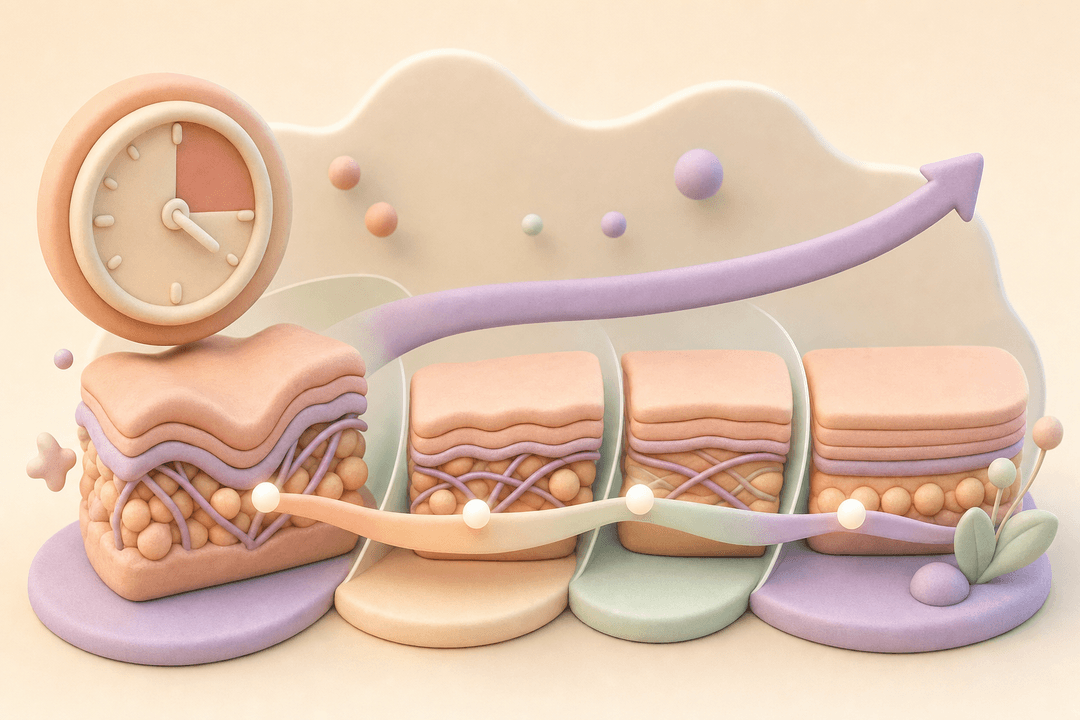
The first three days after surgery are when swelling increases dramatically. Due to gravity, swelling from the forehead moves down to the eyelids and cheeks, causing puffiness even in areas not operated on. Managing this period significantly impacts the swelling at the two-week mark.
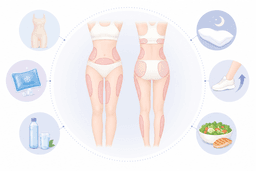
You should sleep with your upper body elevated at a 30-45 degree angle. Lying flat causes blood to pool in the head, worsening swelling. The key is to stack 2-3 pillows to support your entire upper back, not just prop up your head.
Cold compresses are only effective for the first 48 hours after surgery. After that, switch to warm compresses to aid blood circulation and reduce swelling. However, do not apply them directly to the incision sites; use them indirectly on swollen areas like the eyelids or cheeks for 10 minutes at a time with breaks in between.
Caution A 2019 study by the Korean Society of Plastic and Reconstructive Surgeons found that limiting salt intake to under 1500mg per day for the first three days after surgery can shorten the duration of swelling by an average of 3 days. Avoid soups, stews, and ramen during this period.
True or False Quiz
The reason it typically takes 3-6 months for sensation to return after a forehead lift is due to the slow rate of nerve regeneration.
Check the Answer
True Nerve regeneration occurs at a rate of approximately 1mm per day. To recover a distance of 10-15cm from the incision site to the edge of the forehead requires 100-150 days, or 3-5 months. Forced massage does not speed up regeneration; natural healing is the safest approach.
Day 7, 14, 30: A Step-by-Step Measured Timeline
Day 1-3 Post-Surgery: Swelling peaks. Eyelids may appear more swollen than the forehead, and some bruising may extend below the eyes. Pain is manageable with painkillers. Showers are limited to below the neck.
Day 4-7: This is when 60-70% of the swelling subsides. Suture removal occurs around day 10-14 for coronal lifts, 7-10 days for hairline incisions, and around day 7 for endoscopic lifts. Light showering and face washing are possible from this point, but minimize water contact with incision sites.
Day 8-14: Most people can return to work. Over 90% of swelling is gone, and hairline scars can be adequately covered with makeup. However, strenuous exercise, saunas, and alcohol consumption are prohibited for 4 weeks.
Day 15-30: The appearance becomes nearly natural, but altered sensation in the scalp (tingling/numbness) may still be present. This is normal as nerves regenerate and typically resolves over 3-6 months.
| Period | Swelling/Bruising | Activity Level | Precautions |
|---|---|---|---|
| 1-3 Days Post-Op | Peak (swelling extends to eyelids) | Walking indoors only | Sleep with upper body elevated 30 degrees |
| 4-7 Days | 60-70% reduction | Light outings, showering possible | Minimize water contact with incision sites |
| 8-14 Days | 90% reduction | Return to work, makeup possible | Avoid lifting heavy objects |
| 15-30 Days | 95% reduction | Most daily activities resumed | Avoid exercise/saunas for 4 weeks |
| 1-3 Months | Residual swelling completely resolved | All activities possible | Sensation recovery in progress |
- Endoscopic lift: Average return to work 10 days
- Coronal lift: Average return to work 14-21 days
- Hairline incision: Scar coverable with makeup by 10-14 days
When is a Realistic Return to Work?

The statement "it takes 2 weeks" applies to remote work or freelance situations. For returning to an office, it's safer to expect 10-21 days depending on the incision method. The average for endoscopic lifts is 10-12 days, hairline incisions 14 days, and coronal lifts 18-21 days.
There are three criteria for returning to work: First, has 90% of the swelling subsided so it's not noticeable in video calls or in-person meetings? Second, have the sutures been removed, or can the scar be covered with hairstyle or makeup? Third, is it possible to work for 8 hours with minimal pain?
There's a detail often left out in advertisements. If you have a hairstyle without bangs, the hairline incision scar might still be slightly visible at the two-week mark. In such cases, wearing bangs, a headscarf, or a headband can provide sufficient coverage for the first four weeks.
Tip If your job involves frequent video calls, subtly mentioning "I changed my hairstyle" about two weeks before surgery can make your return more natural. Appearing with bangs or a headband post-surgery will feel less jarring.
Sensation Recovery: Time is the Only Answer
Almost all patients experience altered sensation in the scalp after a forehead lift. They describe the feeling as dull when washing their hair or like touching a rubber mat instead of skin when brushing. This is because sensory nerve branches are temporarily stretched or compressed during surgery.
Since nerve regeneration occurs at a rate of about 1mm per day, it takes 3-6 months to recover the approximately 10-15cm distance from the incision site to the edge of the forehead. A 2020 follow-up study by the Korean Society of Plastic and Reconstructive Surgeons found that 94% of forehead lift patients regained full sensation within 6 months.
Trying to speed up recovery through forceful massage or stimulation can be counterproductive. Nerves heal best through natural regeneration. While some studies suggest that taking B-complex vitamins (B1, B6, B12) may aid nerve recovery, this should be decided in consultation with your doctor.
To Speed Up Recovery, Follow These 3 Rules
First, strictly abstain from alcohol and smoking for 4 weeks post-surgery. Alcohol dilates blood vessels, increasing swelling, while nicotine constricts blood flow, delaying wound healing. A 2018 FDA report indicated that smokers take an average of 1.5 times longer to recover compared to non-smokers.
Second, consume 70-100g of protein daily. Collagen synthesis is essential for wound healing, and insufficient protein, the raw material, slows down recovery. Focus on eggs, chicken breast, tofu, and fish.
Third, maintain a fixed sleeping position. For the first two weeks after surgery, sleeping on your side or stomach can put pressure on the incision sites, causing swelling to return. Maintaining an elevated upper body position, even if uncomfortable, will accelerate healing.
- First 72 hours post-surgery: Golden time for swelling management — Elevate upper body 30 degrees + cold compress for 48 hours
- Return to work timing: Endoscopic 10 days, Hairline 14 days, Coronal lift 18-21 days
- Full sensation recovery: Takes 3-6 months, nerve regeneration rate 1mm per day
- Abstinence from alcohol/smoking for 4 weeks + 70-100g protein/day intake shortens recovery period
Recovery Comparison by Incision Method
Endoscopic Lift [Fastest Recovery]
- Suture removal: 7 days
- Return to work: 10-12 days
- Scar location: 4-5 small holes (approx. 1cm) within the scalp
- Sensation recovery: 2-4 months
Narrow dissection area leads to less swelling, scars are almost invisible
Hairline Incision [Allows Forehead Height Adjustment]
- Suture removal: 7-10 days
- Return to work: 14 days
- Scar location: Thin line along the hairline
- Sensation recovery: 3-5 months
Scar requires covering with bangs for the first 2 weeks
Coronal Lift [Most Powerful Lifting Effect]
- Suture removal: 10-14 days
- Return to work: 18-21 days
- Scar location: Inside the scalp behind the crown
- Sensation recovery: 4-6 months
Extensive dissection causes prolonged swelling, scar is completely hidden
Recovery Strategy Based on Your Situation
If you work remotely or freelance with few in-person meetings
Endoscopic Lift — Aim for 10-day return
Swelling can be managed with camera angles for video calls, and scars are hidden within the scalp, eliminating exposure concerns.
If you work in an office 5 days a week and don't have bangs
Coronal Lift — Secure 3 weeks of leave
Allows for recovery without hairline scars, and initial swelling is manageable with no scar concerns.
If you want a quick return but also want to lower your forehead
Hairline Incision + Transition to bangs style for 2 weeks
Addresses both lifting and forehead reduction simultaneously, with bangs naturally covering initial scars.
If you have an important event within a month after surgery
Reschedule or postpone surgery recommended
Even at 30 days, 5% residual swelling may remain, and makeup application can feel dulled due to altered sensation.
Misconceptions Debunked
Myth You can always return to daily life within 2 weeks after a forehead lift.
Truth Depending on the incision method, it can take 10-21 days. While an endoscopic lift may allow a 10-day return, a coronal lift involves extensive dissection causing swelling that lasts over two weeks. Confirm your specific incision method first.
Myth Once the swelling is gone, you're fully recovered.
Truth Visible recovery and sensory recovery are separate. While 90% of swelling subsides within two weeks, scalp sensation takes 3-6 months to return due to nerve regeneration (1mm per day).
Actions That Delay Recovery — Avoid These
- Drinking alcohol within 4 weeks of surgery: Causes vasodilation leading to recurrent swelling, extending recovery time by 1.5 times.
- Continuing cold compresses after 48 hours: Hinders blood circulation, delaying swelling reduction.
- Sleeping face down or on your side: Puts pressure on incision sites, increasing swelling.
- Engaging in strenuous exercise (jogging, weightlifting) within 4 weeks: Increases blood pressure, risking bleeding and swelling.
- Low-protein diet: Insufficient collagen synthesis delays wound healing.
Frequently Asked Questions
Can I shower the day after surgery?
Only below the neck is allowed. Washing your hair and face is possible after suture removal (7-10 days). Until then, use wet wipes for a light cleaning. Water contact with incision sites carries a risk of infection.
Will colleagues notice on my first day back at work?
With an endoscopic lift, it's barely noticeable by day 10-12. For hairline incisions, bangs or a headband provide natural coverage by week two, and coronal lift scars are completely hidden within the scalp. With 90% of swelling gone, makeup can provide sufficient cover.
What if my sensation doesn't return?
Cases where altered sensation persists beyond 6 months are about 3-5% of patients. In such instances, nerve conduction studies may be necessary to assess nerve damage, and nerve regeneration treatments might be considered. For most, time resolves the issue.
When can I fly on an airplane?
It's possible after suture removal (7-10 days). Changes in cabin pressure can affect swelling, so long-haul travel is recommended at least 2 weeks post-surgery.
Is severe headache after surgery normal?
Headaches are common for the first 3-5 days post-surgery. This is typically tension headache caused by the stretching of scalp tissues during dissection. It's manageable with prescribed painkillers, but if it persists for more than 48 hours or is accompanied by blurred vision or vomiting, contact your surgeon immediately. These could rarely be signs of a hematoma or infection.
Can I dye or perm my hair during recovery?
It's possible after at least 4 weeks. Before then, the scalp is sensitive, and chemical products can cause irritation and interfere with incision healing.
Lumi's Take
You might have thought, "This takes longer than I expected" while looking at the recovery timeline. But honestly, a forehead lift is a surgery where proper healing is more important than speed. If you manage the first 72 hours meticulously, your face at the two-week mark will look dramatically different, so don't miss that golden period. If you have questions during recovery, don't hesitate to ask your clinic directly, and come visit us again once you're fully healed!
This content is for informational purposes only and does not substitute for medical advice. Always consult with a specialist before undergoing any procedure.