3 Types of Acne Scar Treatments: Laser for Deeper Scars? Why Microneedling Might Be Better
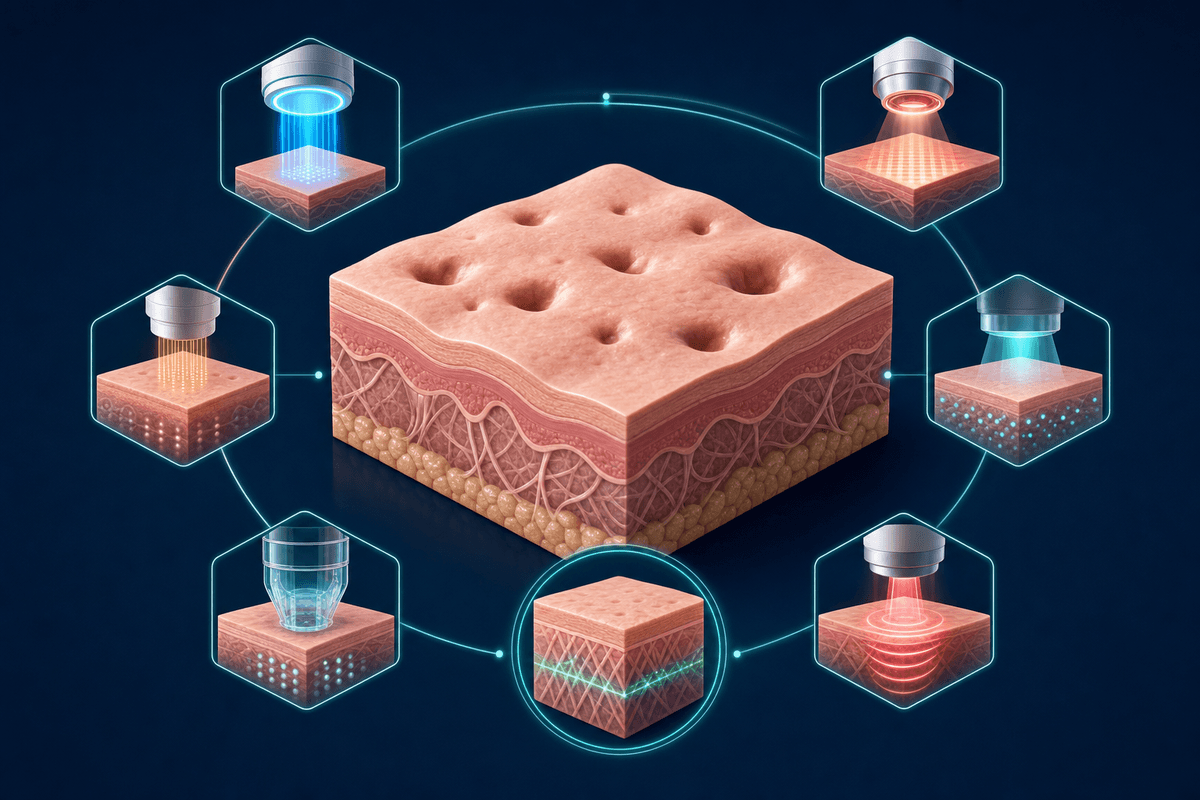
- The deeper the scar, the more effective needles are than lasers, with the depth of fibrous bands being the key factor.
- Depending on the scar type and depth, the principles of fractional laser, microneedling, and subcision work in opposite ways.
- Even at the same depth, boxcar scars and ice pick scars have completely different treatment mechanisms.
Information as of July 2026
Comparing Principles by Scar Depth
- Scars deeper than 3mm: Laser reach rate below 30%
- Subcision: Fibrous band cutting efficiency of 70-85% per session
- Fractional vs. Microneedling: 3x difference in collagen regeneration depth
Acne Scar Treatment: Depth Isn't Everything
"I've had 5 fractional laser sessions, but my deep scars remain unchanged." This is a common complaint in clinics. It's not because the laser is too weak. It's because for atrophic scars deeper than 3mm, the laser energy only reaches less than 30% of the target area.
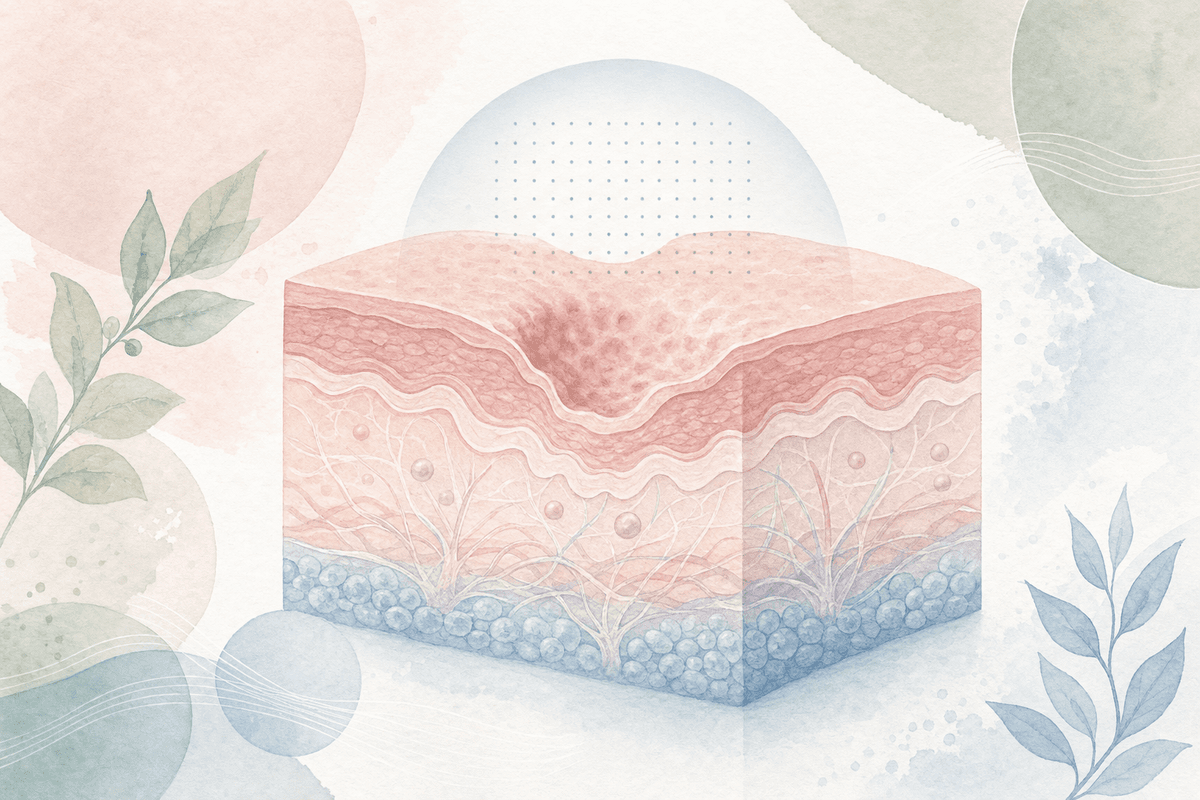
When treating acne scars, you should first consider the scar's shape and the structure of its base, rather than just its depth. Even for scars of the same 3mm depth, boxcar scars are best treated with lasers, rolling scars with microneedling, and ice pick scars with subcision. Why? Because the location and density of the fibrous bands pulling down the scar base differ.
This article compares the mechanisms of action for three acne scar treatments: fractional lasers, microneedling, and subcision, based on scar depth. Instead of repeatedly using lasers on deep scars, we'll first cover the criteria you need to check right now.
Fractional Lasers: Why They Work Best on Shallow Scars
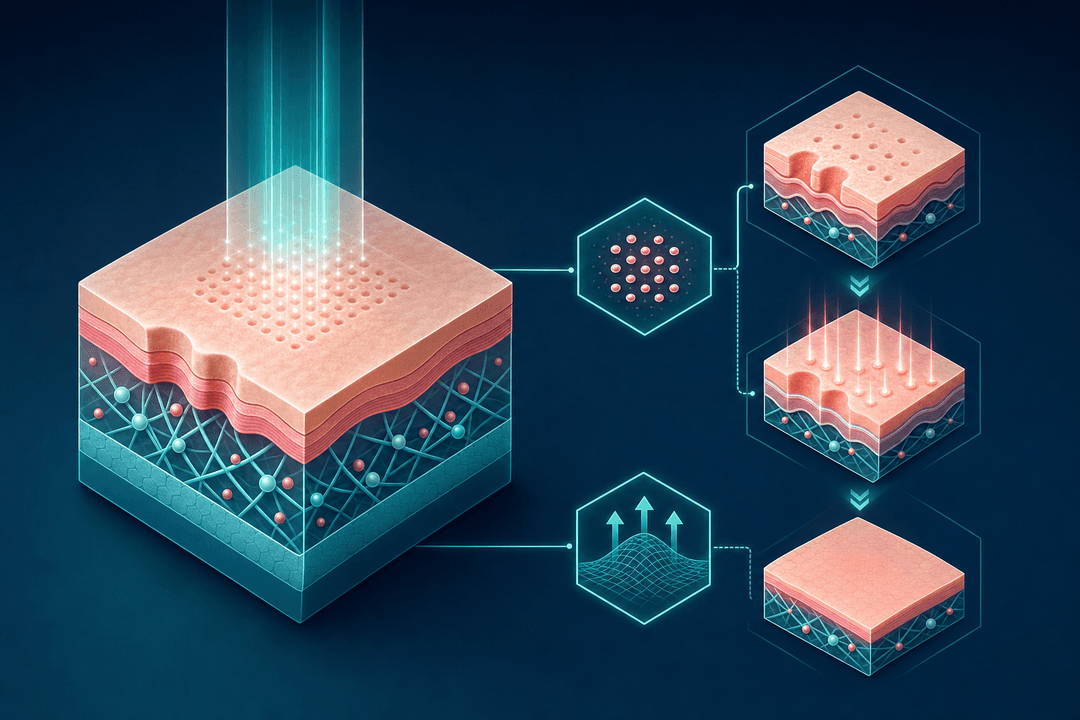
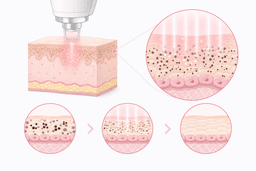
Fractional lasers create hundreds to thousands of microscopic thermal zones in the skin, leading to coagulation and regeneration of collagen in the upper dermis (0.5-1.5mm below the epidermis). Representative devices include Fraxel (Solta Medical, USA) and CO2RE (Candela), with FDA approval in 2004 (Fraxel) and 2009 (CO2RE).
Boxcar scars that are 1-2mm deep with a flat base are the optimal candidates for fractional lasers. This is because the laser columns travel along the scar walls, stimulating collagen buildup due to the near-vertical edges of the scar.
However, the situation changes for scars deeper than 3mm. Laser energy attenuates exponentially with depth, and at a depth of 3mm, less than 30% of the surface energy reaches the target. Insufficient heat reaches the scar base, preventing collagen regeneration.
Clinical Insight Fractional laser treatment increases upper dermal collagen density by an average of 15-20% per session, but the effect drops to less than 5% for depths exceeding 3mm (Journal of Cosmetic Dermatology, 2018).
- Primary target depth for fractional lasers: Upper dermis (0.5-1.5mm)
- Boxcar scars (1-2mm deep): 20-25% improvement per session
- Scars deeper than 3mm: Efficiency drastically decreases with energy reach below 30%
True or False Quiz
Fractional lasers are most effective for acne scars deeper than 4mm.
Check the answer
False Fractional lasers concentrate energy only in the upper dermis (0.5-1.5mm), and their reach drops below 30% for depths over 3mm. For scars deeper than 4mm, the principle is to first cut the fibrous bands with subcision.
Microneedling: It Penetrates Deep, But Can't Break Fibrous Bands
Microneedling uses needles of 0.5-2.5mm in length to directly puncture the dermis, inducing a wound healing response. Unlike lasers, it provides mechanical stimulation without thermal damage, thus lowering the risk of hyperpigmentation and triggering collagen regeneration down to the deep dermis (2-3mm).
Rolling scars are the primary target for microneedling. Rolling scars have a wide, wave-like base, formed by fibrous bands pulling the skin downward from beneath the surface. The needles partially cut through these bands, and new collagen fills the resulting space, lifting the scar base.
However, microneedling has clear limitations. The fibrous band cutting efficiency is only 30-40%. Because the needles move randomly, they cannot target the entire fibrous band. Furthermore, for scars deeper than 4mm, the needle length itself is insufficient to reach the base.
| Procedure | Puncture Depth | Collagen Regeneration Location | Fibrous Band Cutting |
|---|---|---|---|
| Fractional Laser | 0.5-1.5mm | Upper Dermis | No |
| Microneedling | 0.5-2.5mm | Mid-to-Deep Dermis | Partial (30-40%) |
| Subcision | To Subcutaneous Fat Layer | Entire Scar Base | Complete (70-85%) |
Depth and efficiency may vary individually depending on scar type and number of sessions.
- Microneedling needle length: 0.5-2.5mm (varies by device)
- Rolling scars: Average base elevation of 0.3-0.5mm per microneedling session
- Fibrous band cutting efficiency 30-40%; cannot reach scars deeper than 4mm
Subcision: Precisely Targets Fibrous Bands in Deep Scars
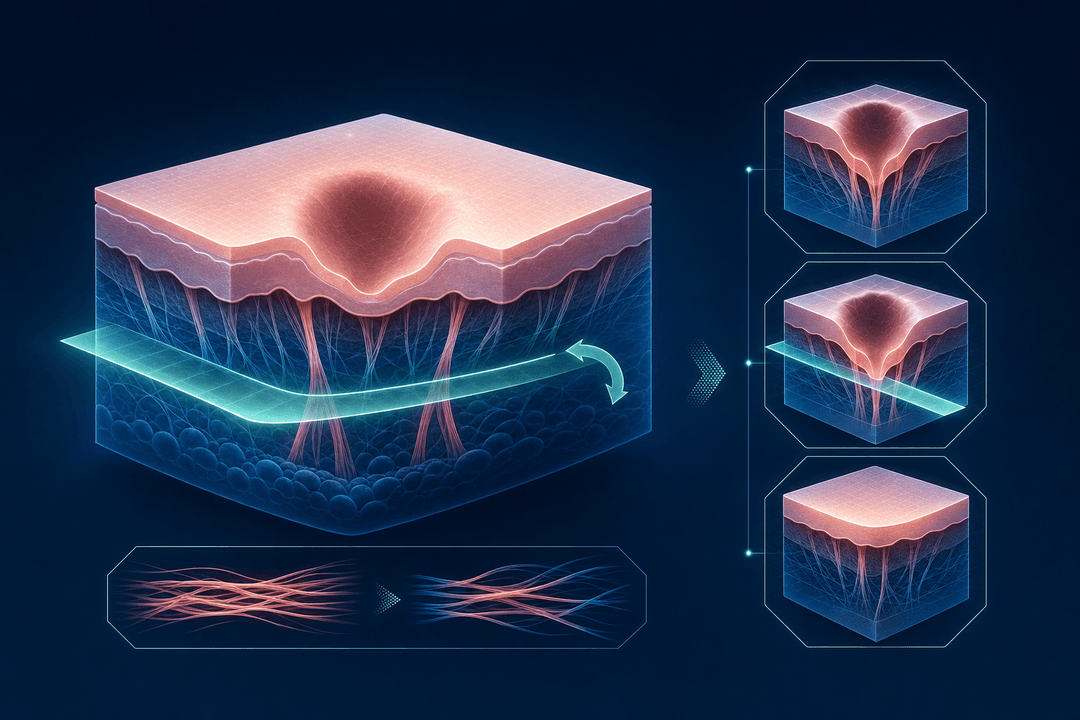
Subcision involves inserting an 18-20G needle or a specialized cannula deep into the subcutaneous fat layer beneath the scar base to physically cut the fibrous bands. First reported by Orentreich and Orentreich in 1995, it has since become the primary treatment of choice for deep rolling and ice pick scars.
The core principle of subcision is cutting the fibrous bands. By inserting the needle below the scar base and moving it laterally (fan-like motion) to sever the bands, the skin immediately lifts, and a hematoma fills the space. This hematoma is replaced by collagen, permanently elevating the scar base.
Ice pick scars are narrow, deep scars less than 2mm in diameter and over 4-5mm deep. Laser or microneedling energy cannot reach the base. The standard treatment is a combination of subcision to cut the fibrous bands, followed by TCA CROSS (Trichloroacetic Acid Chemical Reconstruction Of Skin Scars) applied to the scar opening to promote filling from the base upwards.
Key Point The fibrous band cutting efficiency per subcision session is 70-85%. This is more than double that of microneedling (30-40%), but it comes with a downtime of 1-2 weeks due to bruising and swelling.
- Subcision needle gauge: 18-20G (or Nokor cannula)
- Fibrous band cutting efficiency 70-85%; average scar depth improvement of 40-50% after one session
- Standard protocol for ice pick scars: Subcision + TCA CROSS combination
Treating Scars by Type: Combination is Key
A single treatment cannot resolve all types of scars. Most patients have a mix of boxcar, rolling, and ice pick scars, with varying depths from 1mm to over 5mm. In such cases, combining treatments tailored to each scar type is necessary.
In my practice, the most frequently used combination is subcision (for deep rolling/ice pick scars) → fractional laser 2 weeks later (for shallow boxcar scars/pigmentation) → microneedling 4 weeks later (for overall texture). This approach involves first lifting the scar base with subcision, then refining surface irregularities with fractional lasers, and finally improving overall skin thickness with microneedling.
Dermal fillers are sometimes added. Injecting a small amount of hyaluronic acid filler (e.g., Restylane, Belotero) into the scar base immediately after subcision can inhibit fibrous band reformation and maintain the elevated base. However, fillers are absorbed within 6-12 months, so long-term results depend on the collagen regeneration from subcision itself.
Tip Performing subcision and filler injections on the same day can worsen bruising and swelling. It's safer to administer fillers 1-2 weeks after subcision, once the swelling has subsided.
| Scar Type | Depth | Primary Treatment | Adjunctive Treatment |
|---|---|---|---|
| Boxcar (Shallow) | 1-2mm | Fractional Laser | Microneedling |
| Boxcar (Deep) | 3mm+ | Subcision + Filler | Fractional Laser |
| Rolling | 2-4mm | Subcision or Microneedling | Fractional Laser |
| Ice Pick | 4-5mm+ | Subcision + TCA CROSS | Fractional Laser |
Treatment combinations and sequences may vary based on scar distribution and individual skin characteristics.
- For mixed scar types, the standard combination is subcision → fractional laser → microneedling
- Subcision followed by filler injection increases base elevation retention to 60-70% (vs. 40-50% without filler)
- Average overall scar improvement after 3-5 combination treatment sessions: 50-70%
Acne Scar Treatment: What You Must Check
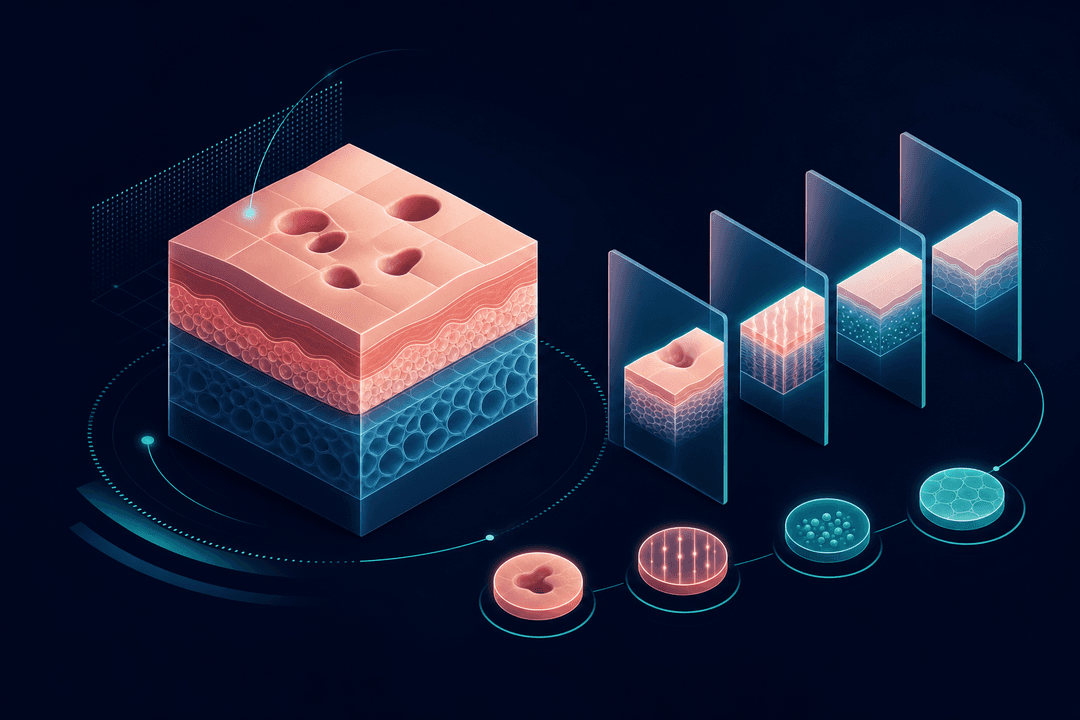
Scar treatment is not a one-time event. The standard protocol involves 4-6 sessions for fractional lasers, 3-5 sessions for microneedling, and 2-3 sessions for subcision. It's more realistic to expect a 10-20% improvement per session rather than a dramatic change after just one.
The interval between sessions is also crucial. The standard interval for fractional lasers and microneedling is 4-6 weeks, and for subcision, it's 6-8 weeks. Since collagen regeneration takes at least 4 weeks, shortening the intervals too much will prevent cumulative effects.
Finally, if you have active acne, you must postpone scar treatment. Performing procedures while inflammation is active can double the risk of hyperpigmentation and further scarring. The principle is to first stabilize the acne (for at least 3 months) before starting scar treatment.
- Standard intervals: 4-6 weeks for fractional lasers/microneedling, 6-8 weeks for subcision
- Improvement per session: 10-20%; total improvement of 50-70% over 3-6 sessions
- Postpone treatment if active acne is present — risk of hyperpigmentation/further scarring is doubled
- Scar base structure (fibrous band location) is more critical than depth in selecting treatment
Comparison of Three Acne Scar Treatments
Fractional Laser [Shallow Boxcar]
- Treatment Depth: 0.5-1.5mm (Upper Dermis)
- Representative Devices: Fraxel, CO2RE
- Improvement per Session: 20-25% (for 1-2mm scars)
- Downtime: 3-5 days
- Cost: ₩200,000 - ₩400,000 per session
Efficiency drops for scars deeper than 3mm due to energy reach below 30%
Microneedling [Rolling]
- Treatment Depth: 0.5-2.5mm (Mid-to-Deep Dermis)
- Fibrous Band Cutting: 30-40%
- Base Elevation per Session: 0.3-0.5mm
- Downtime: 2-4 days
- Cost: ₩150,000 - ₩300,000 per session
Low risk of hyperpigmentation due to no thermal damage, but needle length is insufficient for scars deeper than 4mm
Subcision [Deep Rolling/Ice Pick]
- Treatment Depth: To Subcutaneous Fat Layer
- Fibrous Band Cutting: 70-85%
- Improvement per Session: 40-50%
- Downtime: 1-2 weeks (bruising/swelling)
- Cost: ₩300,000 - ₩600,000 per session
Most effective for deep scars, but has longer downtime and may require additional cost for TCA CROSS combination
Choosing the Right Treatment for Your Scar
If most of your scars are shallow (1-2mm) and boxcar-shaped
Start with fractional laser treatment.
It's most effective for flat-based scars by regenerating upper dermal collagen and has a short downtime.
If your cheeks have a widespread, wave-like appearance (rolling scars)
Consider a combination of subcision and microneedling.
The standard approach is to first release the fibrous bands with subcision, then improve overall texture with microneedling.
If you have scattered, narrow, and deep scars resembling puncture marks (ice pick scars)
A combination of subcision and TCA CROSS is essential.
Laser and microneedling cannot reach the base; after cutting the fibrous bands, chemical peeling is needed to promote filling from the base up.
If you have a mix of scar types and varying depths
Combine treatments tailored to each scar type.
A phased approach—subcision for deep areas, fractional laser for shallow areas, and microneedling for overall texture—enhances the final result.
Common Misconceptions
Misconception Fractional lasers are the most powerful and can resolve even deep scars.
Truth Laser energy attenuates with depth. For scars deeper than 3mm, the reach is less than 30%, making it ineffective. Subcision or microneedling are more efficient in these cases.
Misconception Scars will significantly improve after just one session.
Truth Scar treatment is an accumulative process with 10-20% improvement per session. The standard protocols are 4-6 sessions for fractional lasers, 3-5 for microneedling, and 2-3 for subcision. Dramatic results after one session are unlikely.
Before Acne Scar Treatment: Essential Checks
- Postpone treatment if you have active acne (ongoing inflammation) — risk of hyperpigmentation and further scarring is more than doubled.
- Do not apply exfoliating ingredients like retinol, AHA, or BHA on the day of treatment (discontinue at least 3 days prior).
- Avoid strenuous exercise and saunas for 1-2 weeks after subcision — this can worsen bruising/swelling and increase infection risk.
- Thoroughly apply sunscreen (SPF 50+, reapply every 2 hours) for 48 hours after fractional laser treatment.
- Inform your doctor if you are pregnant, breastfeeding, have a history of keloids, or have a history of herpes simplex.
Frequently Asked Questions
Is fractional laser or microneedling more painful?
The pain level is similar. Both procedures are performed after applying numbing cream for 30 minutes and involve a stinging sensation and heat during treatment. However, microneedling involves direct needle punctures causing pinpoint bleeding, while fractional lasers may leave a longer-lasting heat sensation.
How long does bruising last after subcision?
Bruising and swelling typically last for 1-2 weeks. The first 3 days are the most severe, gradually subsiding thereafter. Taking arnica cream or bromelain supplements may slightly speed up recovery, but complete resolution takes at least 10 days.
Can I receive multiple treatments in one session?
While possible, it is not recommended. Combining subcision and fractional laser on the same day can more than double bruising and swelling and increase infection risk. It is safer to wait 2 weeks after subcision or 4 weeks after fractional laser before the next procedure.
When can I start wearing makeup after scar treatment?
Makeup is generally permissible 24-48 hours after fractional laser and microneedling, and 3-5 days after subcision. However, stick to light base makeup and avoid rubbing with brushes or sponges for a week, as irritation can lead to hyperpigmentation.
What are the potential side effects?
The most common side effect is temporary post-inflammatory hyperpigmentation (PIH), occurring in 10-15% of fractional laser patients and 5-10% of microneedling patients. Most cases resolve naturally within 3-6 months, but neglecting sun protection can make it permanent. Subcision carries a risk of infection (less than 1%) in addition to bruising and swelling; contact your clinic immediately if swelling or heat persists for more than 3 days.
What is the typical cost?
Fractional laser sessions typically range from ₩200,000 to ₩400,000, microneedling from ₩150,000 to ₩300,000, and subcision from ₩300,000 to ₩600,000. Costs vary depending on the scar area and equipment used. Some clinics offer package deals for combination treatments. The total cost for a 3-5 session protocol generally falls between ₩1,500,000 and ₩3,000,000.
Lumi's Note
You don't always need to seek out stronger lasers for deep scars. The key is how you release the fibrous bands pulling down the scar base. I hope this article helps you prioritize checking your scar type when choosing a treatment. Feel free to return anytime if you have more questions about procedures!
This content is for informational purposes only and does not substitute for medical advice. The appropriate acne scar treatment varies depending on individual skin condition and scar type, so consult with a dermatologist before undergoing any procedure.