Why More Thread Lift Threads Aren't Always Better

- Inserting more threads doesn't necessarily mean longer-lasting elasticity — skin thickness makes a difference.
- Even with the same PDO threads, recovery time can vary up to threefold depending on skin type.
- Why PCL cog threads can actually look bumpy on thin skin.
Information as of August 2026
How to Choose the Best Thread for Your Skin Type
- PDO thread absorption: 6 months
- PCL thread duration: 12-18 months
- PLLA thread collagen production: 24 months
Does Inserting More Threads Last Longer?
If you thought that more threads in a Thread Lift meant longer-lasting results, you're only half right. Depending on the type of thread and your skin type, the placement, rather than the number, dictates the outcome.
There are three main types of Thread Lift threads: PDO, PCL, and PLLA. Each has a different absorption rate and collagen-generating mechanism, and the suitable thread varies based on skin thickness and elasticity.
PDO, PCL, PLLA: What's the Difference?
PDO threads (Polydioxanone) are absorbed within 6 months and aim for immediate lifting. They are thin and soft, putting less strain on the skin, but have the shortest duration.
PCL threads (Polycaprolactone) dissolve slowly over 12-18 months, stimulating collagen production.
PLLA threads (Poly-L-Lactic Acid) promote collagen regeneration for over 24 months. However, the immediate effect is mild, with a plumping sensation starting after 2-3 months.
If you want quick changes, PDO is suitable; if long-term elasticity is your goal, PLLA is the way to go.
OX Quiz
For a 30-something with thin skin, inserting many PCL cog threads is effective.
Check the Answer
X For skin less than 1.2mm thick, the cogs on cog threads can cause unevenness and visibility on the skin's surface. In such cases, PDO smooth threads are safer.
Which Thread is Right for My Skin?
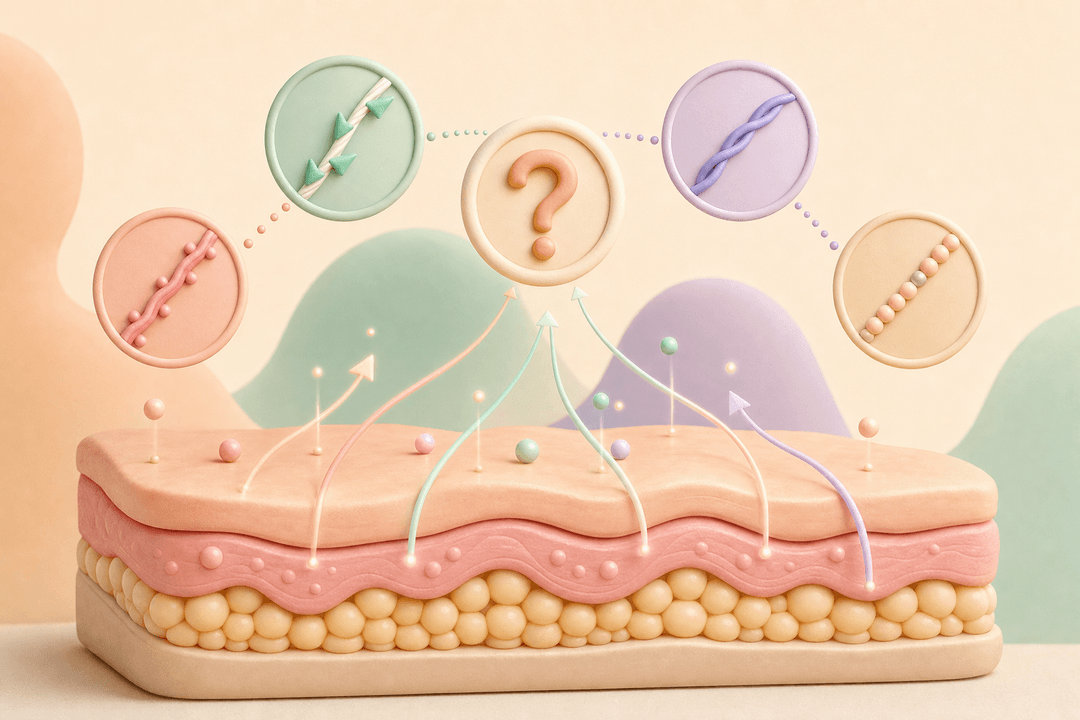
For those with thin and delicate skin, PDO smooth threads are safe. Cog threads (with barbs) can cause unevenness and visibility on skin less than 1.2mm thick.
Conversely, if your skin is thick and sagging significantly, the pulling power of PCL cog threads is needed.
It's common for individuals in their early 30s to opt for PDO for a light lift, while those over 40 often choose PLLA for collagen regeneration.
However, if you have a constitution prone to strong inflammatory reactions, it's best to avoid PLLA.
Caution If you have a history of keloid scarring or autoimmune diseases, PLLA carries a higher risk of inflammatory reactions and requires prior consultation with a medical professional.
Just Remember This
Instead of increasing the number of threads, the priority is to accurately place the right threads for your skin type.
Inserting too many cog threads into thin skin can lead to an uneven appearance, and using only smooth threads on thick skin may result in a weak effect.
The key is to choose the thread type by considering skin thickness, degree of sagging, and recovery time budget before the procedure. Inserting more threads does not double the elasticity.
- Skin thickness of 1.2mm is a criterion for thread selection
- PCL lasts twice as long as PDO
Choosing the Right Thread for Me
Early 30s, thin skin, desire for immediate lifting
20-30 strands of PDO smooth threads
Over 40, significant sagging, goal of long-term elasticity
Combination of PLLA mesh threads + PCL cog threads
Misconceptions
Myth The more threads inserted, the longer the effect lasts.
Truth The type and placement of threads suitable for your skin type, rather than the number, determine the duration of the effect. Over-inserting cog threads into thin skin can actually make it look uneven.
Check Before Your Thread Lift
- If you have a history of keloid scarring or autoimmune diseases, consult a medical professional before using PLLA.
- For 2 weeks post-procedure, avoid excessive head bending or sleeping on your side to prevent thread migration.
- If inflammation or swelling persists for over a week, or if threads become visible, seek immediate re-examination.
Frequently Asked Questions
How long does swelling last after a Thread Lift?
It typically subsides within 3-5 days. Cog threads may take about two days longer than smooth threads.
Can PCL and PLLA be used together?
Yes, they are sometimes used in combination when aiming for both immediate lifting (PCL) and long-term regeneration (PLLA) simultaneously.
What are the side effects of Thread Lifts?
Threads may rarely become visible through the skin, or infection/inflammation may occur. If swelling persists for more than a week, re-examination is necessary.
Lumi's Note
Choosing the right type for your skin is more important than the number of threads. If you have thin skin, opt for PDO smooth threads for a light lift. If sagging is a concern, aim for long-term elasticity with PCL or PLLA. I hope you greet yourself with a smile in the mirror every day!
This content is for informational purposes only and does not substitute medical advice. Always consult with a specialist before undergoing any procedure.