5 Types of Laser Toning: How to Choose Based on Your Pigmentation Concerns
- Why Recommended Lasers Differ Based on Depth and Distribution of Melasma
- Laser toning determines the depth of target pigment based on the combination of wavelength, pulse width, and energy density.
- The risk of inflammatory hyperpigmentation varies by skin type, influencing the criteria for device selection.
Information as of July 2026
Customized Criteria from a Dermatologist
- 5 types of toning lasers approved in Korea
- 3-step selection criteria by skin type
- Wavelength difference by pigment depth: 532-1064nm
Laser Toning Types: Why So Many?
Yesterday, a patient in her 30s showed me her smartphone screen in the clinic. "Doctor, what's the difference between this laser and that one? They both say 'toning'." The ones she pointed to were Picosecond Toning and Lutronic Spectra. Although both have 'toning' in their name, their operating principles and targets are completely different.
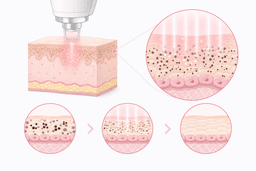
There are three core criteria for categorizing laser toning types: wavelength (what nm of light is emitted), pulse duration (how short a time energy is delivered), and energy density (J/cm²). The combination of these determines whether the target is superficial epidermal pigment or deep dermal melanin.
The main laser toning devices approved in Korea for pigment treatment are categorized into five types: Q-switched Nd:YAG (1064nm), Ruby Laser (694nm), Alexandrite (755nm), Picosecond Laser, and Fractional Toning. Each differs in pigment depth, skin type, and recovery period, so choosing the one that suits your concerns is crucial for results.
- Laser Toning Wavelength Range: 532nm (epidermal pigment) ~ 1064nm (dermal pigment)
- Q-switched Pulse Duration: 5-10ns, Picosecond Pulse Duration: 450-750ps
- Major Devices in Korea: Lutronic Spectra, Qplus, Enlighten, PicoSure, Discovery Pico
Q-switched vs. Picosecond: The Real Difference is Time
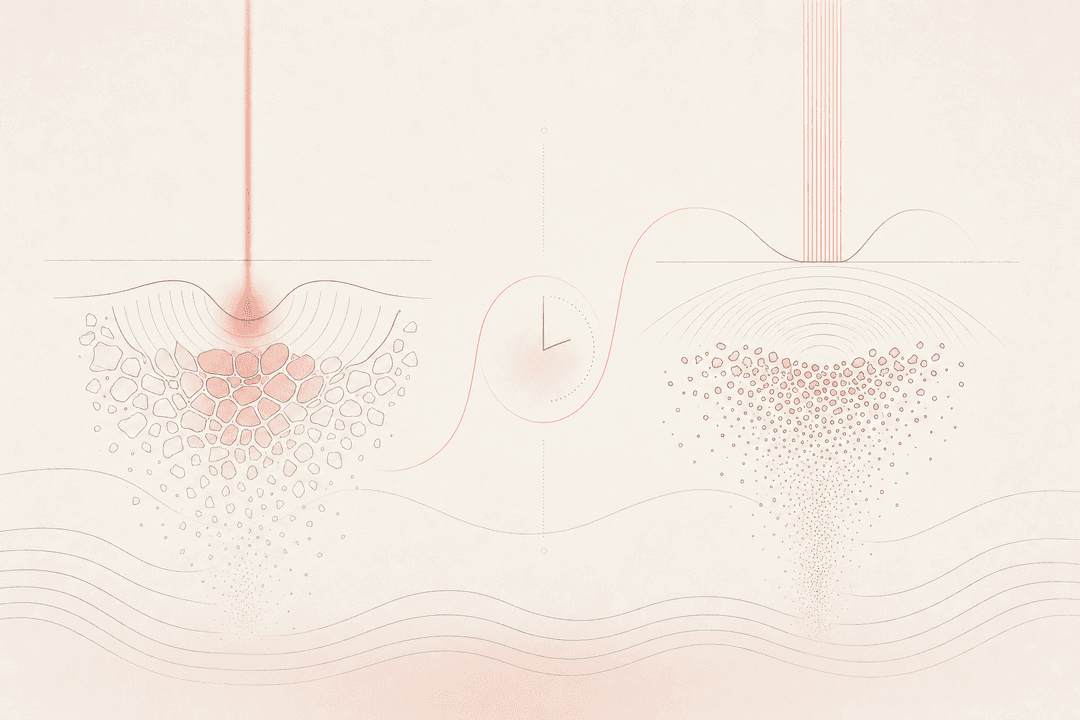
People often say "Pico is better," but in reality, picosecond lasers and Q-switched lasers have different targets. Q-switched lasers emit energy for 5-10 nanoseconds (ns), while picosecond lasers deliver it for 450-750 picoseconds (ps), which is about 10-20 times shorter.
This time difference is important because melanin pigment has something called a thermal relaxation time when it absorbs energy. To break down pigment without damaging surrounding skin, energy must be delivered before the pigment can spread heat to nearby tissues. Picosecond lasers operate much faster than this time, breaking pigment into smaller particles while reducing surrounding thermal damage.
Q-switched 1064nm, like Lutronic Spectra, is effective for dermal melasma. It's the most widely used toning laser in Korea since its MFDS approval in 2013. In contrast, picosecond lasers like Qplus or Enlighten show faster responses for congenital pigments such as freckles and nevus of Ota on the epidermis.
Clinical Study According to a 2019 study published in the Journal of the Korean Dermatological Association, picosecond lasers showed equivalent improvement in melasma treatment with an average of 2-3 fewer sessions compared to Q-switched lasers. However, the incidence of post-inflammatory hyperpigmentation was similar for both devices, at 8-12%.
| Laser Type | Pulse Duration | Wavelength | Primary Target |
|---|---|---|---|
| Q-switched Nd:YAG | 5-10ns | 1064nm | Dermal melasma, Nevus of Ota |
| Picosecond Nd:YAG | 450-750ps | 532/1064nm | Combined epidermal and dermal pigment |
| Alexandrite | 50-100ns | 755nm | Freckles, Lentigines |
| Ruby | 20-40ns | 694nm | Congenital pigment, Tattoo removal |
OX Quiz
Picosecond lasers deliver energy for a shorter time than Q-switched lasers, so they should always be the first choice for all pigment treatments.
Check the Answer
X While picosecond lasers show rapid responses for epidermal and superficial pigments, Q-switched 1064nm may be a more stable choice for deep dermal melasma or skin types IV and above, reducing the risk of PIH. The appropriate device varies depending on pigment depth and skin response.
Why Recommended Lasers Vary by Skin Type
When selecting laser toning, skin type is an absolutely essential factor. According to the Fitzpatrick scale, most Koreans fall into types III-IV. For types IV and above, the risk of post-inflammatory hyperpigmentation (PIH) is about 15-20% higher after laser treatment.
Darker skin tones have more epidermal melanin, so both pigment and normal melanin absorb laser energy. In this case, longer wavelengths like Q-switched 1064nm have relatively lower melanin absorption, stimulating the epidermis less while reaching the dermis. Conversely, shorter wavelengths like 532nm or 755nm react strongly with epidermal melanin, increasing the PIH risk for types IV and above.
The 2020 MFDS guidelines also recommend prioritizing 1064nm wavelength for skin types IV-VI. This is precisely why we first assess skin type before deciding on the device in clinical practice.
- Fitzpatrick Type III: Safe to use 532nm & 755nm
- Type IV and above: Prioritize 1064nm, lower energy density to 2.0-2.5 J/cm²
- PIH Incidence: Type III 8%, Type IV 15%, Type V and above 22%
Wavelength Must Change Based on Pigment Depth
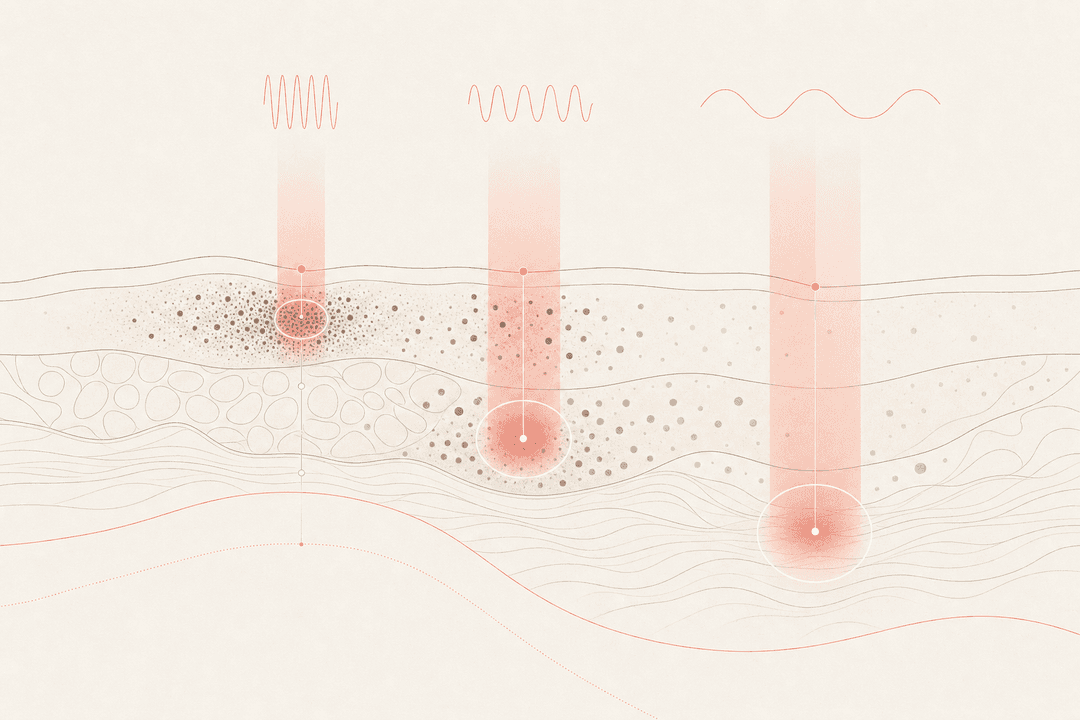
The most crucial factor when comparing pigment lasers is where the pigment is located. Freckles are in the epidermal basal layer (0.1-0.2mm), melasma is at the epidermal-dermal junction (0.3-0.5mm), and nevus of Ota is in the mid-dermis (0.5-1.0mm).
Shorter laser wavelengths are absorbed at the skin's surface, while longer wavelengths penetrate deeper. The 532nm wavelength is effective for epidermal pigments, and 1064nm for dermal pigments. For example, devices like Discovery Pico, which can switch between 532nm, 694nm, and 1064nm, are advantageous for individuals with pigment at multiple depths.
Since melasma is usually a mix of epidermal and dermal pigment, a stepwise approach is necessary: first reduce deep pigment with 1064nm, then clear superficial pigment with 532nm. Conversely, freckles can be sufficiently treated with a single wavelength like 755nm Alexandrite or 532nm.
Tip Even with the same melasma, the starting wavelength differs based on whether it's epidermal (darker under UV light) or dermal (no change) when viewed with a Wood's lamp. For epidermal melasma, 532nm is the primary choice, and for dermal melasma, it's 1064nm.
Where Do Costs and Session Counts Differ?
Laser toning costs range from 50,000 to 250,000 KRW per session, depending on the device, area, and energy settings. Full-face Q-switched toning averages 80,000-120,000 KRW, while picosecond toning is around 150,000-250,000 KRW. Typically, 5-10 sessions are recommended at 4-6 week intervals.
Because picosecond lasers have shorter pulse durations that break pigment into smaller particles, they can achieve similar results in 2-3 fewer sessions than Q-switched lasers. However, the higher cost per session often results in a similar or slightly higher total cost.
Fractional toning, unlike conventional toning, creates microthermal zones to expel pigment, leading to 2-3 days of downtime. However, the recovery process also stimulates collagen regeneration, offering benefits for pores and elasticity. Costs range from 150,000 to 300,000 KRW per session, with 3-5 sessions recommended.
| Laser Type | Cost per Session | Recommended Sessions | Interval |
|---|---|---|---|
| Q-switched Toning | 80,000-120,000 KRW | 5-10 sessions | 4-6 weeks |
| Picosecond Toning | 150,000-250,000 KRW | 3-7 sessions | 4-8 weeks |
| Fractional Toning | 150,000-300,000 KRW | 3-5 sessions | 6-8 weeks |
| Ruby/Alexandrite | 100,000-200,000 KRW | 3-5 sessions | 6-8 weeks |
Costs may vary depending on the area, scope, and medical institution.
How to Ultimately Choose the Right Laser for You
Choosing laser toning isn't just about picking the "latest device"; it should be tailored to your pigment type, skin response, and schedule. For epidermal freckles, 755nm Alexandrite or 532nm picosecond offer quick results, while for dermal melasma, 1064nm Q-switched is stable.
If you have skin type IV or higher, or a history of PIH, it's safer to start with a longer wavelength (1064nm) and lower energy (2.0-2.5 J/cm²). If you cannot afford any downtime due to your job, avoid fractional toning and seek clinics that use conservative energy settings for standard toning.
- Selection Priority: Confirm pigment depth → Check skin type → Assess downtime → Consider total budget
- First session: Perform a test shot to check reaction before full treatment
- PIH Prevention: Mandatory reapplication of SPF 50+ sunscreen for 2 weeks post-treatment
Comparison of Representative Laser Toning Devices
Lutronic Spectra [Major Domestic Market Share]
- Q-switched Nd:YAG 1064nm
- Primary target: Dermal melasma, Nevus of Ota
- 80,000-120,000 KRW per session, 5-10 sessions
A stable choice, suitable for skin types IV and above
Qplus/Enlighten [Representative Picosecond]
- Picosecond 532/1064nm Dual
- Combined epidermal and dermal pigment
- 150,000-250,000 KRW per session, 3-7 sessions
Rapid response for freckles and superficial pigment, fewer total sessions
Fractional Toning [Pigment + Elasticity Simultaneously]
- Microthermal zone method
- 2-3 days downtime
- 150,000-300,000 KRW per session, 3-5 sessions
Simultaneous effects of pigment expulsion and collagen regeneration
Laser Selection Guide for My Situation
Superficial freckles spread across the face, 20s, skin type III
Alexandrite 755nm or Picosecond 532nm
Strong absorption by epidermal pigment, rapid improvement expected in 3-5 sessions
Dermal melasma on both cheeks, 30s-40s, skin type IV
Q-switched 1064nm (e.g., Lutronic Spectra)
Longer wavelength reduces epidermal stimulation and reaches the dermis, lowering PIH risk
Cannot afford downtime, wants lunchtime procedure
Standard Toning (Q-switched or Picosecond), energy 2.0-2.5 J/cm²
Excluding fractional, low energy allows immediate makeup application
Budget under 1 million KRW, aiming for completion in 5 sessions
5 sessions of Q-switched + concurrent home use of tretinoin
Lower cost per session than picosecond, goal achievable in 5 sessions with concurrent topical treatment
Common Misconceptions
Misconception Pico lasers are always better than Q-switched lasers.
Truth Picosecond lasers break pigment into smaller particles due to their short pulse duration, but Q-switched 1064nm may be more stable for deep dermal melasma. The appropriate device varies depending on pigment depth and skin type.
Misconception Stronger toning in one session can reduce the number of treatments needed.
Truth Toning works by gradually reducing pigment through repeated low-energy treatments. High-energy single pulses can actually increase the risk of PIH and may worsen pigmentation.
Pre- and Post-Laser Toning Precautions
- Discontinue retinol and exfoliants for 2 weeks before treatment (minimize epidermal irritation)
- Mandatory application of SPF 50+ sunscreen on the day of treatment, reapply every 2 hours
- Avoid saunas, steam rooms, and excessive exercise for 1 week after treatment (avoid heat stimulation)
- Apply cold compresses immediately if redness persists; consult a doctor if it lasts more than 48 hours
- Do not use whitening agents arbitrarily if PIH occurs — professional prescription is required
Frequently Asked Questions
Can I wear makeup immediately after laser toning?
For standard toning (Q-switched and picosecond), makeup is possible 30 minutes after application of sunscreen. However, fractional toning has 2-3 days of downtime, so makeup on the same day should be avoided.
How many sessions are needed to see results?
An average of 3-5 sessions for epidermal freckles and 5-10 sessions for dermal melasma. Picosecond lasers require 2-3 fewer sessions than Q-switched, but individual results vary greatly depending on pigment depth and area.
Do I absolutely need to change lasers based on my skin type?
Yes, for skin types IV and above (skin that tans easily in summer), using short wavelengths (532nm/755nm) increases the risk of post-inflammatory hyperpigmentation by 15-20%. Longer wavelengths of 1064nm are safer.
What are the side effects of laser toning?
The most common are temporary redness (several hours to 2 days) and post-inflammatory hyperpigmentation (PIH, 8-15%). Rarely, blisters, scabs, or vitiligo have been reported, and high-energy exposure can potentially worsen pigmentation. Pre-treatment skin assessment is essential.
Can I get toning effects from an at-home LED mask?
Home LED devices do not have pigment removal effects. Toning works by fragmenting melanin with high-energy lasers of specific wavelengths, which is only possible with medical devices. LEDs only assist with soothing and regeneration.
How is toning different from IPL?
IPL (Intense Pulsed Light) uses a non-laser light source that emits a broad spectrum of wavelengths (500-1200nm) to improve pigment, blood vessels, and pores simultaneously, but its selectivity is low. Toning uses a single-wavelength laser to target pigment specifically, and toning is prioritized for melasma treatment.
Lumi's Take
Even if laser names seem complicated, the key is ultimately where your pigment is located and how your skin reacts. Finding the right wavelength and energy for your situation comes before choosing the device. If you use the criteria organized today during your consultation, you'll be able to see the laser that truly suits you. I hope your pigment concerns are resolved!
This content is for informational purposes only and does not substitute for medical advice. Always consult with a specialist before undergoing any procedure.