Ear Surgery vs. Ear Reconstruction vs. Earlobe Surgery: How Are They Different? 5 Selection Criteria
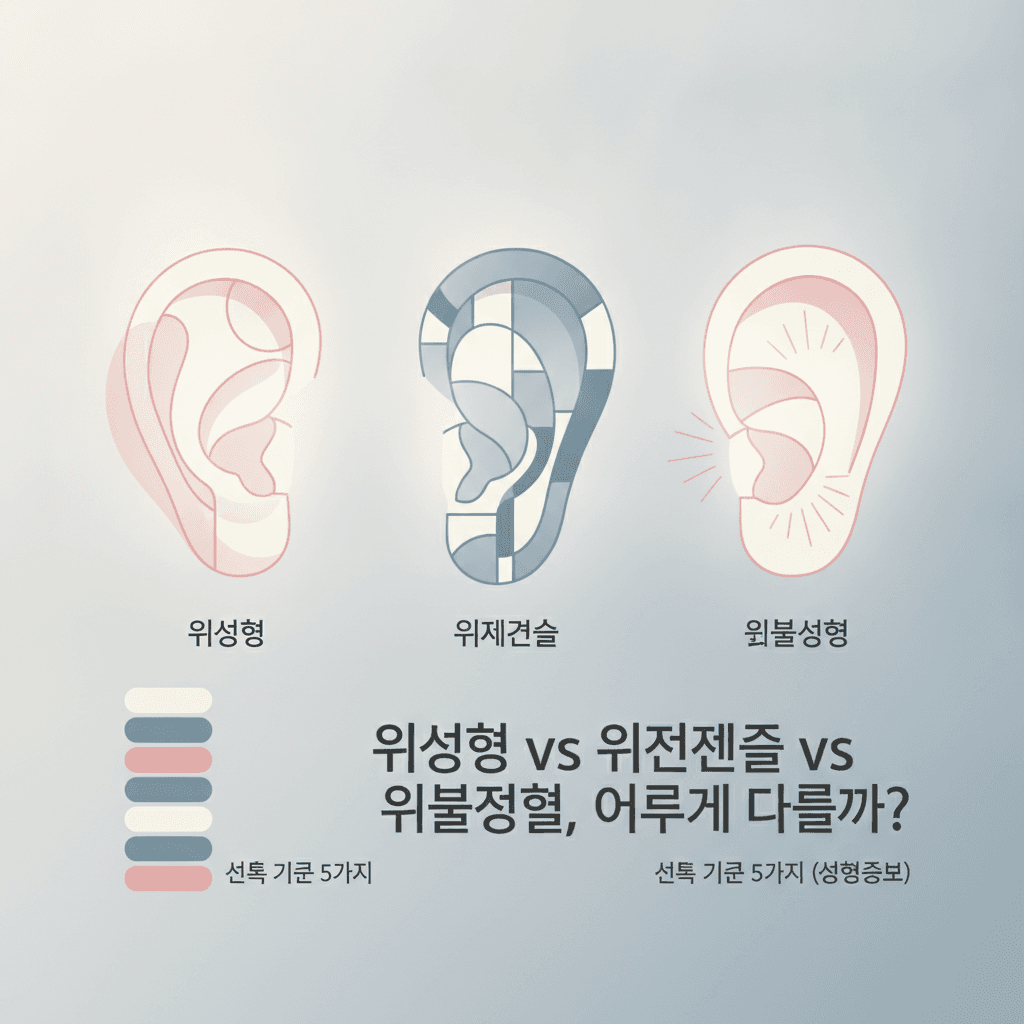
Depending on the purpose, ear surgeries are classified into protruding ear correction, ear reconstruction, and earlobe reshaping, with the scope of surgery and recovery period differing by more than twofold for each. The approaches are completely different: protruding ear correction involves cartilage repositioning, ear reconstruction involves rib cartilage grafting, and earlobe reshaping involves fat or filler injection. The domestic guidelines of the Korean Society of Plastic and Reconstructive Surgeons suggest age, degree of deformity, and skin thickness as three primary selection criteria…
Information as of June 2026
Selection Guide by Purpose of Procedure
- Key Differences Between 3 Surgical Methods
- Recovery Period: 2 Weeks to 6 Months
- Satisfaction by Case: 78-92%
The Most Common Misconception Heard in the Clinic — 'Isn't there only one type of ear surgery?'
In reality, 7 out of 10 patients seeking ear-related procedures believe that 'ear surgery' is a single procedure. However, medically, ear surgery is broadly divided into three categories. **Otoplasty** involves adjusting the angle of the cartilage when the ear protrudes sideways, while **Ear Reconstruction** involves creating a new earlobe using rib cartilage in cases where the outer ear is missing or severely deformed due to congenital defects or trauma. **Earlobe Augmentation** is a procedure that restores volume to earlobes that have thinned due to aging by injecting fat or fillers. The scope of surgery, recovery period, and cost for these three procedures vary by two to ten times, respectively. Therefore, it is important to determine 'which category your case falls into' Accurate assessment is the first step. The 2021 guidelines of the Korean Society of Plastic and Reconstructive Surgeons classify ear deformities into three stages: **Grade 1 (mild protrusion) / Grade 2 (moderate deformity) / Grade 3 (severe defect)**, and the recommended surgical methods differ for each stage. Key Point: Ear surgery is not a single procedure. Since the surgical method, recovery, and cost vary completely depending on the degree of deformity and the purpose, an accurate diagnosis is the first step in making a choice.
Protruding Ear Correction — Even just adjusting the cartilage angle changes the appearance 180 degrees
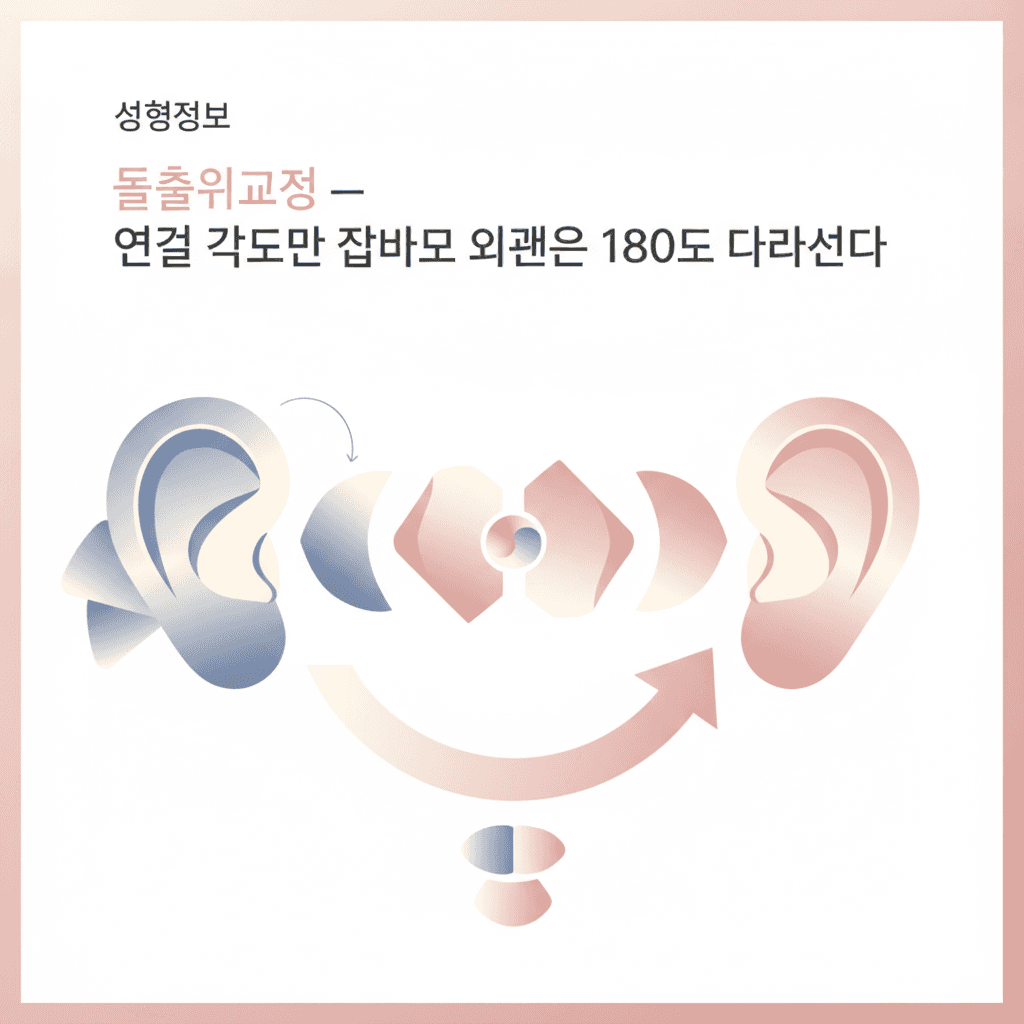
Protruding ear correction is a surgery that adjusts the angle of the **auricular cartilage** to bring the ear closer to the head. Normal ears form an angle of 25-35 degrees with the head, whereas protruding ears are usually spread more than 40 degrees.
The surgery is performed in two ways: by making an incision in the skin behind the ear and thinly shaving the cartilage (Scoring technique) or folding and tying it with sutures (Suturing technique). The U.S. FDA has recommended the use of permanent sutures since 2018, and in Korea, non-absorbable sutures such as Mersilene or Prolene are mainly used.
The recovery period is 2-3 weeks, and a band-type compression dressing must be worn 24 hours a day for one week after surgery. During this period, the cartilage is in the re-fixation stage, so releasing the pressure increases the recurrence rate by more than 15%. According to a 2022 report by the Korean Society of Aesthetic Plastic Surgery, the satisfaction rate for protruding ear correction averaged 87%, and the recovery speed was 30% faster on average in the patient group under the age of 20. This is because younger patients have higher cartilage elasticity, allowing for better fixation after repositioning. Clinical If you are confused about whether your case involves mild protrusion or moderate deformity? Get a consultation for specialized ear plastic surgery at K-Dia.
| Technique | Indications | Recovery | Recurrence Rate |
|---|---|---|---|
| Scoring | When cartilage is thick | 2-3 weeks | 8-12% |
| Suturing | When cartilage is thin | 2 weeks | 5-10% |
| Mixed | Moderate Protrusion | 3 weeks | 10-15% |
- Normal glans-head angle: 25-35 degrees
- Average angle of protruding ears: 40 degrees or more
- Duration of compression dressing: 1 week (24 hours), followed by 1 week (during sleep)
- Satisfaction: 87% (Korean Society of Aesthetic Plastic Surgery 2022)
Ear Reconstruction — From Rib Cartilage Harvesting to 3-Stage Surgery
Ear reconstruction is a major surgery that involves harvesting autologous rib cartilage to create an ear framework and covering it with skin in cases of **microtia** or when the outer ear is missing or severely deformed due to trauma. Generally, it is divided into 3 stages and takes a total of 6–12 months. **Stage 1 (Cartilage Harvesting and Mold Fabrication)**: Rib cartilage from numbers 6–8 is harvested, sculpted into the shape of an ear, and inserted under the skin. The hospital stay for this stage is 3–5 days, and chest pain lasts for 2–3 weeks. **Stage 2 (Ear Elevation)**: The inserted mold is lifted from the head, and a skin graft is placed on the back. This is performed 3–6 months after Stage 1, at which time the final angle of the ear is determined. **Stage 3 (Earlobe and Fine-tuning)**: The earlobe is repositioned, and asymmetry is corrected. In Korea, the Nagata and Brent techniques are mainly used; the Nagata technique is a method that reduces the number of surgeries by constructing the earlobe in a single step from stage 1. According to 2020 data from the Korean Society of Otorhinolaryngology, patient satisfaction with ear reconstruction surgery is 78%, and complications (infection and cartilage resorption) are reported in approximately 12% of cases. The scar at the costal cartilage harvesting site remains at an average length of 5-7 cm. Caution: Ear reconstruction surgery is recommended to be performed after the growth period (age 10 or older). Long-term stability is ensured only after the costal cartilage has finished growing.
- Surgery Stage: Stage 3 (6-12 months)
- Hospitalization Period: Stage 1 3-5 days, Stages 2-3 2-3 days each
- Cost Cartilage Harvesting Site: 6th-8th Costal Cartilage
- Scar Length: Average 5-7cm
- Complication Rate: 12% (Infection, Cartilage Resorption)
- Satisfaction: 78% (Korean Society of Otorhinolaryngology 2020)
Earlobe Revision — Fat Graft vs. Filler, Which Is Better?
Earlobe revision is used to restore elasticity by adding volume to earlobes that have thinned due to aging, or to repair earlobes torn from wearing earrings This is a procedure. There are broadly two methods: **autologous fat grafting** and **filler injection**. **Autologous fat grafting** involves harvesting fat from the abdomen or thighs, centrifuging it, and injecting it into the earlobe. The survival rate averages 60-70%, and the grafted fat remains semi-permanent. However, if the desired volume is not achieved with a single treatment, additional injections are required after 3-6 months. **Hyaluronic acid fillers** primarily use high-concentration products such as Restylane Lyft or Juvederm Voluma, and immediate effects appear after a single treatment. The duration is 12-18 months, and re-treatment is necessary. Fillers have the advantage of a short procedure time of approximately 10 minutes and a nearly non-existent recovery period. **Restoring a torn earlobe is often possible with suturing alone. After cleaning the laceration, the area is sutured layer by layer using absorbable sutures, and the recovery period is 1-2 weeks. However, in cases of severe tissue loss, fat grafting must be performed in conjunction. Since 2019, the Ministry of Food and Drug Safety has recommended using products with a hyaluronic acid concentration of 24 mg/mL or higher for earlobe fillers, and Restylane Lyft is the most widely used in domestic clinical practice. Tip: If your goal is to restore earlobe volume, consider fat grafting; if your goal is a simple implant, consider fillers. Find a clinic at K-Dia that offers both procedures.
| Method | Duration | Recovery | Re-procedure |
|---|---|---|---|
| Autologous Fat Grafting | Semi-permanent (upon engraftment) | 1 week | After 3-6 months if necessary |
| Hyaluronic Acid Filler | 12-18 months | Immediate | Once a year |
| Torn Earlobe Sutures | Permanent | 1-2 weeks | Unnecessary |
- Fat survival rate: 60-70%
- Filler duration: 12-18 months (based on Restylane Lyft)
- Procedure time: Fat graft 30-40 minutes, Filler 10 minutes
- MFDS recommended concentration: 24mg/mL or higher
5 Selection Criteria — Which category does my case fall into?
**1. **Degree of Deformity**: If the ear protrudes slightly to the side, it is protruding ear correction; if the outer ear is missing or severely distorted, it is ear reconstruction; and if only the earlobe has thinned, it is earlobe reshaping. **2. Age**: Protruding ear correction is possible from age 6 (when the cartilage has grown to a certain extent), but ear reconstruction is recommended after age 10. There is no age limit for earlobe reshaping. **3. Recovery Period**: Protruding ear correction takes 2-3 weeks, ear reconstruction takes 6-12 months, and earlobe reshaping takes within 1 week. For office workers, protruding ear correction is a realistic option. **4. Cost**: Earlobe reshaping (based on fillers) costs 300,000-500,000 KRW, protruding ear correction costs 2-4 million KRW, and ear reconstruction costs 8-15 million KRW. There are cases where ear reconstruction surgery is covered by insurance, so please check during the consultation. **5. Likelihood of Recurrence**: For protruding ear correction, the recurrence rate can rise up to 15% if compression dressings are not applied properly. For ear reconstruction surgery, cartilage absorption is a major complication, reported in about 12% of cases. For earlobe reshaping, re-injection is necessary when fillers are used, but there is no concept of recurrence. Key Points: Please make your selection by comprehensively considering the five factors: degree of deformity, age, recovery period, cost, and possibility of recurrence. If you make a decision based on only one factor, satisfaction drops by more than 30%.
- Cost of protruding ear correction: 2 million - 4 million won
- Cost of ear reconstruction: 8 million - 15 million won
- Cost of earlobe reshaping: 300,000 - 500,000 won (based on fillers)
- Recurrence rate of protruding ear correction: 15% (if compression is not applied)
- Complications of ear reconstruction: 12% (cartilage absorption)
Precautions after recovery — Things you must absolutely not do
**Do not lie on your side for 1 month after protruding ear correction.** Asymmetry occurs if lateral pressure is applied during the stage where the cartilage is re-fixed. During this period, you should use a donut-shaped pillow or sleep on your back. **Absolutely refrain from folding or pulling on your ears for 3 months after ear reconstruction surgery.** The frame made of rib cartilage is very weak initially, and if external force is applied, it will deform or be absorbed. Also, do not hook headset, glasses, or mask straps onto your ears; secure them behind your head. **Do not wear earrings for 2 weeks after earlobe fat grafting.** If external stimulation is applied before engraftment, fat cells will necrose. It is safer to avoid earrings for 1 week after filler injection as well. **Avoid saunas, steam rooms, and high-temperature showers for 2 weeks after surgery. Vasodilation worsens edema, and the risk of infection at the suture site increases by more than twofold. The Korean Society of Plastic and Reconstructive Surgeons prohibits strenuous exercise (ball sports, swimming, weightlifting) for at least 6 weeks after ear surgery, and specifically recommends that patients who have undergone ear reconstruction avoid contact sports for 3 months.
- Side-sleeping prohibition period: 1 month for protruding ear correction, 3 months for ear reconstruction
- Earring prohibition: 2 weeks for fat grafting, 1 week for fillers
- Sauna/Jjimjilbang prohibition: 2 weeks
- Strenuous exercise prohibition: 6 weeks (3 months for ear reconstruction)
Comparison by Type of Ear Surgery
Protruding Ear Correction [Cartilage Repositioning]
- Target: Cases where the ear protrudes sideways
- Surgery: Cartilage incision and suturing
- Recovery: 2-3 weeks
- Cost: 2-4 million KRW
- Satisfaction: 87%
Most common case. The younger the patient, the faster the recovery
Ear Reconstruction [Rib Cartilage Graft]
- Target: Auricle defects/severe deformities
- Surgery: 3 stages (6-12 months)
- Recovery: 2-5 days of hospitalization per stage
- Cost: 8-15 million KRW
- Satisfaction: 78%
Large-scale surgery. Insurance coverage available in some cases
Earlobe Correction [Fat/Filler Injection]
- Target: Thinned earlobes · Torn earlobes
- Procedure: Fat grafting or filler
- Recovery: Within 1 week
- Cost: 300,000-500,000 KRW (Filler)
- Duration: 12-18 months (Filler), Semi-permanent (Fat)
Simple and fast recovery.
Common Misconceptions
Misconception Protruding ear correction is ineffective in adulthood
Truth Cartilage can be repositioned regardless of age. However, recovery is only 30% faster in those under 20 due to higher cartilage elasticity; correction is sufficiently possible even for those in their 40s and 50s. In fact, adults are more cooperative, resulting in a better compliance rate for compression dressings and a lower recurrence rate.
Misconception Ear reconstruction surgery is completed in a single session
Truth Ear reconstruction surgery is a basic 3-stage procedure that takes a total of 6 to 12 months. In step 1, create the cartilage frame, in step 2, lift the ear, and in step 3, adjust the earlobe and details. The Nagata technique can be reduced to 2 stages, but it still takes more than 6 months.
Absolutely Forbidden Actions After Ear Surgery
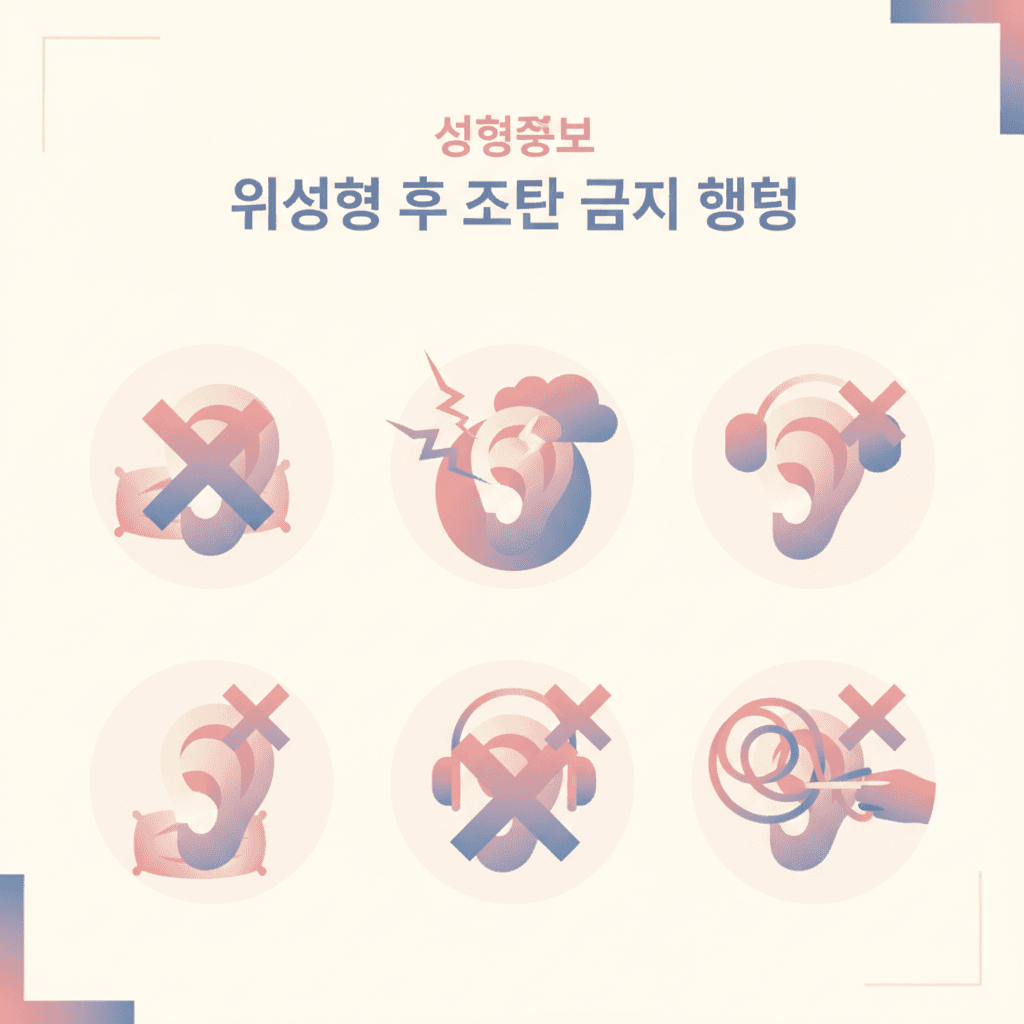
- No Side Sleeping for 1 Month After Surgery (Protruding Ear Correction · Ear Reconstruction) Do not remove compression dressings arbitrarily — recurrence rate increases by more than 15% Do not fold, pull, or wear headsets for 3 months after ear reconstruction Do not wear earrings for 2 weeks after fat grafting (hinders engraftment) Do not use saunas, steam rooms, or high-temperature showers for 2 weeks after surgery (worsens swelling and risk of infection) Do not engage in strenuous exercise for at least 6 weeks (3 months for ear reconstruction)
Frequently Asked Questions
When can I wear glasses after protruding ear correction?
You can wear them starting 2 weeks after surgery, but please choose lightweight frames so they do not press against your ears. If pressure persists, cartilage repositioning may become misaligned. It is recommended to wear contact lenses for up to one month if possible. Is ear reconstruction covered by insurance? Congenital microtia or ear defects caused by trauma are covered by private health insurance and national health insurance. However, protruding ear correction or earlobe reshaping for cosmetic purposes is not covered by insurance. Please obtain a medical diagnosis certificate and a surgical opinion letter during your consultation and verify with your insurance company. How often do I need earlobe fillers? Based on Restylane Lyft, re-injection is required every 12 to 18 months. This varies depending on individual metabolic rates, and the duration is about 20% shorter for smokers. Fat grafting is semi-permanent once the tissues engraft, but since the engraftment rate is 60-70% per session, additional procedures may be necessary. Is re-surgery possible if protruding ears recur after correction? Yes, it is possible. Recurrence mostly occurs due to improper compression dressing, and revision surgery is possible 6 months after the initial surgery. Since the difficulty of revision surgery increases due to scar tissue, it is important to strictly adhere to compression guidelines after the initial surgery. What are the side effects or complications of ear surgery? For protruding ear correction, asymmetry, recurrence (15%), and suture protrusion (5%) are reported. For ear reconstruction, major complications include cartilage absorption, infection (12%), and chest pain (when harvesting rib cartilage). For earlobe surgery, filler migration and fat necrosis (in case of engraftment failure) may occur. All surgeries vary from person to person, so a decision should be made after sufficient consultation with a specialist. Is there really a difference in recovery speed between people in their 20s and 40s? Yes. People in their 20s have higher cartilage elasticity and skin regenerative capacity, so the average recovery speed is 30% faster. However, even for those in their 40s, satisfaction is almost the same if they are in good health and follow post-operative guidelines well. On the contrary, adult patients tend to be more cooperative, resulting in a lower recurrence rate.
This content is for informational purposes only and does not replace medical advice. Please consult a specialist before the procedure.