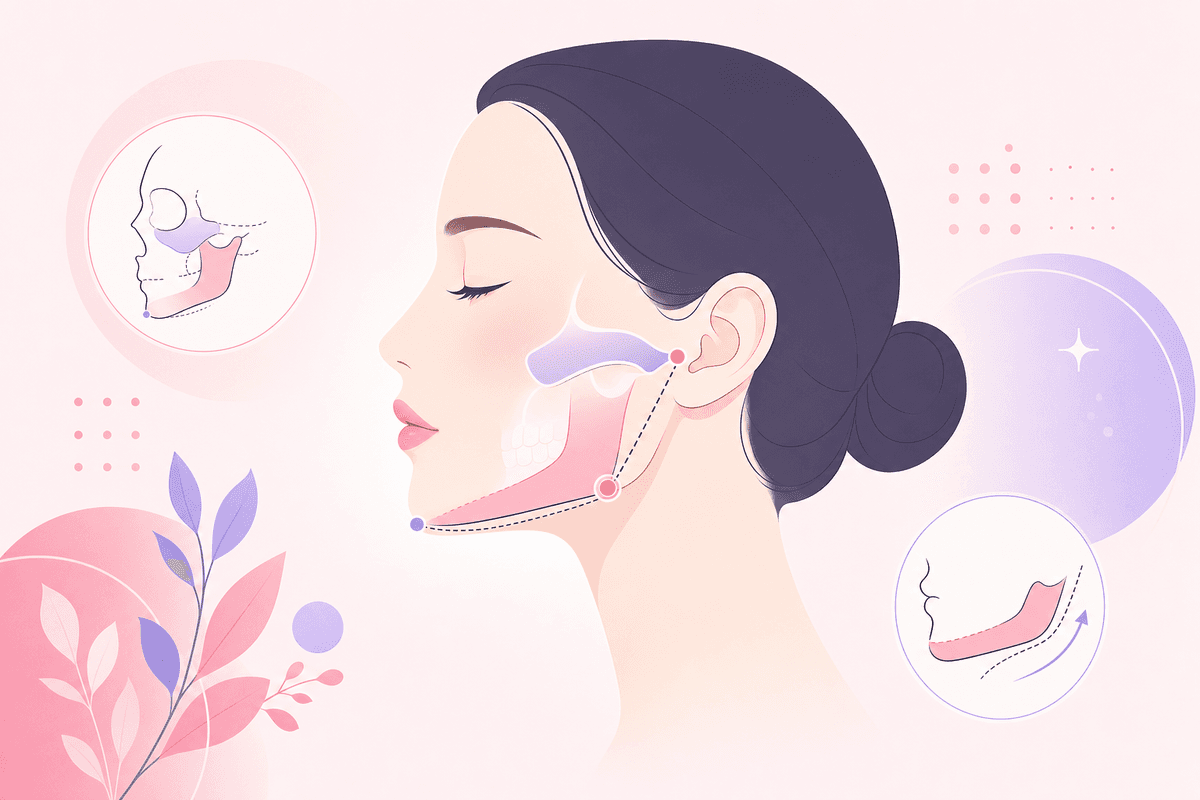
A combined functional and cosmetic surgery that corrects the position of both the upper and lower jawbones. It improves malocclusion, prognathism, and protruding mouth.
Orthognathic surgery is a procedure that involves cutting the upper jaw (maxilla) and lower jaw (mandible) to move and fix them in the correct positions. As a highly complex surgery that simultaneously corrects prognathism, retrognathism, protruding mouth, facial asymmetry, and the resulting malocclusion, it is frequently performed in conjunction with orthodontic treatment.
Following precise diagnosis (CT and occlusal analysis) and orthodontic treatment, the upper and lower jaws are osteotomized, moved, and fixed according to plan. Both function (chewing and occlusion) and aesthetics (lines) are considered.
The recovery period is long, swelling tends to be significant, and temporary numbness is common. A thorough examination, sufficient consultation, and experienced medical staff are essential.
It is common to perform orthodontic treatment before and after surgery to align the bite. It depends on the case.
Yes, it is possible. Many dermatology and plastic surgery clinics in Korea treat foreign patients, and there are also many hospitals that offer consultations or interpretation support in foreign languages such as English, Chinese, and Japanese. On K-Dia, you can compare hospital information and real reviews, and consult directly via chat before your visit.
It usually takes about 2 to 4 weeks to return to daily activities, and the recovery period involves 4 to 8 weeks for swelling and 6 months or more for settling in. If you are traveling for a short time, it is recommended to schedule your trip with ample time to check your progress immediately after the procedure, and to discuss post-recovery care methods and precautions with the hospital in advance.
Costs vary significantly depending on the hospital, the scope of the procedure, the equipment and materials used, and the anesthesia method. Since Korea has a well-developed infrastructure for procedures, making consultations and price comparisons relatively easy, it is recommended to compare quotes from multiple hospitals rather than relying on just one. You can check event prices and actual reviews by hospital on K-Dia.
This information is for general understanding only and is not medical advice. Always consult a medical professional before deciding on any procedure.
