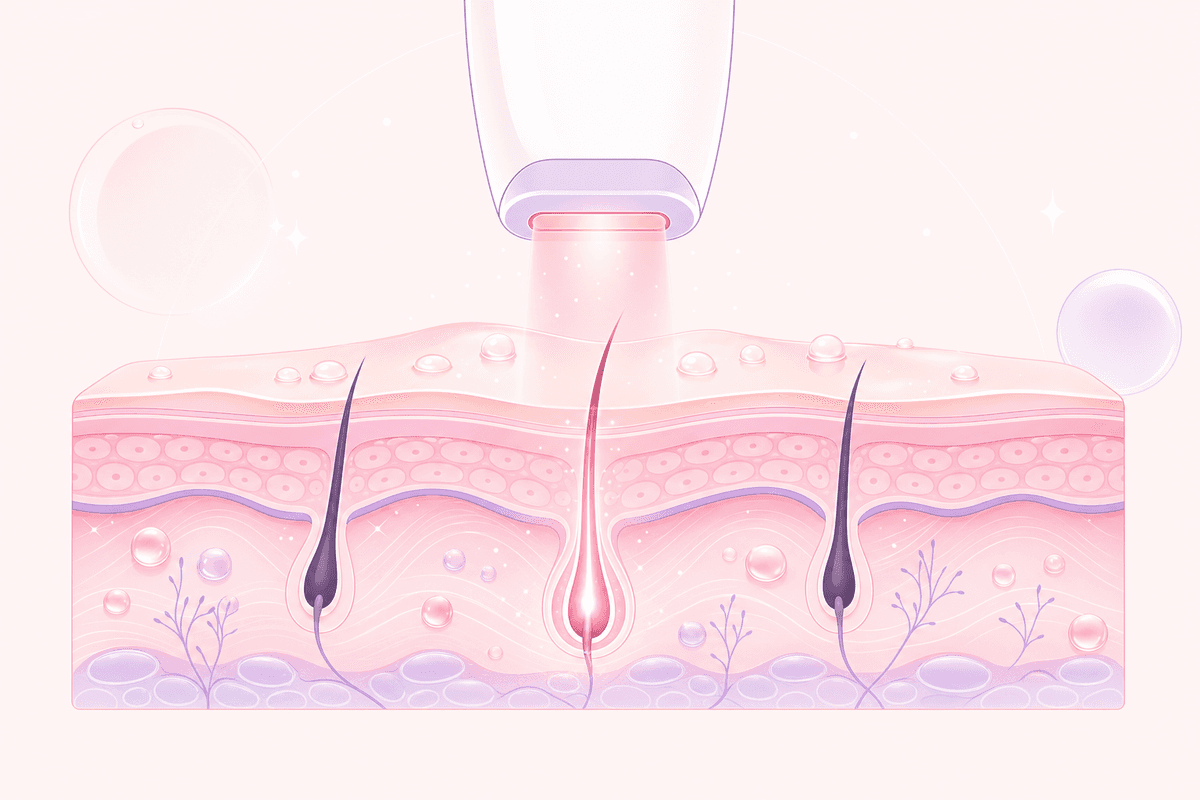
It is a representative dermatological procedure that uses a laser to selectively destroy hair follicles and permanently reduce hair through repeated treatments.
Laser hair removal is a procedure that reduces hair by selectively destroying hair follicles using laser heat absorbed by the melanin in the follicles. Since hair follicles respond effectively only during the growth phase, the procedure must be repeated multiple times and is used on various areas such as the underarms, legs, face, and bikini area.
The laser is absorbed by the melanin in the hair, causing thermal damage to the hair follicles. Since it works effectively only on follicles in the growth phase, it must usually be repeated several times at intervals of 4 to 8 weeks (5 to 10 or more times depending on the area) to gradually make the hair thinner and less dense.
It is suitable for those who find frequent shaving or waxing cumbersome, suffer from recurring folliculitis or ingrown hairs, or wish to tidy up their underarms, legs, face, or bikini line. The greater the contrast between the hair and skin color, the better the results.
Temporary redness and stinging around the hair follicles may persist for several hours after the procedure, but there is virtually no downtime. Avoid strong UV rays, tanning, and waxing before and after the procedure, and apply moisturizer and sunscreen.
Effectiveness is limited on white or very light-colored hair due to its low melanin content. For tanned or dark skin, careful adjustment of equipment and intensity is crucial due to the risk of burns and hyperpigmentation. Repeated treatments and maintenance are required.
Due to the hair follicle cycle, you usually need to repeat the process 5 to 10 times or more at intervals of 4 to 8 weeks, depending on the area, for the effects to accumulate.
Permanent hair reduction (becoming thinner and sparser) can be expected with repeated treatments, but maintenance may be necessary depending on hormones and body type.
Yes, it is possible. Many dermatology and plastic surgery clinics in Korea treat foreign patients, and there are also many hospitals that offer consultations or interpretation support in foreign languages such as English, Chinese, and Japanese. On K-Dia, you can compare hospital information and real reviews, and consult directly via chat before your visit.
You can usually return to your daily routine on the same day, and the recovery period is minimal (redness lasts for a few hours). If you are traveling for a short time, it is recommended to schedule your trip with ample time to check your progress immediately after the procedure, and to discuss post-recovery care and precautions with the clinic in advance.
Costs vary significantly depending on the hospital, the scope of the procedure, the equipment and materials used, and the anesthesia method. Since Korea has a well-developed infrastructure for procedures, making consultations and price comparisons relatively easy, it is recommended to compare quotes from multiple hospitals rather than relying on just one. You can check event prices and actual reviews by hospital on K-Dia.
This information is for general understanding only and is not medical advice. Always consult a medical professional before deciding on any procedure.
