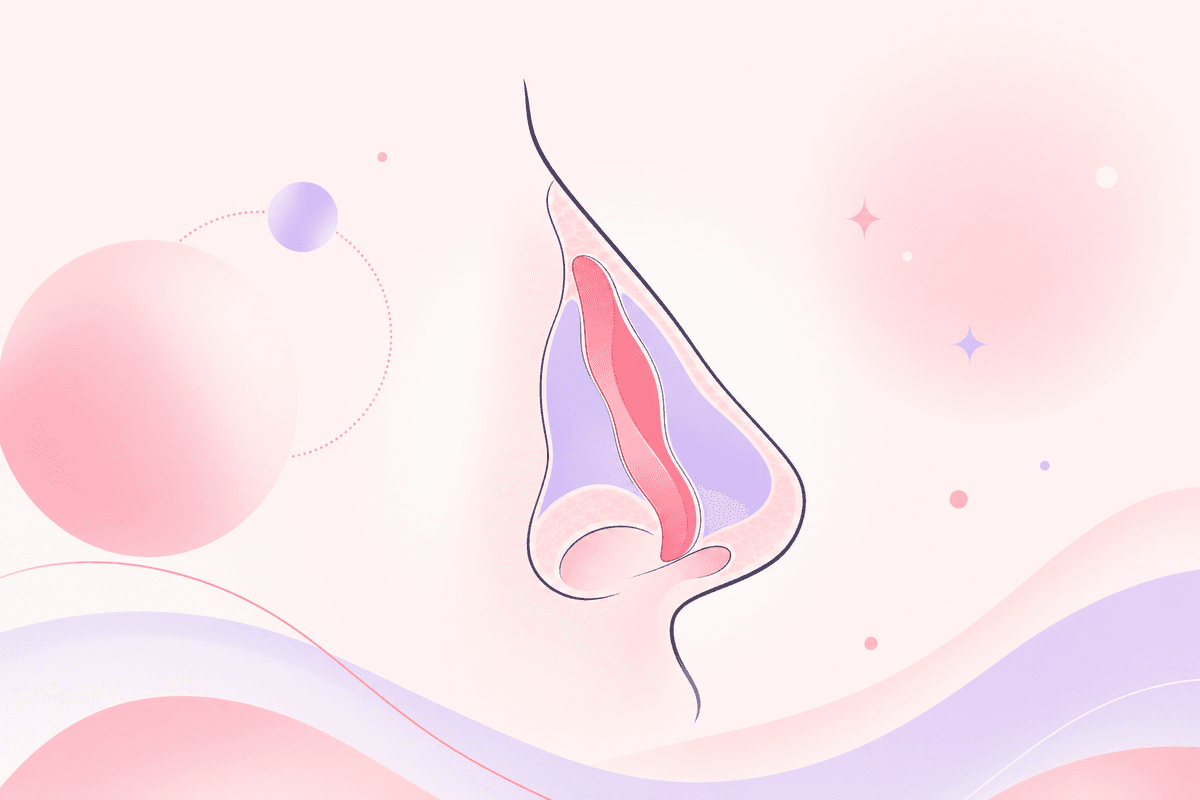
This is a surgery that straightens crooked nasal bones and cartilage and corrects deviated nasal septum to improve both the shape and nasal congestion.
Nose deviation correction is a surgery to straighten a nose that has become crooked due to trauma or structural causes. The nasal bone is osteotomized to realign it, and the deviated cartilage and nasal septum are straightened and fixed. In cases of nasal congestion caused by a deviated septum, functional rhinoplasty can simultaneously improve both the shape and breathing.
It is suitable for cases where the nose appears crooked to one side, is accompanied by nasal congestion or breathing difficulties, or has developed a deformity after trauma. In many cases, both shape and function improvement are required.
Depending on the degree of deviation, the nasal bone is straightened through medial or lateral osteotomy, and the deviated cartilage and nasal septum are straightened and fixed. Cartilage harvested from the nasal septum is also used as a material for rhinoplasty. Nasal congestion correction (septoplasty) can be performed simultaneously.
The splint is removed after 5 to 7 days, and swelling and bruising subside over 2 to 4 weeks. Since it takes several weeks to several months for the nasal bone to stabilize, you should be careful to avoid bumps during the initial period.
If the degree of curvature is severe or cartilage memory is strong, a slight curvature may remain. Functional nasal congestion correction may be partially covered by insurance, so a hospital consultation is required.
Nasal congestion caused by a deviated septum can be improved by correcting the septum.
Although significant improvement is usually achieved, slight bending may remain due to the cartilage's tendency to revert, so precise fixation is important.
Yes, it is possible. Many dermatology and plastic surgery clinics in Korea treat foreign patients, and there are also many hospitals that offer consultations or interpretation support in foreign languages such as English, Chinese, and Japanese. On K-Dia, you can compare hospital information and real reviews, and consult directly via chat before your visit.
This information is for general understanding only and is not medical advice. Always consult a medical professional before deciding on any procedure.
It usually takes about 7 to 10 days to return to daily activities, and the recovery period involves wearing a splint for 5 to 7 days and swelling for 2 to 4 weeks. If you are traveling for a short time, it is recommended to schedule your trip with ample time to check your progress immediately after the procedure, and to discuss post-recovery care and precautions with the hospital in advance.
Costs vary significantly depending on the hospital, the scope of the procedure, the equipment and materials used, and the anesthesia method. Since Korea has a well-developed infrastructure for procedures, making consultations and price comparisons relatively easy, it is recommended to compare quotes from multiple hospitals rather than relying on just one. You can check event prices and actual reviews by hospital on K-Dia.
