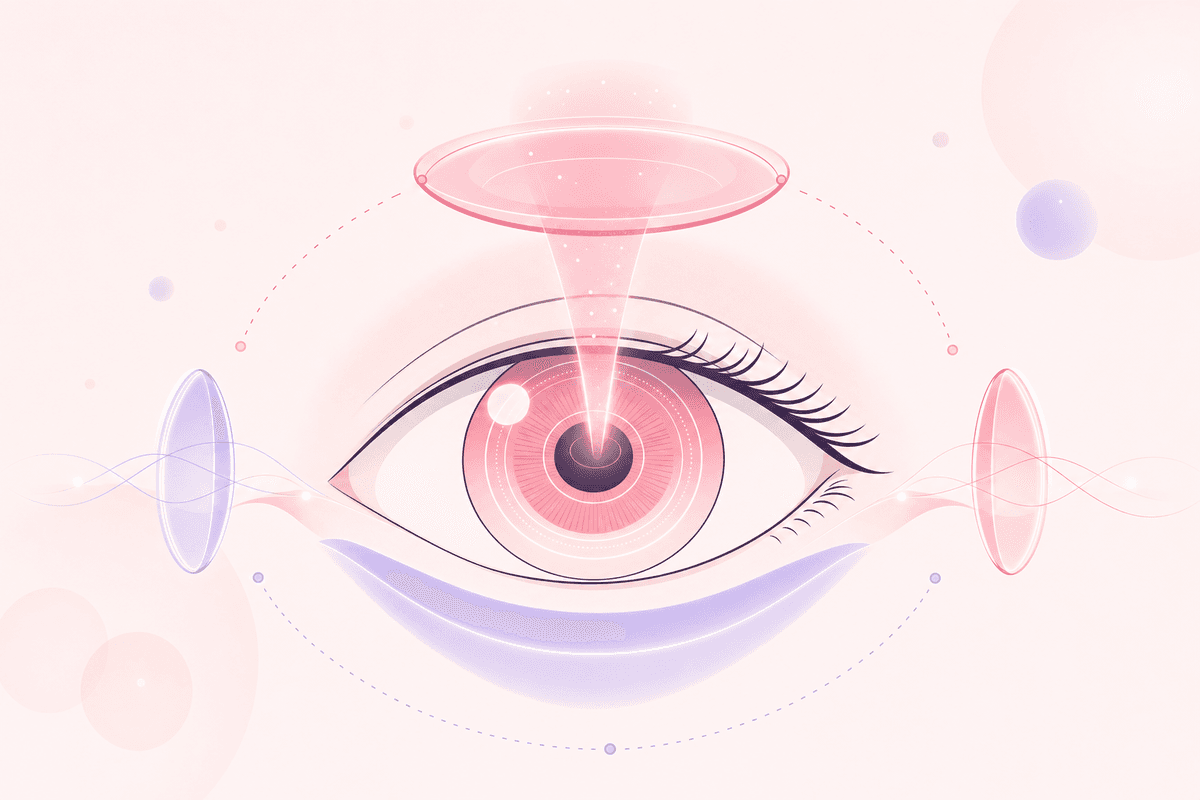
It is a non-surgical vision correction that is worn while sleeping to temporarily correct the shape of the cornea, allowing you to see without glasses during the day.
Dream Lenses (corneal correction lenses) are a non-surgical vision correction method that involves wearing specially designed hard lenses while sleeping to temporarily reshape the cornea. Once the lenses are removed in the morning, patients can go about their daily lives without glasses or contact lenses, and they are also widely used to slow the progression of myopia in growing children and adolescents.
While you sleep, the lens flattens the center of the cornea to correct refraction. If you remove it in the morning, the corrective effect lasts for a certain period, allowing you to go about your daily life without lenses. The effect is reversible, so your vision returns to normal once you stop wearing it.
It is suitable for those who are hesitant about surgery or have not yet reached the surgical age (18 years or older), children and adolescents who wish to slow the progression of myopia during their growth period, or those who find it uncomfortable to wear glasses or contact lenses during the day. The scope of application varies depending on the degree of myopia and astigmatism.
During the first 1 to 2 weeks, there may be a foreign body sensation and an adjustment period, and it takes a few days to several weeks for vision to stabilize. Lens hygiene is very important, and the condition of the cornea should be checked through regular ophthalmological examinations.
Due to the risk of corneal infection if hygiene is inadequate, cleaning and storage guidelines must be strictly followed. Although it is safe as it is non-surgical and reversible, consistent wear is necessary to maintain effectiveness.
No. It is a non-surgical and reversible method of wearing lenses while sleeping, and your vision returns to normal when you stop wearing them.
It is widely used for children and adolescents to slow the progression of myopia during the growth period, but parental assistance is required due to the importance of hygiene management.
Yes, it is possible. Many dermatology and plastic surgery clinics in Korea treat foreign patients, and there are also many hospitals that offer consultations or interpretation support in foreign languages such as English, Chinese, and Japanese. On K-Dia, you can compare hospital information and real reviews, and consult directly via chat before your visit.
The recovery period varies depending on the scope of the procedure and the individual's condition. If you are traveling for a short period, it is recommended to schedule your trip with ample time to check your progress immediately after the procedure, and to discuss post-recovery care and precautions with the hospital in advance.
Costs vary significantly depending on the hospital, the scope of the procedure, the equipment and materials used, and the anesthesia method. Since Korea has a well-developed infrastructure for procedures, making consultations and price comparisons relatively easy, it is recommended to compare quotes from multiple hospitals rather than relying on just one. You can check event prices and actual reviews by hospital on K-Dia.
This information is for general understanding only and is not medical advice. Always consult a medical professional before deciding on any procedure.
