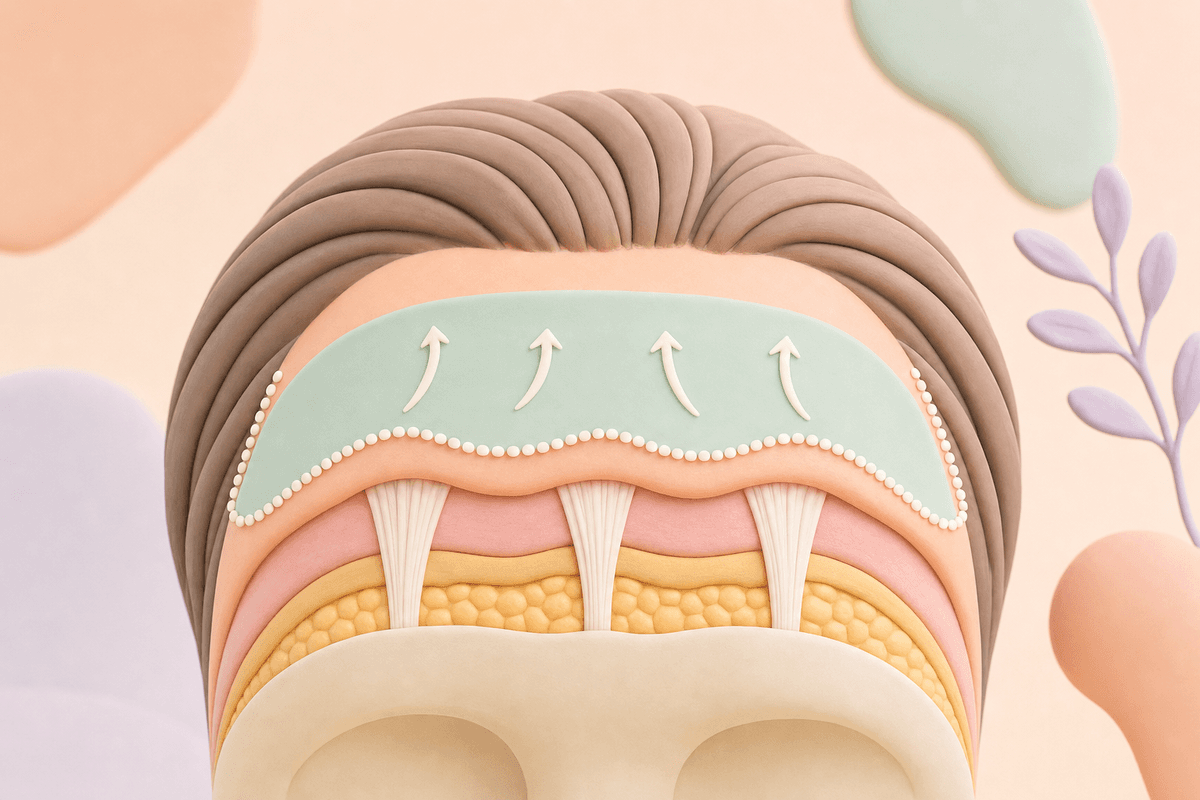
Mastering the Forehead Lift Surgery Process: 7 Steps from Consultation to Recovery

Actions taken during the 72 hours prior to surgery determine 30% of the outcome—from medication discontinuation to sleep patterns. The location of the incision (hairline vs. intrascalp) makes a difference of more than five times in scar visibility after recovery. The timing of cold compresses during the first three days after surgery shortens the duration of swelling by two weeks.
The Actual Process from the Surgeon's Perspective
- Average surgery time: 2-3 hours
- Critical recovery golden hour: 72 hours
- Final result assessment: 6 months
Step 1: Initial Consultation — What You Need to Prepare
The most frequently asked question in the consultation room is surprisingly not "What is the surgical method?" but "What should I ask during the consultation?" The initial consultation is not just an exchange of information; it's the first step that determines the surgical outcome.
You must stop taking anticoagulants such as aspirin, omega-3, and ginkgo biloba extract at least 3 days before your consultation. These can increase intraoperative bleeding by 20-30%. Since over 70% of health supplements approved by the Korean Ministry of Food and Drug Safety contain these ingredients, be sure to bring any supplements you are currently taking.
During the consultation, the doctor will measure scalp elasticity, hairline height, and the distance between the eyebrows and hairline in millimeters. The average distance is 6-7 cm for men and 5-6 cm for women. If this measurement exceeds 8 cm, a hairline incision is recommended; if it's less than 8 cm, an incision within the scalp is advised.
CT or MRI scans are not mandatory, but they are performed for individuals over 40 or those with a history of forehead trauma to check the degree of periosteal adhesion. The Korean Society of Plastic and Reconstructive Surgeons' guidelines (2021) recommend imaging tests when planning subperiosteal dissection.
At the end of the consultation, request a written document outlining the surgical method (endoscopic vs. incision), anesthesia type, and expected recovery period. Verbal explanations alone can lead to confusion later.
Caution Avoid clinics that pressure you into booking surgery on the same day as your consultation. Clinics that allow at least 3 days for consideration are safer.
- Required period for stopping anticoagulants: 3-7 days before surgery
- Average distance between hairline and eyebrows: 6-7 cm for men, 5-6 cm for women
- Recommended age for imaging tests: Over 40 or with a history of trauma
Step 2: 72 Hours Before Surgery — Preparation That Changes the Outcome

Avoid high-sodium diets starting 3 days before surgery. One bowl of ramen (1800mg sodium) can increase swelling by 15-20% the day after surgery. The WHO's recommended daily sodium intake is 2000mg, but limit it to under 1000mg before and after surgery.
Alcohol consumption is prohibited starting 7 days before surgery. Alcohol simultaneously causes vasodilation and reduces platelet function, increasing bleeding risk even with a single drink. A 2019 study by the Korean Society of Anesthesiologists found that patients who consumed alcohol within 48 hours of surgery had a 2.3 times higher complication rate.
Sleep patterns are also important. A group that maintained over 7 hours of sleep per night for 3 days before surgery recovered an average of 4 days faster than those who did not. Sleep aids like melatonin can only be taken up to 24 hours before surgery.
Fasting is mandatory on the day of surgery. For general anesthesia, you must fast from solid food for 8 hours and clear liquids for 2 hours prior. Even with sedation, fasting for at least 6 hours is necessary to reduce the risk of aspiration pneumonia.
| Item | Discontinuation/Restriction Timing | Reason |
|---|---|---|
| Anticoagulants (e.g., Aspirin) | 7 days before surgery | Prevent 20-30% increase in bleeding |
| Alcohol consumption | 7 days before surgery | Reduced platelet function, 2.3x higher complication rate |
| High-sodium diet | 3 days before surgery | Prevent 15-20% increase in swelling |
| Sleep aids | 24 hours before surgery | Risk of interaction with anesthetics |
- Sodium restriction target: Under 1000mg/day
- Recommended sleep before surgery: Over 7 hours × 3 days
- Fasting time for general anesthesia: 8 hours for solids, 2 hours for water
Step 3: Entering the Operating Room — From Anesthesia to Incision
Upon entering the operating room, vital signs (blood pressure, pulse, oxygen saturation) are measured first. Blood pressure is maintained 10-15% lower than usual during surgery to minimize bleeding. This is called "hypotensive anesthesia" and is adopted as a standard protocol by most clinics in Korea.
Anesthesia methods are broadly divided into general anesthesia and sedation (sedation + local anesthesia). Endoscopic forehead lifts can be performed under sedation, but coronal incisions require general anesthesia. For sedation, the average Propofol dosage is 1.5-2mg per kilogram of body weight.
Incision line design is performed just before surgery while the patient is in a seated position. For hairline incisions, the line is drawn 1-2mm behind the hairline, and for scalp incisions, it's drawn 4-5cm behind the hairline. The endoscopic method involves placing 3-5 small incisions of 1-2cm in the temporal and parietal regions.
After the incision, subperiosteal or subgaleal dissection begins. Subperiosteal dissection has a lower risk of nerve damage but causes more swelling, while subgaleal dissection causes less swelling but may lead to temporary sensory abnormalities. The average dissection area is 12-15cm from the hairline to the eyebrow.
Fixation after lifting is done using Endotine (absorbable fixation devices) or titanium screws. Endotine received FDA approval in 2003 and is absorbed by the body within 6 months. Titanium is permanent but can cause artifacts during MRI scans.
Clinical Insight The choice between subperiosteal and subgaleal dissection depends on age and skin thickness. Subperiosteal is generally preferred for those over 40, while subgaleal is common for those under 30.
- Average Propofol dosage: 1.5-2mg/kg
- Average dissection area: 12-15cm (hairline to eyebrow)
- Endotine absorption period: 6 months
What to Absolutely Avoid — The Golden Hour Immediately After Surgery

The first 72 hours after surgery determine half of the outcome. How you spend this period can result in a difference of over 2 weeks in swelling duration.
The most crucial factor is head elevation. Maintain an elevated head position at 30-45 degrees for at least 72 hours. Lying flat allows gravity to pull swelling down to the entire face, delaying recovery by 7-10 days.
Cold compresses are effective only from the day of surgery up to 48 hours. Repeat 15 minutes of application followed by 15 minutes of rest, for a total of 6-8 times a day. Applying ice directly to the skin risks frostbite, so wrap it in gauze or a towel.
Showering is possible from 3 days after surgery, and shampooing from 5 days. Water contact with the incision site increases infection risk by 3-4 times. Use dry shampoo or wet wipes as alternatives, and avoid scratching or rubbing the scalp.
Smoking is strictly prohibited for at least 4 weeks. Nicotine causes vasoconstriction, increasing the risk of tissue necrosis by 8 times. Secondhand smoke has the same effect, so avoid contact with smokers.
Recovery Timeline — When Can You Resume Normal Activities?
Swelling peaks between days 3-5 post-surgery. Swelling in the eyelids and cheeks is normal, and temporary asymmetry may occur. During this period, refrain from going out and rest at home.
Suture removal varies depending on the surgical method. For hairline incisions, it's 7-10 days; for scalp incisions, it's 10-14 days. Endoscopic methods mostly use absorbable sutures, eliminating the need for removal.
Returning to work is possible on average 7-10 days post-surgery. However, if your job involves significant face-to-face interaction, it's safer to allow 2 weeks. Video calls or remote work can resume from day 5, but adjustments to lighting and angles may be necessary.
Light exercise (walking, yoga) can begin after 2 weeks, and moderate aerobic exercise after 4 weeks. Weight training or high-intensity interval training (HIIT) can be resumed after 6 weeks.
The final result can only be assessed after 6 months. Tissue swelling takes 3 months, and sensory recovery takes 6 months. Numbness in the forehead is normal, and over 90% of patients recover within 6 months.
Key Takeaway While recovery speed varies greatly among individuals, managing the first 72 hours determines 30% of the total recovery period. Strictly adhering to this period alone can accelerate recovery by over 2 weeks.
| Timing | Recovery Stage | Possible Activities |
|---|---|---|
| 1-3 days | Swelling begins, peak pain | Absolute rest, cold compresses |
| 3-5 days | Peak swelling, bruising spreads | Showering possible, light indoor activities |
| 7-10 days | Suture removal, 50% swelling reduction | Return to work (non-face-to-face), light outings |
| 2 weeks | 80% swelling reduction, return to daily life | Face-to-face work, light exercise (walking) |
| 4 weeks | 90% swelling reduction | Aerobic exercise, dyeing/perming hair possible |
| 6 months | Final result confirmed | No restrictions on any activity |
Scar Management — Why It Needs to Continue for Up to a Year
The visibility of forehead lift scars can vary by more than 10 times depending on their location. Hairline incisions are concealed by hair but can become visible with hair loss. Incisions within the scalp are initially hidden but may impose hairstyle restrictions.
Start using silicone sheets or scar ointments (e.g., Dermatix, Contractubex) from 2 weeks after suturing. Silicone sheets are most effective when worn for over 12 hours a day and should be used for at least 3 months. Laser treatments can begin 6 weeks after surgery. Fractional CO2 or Er:YAG lasers can reduce scar thickness by 30-40%. 3-5 sessions are typically required, with intervals of 4-6 weeks between treatments.
Sun protection is essential for 1 year. Scar areas are 3-4 times more prone to melanin deposition, so reapply SPF 50+ products every 2-3 hours. Supplement with physical protection like hats or headscarves.
If hypertrophic scarring (keloids) develop, seek immediate dermatological consultation. Steroid injections (triamcinolone 10mg/ml) administered 3 or more times at 4-6 week intervals can improve the condition by over 70%.
Tip If you're curious about incision methods and scar management tailored to your case, find clinics offering 1:1 consultations on K-Dia. Choosing a facility with a systematic recovery care program is crucial.
- Silicone sheet application time: Over 12 hours/day × 3 months
- Laser treatment start time: 6 weeks after surgery
- Mandatory sun protection period: Minimum 1 year
Comparison of Forehead Lift Surgical Methods
Endoscopic Forehead Lift [Minimally Invasive]
- Incisions: 3-5 small incisions (1-2cm)
- Anesthesia: Sedation or general
- Recovery: 7-10 days
- Scar: Almost invisible
Suitable for those under 30 with good skin elasticity. Limited lifting range.
Hairline Incision [Standard]
- Incision: Along the entire hairline
- Anesthesia: General required
- Recovery: 10-14 days
- Scar: Concealed by hair
Suitable for high foreheads, can simultaneously lower the hairline. Risk of scar exposure with hair loss.
Coronal Incision [Extensive]
- Incision: Connecting ears within the scalp
- Anesthesia: General required
- Recovery: 14-21 days
- Scar: Hidden within the scalp
For those over 50 with severe forehead wrinkles. Sensory abnormality recovery may take over 6 months.
Misconceptions
Myth A forehead lift is permanent.
Truth Tissue aging continues, so many consider revision surgery every 7-10 years on average. However, how long the results of the first surgery last depends on lifestyle habits (sun protection, no smoking) and skincare. Clinical studies show that 50-60% of patients maintain satisfaction without revision surgery after 10 years.
Myth The endoscopic method is always better because the scar is smaller.
Truth While endoscopic surgery leaves smaller scars, its lifting range and duration are limited. For individuals over 40 or with significant skin sagging, a coronal incision may yield better results. The surgical method should be chosen based on a comprehensive consideration of age, skin thickness, and forehead height; a "small scar = unconditionally good surgery" is not always true.
Actions Strictly Prohibited for 2 Weeks Post-Surgery
- Bending over (washing face, laundry, cleaning) — 3x increased risk of bleeding due to elevated blood pressure
- Hot saunas/jjimjilbangs — Worsened swelling due to vasodilation, 4x increased infection risk
- Wearing glasses/sunglasses — Causes swelling displacement and asymmetry due to pressure on the nose area
- Alcohol and smoking — 8x increased risk of tissue necrosis, over 2 weeks delay in recovery
- Strenuous exercise (running, weightlifting) — Wound dehiscence due to elevated blood pressure
Frequently Asked Questions
When can I return to work after surgery?
The average return for non-face-to-face work is 5-7 days, and for face-to-face work, it's 10-14 days. Swelling and bruising are over 80% resolved by the second week, but it takes over 4 weeks for them to disappear completely. Allow more than 2 weeks if you have frequent meetings or presentations.
Can I go home immediately after waking up from anesthesia?
With sedation, you can go home after 2-3 hours of recovery, but general anesthesia requires 4-6 hours of observation. Driving on the same day is strictly prohibited, and a companion is mandatory. Some clinics recommend an overnight stay.
Is even one drink of alcohol not allowed? I have a company dinner.
Absolute abstinence from alcohol is required for at least 4 weeks after surgery. Alcohol causes vasodilation and inflammatory responses, more than doubling swelling and increasing infection risk. Postpone dinner gatherings or opt for non-alcoholic beverages.
When can I get my hair dyed or permed?
It's possible from 4 weeks post-surgery at the earliest. Chemical ingredients in hair dyes or perms can cause inflammation or allergic reactions upon contact with the incision site. It's safer after 6 weeks, and you should inform the salon about your surgery in advance.
Is numbness normal? When will sensation return?
Reduced sensation in the forehead and scalp is a normal part of the recovery process. Nerve regeneration takes an average of 3-6 months, with over 90% recovering within 6 months. Less than 5% experience residual numbness after a year.
Are there any issues with MRI or CT scans?
Absorbable fixation devices (Endotine) are absorbed within 6 months, posing no problem. If titanium screws were used, you must inform the medical staff before undergoing an MRI. Titanium is non-magnetic and safe, but it can cause image distortion.
This content is for informational purposes only and does not substitute medical advice. Always consult with a specialist before undergoing any procedure. All surgeries involve individual variations, and decisions should be made after fully understanding the potential for complications.