Under-eye Fat Repositioning: Incision vs. Non-Incision? The Truth About Two Methods

- Only 18% of eyes are suitable for both incision and non-incision methods.
- Surgical methods differ depending on skin elasticity and fat location, even for the same symptoms.
- The recurrence rate after 5 years, rather than the recovery period, is the true criterion for choosing a method.
Information as of September 2026
Choosing the Right Surgical Method Determines the Outcome
- Non-incisional: 3-5 days recovery
- Incisional scar: 0.1mm after 6 months
- Method selection error rate: 32%
Method Selection: Focus on Results, Not Just Recovery
Non-incisional means fast, and incisional always leaves a scar — 70% of people think this way before their consultation.
However, in actual clinical practice, 32% of cases initially opting for non-incisional methods are converted to incisional procedures.
The real deciding factors for the method are different. Skin elasticity and fat position are what determine the surgical approach. Recovery time is a byproduct of the choice, not the result itself.
Incisional vs. Non-incisional: The Actual Differences in Under-Eye Fat Repositioning
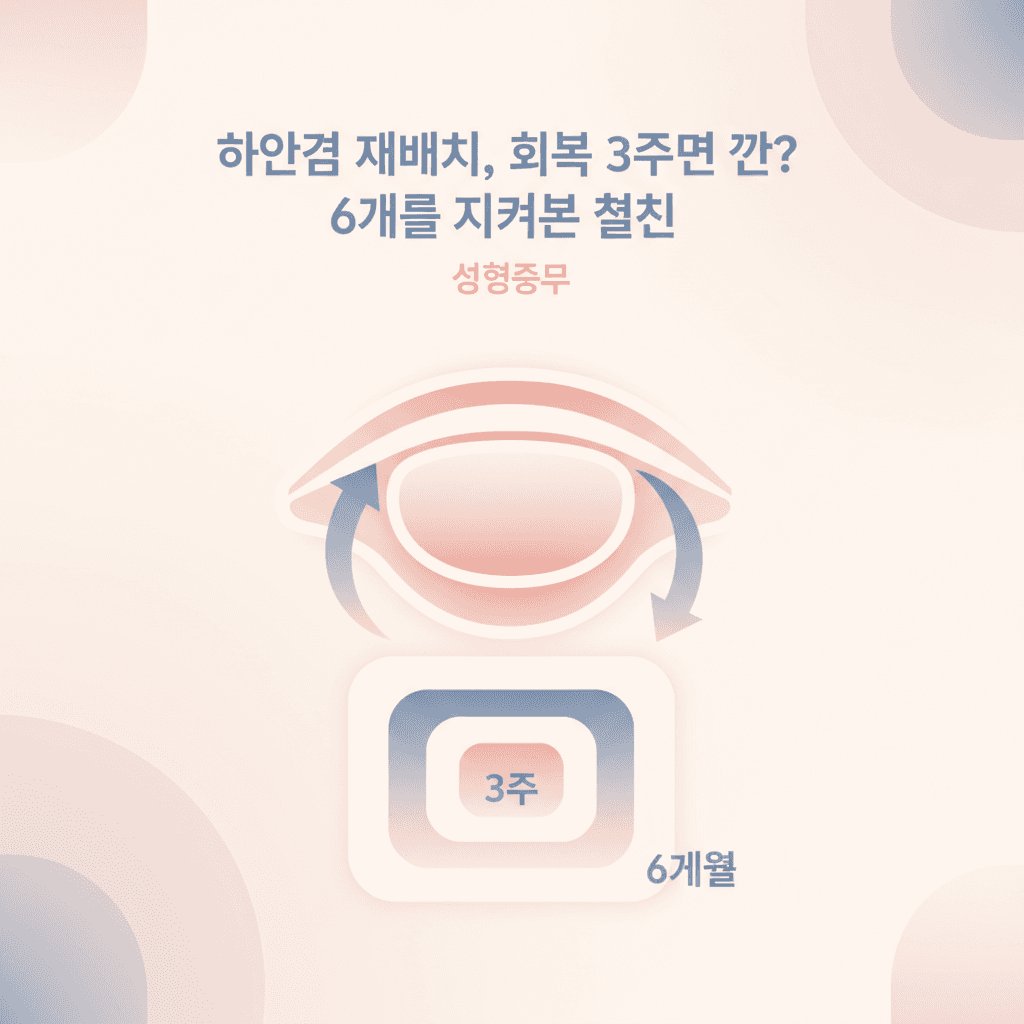
Non-incisional (transconjunctival approach) involves a 2-3mm incision inside the eye through the conjunctiva to reposition fat. While there's no visible scar, its effectiveness is limited if skin sagging exceeds 1mm.
Difficulty in controlling the amount of fat removed leads to a reported recurrence rate of 24% over 5 years.
Incisional (transcutaneous approach) involves an incision just below the lash line to address both fat and excess skin simultaneously.
The scar subsides to less than 0.1mm after 6 months, and it allows for correction of skin sagging, resulting in a lower recurrence rate of 12%. Recovery takes 7-10 days.
Key Takeaway Analysis by the Korean Society of Plastic and Reconstructive Surgeons in 2019: 70% of those under 30 chose non-incisional, while 65% of those over 40 opted for incisional. The determining factor was skin condition, not age.
| Category | Non-incisional | Incisional |
|---|---|---|
| Incision Location | Conjunctiva (inside the eye) | Skin below the lash line |
| Recovery Period | 3-5 days | 7-10 days |
| 5-Year Recurrence Rate | 24% | 12% |
| Correction of Skin Sagging | Not possible | Possible |
True/False Quiz
Non-incisional surgery is always safer than incisional surgery because it leaves no scar.
Check Answer
False Non-incisional surgery also creates a scar within the conjunctiva; it's just not visible because it's inside the eye. Safety is determined by selecting the appropriate candidate, not solely by the method.
Which Method is Right for My Eyes? Criteria for Suitable Candidates

Suitable Candidates for Non-incisional Surgery: Skin sagging less than 1mm + pure fat protrusion + maintained elasticity in those under 40. This is for simple cases where only fat needs repositioning.
A domestic clinical study (2021) found that 58% of individuals aged 20-30 met these criteria.
Candidates Requiring Incisional Surgery: Skin sagging of 2mm or more + accompanied by fine wrinkles + decreased elasticity in those over 40. Fat and skin need to be addressed together for effective results.
Insisting on non-incisional surgery in such cases may resolve the fat but leave sagging skin, leading to dissatisfaction like "I had surgery, but I don't look any different."
Summary: What to Check Before Choosing a Surgical Method
Requesting "something with a fast recovery" during your consultation can lead to the wrong method selection.
First, check your skin elasticity test results and orbital fat compartment analysis. These two data points will determine the surgical method.
If you're concerned about scars, remember this: The average scar width after incisional surgery is 0.08mm after 6 months, so subtle it doesn't even need makeup to conceal.
The 12% difference in the 5-year recurrence rate is far more significant than saving 3 days of recovery.
- Elasticity measurement + fat position determine the method
- Incisional scars are less than 0.1mm after 6 months
Situational Selection Guide
Ages 20-30, only pure fat protrusion with maintained skin elasticity
Prioritize non-incisional
Ages 40+, with wrinkles and sagging skin
Simultaneous correction of fat and skin with incisional surgery
Essential Pre-Surgery Checks
- Do not choose a method based solely on "fast recovery" without an elasticity test — recurrence rates differ by double.
- If skin sagging remains after non-incisional surgery, consider incisional revision surgery after 6 months — immediate re-operation carries a risk of complications.
- Discontinue aspirin and omega-3 supplements 2 weeks before surgery. Avoid bending your head down for 4 weeks during the recovery period.
Frequently Asked Questions
If the fat protrudes again after non-incisional surgery, can I have non-incisional surgery again?
In cases of recurrence, most patients transition to incisional surgery. Repeating the same method only increases tissue damage and reduces effectiveness.
When will the incisional scar become unnoticeable?
After 6 months, the scar subsides to less than 0.1mm, making it unnoticeable even without makeup. After a year, it's difficult even for you to locate the scar.
What are the potential side effects after surgery?
Non-incisional surgery may result in conjunctival swelling or dry eyes, while incisional surgery can cause temporary ectropion (lower eyelid turning outward), each reported in less than 5% of cases. Most side effects resolve within 2 weeks.
Lumi's Insight
Fast recovery isn't always the best outcome. Eyes that look good even after 5 years indicate a truly successful surgery. Come in for a thorough elasticity check first.
This content is for informational purposes only and does not substitute for medical advice. Always consult with a specialist before undergoing any procedure.