PDRN Salmon Injection: 5 Criteria for Choosing Based on Skin Type
K-Dia Editor4,90429 min read
▸PDRN is categorized into over 12 products based on molecular weight, concentration, and added ingredients, with different products suitable for dry, oily, or sensitive skin types.
▸Rejuran (PN) is optimized for rapid absorption and soothing with its low molecular weight (50-300 kDa), while Ellanse (PDRN+PCL) is optimized for mid-to-long-term collagen production.
▸Pure PDRN offers the best value for money if your budget is under 300,000 won, while hyaluronic acid and peptide complex formulations are more cost-effective if your budget is over 500,000 won.
Information as of July 2026
Finding the Right Product for My Skin
Over 12 Domestic PDRN Products
Molecular Weight Range 50-2000kDa Selectable
Up to 40% Difference in Response Rates by Skin Type
You Think All PDRN Is the Same Salmon Injection? If you thought, "Since PDRN salmon injections have the same ingredients anyway, it will be similar no matter where you get it," then you are only getting halfway there. While it is true that all PDRN uses polydeoxyribonucleotides extracted from salmon DNA, their molecular weights differ by nearly 40 times, ranging from 50 kDa to 2000 kDa, and their concentrations vary from 0.5% to 4%. Furthermore, if you add complex formulations mixed with hyaluronic acid, amino acids, and peptides, there are over 12 types of PDRN products circulating in Korea alone.
In fact, the question I hear most often in my clinic is, "Which is better, Rejuran or Ellanse?" This is similar to asking, "Which is better, sneakers or dress shoes?" The answer varies depending on your skin type, concerns, and budget. In this article, I will summarize 5 selection criteria based on dermatological clinical data and product ingredient lists.
3 Key Things to Check When Choosing a PDRN Product — ① Molecular weight (kDa, determines absorption rate), ② Concentration (%, effect strength), ③ Added ingredients (whether it is a complex of hyaluronic acid/peptides, etc.). Be sure to ask in the product manual or during the pre-procedure consultation.
Domestic MFDS-approved PDRN products: Over 12 types including Rejuran (PN), Ellanse (PDRN+PCL), ThinCare Recovery, Enex PDRN, etc.
Concentration: 0.5% (low irritation) ~ 4% (high concentration), single injection volume typically 2-4cc
Why is molecular weight important?
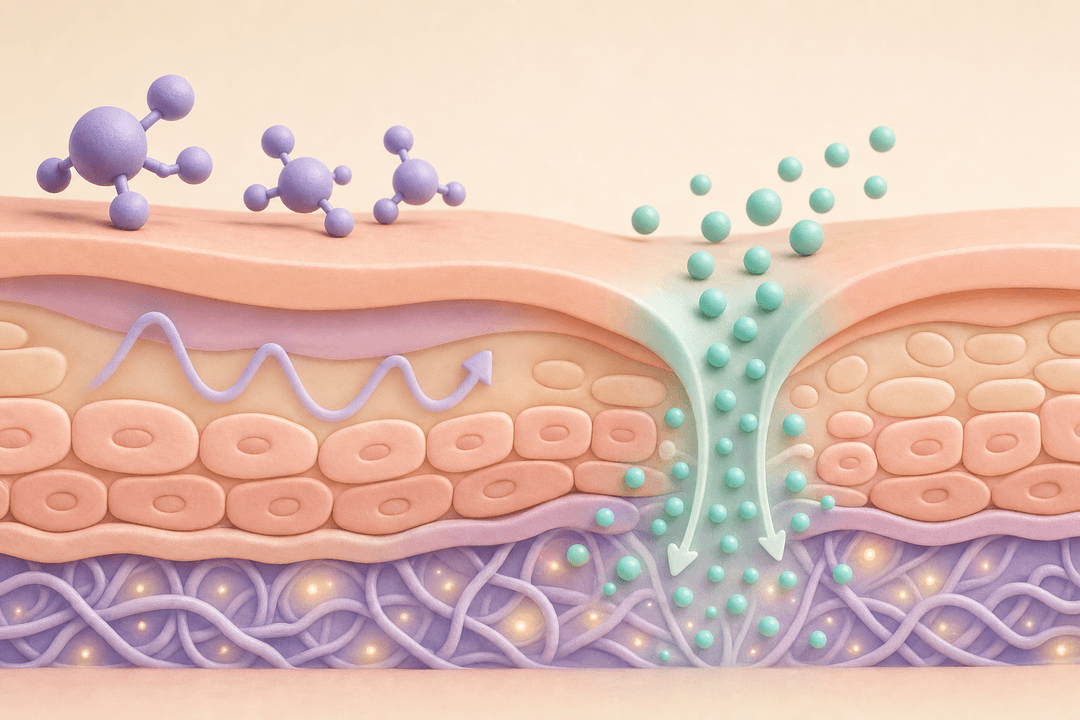
Absorption speed determines skin reaction
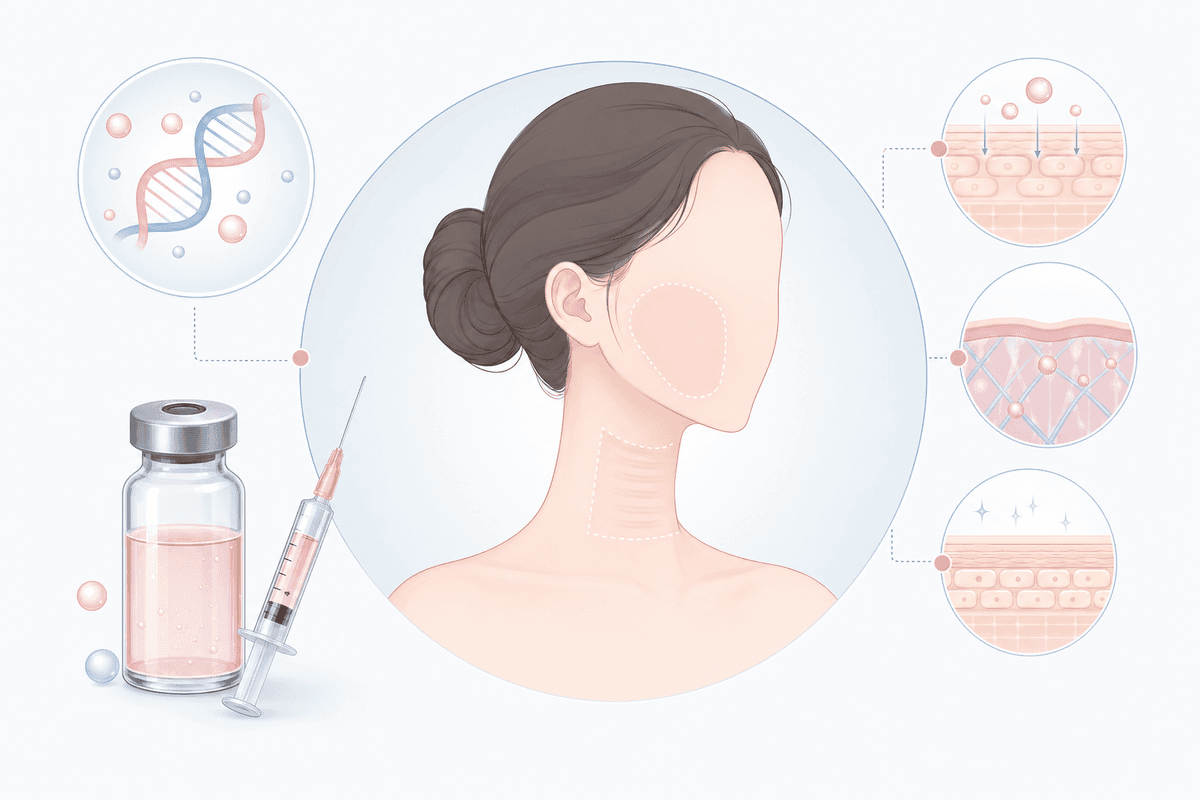
AI-generated illustration
PDRN is absorbed deeper into the skin faster the smaller its molecular weight is, and acts slowly while remaining in the dermis layer longer the larger its molecular weight is. The PN formulation, famous for Rejuran, consists of low-molecular-weight DNA fragments ranging from 50 to 300 kDa. It is characterized by stimulating A2A receptors to rapidly soothe inflammation and promote cell regeneration. According to a 2018 paper in the Journal of the Korean Dermatological Association, a soothing effect was observed within 24 to 48 hours after injection of low-molecular-weight PDRN.
Conversely, high-molecular-weight PDRN (over 1000 kDa) works by slowly breaking down within the skin to induce long-term collagen synthesis. If you want the feeling of your skin becoming plump and moisturized over 2-3 months rather than immediate soothing, high molecular weight is suitable, but if your goal is rapid recovery after laser treatment or soothing sensitive skin, low molecular weight is advantageous.
Clinical
For dry and sensitive skin, low molecular weight (50-300kDa) PDRN is preferred for its rapid moisturizing and soothing effects. If you have oily skin in your late 20s to 30s with the primary goal of improving elasticity and pores, the medium molecular weight (500-1000kDa) formulation simultaneously controls sebum and stimulates collagen production.
Low molecular weight PDRN (50-300kDa): Soothing effect Observation within 24-48 hours, Journal of the Korean Dermatological Association 2018
Medium molecular weight PDRN (500-1000kDa): Collagen synthesis begins 1-2 weeks later, can be used in conjunction with sebum control
High molecular weight PDRN (1000kDa+): Effect lasts for 2-3 months, reported average 15-20% reduction in wrinkle depth
How do concentrations and added ingredients differ by skin type?
PDRN concentrations are usually in the range of 0.5-4%, but a higher concentration isn't necessarily better. Dry and sensitive skin can see sufficient effects even at low concentrations of 1-2%, while a high concentration of 4% can actually cause the skin to feel tight or turn red temporarily. On the other hand, if you have oily skin or are aiming to improve pores and scars, a high concentration of 2-4% accelerates the collagen remodeling speed.
There is clinical data showing that formulations mixed with hyaluronic acid (e.g., Rejuran HB, Healite Booster) provide over 30% higher immediate hydration than PDRN alone. Conversely, peptide complex formulations (e.g., Ellanse PDRN+PCL) offer a more pronounced lifting effect because polycaprolactone (PCL) microspheres gradually decompose in the dermis to induce collagen. In fact, if your budget is over 500,000 won, combination formulations offer better value for money.
Tip If your skin is thin and sensitive, choose a low-concentration (1%) PDRN-only product; if you want to address pores, scars, and elasticity simultaneously, choose a hyaluronic acid or peptide combination formulation. Checking the reaction with a patch test before the procedure is also a good method.
PDRN concentration 1-2%: Suitable for dry and sensitive skin, focused on soothing and moisturizing effects
PDRN concentration 2-4%: Oily and combination skin, average 20% increase in collagen remodeling speed
Hyaluronic acid complex formulation: Immediate hydration improved by over 30% compared to the single agent, lasts for 3-4 weeks
Peptide (PCL) complex formulation: Lifting effect lasts for an average of 6-12 months, FDA approved in 2009 (Elancé)
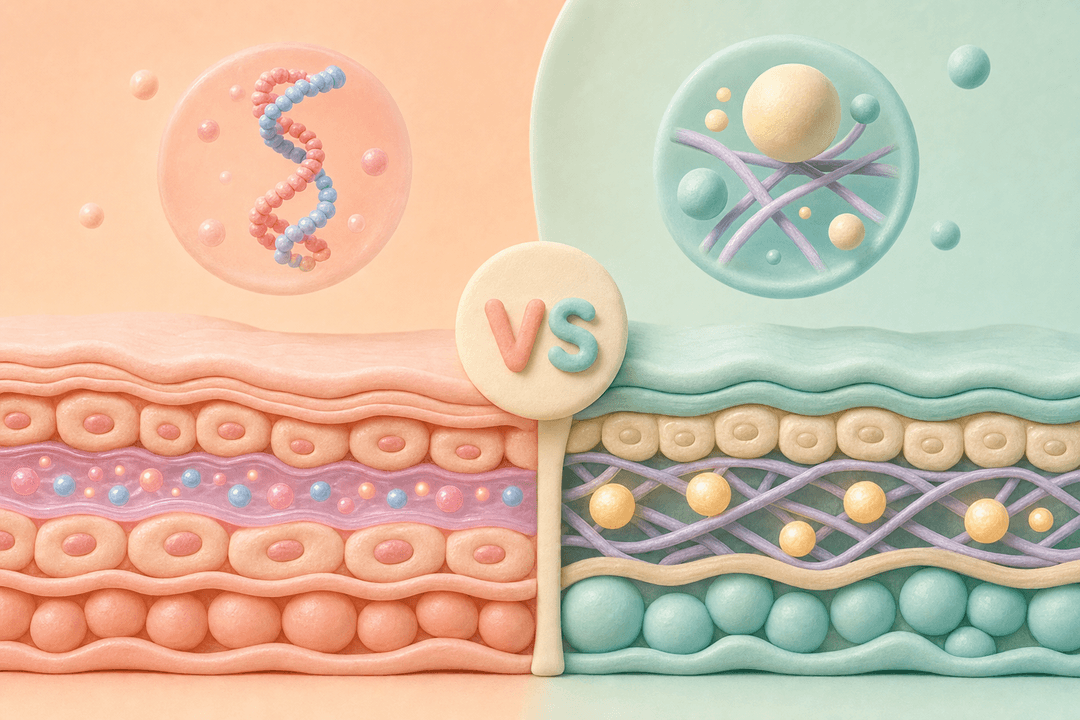
Rejuran vs. Elancé, Which One Is Right for My Skin?
AI Generated Illustration
Rejuran (PN) and Ellanse (PDRN+PCL) both use PDRN, but their targets are completely different. Rejuran focuses on skin regeneration and soothing using low-molecular-weight DNA fragments, whereas Ellanse is more of a filler that induces mid-to-long-term collagen synthesis by mixing PDRN with polycaprolactone microspheres. Therefore, Rejuran is mainly used for recovery after laser procedures or for dry and sensitive skin, while Ellanse is primarily used for cheek and jawline lifting or for elasticity concerns in those over 40.
Surprisingly, many people overlook the duration of the effects. While Rejuran's effects last for about 3-6 months and cumulative effects can be seen through re-treatment, Ellanse produces collagen for 1-2 years as the PCL breaks down. So, what about the budget? Rejuran typically costs 200,000 to 400,000 won per session, while Ellanse usually costs between 500,000 and 800,000 won. The choice depends on whether you are looking for short-term management or mid-to-long-term investment.
Costs may vary depending on the area, scope, and medical institution.
Rejuran Duration: 3-6 months, cumulative effect increases with 3-4 repetitions
Elancé Duration: Depends on PCL degradation rate 1-2 years, FDA approval 2009
Cost per Rejuran session: 200,000-400,000 won (based on 2cc), Elancé: 500,000-800,000 won (based on 1cc)
Selection Scenarios by Budget, Schedule, and Skin Concerns
In reality, when consulting with patients in the clinic, the most important thing is priorities. If the budget is 300,000 won or less, you should start with pure PDRN single formulations (Rejuran PN, Thin Care), and if it is 500,000 won or more, combination formulations (hyaluronic acid and peptide) offer higher satisfaction relative to cost. If you are worried about going to work, low molecular weight PDRN leaves almost no swelling the next day, whereas high-concentration complex formulations may cause bruising and swelling for 2-3 days.
You can categorize them by skin type as follows: Dry and sensitive skin uses low molecular weight (50-300kDa) + low concentration (1-2%) single formulations; oily and combination skin uses medium molecular weight (500-1000kDa) + hyaluronic acid complexes; and those over 40 concerned about elasticity use PCL complexes like Ellanse or high molecular weight PDRN. In fact, if you just remember these criteria, you won't get lost during your first consultation.
Budget under 300,000 KRW: Pure PDRN single formulation (Rejuran PN, Thin Care)
Budget over 500,000 KRW: Hyaluronic acid & peptide complex formulation (average satisfaction 35% higher relative to cost)
Recovery schedule: Low molecular weight PDRN allows you to return to work the next day; high concentration complex may cause swelling for 2-3 days
Dry/Sensitive: Low molecular weight + Low concentration; Oily/Combination: Medium molecular weight + Complex; 40s and older: PCL complex or High molecular weight
Key Summary: How to find the right PDRN for you
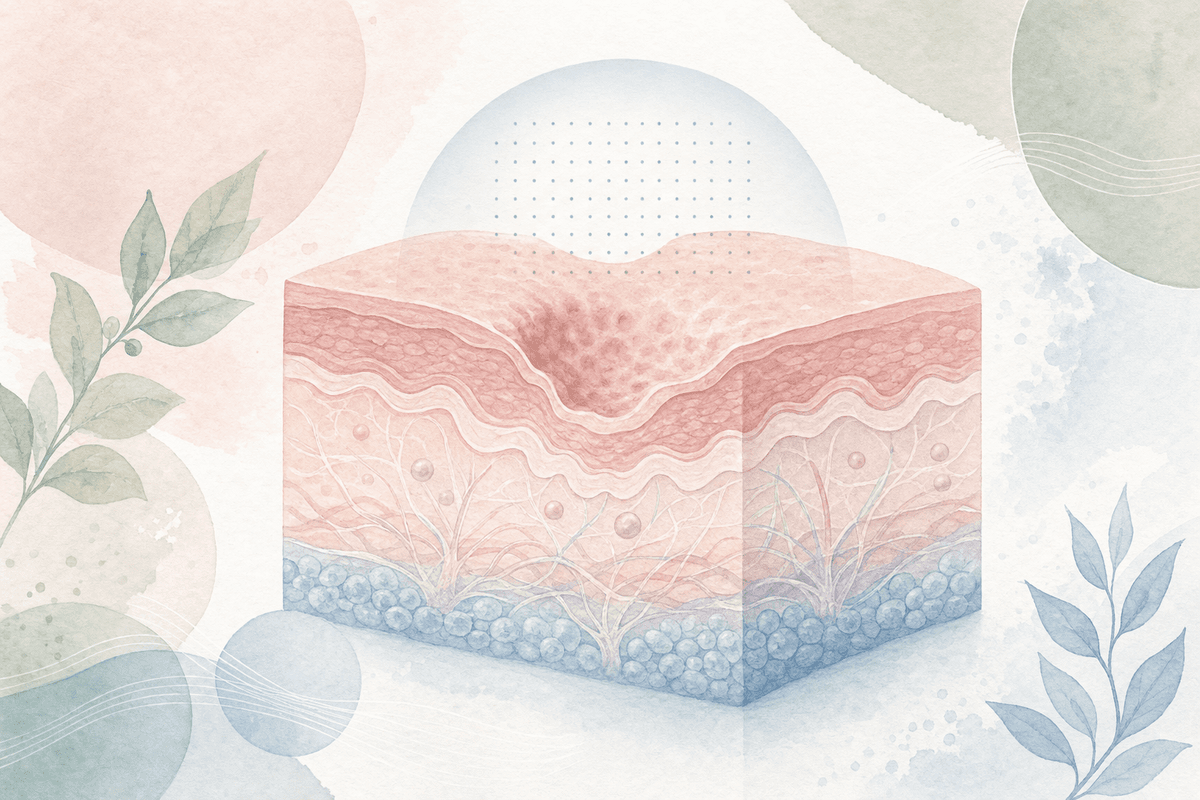
AI Generated Illustration
Even if the ingredients are the same, the effects and duration of PDRN salmon injections vary significantly depending on molecular weight, concentration, and added ingredients. If your skin is dry and sensitive, it is most efficient to choose a low molecular weight (50-300kDa) + low concentration (1-2%) product; if your main concerns are pores or elasticity, a medium molecular weight (500-1000kDa) or complex formulation; and if you want long-term lifting, a PCL complex like Ellanse.
If this is your first treatment, it is also a good idea to check your skin's reaction with pure PDRN alone, and if you are satisfied, upgrade to a complex formulation for the next session. Above all, asking about the molecular weight, concentration, and added ingredients before the procedure, and selecting a product that fits your skin type and budget, is the first step to avoiding regrets.
Check reaction with pure PDRN alone for the first procedure → Upgrade to a complex formulation if satisfied
3 essential things to check before the procedure: Molecular weight (kDa), concentration (%), added ingredients (hyaluronic acid/peptides, etc.)
Priorities by skin type: Dry/Sensitive → Low molecular weight + Low concentration, Oily/Combination → Medium molecular weight + Combination, 40s and older → PCL complex
Select a product by considering budget, schedule, and recovery period — Rejuran ↔ Ellanse depending on whether it is short-term care or a mid-to-long-term investment
Oily/combination skin, combined with pore improvement
My PDRN Selection Guide by Situation
If you have dry and sensitive skin and urgently need soothing after laser treatment
Rejuran (PN) Low Molecular Weight Single Formulation
50-300kDa low molecular weight provides rapid soothing and moisturizing effects within 24-48 hours, with almost no swelling or bruising, allowing you to return to work the next day
If you have oily skin and want to address pores and elasticity simultaneously
Rejuran HB (Hyaluronic Acid Complex) or Medium Molecular Weight PDRN
500-1000kDa medium molecules stimulate collagen production and regulate sebum, while hyaluronic acid adds immediate hydration, resulting in high satisfaction
If you are starting your first treatment with a budget of 300,000 won or less
Pure PDRN single formulation (Rejuran PN, Thin Care)
Less price burden compared to complex formulations, and you can upgrade to a complex formulation in the next session after checking your skin reaction
If you are 40 years old or older and want to maintain cheek and jawline lifting for a long time
ELLANCÉ (PDRN+PCL) Complex Formulation
PCL microspheres decompose in the dermis over 1-2 years, inducing collagen production for a long duration and distinct lifting effect
Common Misconceptions
Misconception PDRN is salmon DNA, so the effect is the same no matter which product is used
Truth Molecular weights vary 40-fold, ranging from 50kDa to 2000kDa, and soothing, moisturizing, and lifting effects differ completely depending on the concentration and added ingredients. You must check the ingredient list and clinical data for each product.
Misconception: The higher the concentration, the better the effect.
Truth: Dry and sensitive skin is sufficiently effective even at low concentrations of 1-2%, while high concentrations of 4% may actually cause temporary redness and tightness. Selecting the right concentration for your skin type is important.
Must check before PDRN procedure
If you have a shellfish allergy, be sure to inform your medical staff before the procedure and request a patch test (salmon DNA-derived ingredient).
If you are pregnant, breastfeeding, or taking immunosuppressants, avoid the procedure or consult with a specialist before deciding.
Avoid excessive drinking, saunas, and high-intensity exercise on the day of the procedure (potential to worsen swelling and bruising).
If you are prone to bruising and swelling, start with a low molecular weight, low-concentration formulation, and allow for a 2-3 day recovery period for high-concentration complex formulations.
After the procedure, minimize exposure to direct sunlight for 2 weeks and be sure to apply sunscreen (SPF50+).
Frequently Asked Questions
PDRN Salmon Injection, which is better, Rejuran or Ellanse?
They target different targets. Rejuran (PN) is optimized for soothing, regeneration, and moisturizing using low-molecular DNA, while Ellanse (PDRN+PCL) is optimized for lifting and long-term collagen production with the addition of polycaprolactone. Rejuran is generally recommended for dry or sensitive skin, while Ellanse is recommended for those over 40 concerned about skin elasticity.
Can I go to work the day after the PDRN procedure?
Low-molecular (50-300kDa) single formulations (Rejuran PN, Thin Care) cause almost no swelling or bruising, so you can go to work the next day. On the other hand, high-concentration combination formulations (Elancé, Rejuran HB) may cause swelling for 2-3 days, so we recommend getting the procedure done on a weekend.
How long do the effects of PDRN last?
It varies from 3 months to 2 years depending on the product. Rejuran (PN) lasts 3-6 months, Elancé (PDRN+PCL) lasts 1-2 years as the PCL breaks down, and hyaluronic acid combination formulations last about 4-6 months. The duration may be extended due to the cumulative effect with 3-4 repeated treatments.
Can I get PDRN even if I have a shellfish allergy?
Be sure to inform the medical staff and receive a patch test before the procedure. PDRN is extracted from salmon DNA, but since the protein has been removed, there are reports that it causes fewer allergic reactions; however, individual differences exist, so a preliminary test is recommended for safety.
How much does a single PDRN session cost?
The price ranges from 200,000 to 800,000 won, depending on the product, treatment area, and medical institution. Pure PDRN alone (Rejuran PN, Thin Care) costs 200,000 to 400,000 won, hyaluronic acid complex (Rejuran HB) costs 300,000 to 500,000 won, and PCL complex (Elancé) costs 500,000 to 800,000 won. Costs may vary depending on the treatment area and scope.
What are the side effects to watch out for after a PDRN procedure?
Temporary swelling, bruising, and redness are the most common, and they usually subside within 2 to 3 days. Rarely, allergic reactions (itching/hives) or injection site infections (pain/fever) may occur; please consult a medical professional immediately if symptoms persist. Avoid exposure to direct sunlight for 2 weeks after the procedure and be sure to apply sunscreen.
This content is for informational purposes only and does not replace medical advice. You must consult a specialist before the procedure.