AI Treatment Recommendation: The 5-Step Judgment, How Much of My Face Does It Actually See?

- The reason why recommendations differ for the same face depending on lighting and angle is revealed by 468 dots.
- We've explained the 5-step process, from input photos to training data, judged by AI, at a reader-friendly level.
- To avoid blindly trusting the results, you need to know under what conditions errors occur.
Information as of September 2026
From Input and Learning to Evidence
- Real-time recognition of 468 facial landmarks
- 3 sources for learning data composition
- 23% judgment error due to lighting condition differences
A single selfie can provide treatment recommendations
I turn on the app while looking at one side of my face in the mirror one morning. After taking one photo, it says 'Botox'. A menu that wasn't there yesterday is showing up today.
The reason for the differing recommendations for the same face is that the AI isn't reading a face, but rather '468 coordinates'.
Even a slight change in lighting, angle, or makeup can shift the arrangement of these points.
What you see when broken down into 5 steps
The facial recognition algorithm operates in the order of input → feature point extraction → skin condition analysis → data matching → recommendation output.
In the first step, 468 points are placed on the eyes, nose, mouth, and jawline, and ratios are calculated based on their distances and angles.
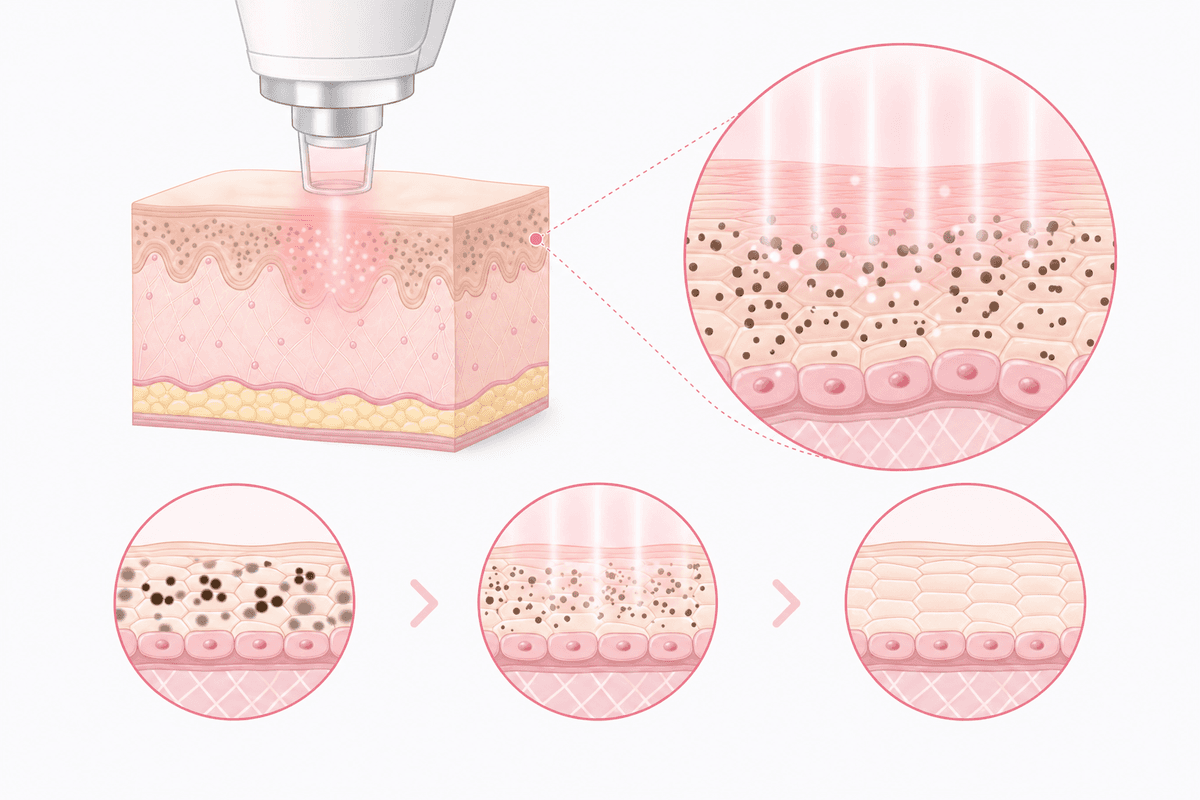
Information on skin texture, pigmentation, and wrinkle depth is then overlaid and compared with learned data.
Therefore, the AI isn't looking at whether a 'face is pretty or not', but rather finding patterns in thousands of photos to derive the correlation: 'If this combination of features appears, this treatment was frequently received.'
Key takeaway Learning data is typically composed of three sources: before-and-after treatment changes, dermatology diagnostic records, and self-assessment surveys. Since the reliability of each source differs, the results are 'statistical tendencies,' not 'diagnoses.'
OX Quiz
Even for the same person's face, AI treatment recommendations can change if only the lighting changes.
Check the answer
O Judgment errors of up to 23% are reported due to differences in lighting conditions alone, such as between white light and yellow light. AI is not an absolute standard but a statistical tool sensitive to input conditions.
So why do the results fluctuate?

The fact that judgment errors can widen up to 23% due to lighting condition differences alone is the generally reported range in the industry.
Under white light, pigmentation appears lighter, while under yellow lighting, wrinkles appear deeper.
Makeup is also a variable. If foundation covers the skin texture, the AI reads it as 'smooth skin' and underestimates the necessary treatment.
Therefore, bare face, natural light, and a frontal angle are the conditions that produce the most consistent results.
- 23% error between natural light vs. indoor lighting
- 1.4x difference in judgment items before and after makeup
So, how should we interpret these results?
The realistic standard is to use AI treatment recommendations as a 'starting point for exploration,' not as a 'diagnosis.'
Don't book an appointment immediately just because a recommendation appears; you should ask a specialist for clarification on the basis of the recommendation during a consultation.
Also, be sure to check where your facial photos are stored and what the deletion policy is.
Some apps reuse photos as learning data, and if this is done without consent, there's no way to undo it later.
Misconceptions
Misconception If a treatment is recommended by AI, it's a perfect fit for my skin.
Truth AI only shows a statistical correlation of 'if this combination of features appears, this treatment was frequently received.' It does not consider your specific skin condition, medical history, or lifestyle patterns, so the final decision must always be made with a specialist.
How NOT to Use AI Results
- Believing the recommended treatments as a 'diagnostic report' and immediately booking procedures — results can change even with slight variations in lighting or makeup conditions.
- Running multiple apps with a single photo and choosing only the most satisfactory result — if the learning data differs, the judgment will differ, reducing its value if inconsistent.
- Not checking the storage, deletion, and recycling policies before uploading facial photos — some apps may use them as learning data without consent.
Frequently Asked Questions
Can I trust AI recommendation results?
Use them only as a 'starting point for exploration.' Due to significant errors depending on lighting, makeup, and angle conditions, the final decision must always be made during a consultation with a specialist.
Why do recommendations differ across apps?
It's because the data used for learning is different. The judgment criteria vary depending on whether the learning focused on before-and-after treatment changes or used dermatology diagnostic records.
Where are facial photos stored?
Policies vary by app. Some reuse them as learning data, so be sure to check the storage and deletion policies before uploading photos.
Lumi's Word
Remember that AI sees not a face, but 468 coordinates. You shouldn't trust judgments that fluctuate with just one change in lighting as a diagnosis; it's more realistic to use it as an indication of 'what tendencies appear when I'm viewed with this standard.' Come back if you discover another AI tool you're curious about.
This content is for informational purposes only and does not substitute for medical advice. Always consult with a specialist before undergoing any procedures.