AI Consultation vs. Specialist: 4 Roles Each Excels At

- While it's true that AI is faster than humans, the actual decisions come from the other side.
- AI collects objective data, while specialists interpret the context—their stages are different.
- AI's judgment can fluctuate by up to 20% when lighting, angles, or makeup conditions change.
Information as of October 2026
Organized by Stage-Specific Roles
- Average AI Skin Analysis: 15 seconds
- Average Specialist Consultation: 15 minutes
- Accuracy Increases When Combining Both Tools
Can AI Replace Specialists? Only Half True
If you thought AI consultations would replace specialists, you're only half right.
AI excels at quickly organizing data, but interpreting what those numbers mean for you is still a human task.
In fact, the consultation process in domestic plastic surgery clinics increasingly follows a two-step structure: AI analysis followed by specialist consultation. This is because each excels at different roles.
What AI Does Well: Quantifying Objective Data and Filtering Options
AI breaks down the face into hundreds of landmarks for measurement. It organizes metrics like interocular distance (32mm) and columella angle (102 degrees) in just 15 seconds, which humans might overlook with a quick glance.
AI is remarkably fast at this stage.
Its strengths extend to narrowing down options, such as suggesting, "These 3 procedures are typically considered for your face."
It's good at filtering, but it cannot decide which to choose.
True/False Quiz
AI skin analysis results can replace a specialist's diagnosis.
Check the answer
X AI can only collect objective data and filter options. Interpreting personal context, checking contraindications, and making the final decision remain the specialist's unique domain, and legal responsibility lies with the human.
What Specialists Do Well: Interpreting Context and Making Final Decisions
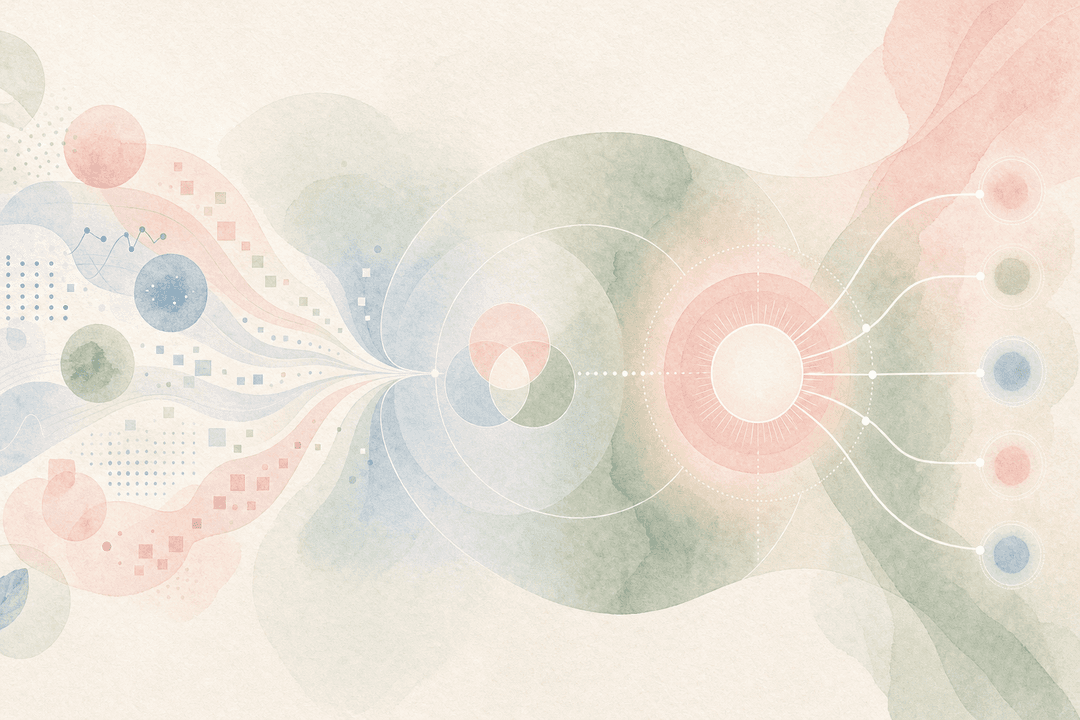
Conversely, specialists read the context behind those numbers.
Even if the columella angle is 102 degrees, the treatment direction emerges only after considering the overall facial proportions, skin thickness, cartilage strength, and your desired aesthetic.
These four factors are not included in AI reports.
Furthermore, determining the timing of a procedure ("Should this procedure be done now?"), checking for contraindications, and explaining the risks of complications are still areas only humans can handle. Legal responsibility also lies here.
Key Takeaway Reports indicate that bringing AI analysis results to a consultation can reduce conversation time by an average of 30%, as it bypasses the basic measurement phase and moves directly to interpretation.
So, When Do You Use What?
If you're vaguely considering a procedure, start with AI analysis. This is the stage to review your objective facial data and narrow down the procedural options.
AI is efficient up to this point.
When you take those results to a specialist consultation, unnecessary options are filtered out, and feasible methods and timing are determined. Think of AI as the starting point and the specialist as the decision-making point.
- AI Analysis → Specialist Consultation: The combination of these two steps is the standard
- Decision-making is still a human task; AI is an efficiency tool
Stage-Specific Role Allocation Chart
If you're just starting to consider a procedure
Confirm your objective facial data with AI analysis and filter options.
AI is fast and efficient for narrowing down vague considerations into specific choices.
If you have AI results and are deciding on a procedure
Bring the results to a specialist consultation for context interpretation and final decision-making.
Only humans can assess personal conditions (skin, cartilage, proportions) behind the numbers, as well as timing and risks.
Misconceptions
Misconception If you have AI analysis results, you can book a procedure immediately.
Truth AI only filters options. Whether a procedure is actually feasible and any contraindications must be confirmed through a specialist consultation. AI results are "reference material," not a "prescription."
How NOT to Use AI Consultation Results
- Do not finalize a procedure type based solely on one AI assessment—decisions without context interpretation based only on numbers are incomplete.
- There is a risk of personal information leakage if you do not check the data storage and deletion policy before uploading facial photos.
- Re-measuring with photos taken under different lighting, angles, or with makeup can cause results to fluctuate by up to 20%.
Frequently Asked Questions
Can AI analysis results vary between clinics?
Yes, if the algorithms and training data used are different, the measurement values for the same face can differ by 5-10%. They should be viewed as reference indicators, not absolute standards.
Can I book a procedure immediately after an AI consultation?
No. AI is merely a tool for narrowing down options. The actual feasibility of a procedure and any contraindications must be confirmed through a specialist consultation.
Where are facial photos stored?
It varies by service. Some delete them immediately after analysis, while others store them for a certain period. Be sure to check the privacy policy before use.
References
- Guidelines for the Use of Medical AI — Ministry of Food and Drug Safety, 2023
- Trends in AI-Based Skin Diagnosis Technology — Korea Health Industry Development Institute, 2024
Lumi's Word
When you first receive an AI report, you might think, "Is everything done now?" But that's actually only half the process. AI quickly organizes the numbers, but a human must interpret what those numbers mean for your face. Following both steps in order saves time and leads to more accurate decisions.
This content is for informational purposes only and does not substitute for medical advice. AI analysis results are for reference only; always consult with a specialist before undergoing any procedure.