Lower Eyelid Surgery vs. Under-Eye Fat Repositioning: A 1mm Difference in Fat Placement Separates Success from Failure
- Whether to remove or reposition fat: the decision hinges on the shape of the bone beneath the eyes.
- Lower eyelid surgery and under-eye fat repositioning differ in approach — fat removal vs. repositioning.
- Before age 30, repositioning is generally recommended; after age 40, removal plus lifting is the usual standard.
Information as of August 2026
Why Different Surgical Methods for the Same Under-Eye Area?
- 3-5mm difference in fat repositioning distance
- 15-20% difference in revision surgery rates
- 7-14 day difference in recovery period
The Fate of Fat: As Seen in the Consultation Room
Pointing to my under-eyes in the mirror, I asked, "This puffiness here, can't it just be removed?" The doctor replied, "It's not about removing the fat, but repositioning it." Hearing that some under-eye fat is removed while other is repositioned left me with a head full of question marks at that moment.
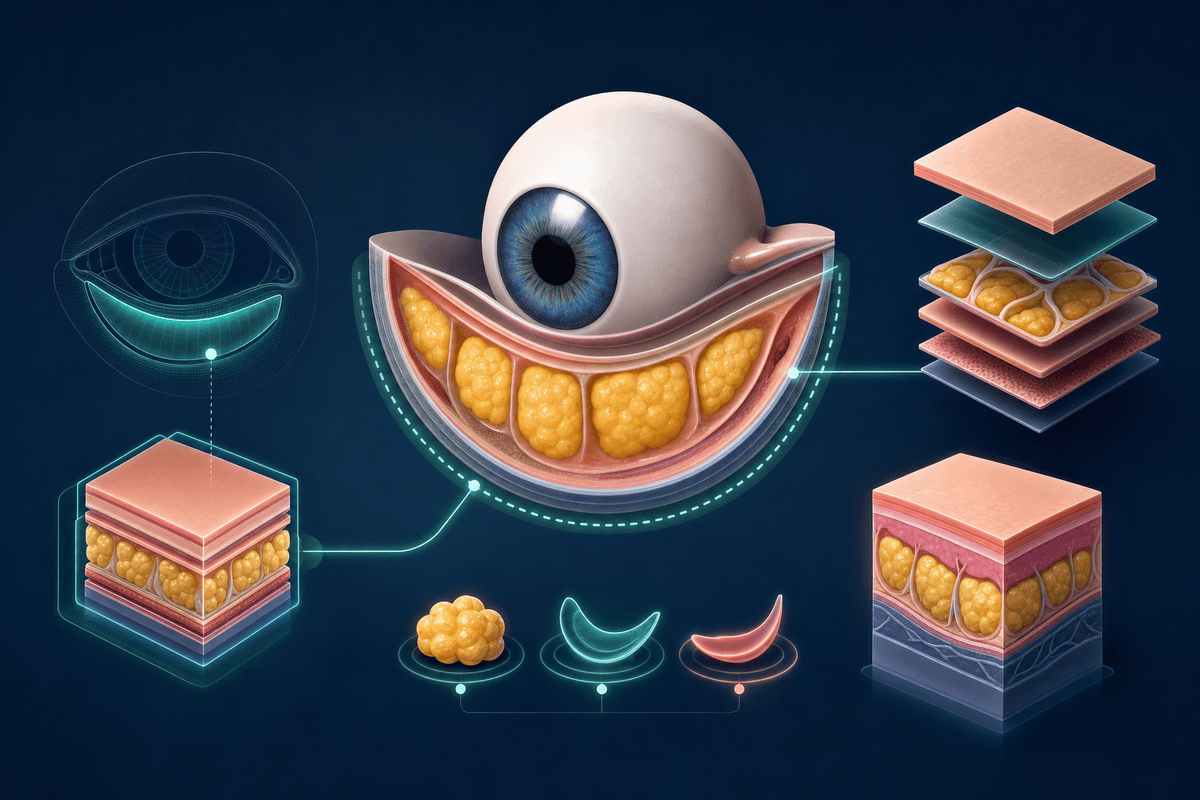
Lower blepharoplasty and under-eye fat repositioning differ fundamentally in their approach. Lower blepharoplasty focuses on removing or minimizing fat, while under-eye fat repositioning, as the name suggests, moves the fat downwards to fill the tear troughs. Even a slight difference of 3-5mm in fat position can result in more than double the depth of under-eye shadows.
The reason for different surgical methods for the same under-eye concerns lies in bone structure and fat condition. In this article, I will break down the criteria that distinguish these two surgeries and provide scenarios for actual selection.
Lower Blepharoplasty vs. Fat Repositioning: Where Do They Differ?
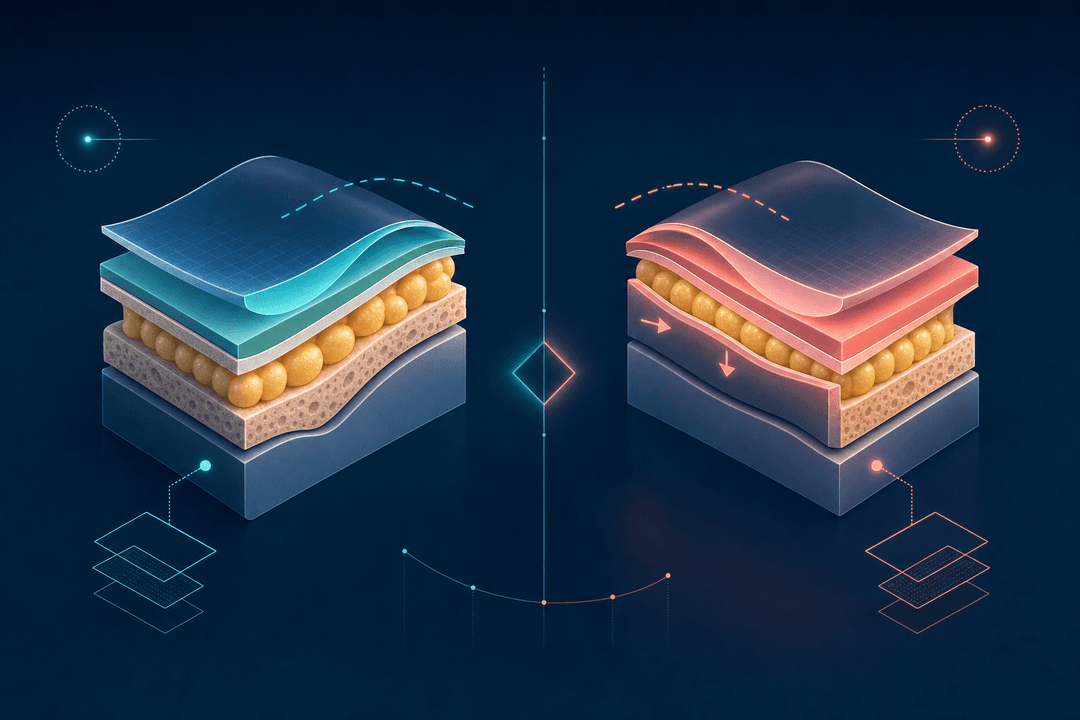
Lower blepharoplasty involves making an incision in the skin below the eye to remove or lift and secure bulging fat. It is typically applied to patients over 40 with sagging skin or wrinkles, or in cases of excessively protruding fat.
On the other hand, under-eye fat repositioning involves opening the fat pocket through an incision inside the conjunctiva and moving the fat 4-6mm upwards onto the periosteum (bone membrane) to secure it. The key benefits are no visible scars as the skin is not cut, and less long-term volume loss because the fat is not discarded.
According to a 2019 presentation by the Korean Society of Plastic and Reconstructive Surgeons, fat repositioning was chosen in 68% of under-eye procedures among those in their 30s, surpassing lower blepharoplasty (32%). However, this ratio reverses after age 40 — indicating that skin elasticity and fat volume are the deciding factors.
- Lower Blepharoplasty: Skin incision → Fat removal/fixation → Skin tightening
- Fat Repositioning: Conjunctival incision → Fat repositioning → Periosteal fixation
- Repositioning chosen by 68% of 30s; Lower blepharoplasty choice increases after 40s
OX Quiz
Under-eye fat repositioning leaves no scars, so anyone can choose it regardless of age.
Check the answer
X For individuals over late 40s with skin elasticity below 50%, repositioning alone may not be sufficient to improve sagging skin. While there are no external scars due to the conjunctival incision, the suitability varies depending on age, elasticity, and bone structure.
Removing vs. Moving Fat: The Bone Holds the Answer
So, how do you decide? If the concavity below the cheekbone (tear trough) is 3mm or more, repositioning is prioritized. If it's 2mm or less and only the fat is bulging, removal via lower blepharoplasty is considered first. There needs to be sufficient space above the periosteum for the repositioned fat to settle.
Skin elasticity is also crucial. Up to the early 30s, collagen density is maintained above 70%, allowing the skin to naturally adapt after repositioning. However, after age 40, when elasticity drops below 50%, even if the fat is moved, sagging skin can lead to wrinkles. In such cases, removing excess skin with lower blepharoplasty is a more practical solution.
Another factor is the fat pocket, which is divided into three compartments (medial, central, and lateral). If only the central compartment is protruding, repositioning is recommended, while if all three compartments are bulging, lower blepharoplasty for removal is considered effective, according to clinical consensus. Honestly, judging this aspect solely by eye without CT or ultrasound can be difficult.
Key Takeaway Tear trough depth of 3mm or more = Prioritize repositioning / Skin elasticity below 50% = Consider lower blepharoplasty / Protrusion of all three fat compartments = Removal is effective
Recovery and Cost: The Realistic Differences

Fat repositioning has a shorter recovery period. Since there's no skin incision, swelling subsides within 3-5 days, and bruising typically disappears within 7 days. Lower blepharoplasty requires suture removal after 7 days due to the incision, and it takes about two weeks for swelling and bruising to completely resolve.
Costs vary significantly by clinic, but generally, fat repositioning ranges from ₩2-3 million, and lower blepharoplasty from ₩2.5-4 million. Adding fat grafting or lifting to lower blepharoplasty can exceed ₩5 million. Anesthesia method (sedation vs. general) can add another ₩0.5-1 million.
Revision surgery rates also differ. For fat repositioning, fat returning to its original position occurs in 10-15% of cases, while for lower blepharoplasty, ectropion (eyelid turning outward) due to excessive skin removal is reported in 5-8%. This is something not often mentioned in advertisements, but the industry generally agrees that fat repositioning is technically more demanding.
| Item | Under-Eye Fat Repositioning | Lower Blepharoplasty |
|---|---|---|
| Incision Method | Conjunctiva (inside eye) | Skin (under eye) |
| Swelling Recovery | 3-5 days | 7-14 days |
| Scar | None | Minimal incision line trace |
| Cost Range | ₩2-3 million | ₩2.5-4 million |
| Revision Rate | 10-15% | 5-8% |
Costs may vary depending on the area, extent, and medical institution.
Combined Surgery: A Third Path
In reality, these two surgeries are increasingly being combined rather than viewed separately. Fat is repositioned, and any remaining excess skin is removed via lower blepharoplasty. This approach is particularly common for patients over mid-40s with deep tear troughs and sagging skin.
A study published in the Journal of the Korean Society of Ophthalmic Plastic and Reconstructive Surgery in 2021 found that patient satisfaction with combined surgery was 12% higher than with single procedures, and the revision rate was 7%, lower than for repositioning alone (15%). However, the cost increases to ₩4-6 million, and the recovery period needs to be at least two weeks.
Surprisingly, many overlook the option of additional fat grafting. When under-eye fat alone is insufficient for volume, fat harvested from the thighs or abdomen is grafted to the under-eye area. Since the survival rate is 60-70%, overcorrection must be considered. This is a separate domain from fat repositioning.
Clinical Insight Combined surgery involves simultaneous fat repositioning and skin excision. Satisfaction increases by 12%, and the revision rate is 7%, lower than single procedures. However, costs and recovery time increase.
Choosing the Right Option for Your Under-Eyes: Here's How to Organize It

Ultimately, age, bone structure, and skin condition determine the surgical method. For those in their early 30s with only bulging fat and deep tear troughs, fat repositioning is recommended. For those over 40 with accompanying skin sagging, lower blepharoplasty should be considered first.
Essential questions to ask during consultation are: "What is the depth of my tear trough in millimeters?" and "What is your revision surgery rate?" If they cannot provide numerical answers, it may be worth questioning their experience. Clinics that measure periosteal thickness using CT or ultrasound are generally more reliable.
- Early 30s + Deep tear troughs → Prioritize repositioning
- Over 40 + Sagging skin → Consider lower blepharoplasty
- Confirm tear trough depth (mm) during consultation – essential
- Choosing a clinic with a revision rate below 10% is a safe standard
Lower Blepharoplasty vs. Under-Eye Fat Repositioning: Key Comparison
Under-Eye Fat Repositioning [Recommended for 30s]
- Conjunctival incision, no scars
- Fat repositioned 4-6mm
- Recovery: 3-5 days
- Cost: ₩2-3 million
- Revision rate: 10-15%
Effective when tear troughs are deep and skin elasticity is above 70%
Lower Blepharoplasty [For 40s and above]
- Skin incision, minimal scar
- Fat removal/fixation
- Recovery: 7-14 days
- Cost: ₩2.5-4 million
- Revision rate: 5-8%
Improves wrinkles by removing excess skin when sagging is present
Combined Surgery [For mid-40s]
- Repositioning + Skin excision
- Satisfaction increased by 12%
- Recovery: 14+ days
- Cost: ₩4-6 million
- Revision rate: 7%
Simultaneously addresses deep tear troughs and sagging skin
Selection Guide Based on Your Under-Eye Condition
Early 30s, only bulging fat with relatively deep tear troughs
Under-Eye Fat Repositioning
Sufficient skin elasticity allows for natural adaptation after repositioning, and it is effective in filling tear troughs.
Over 40s, with accompanying under-eye wrinkles and sagging
Lower Blepharoplasty
Improves wrinkles by excising excess skin; more stable results than repositioning when elasticity is reduced.
Mid-40s, with both deep tear troughs and sagging skin
Combined Surgery (Repositioning + Lower Blepharoplasty)
12% higher satisfaction than single procedures and a lower revision rate of 7%.
Budget under ₩2.5 million, concerned about scars
Under-Eye Fat Repositioning
Conjunctival incision means no visible scars and faster recovery; costs range from ₩2-3 million.
Misconceptions Debunked
Myth Under-eye fat is always best removed.
Truth For those in their 30s, repositioning to fill tear troughs is more beneficial long-term. Removing fat can lead to volume loss and deeper tear troughs over time. The approach varies based on bone structure and age.
Myth Fat repositioning leaves no scars, so anyone can have it done.
Truth For individuals over late 40s with skin elasticity below 50%, repositioning alone may not be sufficient to improve sagging skin. While there are no external scars due to the conjunctival incision, it has specific indications.
Must Check Before Surgery
- During consultation, confirm if tear trough depth was measured in millimeters – visual judgment alone is insufficient.
- Choose a clinic with a revision rate below 10%; inquire about revision cases rather than just surgical volume.
- For combined surgery, secure at least 2 weeks for recovery and avoid important schedules.
- Ectropion (eyelid turning outward) may require corrective surgery – request prior explanation.
- For 2 weeks post-surgery, avoid bending over or lifting heavy objects to prevent increased intraocular pressure.
Frequently Asked Questions
Can the fat return to its original position after repositioning?
This is the case for the 10-15% revision rate. Weak periosteal fixation or frequent eye rubbing during recovery can cause fat displacement. Minimizing eye irritation for two weeks post-surgery is crucial.
How noticeable are the scars after lower blepharoplasty?
A fine line remains just below the eyelashes, but it fades to an unnoticeable level for most within 3-6 months. However, if you have a keloid tendency, the scar may be more prominent, so pre-consultation is essential.
Does the recovery period double with combined surgery?
It's not a simple addition; return to daily activities is possible within about two weeks. However, complete swelling resolution takes 4-6 weeks. While longer than repositioning alone, it's comparable to lower blepharoplasty alone.
I'm in my 30s and was recommended lower blepharoplasty first. Is that unusual?
If all three fat compartments are excessively protruding and the tear troughs are shallow, lower blepharoplasty might be more effective even for someone in their 30s. Ask if they have confirmed the bone structure with a CT scan.
What happens if ectropion occurs after surgery?
This is a complication where the eyelid turns outward, exposing the white part of the eye, with an incidence rate of 5-8%. Mild cases may improve with massage, but severe cases require corrective surgery. Excessive skin removal is the main cause, making the choice of an experienced surgeon crucial.
Are the results of repositioning and lower blepharoplasty permanent?
Repositioning can offer long-term results if the fixed fat remains stable, but it cannot prevent new sagging due to aging. Similarly, with lower blepharoplasty, removed fat does not regenerate, but remaining tissues continue to age. Both are surgeries that 'turn back the clock' rather than provide 'permanent stillness'.
Lumi's Word
Whether to remove or reposition fat, the answer lies with your bone and skin. By confirming the numbers and inquiring about the revision rate, you can minimize regret. If you have more questions about procedures, feel free to visit anytime!
This content is for informational purposes only and does not substitute for medical advice. Always consult with a specialist before undergoing any procedure.