The 6 Steps of a Lower Eyelid Surgery Trip to Korea: A Practical Guide from Booking to Recovery

- Korean Lower Eyelid Surgery: Faster Recovery Protocols Than Your Home Country Determine Your Stay Duration
- A 6-Step Practical Guide from Booking to Departure, and How to Find a Hospital with Language Support
- From When You Can Fly After Surgery to Remote Post-Return Management at a Glance
Information as of September 2026
Stay, Interpretation, and Flights for International Patients
- Recommended stay: 7-10 days
- Possible to fly: 5-7 days after surgery
- Remote post-operative care: 3 months
Why Come to Korea — The Technological Gap in Lower Blepharoplasty
A patient from Singapore came into the consultation room and showed me a quote from their home country on their phone. It was 2.5 times the price of the same surgery in Korea.
"But I'm here for this," he said, pointing not to the price, but to the recovery photos.
In Korean plastic surgery clinics, the standard protocol for lower blepharoplasty with fat repositioning minimizes incisions.
Most procedures are transconjunctival, meaning they access only the inside of the conjunctiva to reposition fat without lifting the skin.
In Western countries, transcutaneous (skin incision) procedures are still more common, often resulting in recovery times of over two weeks.
Step 1: From Online Consultation to Booking — Confirming Interpretation Support is Key
Most clinics accept consultations via KakaoTalk, WhatsApp, or WeChat. Send three photos (front, side, and close-up of the eyes), and you'll receive an initial assessment within 48 hours.
The crucial question to ask at this stage is whether they have an on-site interpreter.
Some clinics that advertise "English consultation available" may not have an interpreter on the day of surgery.
Before confirming your booking, get written confirmation regarding interpreter accompaniment on the day of surgery. About 30% of clinics in the Gangnam and Sinsa areas have full-time English and Chinese interpreters.
OX Quiz
International flights are possible the day after lower blepharoplasty surgery in Korea.
Check the answer
X Cabin pressure changes can worsen swelling, so it's safest to wait at least 5 days, or 7 days for long-haul flights. Reports indicate that flying too soon increases the risk of hematoma threefold.
Steps 2-4: Planning Your Stay — Surgery, Stitches, and Progress Checks
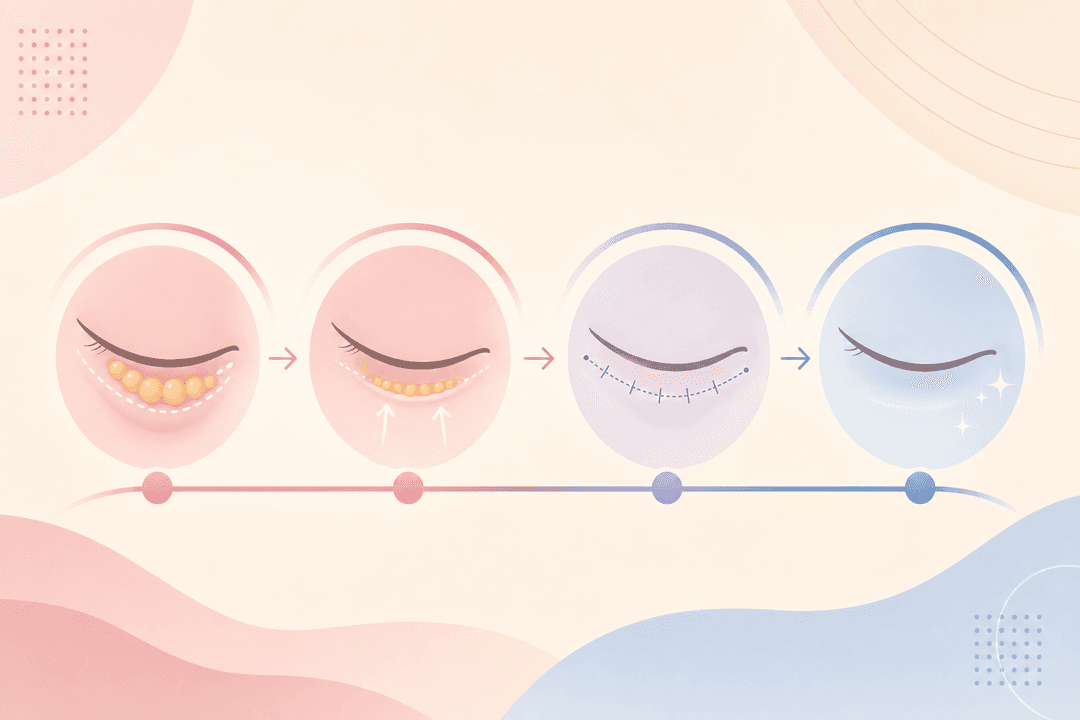
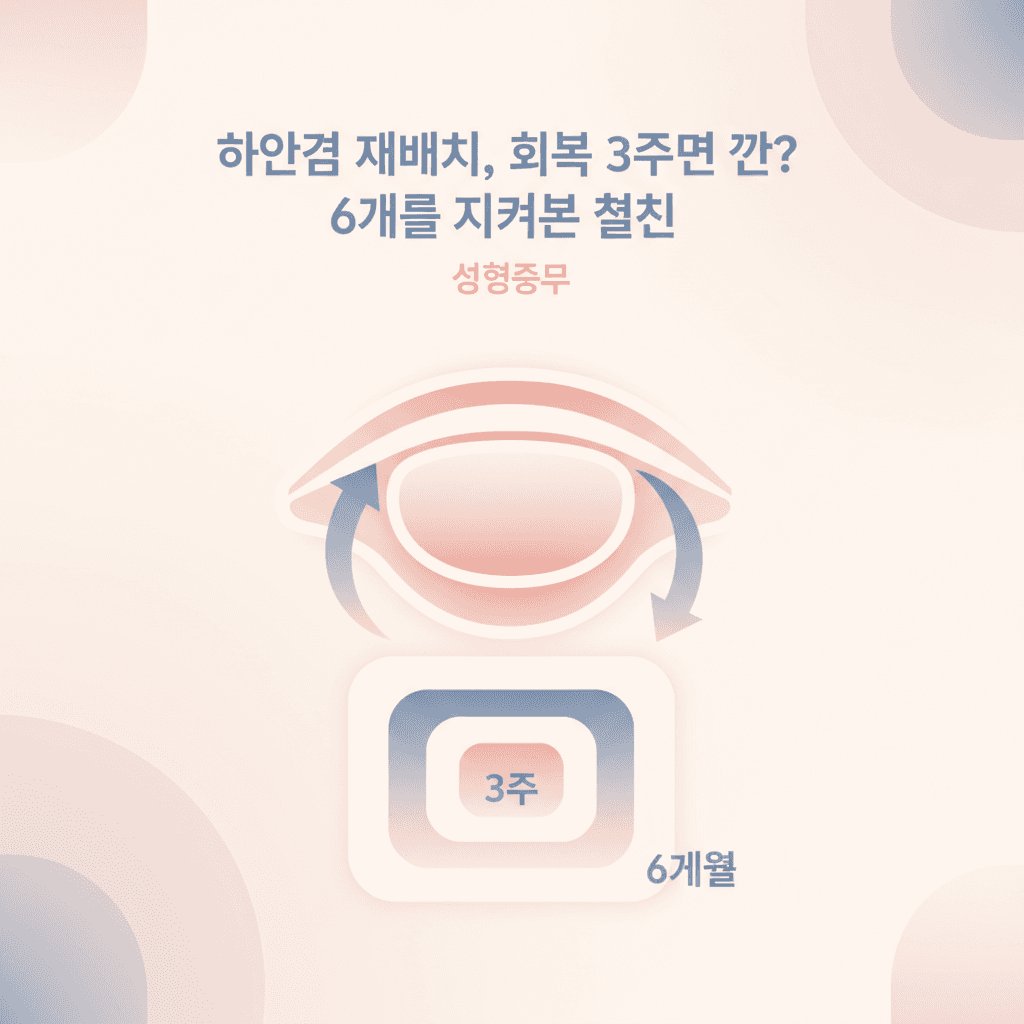
The recommended stay is 7-10 days. The standard procedure is: Day 1 Surgery → Day 5-7 Suture Removal → Day 7-10 Final Progress Check before returning home.
With the transconjunctival approach, there are no skin incisions, so stitches are only on the inside of the eye.
You can fly 5-7 days after surgery. Changes in cabin pressure can worsen swelling, so you must remain on the ground for at least 5 days.
For long-haul flights (8 hours or more), it's safer to wait 7 days. Avoid checking into your hotel on the day of surgery; arrive at least a day prior to adjust to the time difference.
Caution If you book a VIP private room (single room), you can be discharged after a 6-hour recovery room wait on the day of surgery. For standard rooms, a one-night hospital stay is standard.
Steps 5-6: Choosing a Clinic and Remote Care After Returning Home
When choosing a clinic, look for cases in the Before/After portfolio that resemble your own ethnicity. The fat distribution differs between East Asian and Western eyes.
Clinics with extensive experience treating Caucasian patients have accumulated expertise in handling different skin types.
After returning home, remote consultations via KakaoTalk are provided for 3 months.
By sending weekly photos, you can track your recovery progress. Any warning signs, such as persistent swelling or asymmetry, will receive feedback within 24 hours.
Some clinics may cover flight costs for revisional surgery if it's necessary.
- 30% of clinics in Gangnam offer interpretation services
- Remote care provided for an average of 3 months
Selection Guide by Stay Duration
If your vacation is short, 7 days or less
Opt for transconjunctival fat repositioning only
Adding a skin incision will delay suture removal until after day 10
If you have more than 10 days available
Consider combining fat repositioning with laser resurfacing
Recovery periods overlap, making it efficient and resulting in a more natural final outcome
Essential Precautions for Medical Tourism
- Discontinue blood thinners like aspirin and omega-3s two weeks before surgery — do not take them on the flight either.
- Drinking alcohol the day before your return flight can prolong swelling for 48 hours, increasing the risk associated with pressure changes.
- Obtain an English prescription from your clinic for any antibiotics or anti-inflammatories prescribed, so they can be brought onboard the plane.
Frequently Asked Questions
Is it difficult to find a clinic if I only speak English?
About 30% of clinics in the Gangnam and Sinsa areas have full-time English interpreters. You can also search using the 'English support' filter on booking platforms (Gangnam Unni, Kmedi).
How does the cost compare to my home country?
It's about 40-60% of the cost in Western countries. However, the total cost, including flights and accommodation, must be calculated individually, and VIP packages (including interpretation and pick-up) vary by clinic.
What happens if I develop complications after returning home?
After an initial assessment via remote consultation, if a follow-up visit is necessary, clinics often cover flight expenses. Make sure to check the 'revisional surgery guarantee' clause in your contract beforehand.
Lumi's Word
For medical tourism, confirming interpretation services before booking, allowing ample time for your stay, and adhering to remote care appointments are key to success. I hope you have a safe recovery after making the effort to come to Korea.
This content is for informational purposes only and does not substitute medical advice. Always consult with a specialist before undergoing any procedure.