Lower Eyelid Fat Repositioning: Recovery in Just 3 Weeks? The Reality After 6 Months
- Lower eyelid fat repositioning is not about 'filling in missing fat' but relocating fat—one of the surgeries with the biggest gap between expectations and recovery reality.
- The speed at which swelling subsides varies greatly among individuals, with an average of 6 months to see the final results, and up to 12 months depending on skin elasticity.
- The three main reasons that lead to considering revision surgery—insufficient fat repositioning, skin laxity, and asymmetry—can be predicted through a pre-operative skin condition assessment.
Information as of July 2026
Differences You Didn't Know Before Surgery
- Actual recovery period: average 3-6 months
- Complete resolution of swelling: up to 12 months
- Revision surgery rate: 5-8%
Recovery Was Said to Be 3 Weeks, Why Is It 6 Months?
If you're still experiencing unevenness three weeks after lower eyelid fat repositioning, know that the actual recovery period is an average of 3-6 months. While acute swelling subsides within the first two weeks post-surgery, the subsequent micro-swelling and fat settling process ultimately determine the final result.
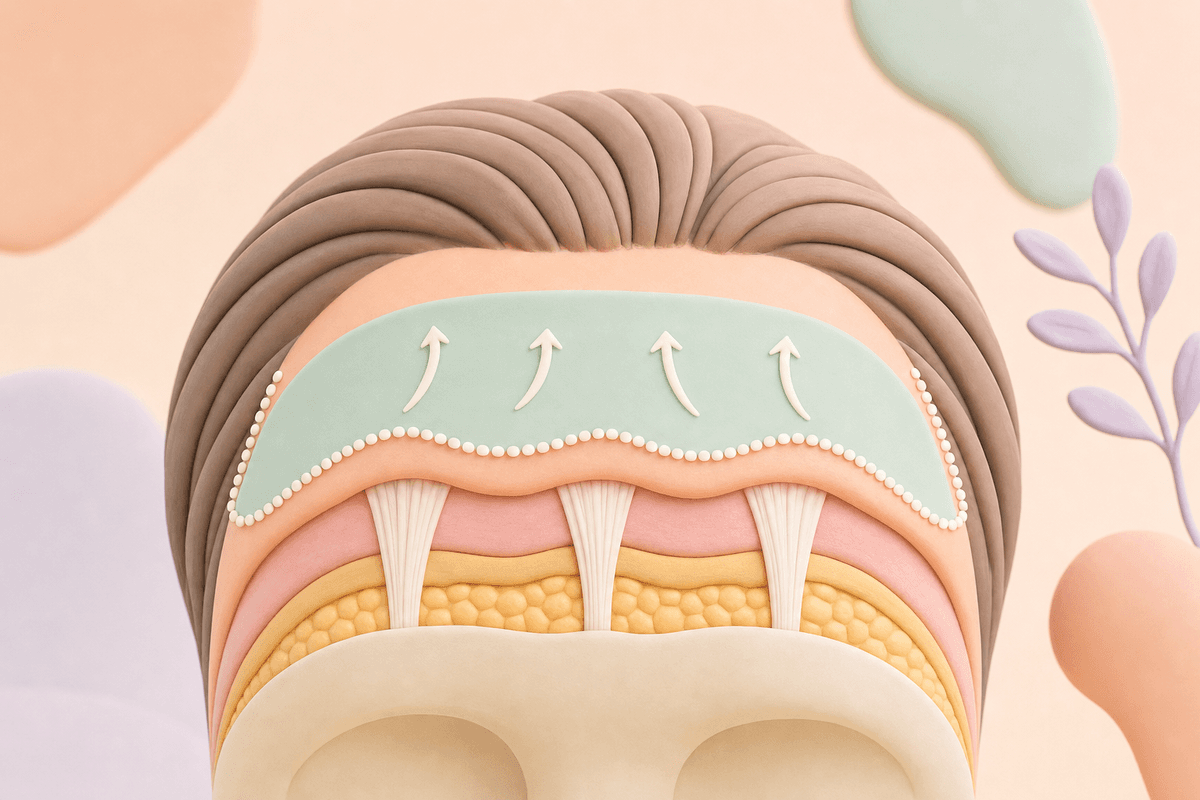
Lower eyelid fat repositioning involves opening the orbital septum (the membrane surrounding orbital fat) and moving the fat to the anterior tear trough. It takes a minimum of 3 months for collagen remodeling for the fat to fully settle in its new location.
In cases of thin or inelastic skin, there's about a 15% chance of fat not settling properly and appearing uneven. This can be predicted through pre-operative skin thickness measurements (ultrasound or OCT). If skin thickness is less than 1mm, concurrent fat grafting should be considered.
- Acute swelling resolution: 2 weeks post-surgery
- Complete resolution of micro-swelling: 3-6 months (with good skin elasticity), up to 12 months (with skin laxity)
- Fat graft survival rate: 70-80% (at 3 months)
- Time to confirm final results: Average 6 months, 9-12 months for thin skin
3 Biggest Differences Between Expectation and Reality
The first is the misconception about 'volume enhancement.' Lower eyelid fat repositioning moves bulging fat to sunken areas; it's not a procedure to increase overall volume. If there isn't enough fat, the tear trough may not be completely filled. In such cases, concurrent fat grafting increases satisfaction by 20-30%.
The second is skin laxity. Even if fat is repositioned, the effect is limited if the skin is sagging. For individuals over 40 or with reduced skin elasticity, if lower eyelid blepharoplasty (skin removal) is not performed concurrently, approximately 25% may experience a sagging sensation again after 6 months.
The third is asymmetry. The amount of orbital fat and the depth of the tear trough naturally differ between the left and right eyes. It's difficult to achieve perfect symmetry with surgery, and the dissatisfaction rate due to asymmetry is about 10%. This can be previewed with 3D simulation before surgery.
Clinical Insight According to a 2022 survey by the Korean Society of Aesthetic Plastic Surgery, the primary reasons for considering additional procedures after lower eyelid fat repositioning were 'improving insufficient volume' (35%), followed by 'skin sagging' (28%), and 'left-right asymmetry' (18%).
True or False Quiz
If your under-eyes are uneven three weeks after lower eyelid fat repositioning, you should immediately consider revision surgery.
Check the Answer
False Unevenness occurs in about 15% of cases but typically improves naturally within 3-6 months. Final results are evaluated after 6 months, and deciding on revision surgery before then can lead to unnecessary additional procedures.
Side Effects and Downtime: Honest Probabilities
The most common side effects are temporary bruising and swelling under the eyes. Bruising typically lasts 7-14 days, and swelling 2-4 weeks, with significant individual variation. Taking circulation enhancers (Tranexamic acid 500mg, 3 times daily) can shorten the bruising resolution period by an average of 3 days.
Under-eye contour irregularity occurs in about 15% of cases and usually resolves naturally within 3-6 months. However, if the skin is thin, the issue of fat showing through may persist, and in such cases, fat grafting or filler correction is needed in 5-8% of cases.
Protrusion of orbital fat again occurs in about 5% of cases after 3-5 years. This can happen if the orbital septum was not sufficiently secured or if fat has re-emerged due to aging. Revision surgery is more challenging due to adhesions compared to the initial surgery.
Numbness persists for 3-6 months in about 10% of cases, with most recovering through nerve regeneration. However, rare cases (less than 1%) can be permanent.
| Side Effect | Incidence | Duration | Management |
|---|---|---|---|
| Bruising/Swelling | Almost all patients | 7-14 days (bruising), 2-4 weeks (swelling) | Cold compresses for 48 hours, circulation enhancers |
| Contour Irregularity | 15% | 3-6 months (natural improvement) | Fat grafting correction for thin skin |
| Fat Protrusion | 5% | 3-5 years later | Revision surgery (difficult) |
| Numbness | 10% | 3-6 months (mostly resolves) | Wait for nerve regeneration, rarely permanent |
- Bruising resolution: Average 10 days (7 days with circulation enhancers)
- Complete swelling resolution: Acute 2-4 weeks, micro-swelling 3-6 months
- Natural improvement of contour irregularity: 70-80% (within 6 months)
- Rate requiring revision surgery: 5-8% (fat deficiency, asymmetry, protrusion)
Points of Regret: Make Sure to Check These
First, omitting the assessment of skin thickness and elasticity. For skin thickness less than 1mm or reduced elasticity, fat repositioning alone has limitations. Skin thickness should be measured via ultrasound or OCT, and concurrent fat grafting or lower eyelid blepharoplasty should be considered if necessary.
Second, undergoing surgery without 3D simulation. If there are differences in the amount of fat or tear trough depth between the left and right sides, asymmetry may become more pronounced after surgery. Satisfaction is about 25% higher when expected results are confirmed with 3D simulation.
Third, assuming a 3-week recovery period and scheduling important events. It takes an average of 3-6 months for swelling to completely subside, and unevenness can persist for a long time, especially with thin skin. It's safest to schedule important events like weddings or job interviews at least 6 months after surgery.
Caution 3 essential pre-operative checks: ① Skin thickness/elasticity measurement (ultrasound/OCT), ② Assessment of fat volume and tear trough depth (3D simulation), ③ Scheduling based on a 6-month recovery period.
Why Individual Differences Are So Large: Anatomical Conditions
The results of lower eyelid fat repositioning vary greatly depending on fat volume, skin thickness, skin elasticity, and tear trough depth. High fat volume and thick skin lead to high satisfaction, whereas low fat volume and thin skin result in limited effects or persistent unevenness.
The strength of the orbital septum is also important. If the orbital septum is weak, the fat may shift back out over time even if secured. In such cases, the rate of re-protrusion is about 5% after 3-5 years.
Age and skin aging are also major variables. For individuals over 40, the effectiveness of fat repositioning alone is reduced due to decreased skin elasticity, and concurrent lower eyelid blepharoplasty (skin removal) is necessary for higher satisfaction. If skin laxity is severe, the revision surgery rate can increase to about 10%.
- Sufficient fat + thick skin: 85-90% satisfaction
- Low fat + thin skin: 60-70% satisfaction, 25% require additional procedures
- Over 40 + skin laxity: 15-20% increase in satisfaction with concurrent lower eyelid blepharoplasty
- Weak orbital septum: 5% re-protrusion rate (after 3-5 years)
Ultimately, This Is the Selection Criterion
Lower eyelid fat repositioning is most effective for individuals in their 20s and 30s with sufficient fat, thick skin, and good elasticity. For those over 40 or with thin skin, concurrent fat grafting or lower eyelid blepharoplasty should be considered, which can be determined through a precise pre-operative evaluation.
While recovery time varies significantly, it is realistic to schedule important events at least 6 months post-surgery and set the evaluation of final results for after 6 months. Even if dissatisfied at the 3-month mark, natural improvement often occurs by 6 months.
- Essential pre-operative assessments: Skin thickness (ultrasound/OCT), fat volume/left-right symmetry (3D simulation), orbital septum strength
- Optimal age group: 20s-30s with sufficient fat and good skin elasticity
- Over 40: Consider concurrent fat grafting or lower eyelid blepharoplasty
- Important events: Schedule at least 6 months post-surgery
Lower Eyelid Fat Repositioning vs. Fat Grafting vs. Fillers: When to Choose Which
Lower Eyelid Fat Repositioning Alone [Sufficient Fat + Thick Skin]
- Sufficient fat volume, skin thickness over 1mm
- Recovery 3-6 months, effects semi-permanent
- Cost: 2-4 million KRW
Most natural results, but effectiveness is high only under specific conditions
Repositioning + Fat Grafting [Fat Deficiency or Thin Skin]
- For cases with low fat volume or expected unevenness
- Recovery 4-6 months, survival rate 70-80%
- Cost: 3-5 million KRW
Satisfaction increases by 20-30% for volume deficiency
Repositioning + Lower Eyelid Blepharoplasty [Over 40 + Skin Laxity]
- For cases with concurrent skin sagging
- Recovery 6-9 months, effects long-lasting
- Cost: 4-6 million KRW
Essential to combine when skin elasticity is reduced
Which Choice Is Right for Me?
20s-30s, only under-eye fat bulging with good skin elasticity
Proceed with lower eyelid fat repositioning alone
These are optimal conditions where fat migration alone can provide sufficient results.
Deep tear troughs with low fat volume or thin skin
Combine repositioning with fat grafting
Repositioning alone may result in insufficient volume and a higher chance of residual unevenness.
Over 40, with simultaneous concerns of under-eye fat and skin sagging
Combine repositioning with lower eyelid blepharoplasty
With reduced skin elasticity, the sagging sensation may return after 6 months if only fat is moved.
Important event (wedding/interview) within 3 months post-surgery
Reschedule surgery for at least 6 months later or postpone until after the event
Acute recovery is 2 weeks, but micro-swelling and unevenness persist for 3-6 months.
Misconceptions Debunked
Misconception Lower eyelid fat repositioning has a short recovery period, allowing a complete return to daily life in 3 weeks.
Truth While acute swelling resolves in 2-4 weeks, micro-swelling and unevenness persist for an average of 3-6 months. Final results are assessed after 6 months.
Misconception If only the under-eye area is sunken, lower eyelid fat repositioning is always the best solution.
Truth If fat volume is low or skin is thin, the effects of repositioning alone are limited. In about 25% of cases, concurrent fat grafting or fillers are necessary.
Cases Where Surgery Should Be Postponed or Decided With Caution
- Skin thickness less than 1mm or significantly reduced elasticity—potential for fat showing through or persistent unevenness
- Significant difference in left-right fat volume/tear trough depth—risk of worsening asymmetry without 3D simulation
- Important event within 3 months post-surgery—high probability of residual swelling/unevenness
- Weak orbital septum or history of previous eye surgery—increased difficulty due to re-protrusion/adhesions
- History of keloid tendency or hypertrophic scarring—scars under the eyes may be noticeable
Frequently Asked Questions
How long does bruising last after lower eyelid fat repositioning?
It lasts an average of 7-14 days. Taking circulation enhancers (Tranexamic acid 500mg, 3 times daily) can shorten this by about 3 days, resolving in around 7 days. Individual variation is significant; those with fragile blood vessels or taking hypertension medication may experience bruising for over 2 weeks.
When can I wear makeup after surgery?
Makeup excluding the eye area is possible 3-5 days after suture removal. Makeup for the under-eye area can be applied 7-10 days later. However, if swelling persists, makeup may not effectively conceal it.
I'm in my 40s. Will repositioning alone be effective?
It depends on skin elasticity. If elasticity is good, repositioning alone can be effective. However, if there is skin laxity, concurrent lower eyelid blepharoplasty (skin removal) increases satisfaction by 15-20%. A pre-operative assessment of skin condition is essential.
Can the under-eye area become puffy again after fat repositioning?
Re-protrusion occurs in about 5% of cases after 3-5 years. This happens if the orbital septum was not sufficiently secured or if fat has re-emerged due to aging. Revision surgery is more challenging than the initial surgery due to adhesions.
What is the most common side effect of lower eyelid fat repositioning?
Contour irregularity occurs in about 15% of cases and typically improves naturally within 3-6 months. However, if the skin is thin, the issue of fat showing through may persist, requiring fat grafting or filler correction. Numbness lasts for 3-6 months in about 10% of cases and usually resolves.
It's been 3 months, and one side is still uneven. Is this normal?
Unevenness on one side can occur due to differences in fat volume or skin thickness. Waiting until 6 months often leads to natural improvement, but if it persists, it can be corrected with fat grafting or fillers. Final results are evaluated after 6 months.
Lumi's Word
Feeling like, 'Is it still like this?' after three weeks? Lower eyelid fat repositioning is a procedure where results appear gradually. You need to wait 6 months to see the true outcome. Don't give up midway; if you have thin skin, consider concurrent fat grafting from the start. Accurate assessment, rather than impatience, reduces regret.
This content is for informational purposes only and does not substitute for medical advice. Always consult with a specialist before undergoing any procedure.