The Difference Between Pico Toning and Laser Toning: Which One Is My Pigmentation?
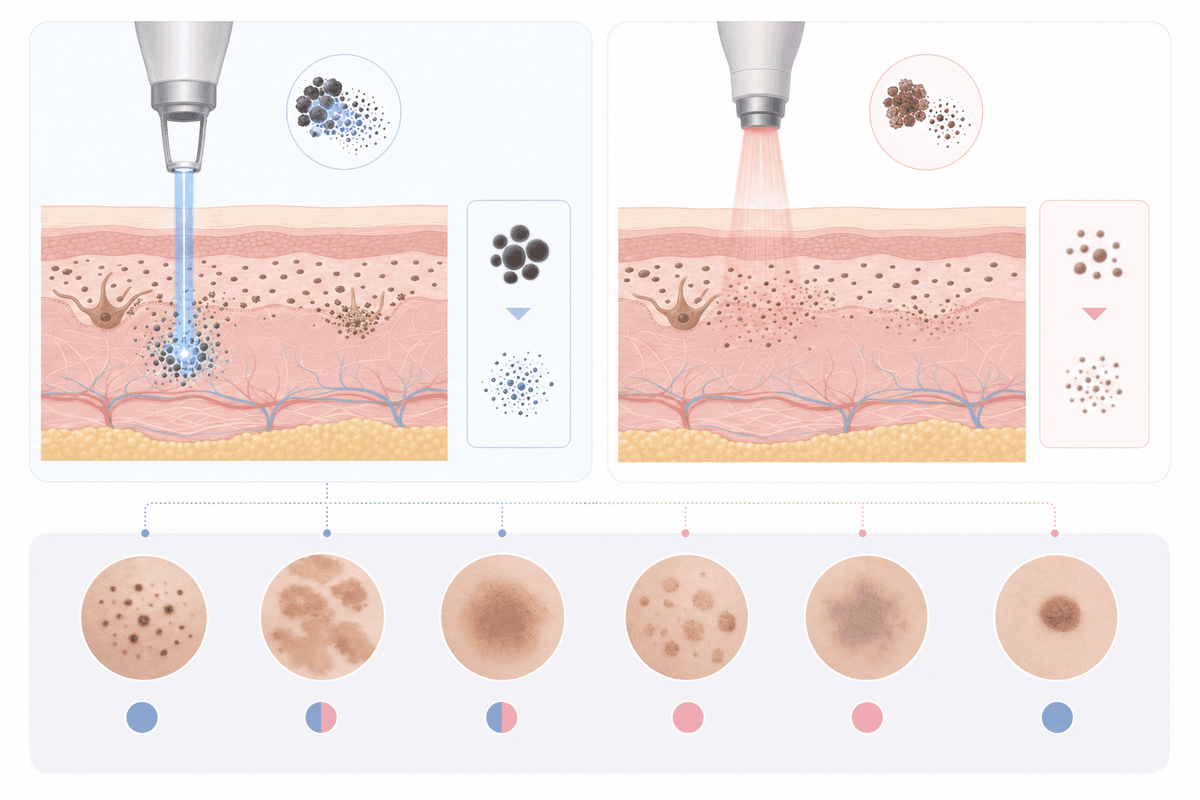
- Pico toning breaks down melanin into physical shockwaves using picosecond (one trillionth of a second) pulses, while laser toning melts pigments using nanosecond thermal energy.
- The 532nm wavelength is advantageous for shallow freckles and blemishes, while 1064nm is suitable for deep melasma and nevus of Ota; skin tone and pigment depth determine the wavelength selection.
- Laser toning has a lower cost per session but typically requires a cumulative total of 10 or more, whereas pico toning has a higher unit price per session but is often completed after 5 to 7 sessions, resulting in similar total costs.
Information as of June 2026
Summary of Target Differences by Wavelength
- Selection of Pico Toning 532nm · 1064nm Wavelength
- Average Cumulative Number of Laser Toning Sessions: 10-15
- Target Differences: Superficial Pigment vs. Dermal Melanin
"What is the difference between Pico and Toning?"
Last week in the consultation room, someone [posted] a smartphone screen "I held it out and asked, 'Doctor, looking here, it says both Pico Toning and Laser Toning remove pigmentation. What is the difference? Which one is right for me?' Watching him swipe up the screen with his finger to show price lists from various clinics, I could immediately sense how confused he must have been between the two procedures that looked exactly the same."
The key difference between Pico Toning and Laser Toning lies in the pulse unit and the mode of action. Pico Toning uses picosecond (one trillionth of a second) pulses to break down melanin with physical shockwaves, while Laser Toning melts pigmentation using thermal energy in nanosecond (one billionth of a second) units. This difference separates the target pigment depth, recovery speed, and number of sessions required.
In this article, I will summarize the selection criteria tailored to your pigmentation, covering everything from the wavelength-based target differences between the two procedures to their cost structures.
Pulse units change the pigment breakdown method.
figure class="lumi-section-figure">
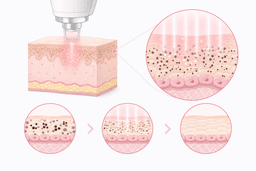
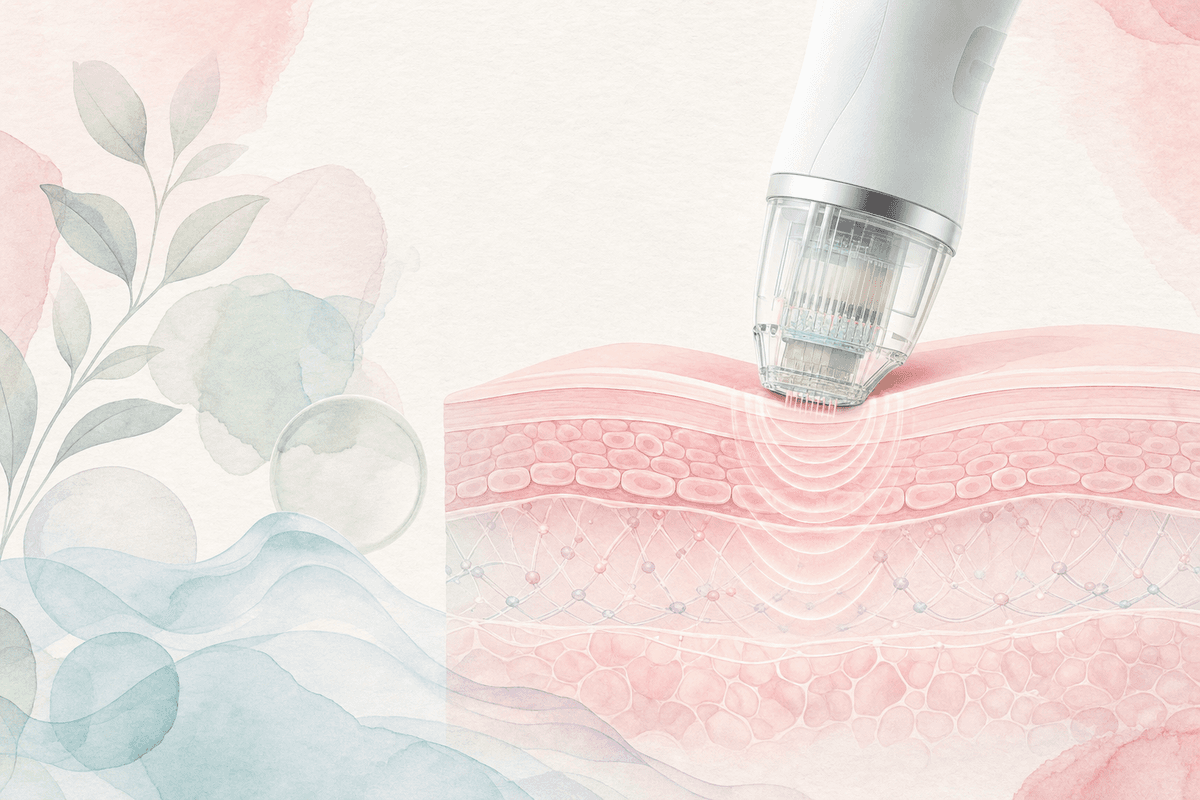
The picosecond pulses of PicoToning have such a short contact time between the laser and the skin that there is no time for the heat to spread to surrounding tissues. Instead, a ‘photoacoustic effect’ occurs, applying instantaneous pressure to melanin particles to physically fragment them. PicoSure (Cynosure), approved by the FDA in 2013, was the first picosecond laser, and the market has expanded since then with the introduction of PicoWay (Candela), Enlighten (Cutera), and others.
On the other hand, laser toning uses a Q-switched Nd:YAG laser fired in nanoseconds to accumulate heat in melanin. It is a ‘photothermal lysis’ method where the pigment gradually decomposes as it absorbs the heat.
Representative devices include MedLite C6 (Hoya ConBio) and RevLite (Cynosure), and they have been widely used in Korea for melasma treatment since the mid-2000s. Although both target melanin, the difference between pico-toning, which breaks it down with shockwaves, and laser toning, which melts it with heat, determines the recovery period and the frequency of side effects. In a 2016 clinical study in the Journal of the American Academy of Dermatology, picosecond lasers showed an incidence of PIH (post-inflammatory hyperpigmentation) approximately 30% lower compared to nanosecond lasers, and there was also a difference in the average number of treatments, with 7.2 vs. 12.5. Picosecond pulse 450-750ps (PicoWay Standard)532nm vs 1064nm, wavelength determines target depth
Both Pico Toning and Laser Toning allow you to select 532nm and 1064nm wavelengths. 532nm is a green wavelength with a high absorption rate by epidermal melanin, making it advantageous for shallow freckles, blemishes, and age spots, while 1064nm is an infrared wavelength that penetrates deep into the dermis to target dermal pigments such as melasma or nevus of Ota. If you have fair skin (Fitzpatrick types I-II), using 532nm carries a low risk of PIH, but if your skin tone is dark (types III-IV) or if dermal melanin is the issue, such as melasma, 1064nm is safer. The 2019 guidelines of the Korean Dermatological Association recommended the 1064nm low-power mode as the primary choice for the treatment of melasma in Koreans. Even with the same wavelength, Pico Toning has a strong pigment-breaking power due to its shockwave effect even when the output is lowered, whereas Laser Toning requires the output to be increased so that heat is sufficiently transferred to melt the pigment. Therefore, while Pico Toning offers more distinct effects per session, Laser Toning allows for wider output adjustment, making it easier to suit sensitive skin.
| Wavelength | Target Pigment | Skin Tone Suitability | Remarks |
|---|---|---|---|
| 532nm | Superficial Freckles/Blemishes | Light Tone (Type I-II) | High Epidermal Melanin Absorption Rate |
| 1064nm | Melasma/Ota Nevus/Deep Pigmentation | Dark Tone (Type III-IV) | Dermal penetration depth 3-4mm |
Wavelength selection must consider pigment depth and skin tone together, and a specialist's diagnosis is required.
- 532nm Epidermal penetration depth approx. 1mm
- 1064nm Dermal penetration depth 3-4mm
- 1064nm recommended for Fitzpatrick Type III-IV
Recovery or side effects, which is more comfortable?

Pico Toning causes less heat damage, so redness immediately after the procedure subsides within 30 minutes to 1 hour, and makeup can be applied starting the next day. In most cases, it finishes without bruising or scabs. On the other hand, with laser toning, heat accumulates, which may leave micro-edema and redness for 2-3 days after the procedure, and if the output was high, thin scalding may also occur.
In terms of side effects, Pico toning has a low incidence of PIH (post-inflammatory hyperpigmentation), but if the output is increased excessively, there is a risk of transient vitiligo (hypopigmentation). PIH is relatively common with laser toning, and the possibility of LITT (laser-induced transepidermal elimination of melanin, also known as 'toning vitiligo') has been reported with long-term repeated treatments.
Therefore, Pico toning is advantageous for working professionals with tight schedules and fast recovery, while laser toning offers a wider safety margin for sensitive skin or cases requiring output adjustment. In fact, pigmentation depth and skin tone influence the choice more than recovery speed. Caution: Repeating laser toning more than 10 times at 2-week intervals increases the risk of LITT (Toning Vitiligo). Even with Pico Toning, temporary vitiligo can occur if the output is excessive, so it is safer to stop within 5-7 sessions or leave an interval of at least 4 weeks.
- Redness after Pico Toning: 30 minutes to 1 hour
- Redness after Laser Toning: 2-3 days
- PIH incidence rate is about 30% lower with Pico Toning (compared to nanoseconds)
Comparison of Sessions and Cost Structure
Laser Toning costs around 70,000 to 120,000 won per session, but an average of 10-15 cumulative sessions is typical. If performed at intervals of 2-3 weeks, it takes 6-9 months, and the total cost is in the 700,000 to 1,800,000 won range. Although Pico Toning has a high unit price of 150,000 to 250,000 won per session, satisfaction is often achieved after 5 to 7 sessions, so the total cost becomes similar at 750,000 to 1,750,000 won. Even with the same number of sessions, Pico Toning shows results quickly because it breaks down pigments per session, whereas Laser Toning feels like the cumulative effect builds up gradually. If you are short on time or want quick results, Pico Toning is the right choice; if you want to spread your budget or have sensitive skin and prefer a slower approach, Laser Toning is the better fit. Recently, 'hybrid protocols' that combine the two procedures have also become more common. For example, the first three sessions are used to break down pigments with Pico Toning, followed by Laser Toning to clear away any remaining melanin. By doing this, you can reduce the total number of sessions to 7-8 while lowering the risk of PIH.
| Category | Laser Toning | Pico Toning |
|---|---|---|
| Cost per session | 70,000-120,000 KRW | 150,000-250,000 KRW |
| Average number of sessions | 10-15 sessions | 5-7 sessions |
| Total cost | 700,000-1,800,000 KRW | 750,000-1,750,000 Won |
| Interval | 2-3 weeks | 4-6 weeks |
Costs may vary depending on the area, scope, and medical institution, and the number of sessions required may increase or decrease depending on skin condition.
- Laser Toning average 10-15 cumulative sessions
- Pico Toning average 5-7 sessions
- Hybrid Protocol total 7-8 sessions possible
Ultimately, my pigmentation type and schedule are the answer
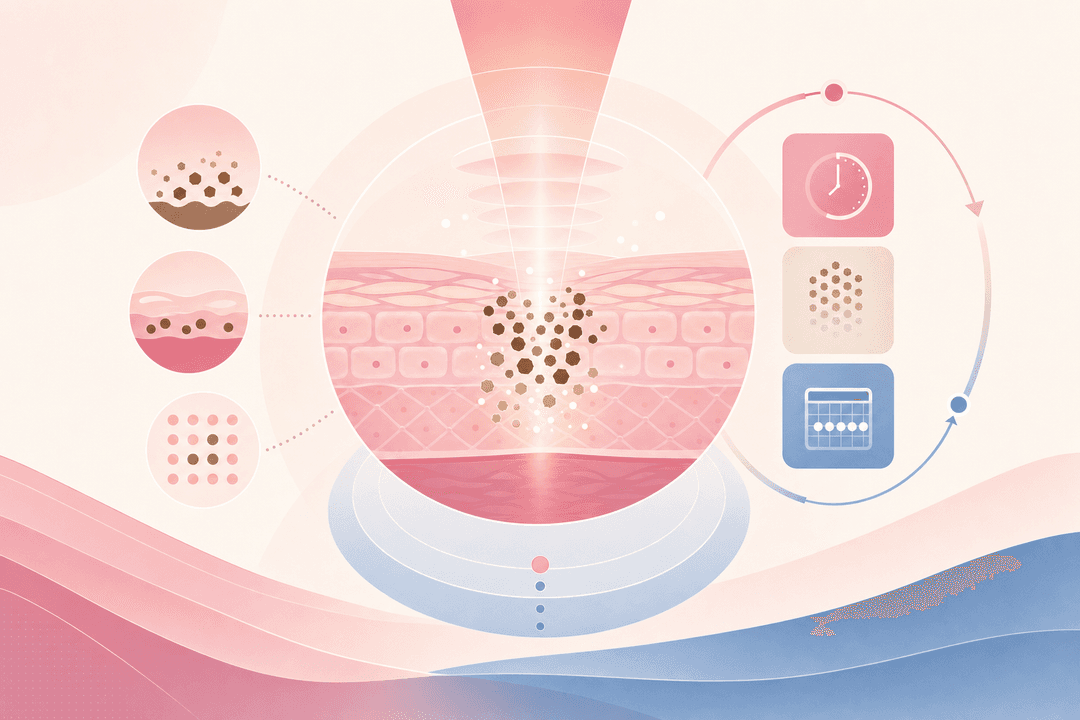
There is no unconditionally better option between Pico Toning and Laser Toning.If you have a lot of superficial blemishes and need a tight recovery time, Pico Toning is safer, while if you have deep melasma and sensitive skin, Laser Toning is safer. Since you can choose between 532nm and 1064nm wavelengths for both procedures, the proper procedure is to have your pigmentation depth and skin tone diagnosed first and then determine the wavelength. Don't just look at the unit price; compare the final cost calculated by multiplying it by the total number of sessions. Even if Pico Toning seems expensive, it can be cheaper than 12 sessions of Laser Toning if it is completed in just 5 sessions. If your schedule doesn't allow you to visit the clinic every two weeks, Pico Toning at 4-6 week intervals is a realistic option.
- Pigmentation depth, skin tone, and schedule are the three selection factors
- Compare total cost = unit price per session × number of sessions required
- Session reduction possible with hybrid protocol
- Pre-procedure wavelength (532nm/1064nm) selection determines target accuracy
Key comparison of Pico Toning vs. Laser Toning
Pico Toning [Fast Effects]
- Picosecond pulse photoacoustic shockwave
- Average of 5-7 sessions Completed
- Recovery 30 minutes-1 hour
- 150,000-250,000 won per session
For superficial pigmentation and quick results
Laser Toning [Safety Margin]
- Nanosecond Pulse Photothermal Decomposition
- 10-15 Cumulative Sessions
- Recovery 2-3 days
- 70,000-120,000 won per session
Deep Melasma, Sensitive Skin, Budget Split
Hybrid [Customized [Combination]
- Pico 3 sessions + Toning 4-5 sessions
- Total 7-8 sessions
- Reduced PIH risk
- Total 1-1.5 million KRW range
Pigmentation Complex Type · Optimal Efficiency
Selection Guide by Situation
If you have many shallow freckles and blemishes and have an important schedule next week
Pico Toning 532nm Wavelength
Advantageous for targeting superficial pigments and recovery Finishes within 30 minutes to 1 hour, no schedule disruption
If you have deep melasma, a dark skin tone (Type III-IV), and are on the sensitive side
Laser Toning 1064nm Low Power
High dermal penetration and wide power adjustment range lower PIH risk
If you have a combination of blemishes and melasma and want to reduce the total number of sessions
Hybrid Protocol (Pico 3 sessions → Toning 4-5 sessions)
Start with Pico Pigmentation breakdown followed by toning to refine, possible to complete in a total of 7-8 sessions
If you can spread out your budget and afford to visit the clinic every 2-3 weeks
Laser toning split into 10-15 sessions
Low unit price per session and gradual improvement through cumulative effects, spreading the burden of the budget
Common misconceptions
Misconception Pico toning is unconditionally better than laser toning
Truth Pico toning has strengths in superficial pigmentation and rapid recovery, but it is effective for deep melasma or sensitive skin The power adjustment range of laser toning can be safer for the skin. The appropriate treatment varies depending on pigment depth and skin tone. Misconception: Laser toning is inefficient because it requires many sessions. Truth: The cost per session is low, and stable improvement is possible through cumulative effects. When calculating the total cost, it is often similar to or even cheaper than Pico Toning, making it advantageous for budget distribution.
Must-check before toning procedure
- Stop exfoliating ingredients such as retinol, AHA, and BHA 2 weeks before the procedure — Increased risk of PIH if skin barrier is weakened
- On the day of the procedure, reapply sunscreen SPF50+ PA++++ (every 2 hours) — Prevents melanin regeneration
- Avoid saunas, steam rooms, and high-temperature showers for 3 days after the procedure — Heat stimulation can cause re-pigmentation
- If laser toning is repeated for more than 10 sessions, LITT (Toning Vitiligo) check is necessary — 4-6 week intervals recommended
- Temporary vitiligo is possible with excessive Pico Toning output — Stop within 5-7 sessions or recheck equipment settings
Which is less painful, Pico Toning or Laser Toning?
Laser Toning is relatively less painful. Pico Toning uses a shockwave method, so the stinging sensation is a bit stronger, while Laser Toning uses a heat accumulation method, so it mainly feels warm. Both can be performed without anesthetic cream.
In what order is the hybrid protocol performed?
Usually, the sequence is to break down pigmentation with 3 sessions of Pico Toning, followed by 4-5 sessions of Laser Toning to clear up the remaining melanin. Doing this lowers the risk of PIH compared to doing Pico Toning only 7 times, and shortens the duration compared to doing Laser Toning only 12 times. Is there a risk of vitiligo if I receive more than 10 Laser Toning sessions? There is a possibility of LITT (Toning Vitiligo) if repeated long-term at 2-week intervals for more than 10 sessions. A hybrid approach that involves spacing out treatments by 4-6 weeks or switching to Pico Toning after 5-7 sessions is safe. Prevention is important because a recovery period of 6-12 months is required if vitiligo develops. How do I choose between 532nm and 1064nm wavelengths? You need to consider both pigmentation depth and skin tone. 532nm is safe for shallow freckles and blemishes if the skin is light (Types I-II), while 1064nm is safe for deep melasma if the tone is dark (Types III-IV). Wavelength selection after diagnosis determines target accuracy. Can pigmentation become darker after toning treatment? If PIH (Post-inflammatory Hyperpigmentation) occurs, the pigmentation may appear temporarily darker. The probability of this occurring is particularly high if the laser toning output was excessive or UV protection was insufficient. It can be prevented by reapplying SPF50+ sunscreen every two hours for three months after the procedure and suppressing melanin production with a Vitamin C serum. Is toning treatment possible during pregnancy or breastfeeding? Although the laser itself does not directly affect the fetus, hormonal changes during pregnancy increase melanin production, making it easier for the treatment to become less effective or for PIH to develop. It is recommended to start treatment after childbirth or breastfeeding has ended and hormone levels have stabilized. This content is for informational purposes only and does not replace medical advice. Be sure to consult a specialist before the procedure. Find the right hospital for you at K-Dia