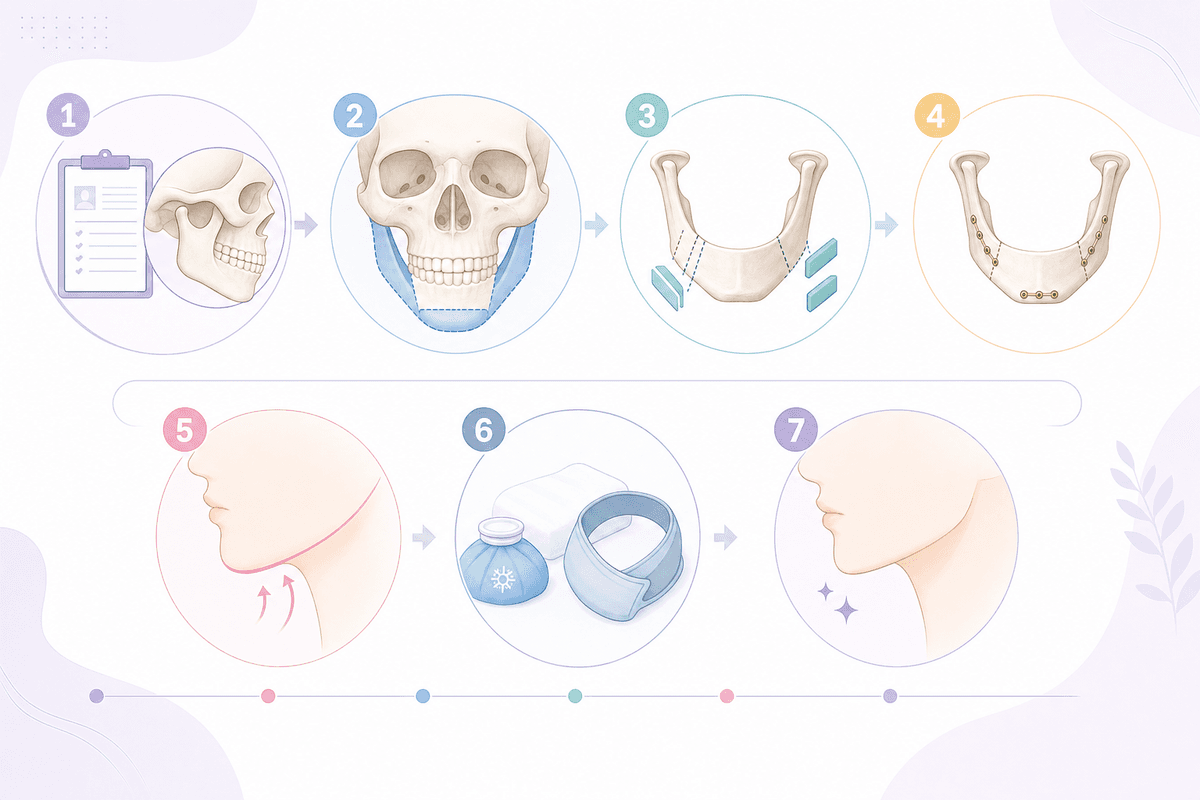
3 Types of Jawline Surgery: Which One Will Sculpt a V-Line for My Face?
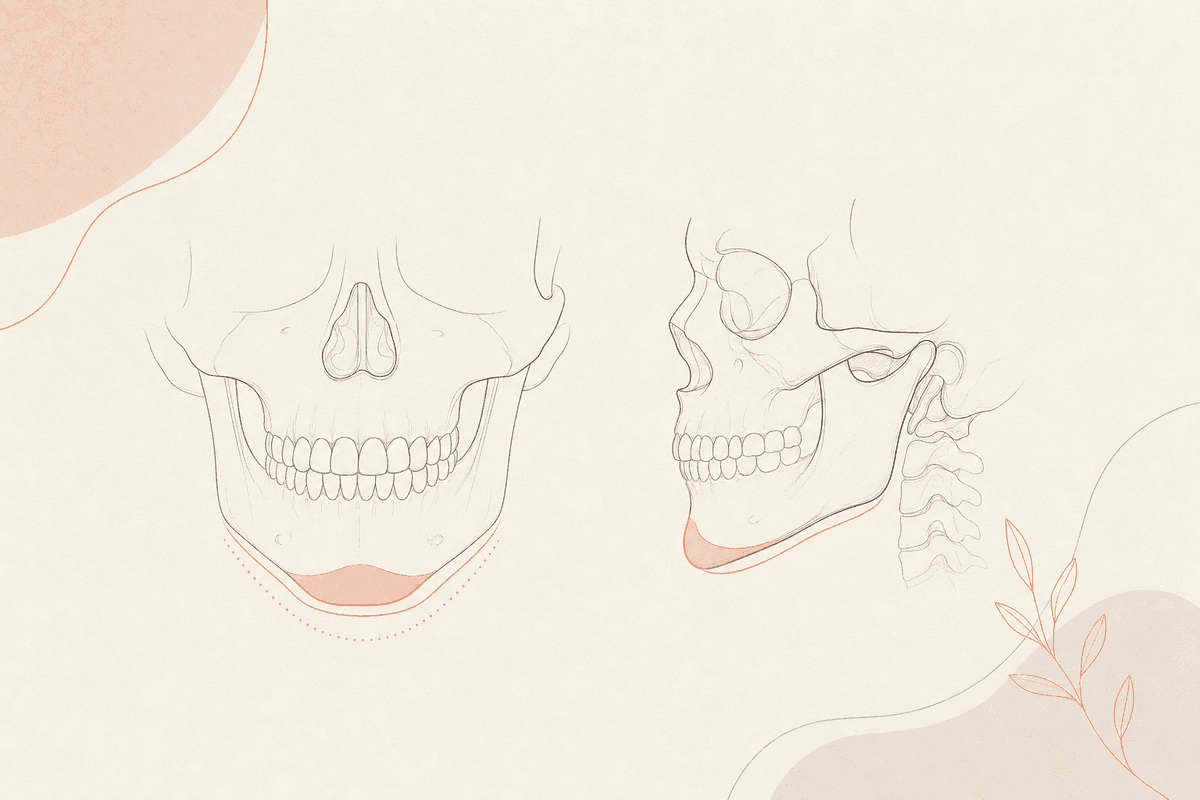
- V-line is a result, not a surgical method—even the same face can look different with 3 approaches
- The bone cutting location differs for the chin tip, contouring, and mini-V procedures, with costs varying by up to 3 million KRW
- A 1cm difference in chin length has a greater impact on facial impression than jaw reduction surgery
Information as of July 2026
Choosing Between Chin, Jawline Contouring, and Mini V-Line Surgery
- Comparison of 3 Types of Chin Surgery
- Selection Criteria by Face Shape Revealed
- Cost Differences Up to 3 Million KRW
Everyone Wants a 'V-Line,' But That's the Result, Not the Surgery Name
When booking a consultation, people often search for 'V-line surgery.' However, when you visit a clinic, doctors suggest different procedures. Some recommend only chin surgery, others suggest shaving down the jaw angle, and some say 'Mini V-Line' is sufficient. The real difference lies not in the surgery name, but in which part of your bone is modified and how much.
Chin surgery is broadly divided into three types. Genioplasty focuses only on the chin tip. The Jawline Contouring Trio (jaw angle, cheekbones, and chin) addresses the entire facial contour. Mini V-Line involves smoothing the bone surface without osteotomy. Costs range from around 2 million KRW for isolated chin surgery to over 8 million KRW for the jawline trio, a difference of up to three times, with recovery periods varying from two to six weeks.
In this article, we compare the three types of chin surgery based on face shape and concerns, and provide criteria to help you determine the right choice for your case.
Chin Surgery vs. Jawline Contouring Trio: It Starts with Where You Cut
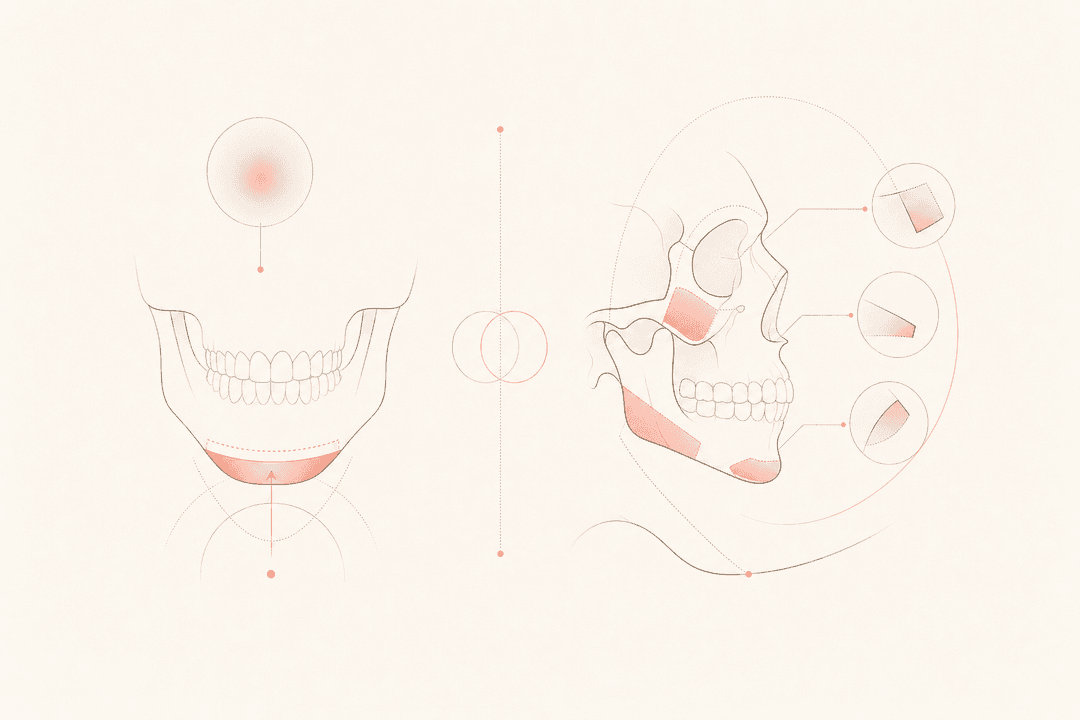
Genioplasty involves cutting or moving 1-2 cm of the chin bone tip (Genioplasty). According to a 2022 report by the Korean Association of Oral and Maxillofacial Surgeons, approximately 8,400 isolated chin surgeries are performed annually in Korea, accounting for 35% of all jaw contouring surgeries. It's often chosen for cases with a short or receding chin (Class II malocclusion) and has the advantage of being performed through an intraoral incision, leaving no external scars.
The Jawline Contouring Trio (jaw angle osteotomy + cheekbone reduction + genioplasty) involves shaving down the mandibular angle and zygoma as well. Using the Stryker Piezotome, a surgical device approved by the Ministry of Food and Drug Safety, allows for precise bone cutting. A 2021 clinical study from Seoul National University Hospital indicates that this method reduces the risk of nerve damage by approximately 40% compared to traditional sawing methods. It's an option for those concerned about both the jaw angle and chin tip, addressing them in one procedure.
Mini V-Line involves grinding down the bone surface (Contouring) without osteotomy. The depth is shallow, about 2-3 mm, and recovery is average 2 weeks, but it's difficult to change the jaw angle itself. Honestly, it's best suited for cases where the jaw appears angular due to swelling or muscles, rather than bone structure.
Caution The 'Trio' doesn't necessarily mean all three areas are operated on. A 'Duo' combination, excluding cheekbones and only addressing the jaw angle and chin, is also common. Package configurations vary by clinic, so during your consultation, confirm exactly which bone will be cut and by how many millimeters with a diagram.
| Surgery Type | Incision Area | Bone to Shave | Recovery Period | Cost Range |
|---|---|---|---|---|
| Genioplasty | Intraoral | 1-2 cm of chin bone tip | 2-3 weeks | 2-4 million KRW |
| Jawline Trio | Intraoral + Behind Ear | Jaw angle + Cheekbones + Chin | 4-6 weeks | 6-10 million KRW |
| Mini V-Line | Intraoral | 2-3 mm of bone surface | 2 weeks | 3-5 million KRW |
Costs may vary depending on the clinic, scope, and equipment used. General anesthesia and hospitalization fees are separate.
- Isolated chin surgery: approx. 8,400 cases annually in Korea, 35% of total jaw contouring surgeries
- Using Piezotome equipment reduces nerve damage risk by approx. 40% (SNUH 2021)
- Mini V-Line bone shaving depth averages 2-3 mm; angle change is limited
OX Quiz
Does the speed of swelling reduction after chin surgery depend more on the osteotomy depth than the surgery type (chin/jawline/mini V)?
Check the Answer
O Correct. Even with isolated chin surgery, if the bone is cut deeply (over 8mm), swelling can last as long as with jawline contouring. A 2023 study from Severance Hospital found that the group with osteotomy over 6mm took an average of 18 days for 50% swelling reduction, while Mini V-Line (2-3mm) allowed for a return to daily activities within 3-5 days. The 'amount shaved' is the real variable determining recovery, more so than the surgery 'name'.
What's Right for My Face? Selection Criteria by Face Shape
If you're concerned about a long chin, genioplasty is the first choice. It involves horizontal osteotomy of the chin bone tip to shorten or advance it, allowing for an average reduction of 5-8 mm. A 2020 report from the Korean Society of Plastic and Reconstructive Surgeons indicates that shortening the chin length by 1 cm resulted in 1.3 times higher satisfaction with facial profile changes compared to jaw angle reduction. If only the chin tip is long and the jawline is otherwise fine, there's no need for the full trio.
If both the jaw angle and chin tip are concerns, consider the Jawline Contouring Trio (or Duo). Especially for square faces with a mandibular angle exceeding 120 degrees, reducing only the chin can still leave the side profile looking angular. In such cases, combining mandibular angle resection with chin surgery creates a more natural overall proportion.
If muscles or fat, rather than bone, are the issue, Mini V-Line might suffice. If CT scans show thin bones but developed masseter muscles or thick deep fat, a combination of Botox (50-100U) + Mini V-Line bone contouring can be less burdensome on recovery and yield natural results. Honestly, opting for the full trio in such cases carries a risk of overcorrection.
Key Point A CT scan is essential. Visually, a jaw might appear angular, but in 20-30% of cases, the bone is actually thin, and only the muscles are developed. A 3D CT scan before surgery to measure bone thickness and angle is crucial to avoid overcorrection.
- Average 5-8 mm chin shortening possible with genioplasty; satisfaction 1.3x higher than jaw angle reduction for 1 cm shortening
- For square faces with mandibular angles over 120 degrees, side profile improvement with isolated chin surgery is limited
- For muscular jaws, a combination of Botox (50-100U) + Mini V-Line maintains more natural proportions than osteotomy
Why Such a Big Price Difference—It's About Equipment and Difficulty
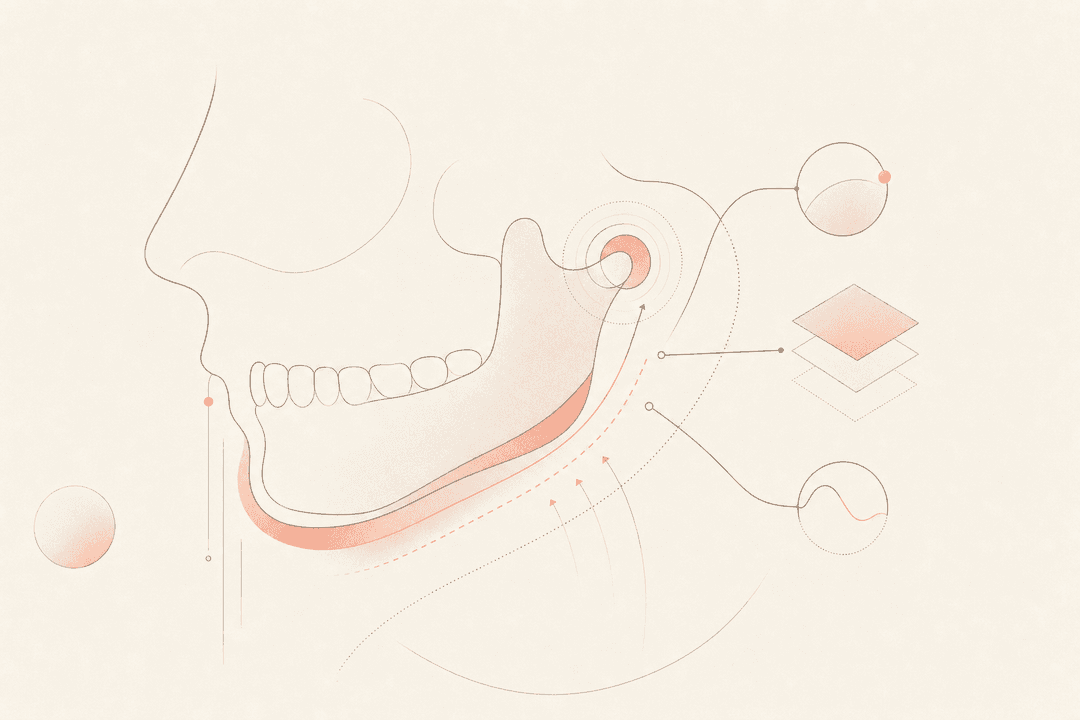
While isolated chin surgery averages 2-4 million KRW and the Jawline Trio ranges from 6-10 million KRW, this difference isn't just about the 'number of areas.' Surgical time (1-2 hours for chin vs. 4-5 hours for the trio) and equipment cost are significant factors. Ultrasonic cutting devices like Piezotome can cost over 80 million KRW to purchase, with tip replacement alone costing 500,000 KRW per use.
General anesthesia time also impacts the cost. The fee for an anesthesiologist is around 300,000-500,000 KRW per hour. For the Jawline Trio, which takes over 5 hours, anesthesia costs alone can add 1.5-2.5 million KRW. Isolated chin surgery, taking around 2 hours, incurs anesthesia fees of about 600,000-1 million KRW.
The use of nerve monitoring equipment (IOM, Intraoperative Nerve Monitoring) also affects pricing. To prevent damage to the inferior alveolar nerve during mandibular angle resection, using IOM adds 500,000-800,000 KRW per procedure. Increasingly, clinics are offering this as standard.
- Piezotome equipment costs over 80 million KRW for clinics; tip replacement costs 500,000 KRW per use
- General anesthesia costs 300,000-500,000 KRW per hour; 5 hours for Jawline Trio totals 1.5-2.5 million KRW
- Nerve monitoring with IOM equipment adds 500,000-800,000 KRW per procedure
Recovery Period: Does It Really Vary from Person to Person?
The peak swelling is proportional to the osteotomy depth, rather than the surgery type. Even with isolated chin surgery, if the bone is cut more than 8 mm, swelling can reach its peak on days 3-4. If only 2 mm are shaved, as in Mini V-Line, you can return to daily activities within 2-3 days. A 2023 follow-up study from Yonsei University Severance Hospital found that the group with osteotomy over 6 mm took an average of 18 days for 50% swelling reduction.
Bruising is closely related to the incision area. With intraoral and behind-the-ear incisions, as in the Jawline Trio, bruising can extend down the neck and persist for over two weeks. Isolated chin surgery with only intraoral incisions results in minimal bruising or resolution within a week.
Sensory changes (numbness, tingling) can occur if the inferior alveolar nerve is affected. Temporary sensory loss after jaw angle resection is reported in about 30-40% of patients, but most recover within 3-6 months (Korean Association of Oral and Maxillofacial Surgeons 2021). Isolated chin surgery is far from this nerve, with a sensory disturbance incidence of less than 5%.
Tip Apply cold compresses for the first 72 hours post-surgery, then switch to warm compresses. Missing the cold compress window can extend swelling by an average of 3-5 days, according to clinical data. Use ice packs in a cycle of 20 minutes on, 20 minutes off.
- For osteotomy over 6 mm, 50% swelling reduction takes an average of 18 days (Severance 2023)
- Temporary sensory loss after jaw angle resection affects 30-40%, most recover within 3-6 months
- Incidence of sensory disturbance after isolated chin surgery is less than 5%
Key Takeaways: Remember These Three Things
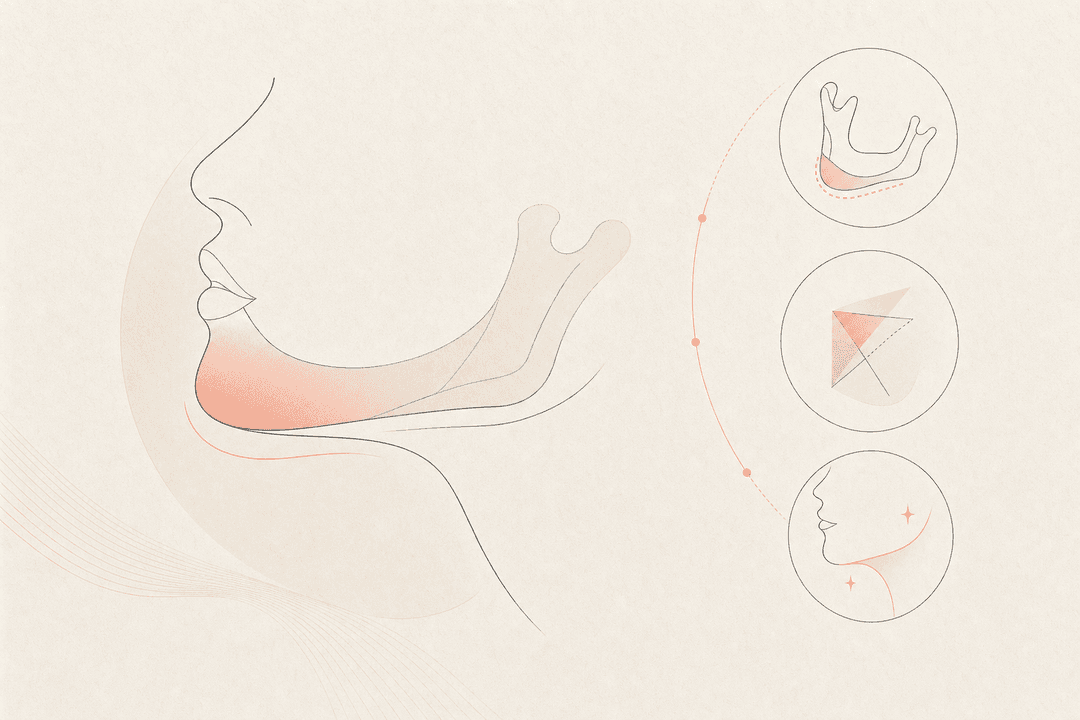
Chin surgery is all about 'where and how much you cut.' A V-line is a desired outcome, not a surgery name. You choose between Genioplasty, Jawline Contouring, or Mini V-Line based on your bone structure and concerns. Deciding based solely on visual consultation without a CT scan carries a high risk of over or undercorrection; always get a 3D scan and confirm with measurements.
Cost differences stem from equipment and surgical time. Even for the same 'chin surgery,' the price can vary by up to 3 million KRW depending on whether Piezotome is used, nerve monitoring is employed, and the duration of anesthesia. It's not just about finding the cheapest option; prioritize ensuring that the necessary equipment and safety measures for your case are included.
Recovery is directly proportional to the osteotomy depth. More bone removal increases the risk of swelling, bruising, and sensory changes. Minimally invasive methods like Mini V-Line offer faster recovery but have limited effects. The right choice balances your goals with your tolerance for downtime.
- 3D CT scan to confirm bone thickness and angle measurements is essential—visual assessment has significant error margins
- Equipment (Piezotome, IOM) and anesthesia time account for over 70% of cost differences
- Osteotomy depth of 6 mm creates a difference of more than double in recovery time and swelling duration
- The first 72 hours of cold compresses can influence final recovery speed by 3-5 days
Chin Surgery: A Quick Comparison of 3 Types
Genioplasty [Chin Tip Only]
- Osteotomy Area: 1-2 cm of chin bone tip
- Recovery: 2-3 weeks
- Cost: 2-4 million KRW
- Suitable for: Long or short chin
Allows for shortening or advancement; limited change to side profile
Jawline Trio [Full Contour]
- Osteotomy Area: Jaw angle + Cheekbones + Chin
- Recovery: 4-6 weeks
- Cost: 6-10 million KRW
- Suitable for: Square face
Simultaneous improvement of front and side profiles; managing nerve damage risk is crucial
Mini V-Line [Minimally Invasive]
- Osteotomy Area: 2-3 mm of bone surface
- Recovery: 2 weeks
- Cost: 3-5 million KRW
- Suitable for: Muscular jaw, mild angles
Limited angle change; synergistic effect with Botox
What About My Case? A Guide to Choosing Based on Situation
If your chin tip is long (front proportion OK) and your side profile is fine
Isolated Genioplasty
Operating on the jaw angle can lead to overcorrection; satisfaction for 1 cm chin shortening is higher than with the trio.
If both your front and side profiles appear angular (mandibular angle > 120 degrees)
Jawline Duo or Trio
Reducing only the chin can result in an awkward proportion if the jaw angle remains sharp.
If CT shows thin bones with developed masseter muscles or fat
Mini V-Line + Botox (50-100U) Combination
Smoothing the bone surface and addressing muscles without osteotomy offers faster recovery and more natural results.
If your budget is under 4 million KRW and downtime is within 3 weeks
Genioplasty or Mini V-Line
The Jawline Trio requires more than double the cost and recovery time; focusing on the target area is more practical.
Common Misconceptions
Misconception V-line is a single, standardized surgery.
Truth V-line is a resultant shape, not a surgery name. Even with the same V-line goal, approaches differ—only chin, including jaw angle, or Mini V-Line—each with distinct costs, recovery times, and risks.
Misconception The Jawline Trio is always the most effective.
Truth Performing the trio on a face with only a long chin can lead to overcorrection and unnatural results. Confirming bone structure with a CT scan and selecting only the necessary areas yields higher satisfaction.
Must-Check Items Before Chin Surgery
- **Mandatory 3D CT Scan**: Visual assessment alone cannot accurately determine bone thickness or angle. Proceeding without CT measurements before surgery significantly increases the risk of over or undercorrection.
- **Confirm Use of Nerve Monitoring Equipment (IOM)**: During jaw angle resection, there's a risk of damaging the inferior alveolar nerve. Ask clinics if they use IOM equipment during consultations.
- **Smokers Must Quit 2 Weeks Before Surgery**: Nicotine hinders blood flow, which slows bone healing by over 30% according to research. Quitting smoking for 4 weeks post-surgery is also essential.
- **Discontinue Anticoagulants like Aspirin and Omega-3 One Week Prior**: These increase bleeding, leading to delayed healing and worsening bruising.
- **Avoid Hard Foods and Chewing Exercises for 3 Months Post-Surgery**: Excessive chewing before bone union is complete can potentially cause displacement of the osteotomy site or malocclusion.
Frequently Asked Questions
Does genioplasty alone make the jawline look less angular?
It has an effect on the front view but is limited from the side. Reducing the chin tip narrows the lower face, improving frontal proportions, but the mandibular angle (the sharp part below the ear) remains unchanged, so the side profile can still appear angular. If CT shows a mandibular angle exceeding 120 degrees, consider combining it with jaw angle resection.
Is Mini V-Line similar in effect to Botox?
Botox targets muscles, while Mini V-Line addresses the bone surface, so their mechanisms differ. Botox (50-100U) reduces masseter muscle volume, and Mini V-Line shaves off 2-3 mm of bone protrusion. Combining both can create a synergistic effect. However, if the bone itself is thick, Mini V-Line alone has limitations.
Should I get the Jawline Trio all at once, or can I do it in stages?
Doing it all at once is more advantageous in terms of recovery and cost. Staging the surgery doubles anesthesia and hospitalization fees, and the total recovery period becomes longer. However, if you need to stage it due to health or budget constraints, proceeding from jaw angle to chin is the general approach.
What if sensation doesn't return after surgery?
Most cases recover within 3-6 months, but permanent sensory loss lasting over a year is reported in about 2-3% (Korean Association of Oral and Maxillofacial Surgeons 2021). Choosing a clinic that uses nerve monitoring (IOM) and supplementing with Vitamin B12 and physical therapy post-surgery can speed up recovery.
What are the side effects and complications of chin surgery?
The most common is temporary sensory loss (30-40%), which usually resolves within 6 months. Rare complications include infection (1-2%), malocclusion (misalignment during chewing, 2-3%), and delayed bone union (over 5% in smokers). Key factors in reducing risk include confirming nerve location with pre-operative CT, using IOM during surgery, and maintaining post-operative smoking cessation and a soft diet.
I'm concerned about clinics with very low prices. What should I check?
Ask about the availability of Piezotome equipment and whether a board-certified anesthesiologist is on staff. Without specialized equipment, using a regular saw increases the nerve damage risk by 40%, and clinics without an anesthesiologist monitoring anesthesia with nurses may have delayed responses in emergencies. If prices are more than 30% below average, these two safety measures are often omitted.
Lumi's Insight
A V-line is not a surgery name but your desired outcome. Even with the same goal, the cost, recovery, and results vary depending on where and how much of your bone is modified. A single CT scan can prevent overcorrection, and 72 hours of cold compresses can shorten recovery by a week. Don't just ponder in front of the mirror; make your decision based on numbers. Lumi supports your smart choices!
This content is for informational purposes only and does not substitute medical advice. The appropriate chin surgery method varies based on individual bone structure and health conditions. Always consult with an oral and maxillofacial surgeon after a CT scan before undergoing surgery.