The One Reason 40% Regret Liposuction 3 Months Later
- While a 6-month recovery is the reality, regrets arise if you expected to return to normal in just two weeks.
- Lingering swelling, unevenness, and sensory abnormalities that persist up to the 3-month mark are the actual points of regret.
- The details of post-operative care, rather than the amount of fat suctioned, determine final satisfaction.
Information as of July 2026
Recovery Realities You Didn't Know Before Surgery
- Actual average recovery period: 6 months
- Swelling lasts 3-6 months
- Revision surgery rate in domestic reports: 8-12%
3 Months Post-Surgery: Regret Points Mentioned by 40%
At the 3-month mark after liposuction, approximately 40% of patients respond, 'I didn't realize it would take this long.' In a 2021 patient survey by the Korean Society of Aesthetic Surgery, the most common complaint was the discrepancy in expectations regarding the recovery period. The gap between the 'return to daily life in two weeks' heard before surgery and the actual experience is the biggest cause of regret.
The core of liposuction regret lies not in the results, but in the unexpected details of the recovery process. Less than 10% of patients were specifically aware before surgery that the treated area might feel lumpy, skin sensation could be dulled, and swelling could persist for over three months.
This article outlines the actual timeline of liposuction downtime, the three conditions with the widest individual variation, and recovery management standards to reduce regret.
Recovery Period: The Actual Timeline
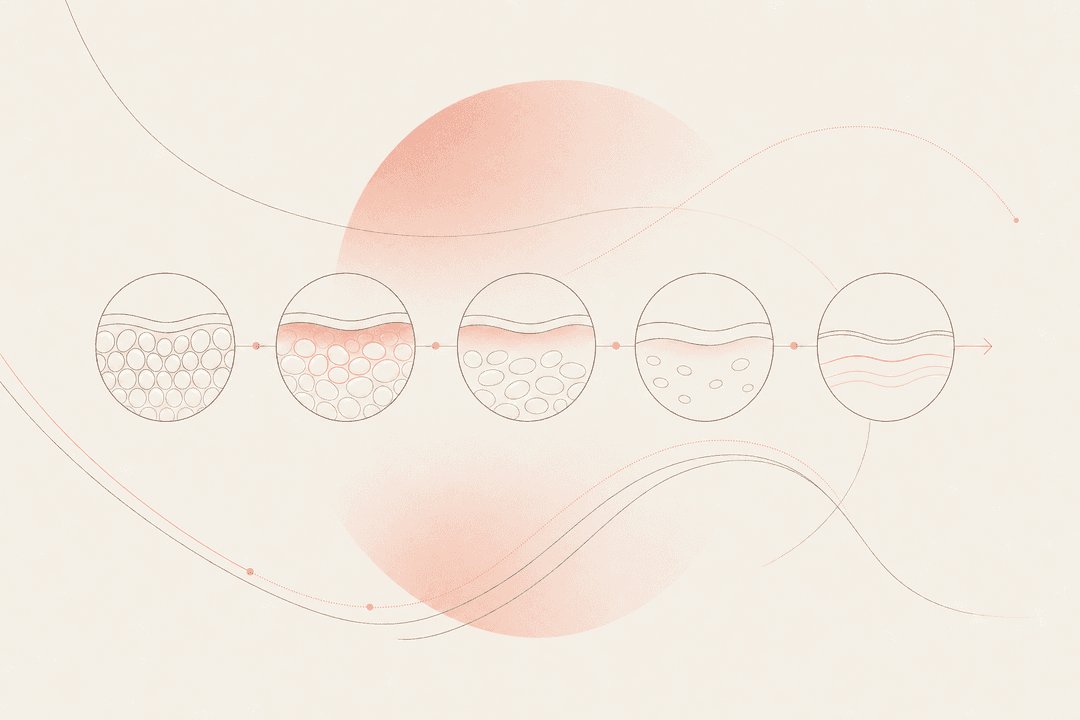
The liposuction recovery period can range from a minimum of 3 months to 6 months, depending on the area, extent, and method of liposuction. 'Return in two weeks' refers to the point when you can go back to work, not when recovery is complete.
Week 1: Severe bruising, swelling, and pain are at their peak. Wearing compression garments 24 hours a day is essential, and you may experience pulling or tingling while walking. During this period, liposuction bruising typically spreads across the entire thighs or abdomen and lasts for 2-3 weeks, changing from yellow to green.
Weeks 2-4: While over 80% of the bruising subsides, swelling may actually become more noticeable starting from week 2. This is called 'secondary edema' and is a normal reaction during the lymphatic fluid redistribution process. Compression garments should be worn for at least 4 weeks, and ideally 6 weeks.
Month 3: Approximately 70-80% of the final contour is visible. Fibrosis (scar tissue) is still progressing under the skin, and you may feel lumpiness or hardness when touched. It is at this point that anxiety like 'Is it still like this?' often leads to regret.
After 6 months: The final results are complete for most patients. Abnormal skin sensation (tingling/numbness) can persist from as early as 3 months up to a year, due to individual differences in nerve regeneration speed.
Caution Recovery takes at least 6 months or longer with larger extraction volumes (over 3,000cc). Simultaneous procedures on multiple areas like the abdomen, thighs, and arms increase the difficulty of compression garment management, and the return to daily life may be extended beyond 4 weeks.
- 1-2 weeks: Peak bruising & swelling, 24-hour compression garment wear
- 3 months: 70% of final contour visible, lumpiness & fibrosis ongoing
- 6 months: Recovery complete, abnormal skin sensation may persist up to 1 year
True or False Quiz
Lumpiness after liposuction can be more pronounced at 3 months than immediately after surgery.
Check the answer
True Due to the contraction of subcutaneous tissue during the fibrosis process, the surface can be pulled, causing lumpiness to become more prominent around months 2-3. Lymphatic circulation management during this period determines the final contour, and it generally improves after 6 months.
Liposuction Side Effects, in Order of Frequency
The most common liposuction side effect is uneven skin surface (lumpiness). In domestic plastic surgery clinical reports, the incidence rate is 15-25%, attributed to individual variations in suction depth, subcutaneous fat layer thickness, and skin elasticity.
The second most common is pigmentation. Brown spots remaining where bruises have faded are reported in 10-15% of cases and can last for 3-6 months. This can be alleviated with sun protection and topical vitamin C application.
The third is abnormal sensation. Tingling, numbness, or hypersensitivity occur due to nerve damage in the suctioned area. While most cases recover within 6 months, some (2-3%) persist for over a year.
Serious complications include thrombosis and fat embolism, with an incidence rate of less than 0.1%, but these can be life-threatening. If severe shortness of breath or chest pain occurs within 48 hours after surgery, seek immediate emergency room care.
Revision surgery is required in 8-12% of domestic reports, mainly due to asymmetry, over-suction, or under-suction. Revision surgery can only be performed after a minimum of 6 months and is more complex than the initial surgery due to scar tissue.
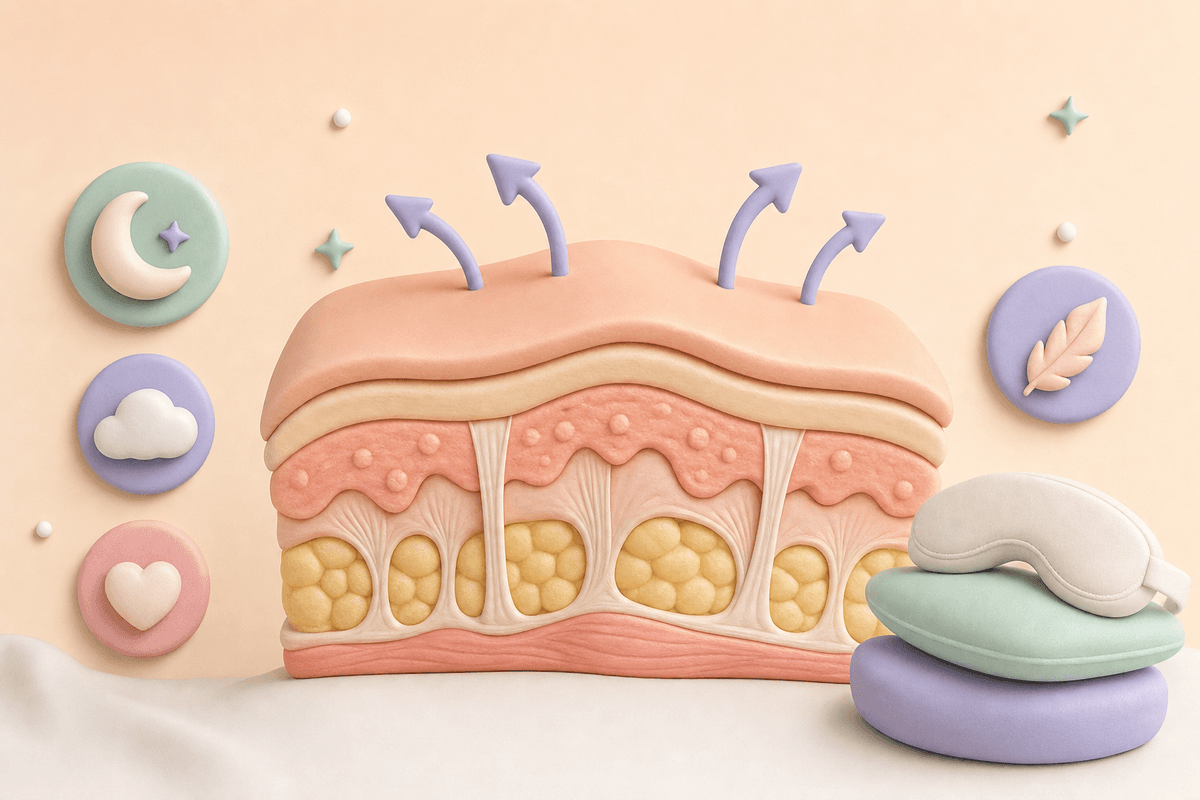
Clinical Insight Lumpiness can be more pronounced at the 3-month mark than immediately after surgery. This is because subcutaneous tissue contracts during the fibrosis process, pulling the surface. Lymphatic circulation management, such as LPG or Endermologie, during this period determines the final contour.
| Side Effect | Incidence Rate | Recovery Period | Management |
|---|---|---|---|
| Skin Irregularity (Lumpiness) | 15-25% | 3-6 months | LPG/Radiofrequency Massage |
| Pigmentation | 10-15% | 3-6 months | Sun Protection, Vitamin C |
| Sensory Abnormalities | 30-40% | 6 months - 1 year | Wait and See |
| Hematoma/Seroma | 5-8% | 2-4 weeks | Drainage Procedure |
| Need for Revision Surgery | 8-12% | After 6 months | Precise Redesign |
Incidence rates are based on clinical statistics from the Korean Society of Aesthetic Surgery, 2018-2022.
Three Conditions with the Widest Individual Variation
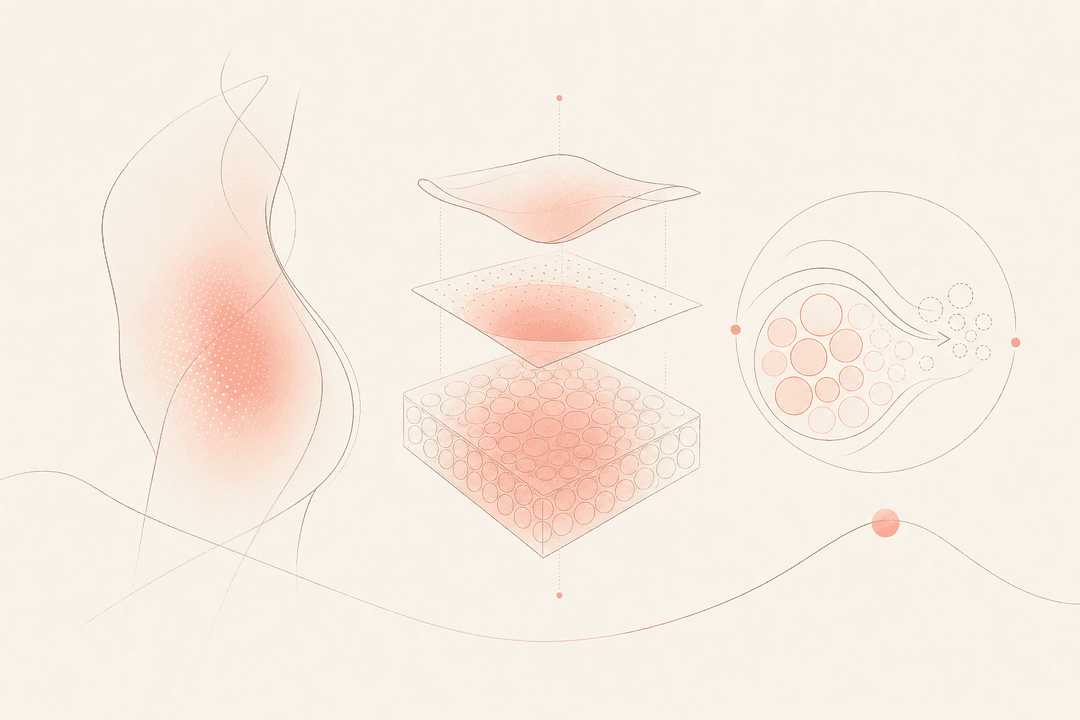
The first is skin elasticity. Even when the same amount is extracted, the skin retraction speed differs between those under 30 and over 40. Skin with reduced elasticity has a greater than 40% chance of residual sagging after liposuction, in which case concurrent lifting or adjustment of the extraction volume may be necessary.
The second is the degree of fibrosis in the liposuction area. The abdomen generally recovers smoothly with fewer fibrous septa, but the inner thighs and upper arms have denser fibrous septa, leading to more than double the incidence of lumpiness.
The third is adherence to wearing compression garments. A comparison between groups who stopped wearing them after 4 weeks versus those who wore them for over 8 weeks showed a final satisfaction difference of over 30%. Compression garments not only suppress swelling but also prevent adhesion between the skin and fascia, creating a smoother surface.
- Sagging residual rate over 40% with reduced skin elasticity
- Lumpiness incidence in inner thighs/upper arms is double that of the abdomen
- Satisfaction increases by over 30% in groups wearing compression garments for 8+ weeks
Recovery Management Standards to Reduce Regret
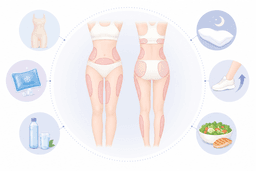
Wearing compression garments: Wear 24 hours a day for the first 48 hours post-surgery, then 23 hours a day for the next 4 weeks (only removing for showers), and during the day only for weeks 4-8. This is the standard protocol. Compression pressure varies by area; moderate pressure (20-30mmHg) is recommended for the abdomen, and high pressure (30-40mmHg) for the thighs.
Lymphatic circulation management begins from week 2. Clinical data from Korea shows that equipment-based management such as radiofrequency, LPG, or Endermologie, performed 2-3 times a week for 6-8 weeks, can improve final contour satisfaction by 25%.
Scar prevention involves applying silicone sheets to the incision sites (cannula insertion points) from week 2 for 3 months. Although the incision size is small (3-5mm), hypertrophic scars can occur in 10-15% of cases if left untreated.
Contraindicated behaviors are clear. Alcohol consumption, smoking, saunas, and high-intensity exercise for 2 weeks after surgery increase the risk of bleeding and infection by more than three times. Smoking, in particular, reduces blood flow to the skin by 40%, delaying recovery, so quitting for at least 4 weeks is necessary.
Tip Placing silicone pads in areas where the compression garment folds (armpits, groin) can reduce friction and prevent hyperpigmentation by over 50%. Pads can be purchased at pharmacies and should be replaced every 2-3 days.
- Compression garments: 48 hours 24/7 → 4 weeks 23 hours → 8 weeks daytime only
- Lymphatic management: 2-3 times/week from week 2, 6-8 weeks duration increases satisfaction by 25%
- Smoking cessation: Minimum 4 weeks, essential for 40% increase in skin blood flow
Key Takeaways: What to Check Before Surgery
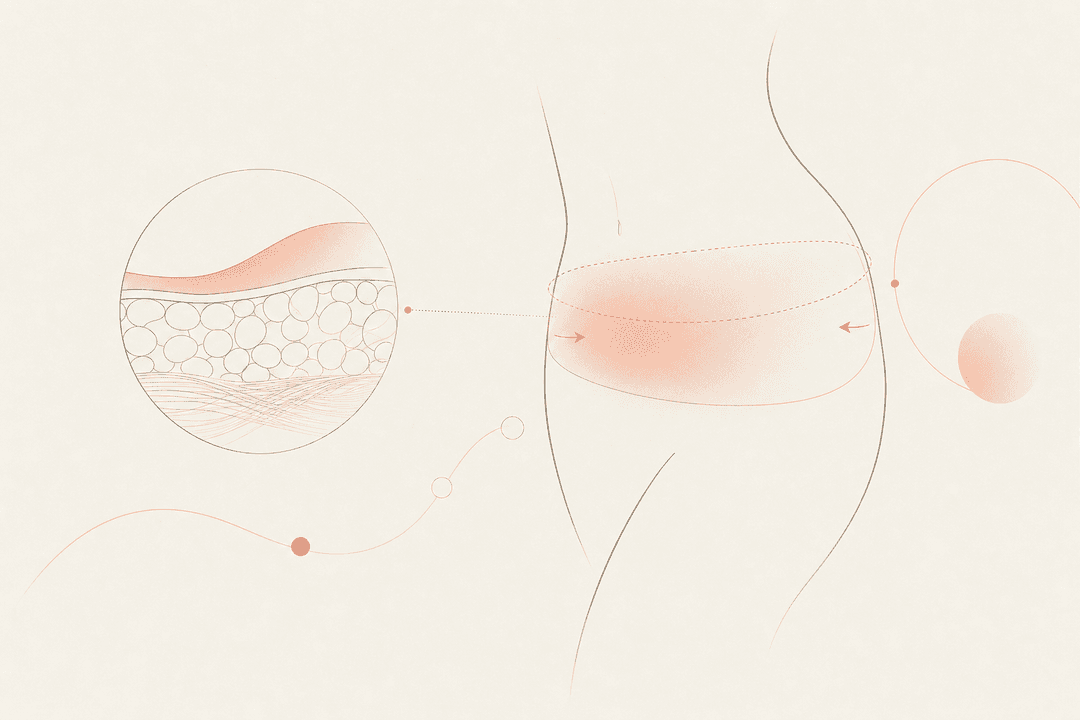
Accurate pre-operative understanding of liposuction drawbacks can reduce regret by more than half. Recovery realistically takes 6 months, and you must accept that lumpiness, sensory abnormalities, and swelling may persist for over 3 months during that period.
Recovery management details, rather than the amount of fat extracted, determine final satisfaction. Statistically significant differences are observed in final outcomes between groups that adhered to 8 weeks of compression garment wear, 6 weeks of lymphatic circulation management, and 4 weeks of smoking cessation, and those who did not.
During your pre-operative consultation, clarify the exact meaning of 'return to work in two weeks.' This refers to the point when you can go back to work, not when recovery is complete. Final contour assessment is done after 6 months.
- Request explicit mention of the '6-month recovery' timeline during consultation
- Confirm adherence to the 8-week compression garment protocol
- Assess feasibility of lymphatic management, smoking cessation, and alcohol abstinence for 4+ weeks
- Adjust expectations considering the 8-12% revision surgery rate
Recovery Differences by Liposuction Area
Abdomen [Faster Recovery]
- Bruising duration: 2-3 weeks
- Lumpiness incidence: 10-15%
- Compression garment wear: 6 weeks recommended
- Final recovery: 4-5 months
Smooth recovery due to fewer fibrous septa
Thighs [Slower Recovery]
- Bruising duration: 3-4 weeks
- Lumpiness incidence: 20-30%
- Compression garment wear: 8 weeks recommended
- Final recovery: 6 months or more
Dense fibrous septa, essential lymphatic circulation management
Upper Arms [Difficult Management]
- Bruising duration: 2-3 weeks
- Lumpiness incidence: 15-25%
- Compression garment wear: High discomfort
- Final recovery: 5-6 months
Difficult to secure compression garments, significant daily life limitations
Selection Criteria Based on Your Situation
If you are over 40 and concerned about skin elasticity
Consider a conservative approach to extraction volume or combining with lifting procedures.
Skin with reduced elasticity has a residual sagging rate of over 40% after liposuction, and excessive extraction can prematurely age your appearance.
If targeting areas with dense fibrous septa like the inner thighs or upper arms
Secure a budget for 6-8 weeks of lymphatic circulation management in advance.
The incidence of lumpiness is double that of the abdomen, and final contour satisfaction significantly decreases without equipment-based management.
If your job or studies make wearing compression garments difficult
Utilize summer or long holidays to schedule surgery when you can work from home for at least 2 weeks.
If you cannot wear compression garments 24 hours a day for the initial 2 weeks, swelling will persist for more than double the time, increasing the probability of revision surgery.
If you are a smoker or drink alcohol frequently
Postpone surgery for at least 4 weeks, quit smoking and drinking, and then re-evaluate.
Smoking reduces skin blood flow by 40%, delaying recovery, and alcohol consumption triples the risk of bleeding and infection.
Misconceptions Debunked
Myth Liposuction recovery is complete in 2 weeks.
Truth Two weeks is merely the point at which you can return to work; final contour completion takes 6 months. Swelling, lumpiness, and sensory abnormalities persist for over 3 months, and 40% of people regret their decision because they cannot endure this period.
Myth The more fat extracted, the better the results.
Truth Excessive extraction doubles the risk of skin sagging, lumpiness, and pigmentation. Appropriate fat extraction, considering skin elasticity and fibrosis, determines final satisfaction.
What NOT to Do After Liposuction
- Alcohol/Smoking for 2 weeks post-surgery — Triples risk of bleeding/infection, reduces skin blood flow by 40%
- Prematurely stopping compression garment wear — Swelling persists twice as long, increases lumpiness incidence
- High-intensity exercise (weightlifting/running) within 1 month — Risk of hematoma/seroma recurrence
- Saunas/Jjimjilbangs within 2 weeks — Worsens swelling due to vasodilation
- Vigorous massage of the surgical area within 4 weeks — Risk of bleeding/bruising recurrence in the treated area
Frequently Asked Questions
How many days does it take to return to work after liposuction?
For office jobs, returning after 2 weeks is possible, but you will still be wearing compression garments and have residual swelling. Pain peaks in the first week and can be managed with painkillers thereafter. For physically demanding jobs, it takes over 4 weeks.
How long does lumpiness last?
Lumpiness felt up to 3 months is a normal part of the recovery process. It is caused by the surface being pulled as fibrosis progresses, and it mostly subsides after 6 months. However, in the inner thighs and upper arms, where fibrous septa are dense, it can persist for up to a year.
Exactly how long should I wear compression garments?
The standard protocol is 24-hour wear for the first 48 hours, then 23 hours a day for 4 weeks (removing only for showers), and daytime wear only for weeks 4-8. Groups wearing them for over 8 weeks reported 30% higher final satisfaction than those who stopped after 4 weeks.
I have abnormal skin sensation, will it recover?
Tingling and numbness are caused by nerve damage during liposuction and usually recover within 6 months. Some cases (2-3%) persist for over a year, but permanent damage is rare. Taking vitamin B complex supplements may aid nerve regeneration.
What is the most serious liposuction side effect to be aware of?
Thrombosis and fat embolism are the most dangerous, with an incidence rate of less than 0.1%, but they can be life-threatening. If severe shortness of breath or chest pain occurs within 48 hours after surgery, seek immediate emergency room care. Prompt action determines the prognosis.
When is revision surgery necessary?
Revision surgery is considered when asymmetry, over-suction, or under-suction persists after 6 months and the patient is dissatisfied. The domestic revision surgery rate is 8-12%, and it can only be performed after a minimum of 6 months. Due to scar tissue, the procedure is more complex and requires careful re-evaluation.
Lumi's Note
If you accept that recovery realistically takes 6 months before surgery, then the lumpiness at 3 months can be viewed as part of the 'process.' Remember that enduring 8 weeks of compression garment wear is what determines your final contour. I hope this article provides some guidance if you are currently considering the procedure.
This content is for informational purposes only and does not substitute for medical advice. Always consult with a specialist before undergoing any procedure.