5 Types of Facelift Surgery: Why Choices Differ for Those in Their 40s and 50s
- Why we recommend mini lifts for sagging in your 40s and full face lifts for your 50s
- The depth of SMAS dissection determines recovery time and longevity.
- The optimal surgical method varies depending on face shape, lifestyle, and budget.
Information as of July 2026
Surgical Methods by Face Shape and Recovery Conditions
- Comparison of 5 Surgical Methods
- Recovery Period: 7 days to 6 weeks
- 3 Selection Criteria by Age
Same Age, Different Surgical Methods—One Standard
Two patients in their early 50s visited for consultations on the same day. One was recommended a mini-lift, and the other, a full facelift. The degree of fascial layer sagging, not age, determines the surgical method.
There are broadly five types of facelifts: thread lift, mini-lift, mid-face lift, full facelift, and deep plane lift. Each differs in the layer and scope of dissection.
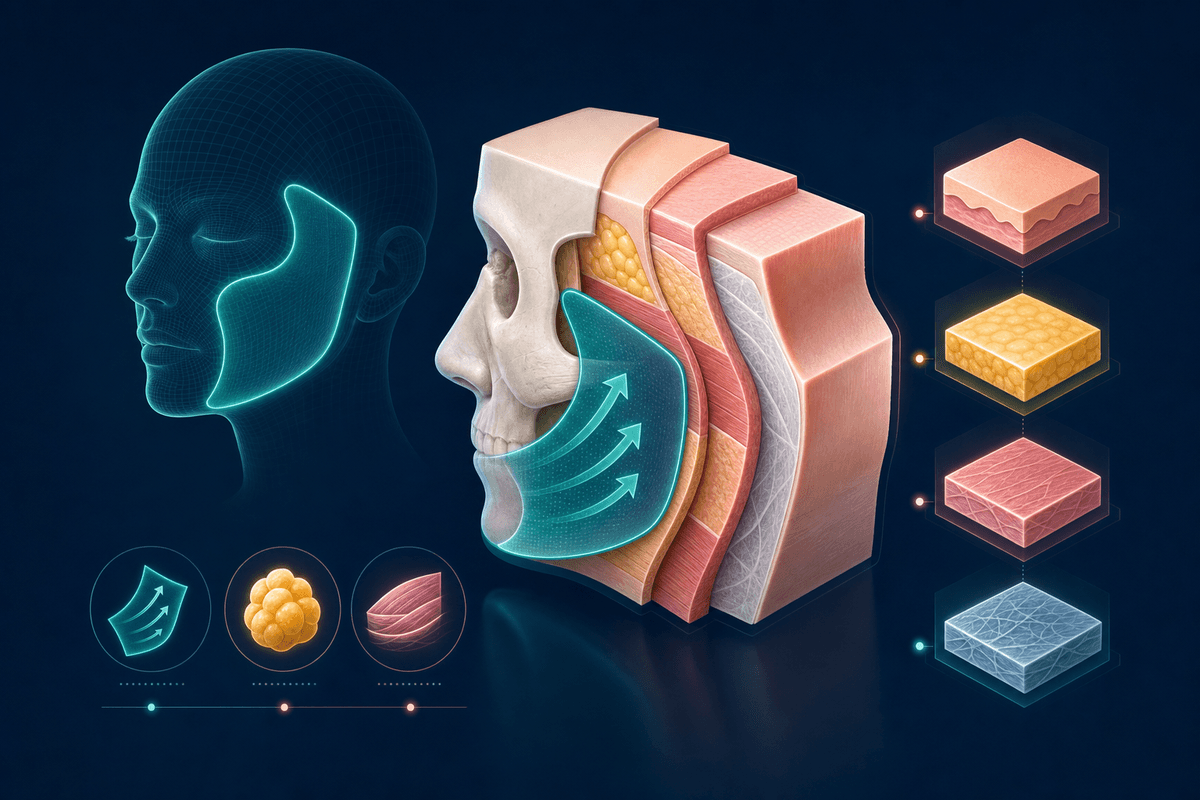
In their 40s, superficial sagging is common and can be addressed with surgery on relatively shallow layers. After the 50s, as deep SMAS (Superficial Musculoaponeurotic System) sagging becomes prominent, the scope of dissection needs to be widened for lasting effects.
- Mini-lift recovery: 7-10 days; Full facelift: 3-4 weeks
- A 2-3mm difference in SMAS dissection depth leads to a 2-3 year difference in duration of results
- Mini-lift selection rate in the 40s: 68%; Full facelift selection rate in the 50s: 71% (Korean Society for Aesthetic Plastic Surgery, 2022)
5 Surgical Methods: Where Do They Lift?
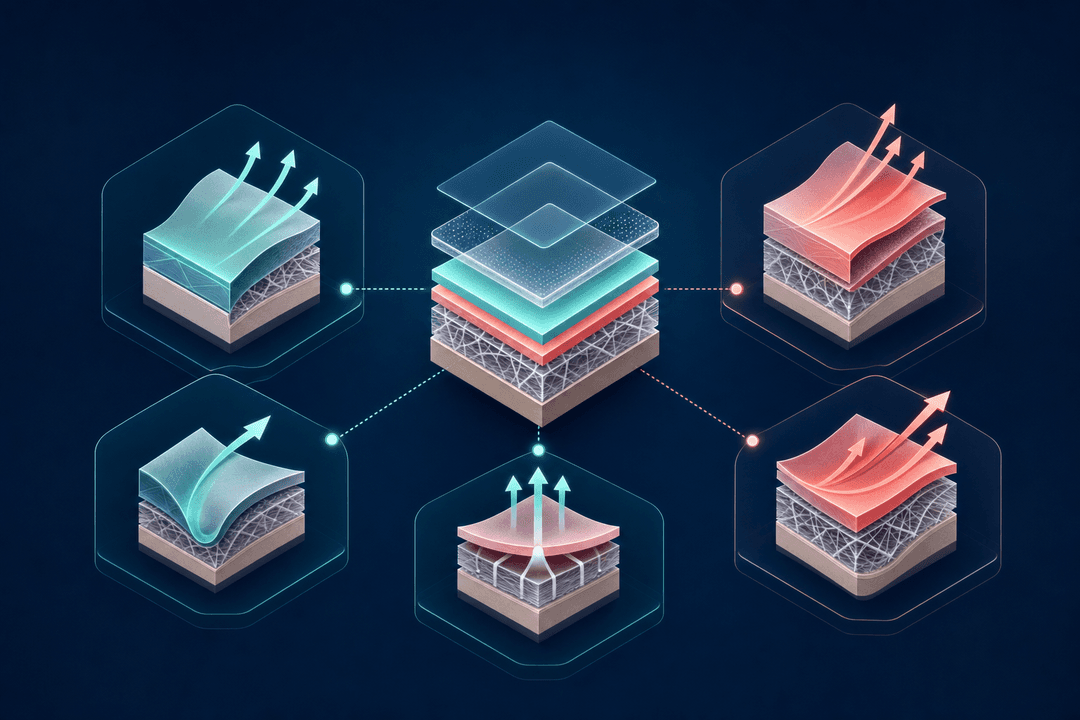
A thread lift uses dissolvable threads to anchor the tissue just below the skin. It leaves only needle marks without incisions. Effects last 6-12 months, with recovery in 3-5 days.
A mini-lift involves a 3-4cm incision in front of the ear, lifting only the superficial SMAS. It's effective for sagging in the mid-cheek area, with recovery in 7-10 days and results lasting 3-5 years.
A mid-face lift focuses on lifting the mid-face below the cheekbones. It's strong for under-eye hollowness and nasolabial folds but has limited effect on lower face sagging.
A full facelift involves incisions around the entire ear and wide SMAS dissection. It allows for a complete lift from the forehead to the jawline, with results lasting 7-10 years. Recovery takes 3-4 weeks.
A deep plane lift dissects deeper layers below the SMAS. It allows for repositioning of the muscles themselves, enabling natural volume restoration, but has the longest recovery period of 4-6 weeks.
Key Takeaway The deeper the dissection layer, the longer the results, but recovery time and swelling increase proportionally. Finding the right balance based on your lifestyle is key.
| Surgical Method | Incision Area | Recovery Period | Duration of Results | Average Cost |
|---|---|---|---|---|
| Thread Lift | Needle Punctures | 3-5 days | 6-12 months | 1.5-3 million KRW |
| Mini-Lift | 3-4cm in front of ear | 7-10 days | 3-5 years | 5-8 million KRW |
| Mid-Face Lift | Front of ear + Under eyes | 10-14 days | 5-7 years | 7-10 million KRW |
| Full Facelift | Entire front and back of ear | 3-4 weeks | 7-10 years | 12-18 million KRW |
| Deep Plane Lift | Front and back of ear + Deep layer | 4-6 weeks | 10-15 years | 15-25 million KRW |
Costs may vary depending on the area, scope, and medical institution.
True/False Quiz
For those in their 40s, a mini-lift is always best, and for those in their 50s, a full facelift is always best.
Check the Answer
False The degree of sagging, not age, is the determining factor. Even in their 50s, if the vertical distance between the cheekbone and jawline is less than 3cm, a mini-lift may be sufficient. Conversely, if fascial layer sagging is severe in their 40s, a full facelift might be necessary.
Why Do Choices Differ Between the 40s and 50s?
In their 40s, skin elasticity remains, so lifting the superficial layer is often enough for restoration. A mini-lift can provide results for 3-5 years. Deeper dissection leads to longer swelling, which many find difficult to accommodate due to recovery constraints.
After the 50s, the SMAS itself stretches, limiting the effectiveness of superficial procedures. Repositioning the fascial layer through a full facelift or deep plane lift is necessary for results lasting 7-10 years.
However, even in their 50s, if sagging is mild, a mini-lift may suffice. The key criterion is the vertical distance from the cheekbone to the jawline, rather than age. If the sagging exceeds 3cm, a full facelift should be considered.
- Average skin elasticity index: 65 points for 40s, 48 points for 50s (MFDS Skin Science Research, 2021)
- Mini-lift revision surgery rate: 12% for 40s, 31% for 50s (Korean Society of Plastic and Reconstructive Surgeons, 2023)
- Average age of deep plane lift patients: 54 years old
Optimal Choices by Face Shape

For a long face shape, a mid-face lift is advantageous. Lifting the mid-face upwards visually shortens the face length. A full facelift might accentuate the vertical proportions.
For a square face shape, pronounced sagging in the lower jaw area makes a full facelift effective. A complete lift to the jawline is needed to refine the contour; a mini-lift is insufficient.
For a round face shape, the presence of excess cheek fat limits the effectiveness of thread lifts or mini-lifts alone. Combining with a deep plane lift that allows for fat repositioning can achieve a natural V-line.
For faces with prominent cheekbones, a full facelift combined with a mid-face lift is necessary for balance. Lifting only the mid-face can make the cheekbones appear more prominent.
Clinical Insight Analyzing face shape requires not only a frontal view but also assessing the degree of sagging along the line connecting the cheekbone, corner of the mouth, and jawline from a side profile for accurate assessment.
Realistic Choices Based on Lifestyle
For office workers, the recovery period is the biggest variable. A mini-lift allows a return to daily life within 10 days, whereas a full facelift requires at least 3 weeks of leave.
Self-employed individuals or those working from home often have more recovery flexibility and tend to prioritize longer-lasting results, opting for full facelifts or deep plane lifts.
If you have budget constraints, a phased approach is an option. Many patients start with a mini-lift in their 40s and upgrade to a full facelift in their 50s. The total cost is similar to a single deep plane lift, but the financial burden is spread out.
Overseas residents often prefer methods with a lower revision rate, such as deep plane lifts, considering post-operative care. Securing 6 weeks for their return trip is a common consideration.
Key Summary—3 Things to Check Before Choosing

First, the dissection layer. Superficial lifts (mini) recover quickly but have shorter durations, while deep lifts (full, deep plane) are the opposite. First, determine whether your sagging is in the skin layer or the fascial layer.
Second, the recovery period. Social activities can be difficult for 3-4 weeks post-surgery. If you cannot secure leave, a mini or mid-face lift is more realistic. Rushing back to normal life can worsen swelling.
- Degree of sagging (vertical distance between cheekbone and jawline > 3cm) is the primary criterion for surgical method selection
- If 3 weeks or more of recovery time is available, consider a full or deep plane lift
- Superficial sagging in the 40s can be maintained for 3-5 years with a mini-lift
- Fascial layer sagging after the 50s requires a full facelift or more
Key Comparison by Surgical Method
Mini-Lift [40s Office Worker]
- Dissection: Superficial SMAS
- Recovery: 7-10 days
- Duration: 3-5 years
- Scar: 3-4cm in front of ear
Effective for mid-cheek sagging, allows quick return to daily life
Full Facelift [50s Overall Sagging]
- Dissection: Entire SMAS
- Recovery: 3-4 weeks
- Duration: 7-10 years
- Scar: Entire front and back of ear
Complete lift from forehead to jawline, long-lasting results
Deep Plane Lift [Natural Volume]
- Dissection: Deep layer below the fascia
- Recovery: 4-6 weeks
- Duration: 10-15 years
- Scar: Front and back of ear + Deep layer
Volume restoration through muscle repositioning, longest duration
Selection Guide for My Situation
40s cheek sagging, need to return to work within 2 weeks
Mini-Lift
Lifts only the superficial SMAS, allowing a return to daily life within 7-10 days with results lasting 3-5 years.
50s overall sagging, 1 month recovery time available
Full Facelift
Repositions the entire fascial layer, providing results for 7-10 years with a low revision rate.
Long face shape, focused improvement of mid-face hollowness
Mid-Face Lift
Lifts the area below the cheekbones upwards, visually shortening the face length and filling under-eye hollowness.
Budget constraints, desire for a phased approach
Mini-Lift in 40s → Full Facelift in 50s
While the total cost is similar to an immediate deep plane lift, the immediate financial burden is distributed.
Common Misconceptions
Misconception The older you are, the more you must have a full facelift.
Truth Even in your 50s, if sagging is mild, a mini-lift may be sufficient. If the vertical distance between the cheekbone and jawline is less than 3cm, superficial surgery can yield effective results.
Misconception Multiple thread lifts are equivalent to a full facelift.
Truth Threads only anchor the skin layer and do not lift the fascial layer. Repeated thread lifts do not improve SMAS sagging and can lead to cumulative skin damage.
Must Check Before Surgery
- !!Clearly confirm the dissection layer and scope!! — The surgical method cannot be determined by the name 'lift' alone
- Social activities are difficult for 3-4 weeks post-recovery — A full facelift without securing leave is inadvisable
- Scars remain in front of and behind the ears and may appear red for at least 6 months — Avoid short hairstyles for one year post-surgery
- Uncontrolled high blood pressure or diabetes increases the risk of bleeding and infection by 3 times — A medical check-up 2 weeks before surgery is essential
- Smokers have an 8x higher risk of skin necrosis — Complete smoking cessation for 4 weeks before and after surgery is required
Frequently Asked Questions
Can I have a full facelift after a mini-lift?
Yes. The mini-lift area is superficial, so it does not affect deep dissection during a full facelift. However, you must wait at least one year for the tissues to fully stabilize before proceeding.
Is a deep plane lift definitively more effective than a full facelift?
While the duration of results is longer (10-15 years vs. 7-10 years), the recovery period is also 1.5 times longer. A deep plane lift is chosen for severe sagging or to minimize revision rates, while a full facelift is selected when recovery time is limited.
What is the difference in effectiveness between a thread lift and a mini-lift?
Threads last 6-12 months, while mini-lifts last 3-5 years. Threads are anchored with needles without incisions, leading to faster recovery but limited effectiveness as they do not lift the fascial layer.
Are there ways to shorten the recovery period?
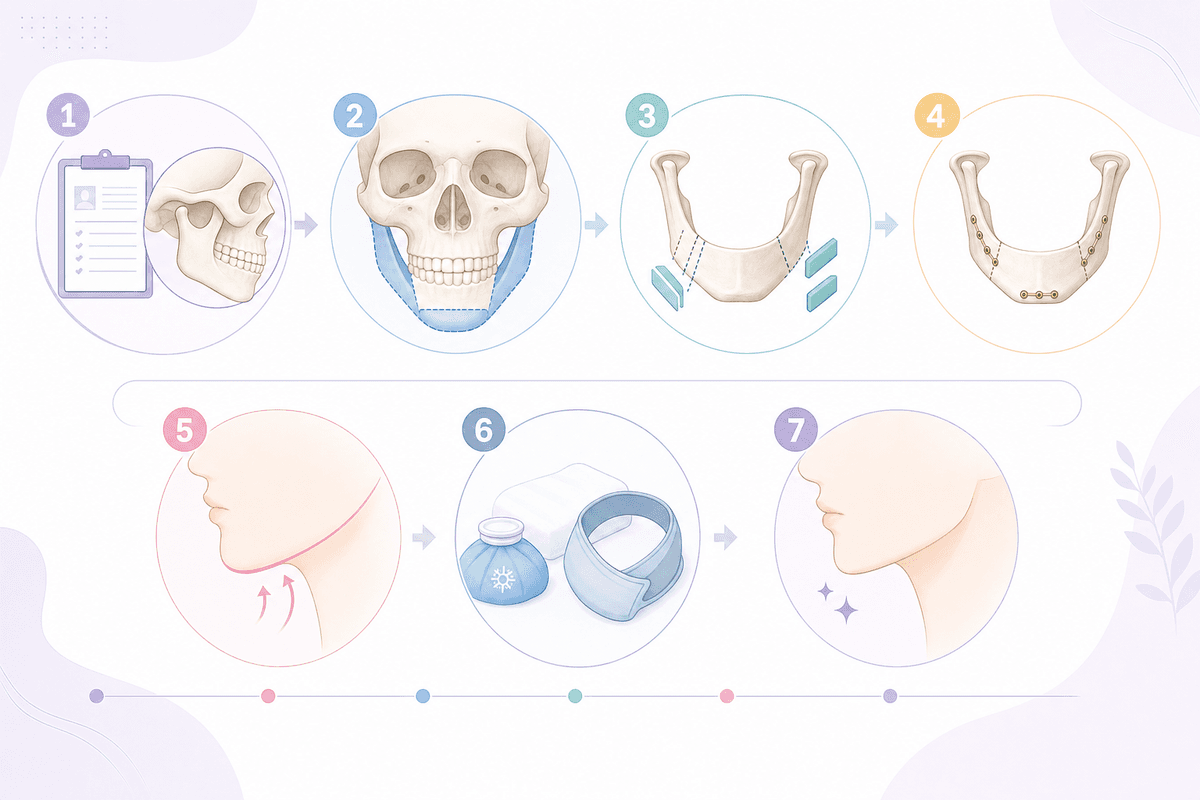
For the first 72 hours post-surgery, sleeping with your head elevated at a 45-degree angle and applying cold compresses for 15 minutes every 2 hours can help reduce swelling faster. However, if the dissection area is extensive, shortening the basic recovery period is difficult.
What are the side effects and complications of facelifts?
The most common is facial nerve injury (temporary facial paralysis), occurring in 2-5% of cases. Most recover within 3-6 months, but permanent damage has been reported in 0.5%. Skin necrosis, hematoma, and infection each occur in less than 1% of cases, with higher risks for smokers (8x).
When can I start exercising after surgery?
Light walking is possible one week after surgery, and strength training can resume after 4 weeks. Activities that increase blood pressure raise the risk of bleeding and hematoma, so avoid them for at least one month.
Lumi's Word
A difference of 2-3mm in dissection depth can change the outcome by several years. By first checking which layer your sagging is in and how much recovery time you have, the surgical options will naturally narrow down. Come back anytime you have questions about procedures!
This content is for informational purposes only and does not substitute for medical advice. Always consult with a specialist before undergoing any procedure.