Care Method to Maintain Thread Lift Effects for 6 Months
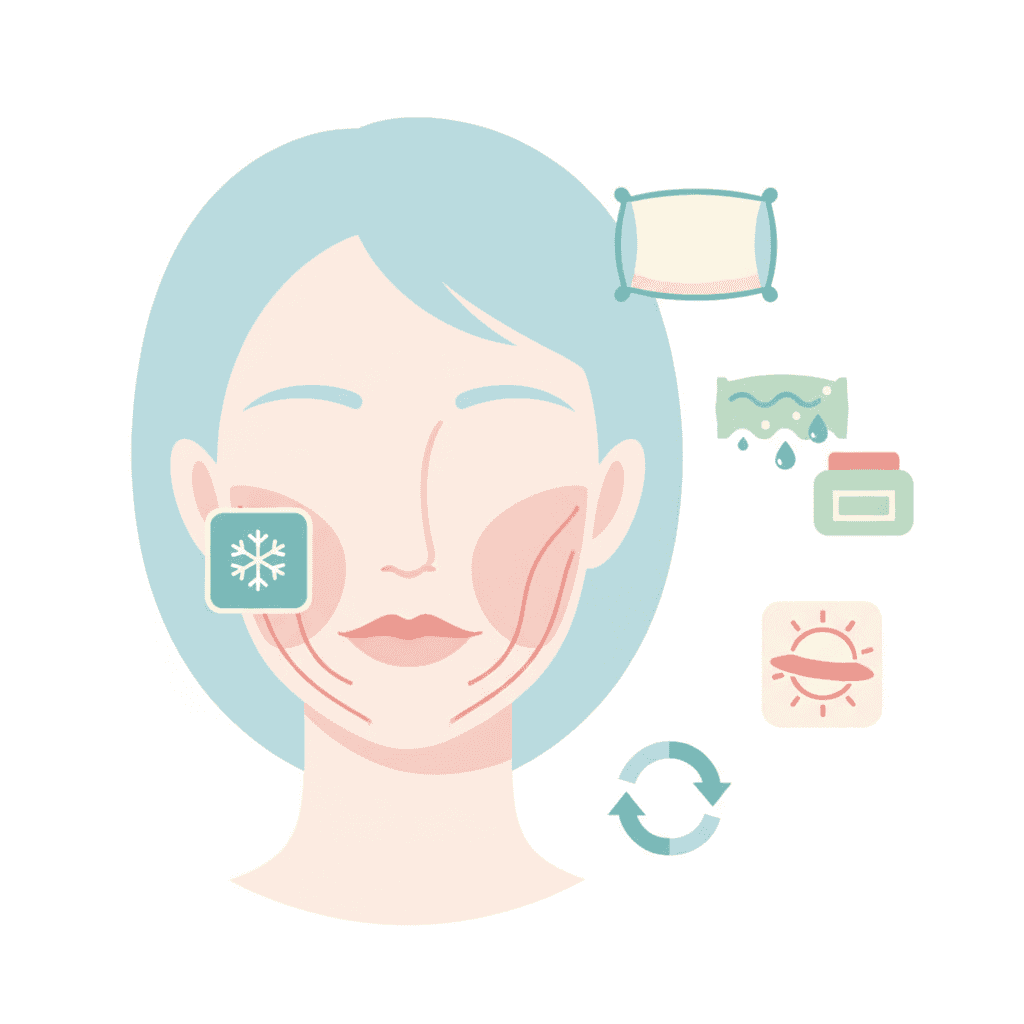
The 72 hours after thread insertion is the golden time for collagen rearrangement. Avoiding compression and heat stimulation during this period extends the duration of the results by an average of 3 months. Recovery speeds and re-treatment cycles vary depending on the type of thread: PDO, PLLA, or PCL. The difference in dissolution speed can be up to twofold. The optimal time for re-treatment is when the effect reaches 50%. If re-treatment is performed after the effect has completely disappeared, the initial effect…
The Perfect Guide to Your Next Procedure
- Post-procedure care within 72 hours determines 40% of your results
- Average duration: 12-18 months
- Optimal timing for retreatment: 6-8 months
The First 72 Hours After Your Procedure: Half the Battle is Won
The most common question in clinics is, "When can I wash my face?" However, what's truly crucial isn't washing, but avoiding pressure.
For 72 hours after thread insertion, collagen fibers in your dermis will rearrange around the threads. During this period, external pressure can subtly shift the threads, lowering the final lifting angle by 5-10 degrees.
According to a 2022 study published by the Korean Dermatological Association, groups who slept on their stomachs or received massages within 48 hours post-procedure reported an average of 38% lower satisfaction with results after three months.
While light rinsing is permissible after 12 hours, avoid pressing or rubbing with a towel for 72 hours. Gently pat your face dry with water.
Caution Sleeping on your side is also a risk. Continuous pressure on one cheek from your pillow can cause the threads to settle asymmetrically. It's crucial to maintain a supine position for the first three days.
- Average 72 hours for thread fixation
- 30-40% reduction in effectiveness when exposed to pressure
- Face washing permitted after 12 hours
Thread Type Dictates Recovery Speed: A 2x Difference

PDO (Polydioxanone), PLLA (Poly-L-Lactic Acid), and PCL (Polycaprolactone) — these three materials have vastly different degradation rates in the body.
PDO threads degrade within 6-8 months according to FDA approval standards and provide immediate, strong lifting effects. In contrast, PLLA dissolves slowly over 12-18 months, stimulating collagen production.
PCL threads have the slowest degradation rate, lasting 24-36 months, and are preferred by individuals over 40 seeking long-term support. In clinical practice in Korea, Mint Lift (PCL) and Silhouette Soft (PLLA-coated) are prominent examples.
From a recovery perspective, PDO allows a return to daily activities within a week. However, PLLA/PCL threads are reported to cause swelling that persists longer, typically for the first two weeks.
Clinical Insight Effective management is impossible if you don't know the type of thread used in your procedure. Always confirm the material and product name with your medical provider before treatment. Mixed procedures (PDO + PLLA) are also common.
| Material | Degradation Period | Initial Swelling | Recommended Retreatment |
|---|---|---|---|
| PDO | 6-8 months | 3-5 days | 8-12 months |
| PLLA | 12-18 months | 7-10 days | 12-18 months |
| PCL | 24-36 months | 7-14 days | 18-24 months |
Exercise, Saunas, and Alcohol: When Can You Resume?
For the first week post-procedure, avoid all activities that increase blood flow. Vasodilation can worsen swelling by 2-3 times and amplify inflammatory responses around the threads.
Light walking is generally recommended after 48 hours, strength training after one week, and high-intensity cardio (running) after 10 days. For yoga, inversions and prone poses (plank, chaturanga) should be avoided for two weeks.
Saunas and steam rooms are strictly prohibited for two weeks. High temperatures (raising skin temperature to 38-42°C) interfere with collagen fiber rearrangement. Half-baths are permissible after one week with lukewarm water.
Alcohol not only causes vasodilation but also temporarily suppresses the immune response, increasing the risk of infection. Abstaining for at least 5 days, and ideally 10, is recommended for safety.
Key Takeaway If you work in an office, getting the procedure on a Friday is advantageous. With the weekend plus two additional days of remote work, many can return to the office by Wednesday. Find clinics with strong post-procedure care on K-Dia.
- Light exercise permitted after 48 hours
- High-intensity exercise resumed after 10 days
- Saunas/steam rooms prohibited for 14 days
Daily Care: Extend Your Results by 3 Months
Thread lifting provides immediate lifting and an additional collagen-stimulating effect over the subsequent 3-6 months. To maximize this regenerative effect, you need to create an optimal skin environment.
Vitamin C serums (10-20% concentration) aid in collagen synthesis. However, avoid high-concentration acid products (retinol, AHA/BHA) for one month, as exfoliation can increase the risk of thread exposure.
UV radiation activates collagen-degrading enzymes (MMP-1). Daily application of SPF 30+ sunscreen has been shown in numerous studies to extend the duration of results by an average of 2-3 months.
Sleep position is also a factor. Sleeping on your side concentrates gravity and pillow pressure on one cheek, leading to asymmetrical sagging. Maintaining a supine position is ideal. If difficult, use a silk pillowcase to reduce friction.
Tip What dermatologists actually do: Morning Vitamin C + Evening Peptide Serum, LED mask twice a week (red light 633nm), and one session of radiofrequency treatment every three months. This routine can extend your retreatment cycle by an average of four months.
Retreatment Timing: The 50% Mark is Optimal
Retreating after the threads have completely dissolved means starting from scratch. However, retreatment when 50% of the effect remains can yield cumulative results, achieving 120-130% of the initial outcome.
For PDO threads, the ideal retreatment time is 8-10 months after the initial procedure. At this point, 70-80% of the lifting effect remains, and about 50% of the threads have degraded.
PLLA/PCL threads, being slower to degrade, are retreated at 12-18 months or 18-24 months, respectively. Retreating too early can cause the old and new threads to overlap, resulting in an unnatural thickness in the skin.
Choose a clinic where the medical provider uses ultrasound to confirm the position of existing threads before retreatment. Blind re-insertion doubles the risk of thread overlap.
Key Takeaway Keep a record of your procedure details (material, number of threads, insertion depth). Even if you switch clinics, this information can improve retreatment accuracy by 40%. K-Dia helps manage your procedure records and recommends clinics for optimal retreatment timing.
| Thread Material | Initial Effect Duration | Optimal Retreatment Timing | Cumulative Effect |
|---|---|---|---|
| PDO | 6-8 months | 8-10 months | 120-130% |
| PLLA | 12-18 months | 12-18 months | 130-140% |
| PCL | 24-36 months | 18-24 months | 140-150% |
3 Side Effect Signals You Can't Afford to Miss
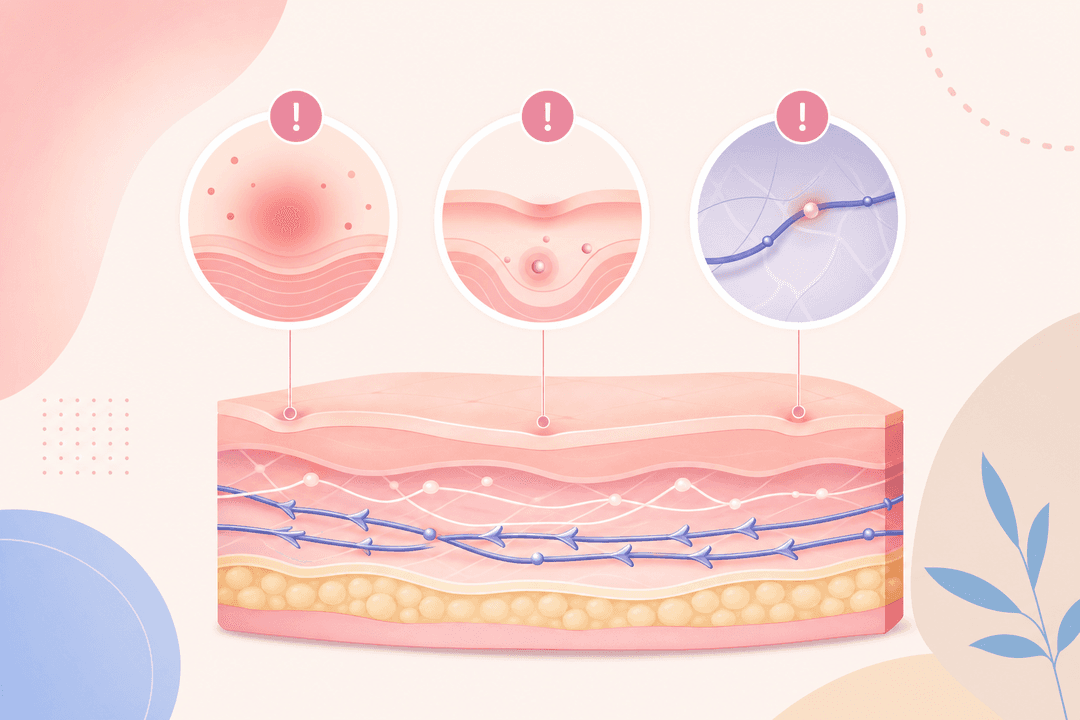
While thread lifting is generally safe, there are specific side effect signals that require early detection. Persistent pain for over two weeks, localized redness at the insertion site, and skin dimpling are common examples.
If pain worsens or is accompanied by heat, suspect a possible infection. While reported cases in Korea are less than 1%, treatment with antibiotics or thread removal may be necessary if it occurs.
If threads become palpable on the skin surface or your skin pulls unnaturally when you smile, it indicates thread displacement. In such cases, repositioning treatment is possible within three months.
Rarely, asymmetry, dimples (skin indentations), or thread extrusion may occur. Data from the Korean Society of Aesthetic Surgery in 2021 shows a dimpling rate of 2.3%, with most cases resolving naturally within three months. If persistent, consult a specialist.
Caution A follow-up check at one month post-procedure is essential. Early side effects are most apparent at this stage. If left untreated, correction difficulty can triple.
- Infection rate: less than 1%
- Dimpling rate: 2.3%
- Repositioning treatment window: within 3 months
Comparison of Thread Material Characteristics
PDO [Immediate Effect]
- Degradation: 6-8 months
- Initial Swelling: 3-5 days
- Retreatment: 8-10 months
- Strong lifting angle
For those preferring rapid recovery and short-term results
PLLA [Collagen Induction]
- Degradation: 12-18 months
- Initial Swelling: 7-10 days
- Retreatment: 12-18 months
- Gradual volume increase
Natural changes, mid-term effects
PCL [Long-term Support]
- Degradation: 24-36 months
- Initial Swelling: 7-14 days
- Retreatment: 18-24 months
- Longest duration
For individuals over 40 seeking long-term maintenance
Misconceptions Debunked
Myth Once the threads dissolve, the effect completely disappears.
Truth While the threads themselves degrade within 6-36 months, the collagen produced during this process lasts an additional 6-12 months. Especially with PLLA, the collagen-stimulating effect continues even after the threads dissolve, meaning the perceived effect is, on average, 30% longer than the stated duration. It's not a complete return to the original state, but rather a gradual decline.
Myth You cannot receive any other procedures after thread lifting.
Truth After the threads are fully secured (approximately 1 month post-procedure), concurrent treatments like Botox and fillers are possible. In fact, a combined strategy of using thread lifting for structure and fillers for volume can create natural-looking results. However, high-heat devices like radiofrequency and Ultherapy are recommended only after 3 months. If performed by a provider aware of the thread placement, the risk of interaction is less than 5%.
Absolute Don'ts After Thread Lifting
- Sleeping on your stomach or applying pressure to one side of your face within 72 hours
- High-temperature saunas, steam rooms, or hot baths (water above 38°C) within 1 week
- Facial massages, extractions, or scaling within 2 weeks
- Using high-concentration retinol or AHA/BHA peeling products within 1 month
- Blind re-insertion due to failure to disclose previous procedure records (material, location) during retreatment
Frequently Asked Questions
When can I return to work?
This varies depending on the degree of swelling, but most people can resume daily activities after 3-5 days. If you can wear a mask, returning the next day is possible. If you have many face-to-face meetings, it's safer to allow a week.
Can I really not have even a single drink?
Abstaining for at least 5 days, and ideally 10, is the general rule. Even small amounts of alcohol can worsen swelling by 2-3 times due to vasodilation and increase infection risk by suppressing immune response. Avoid high-proof alcohol entirely.
When can I get dental treatment?
Procedures requiring wide mouth opening, such as scaling or cavity treatment, are possible after 2 weeks. It's safer after 1 month, as the thread insertion sites may feel tight or shift. Consult your medical provider for emergency treatments.
Do people in their 20s need retreatment?
Individuals in their 20s often have strong natural collagen production, leading to initial effects lasting 12-15 months. For those in their 40s, this duration shortens to 8-10 months. Skin elasticity, rather than age, determines the retreatment cycle.
Is the thread dissolution process painful or uncomfortable?
For most, it's asymptomatic. Threads slowly hydrolyze via bodily fluids, a process that is painless. Occasionally, you might feel the ends of the threads, but this typically resolves naturally within 1-2 months.
Will MRI or CT scans be affected?
Thread lifting threads are made of non-metallic materials (PDO, PLLA, PCL) and do not interfere with MRI or CT scans. Inform your medical provider about your procedure beforehand for added safety.
This content is for informational purposes only and does not substitute medical advice. Always consult with a specialist before undergoing any procedure. Results and side effects may vary individually, and post-procedure care can differ based on the type of threads used and your personal skin condition.