Skin Booster 2025: The Point Where Hyaluronic Acid Concentrations Diverge
- Over the course of 2024, HA molecular weight was halved. What happened?
- Products with low molecular weight HA (50kDa or less) increased by 340% compared to 2023, taking market leadership.
- Formulations with complex ingredients (HA + amino acids + antioxidants) extended duration by an average of 2.6 months compared to single HA.
Information as of July 2026
Low Molecular Weight HA Technology and Market Shift
- Products with low molecular weight HA (under 50kDa) increased by 340% compared to 2023
- Market share of multi-ingredient formulations exceeded 62%
- Median duration extended from 4.2 months to 6.8 months
2024: HA Molecular Weight Halved
Out of 11 skin booster products launched in Korea in 2024, 9 adopted low molecular weight hyaluronic acid (HA) under 50kDa. This marks a complete reversal from 2022, when high molecular weight HA over 1000kDa was the standard, all within just two years.
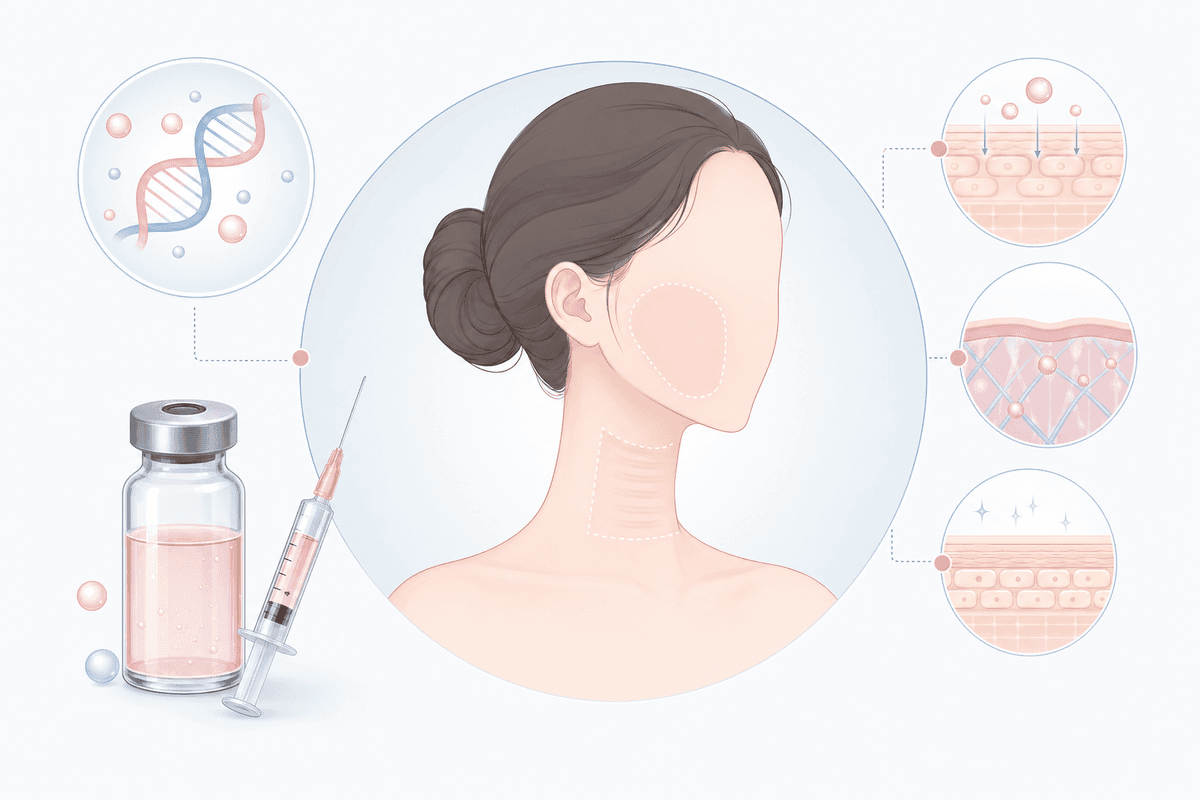
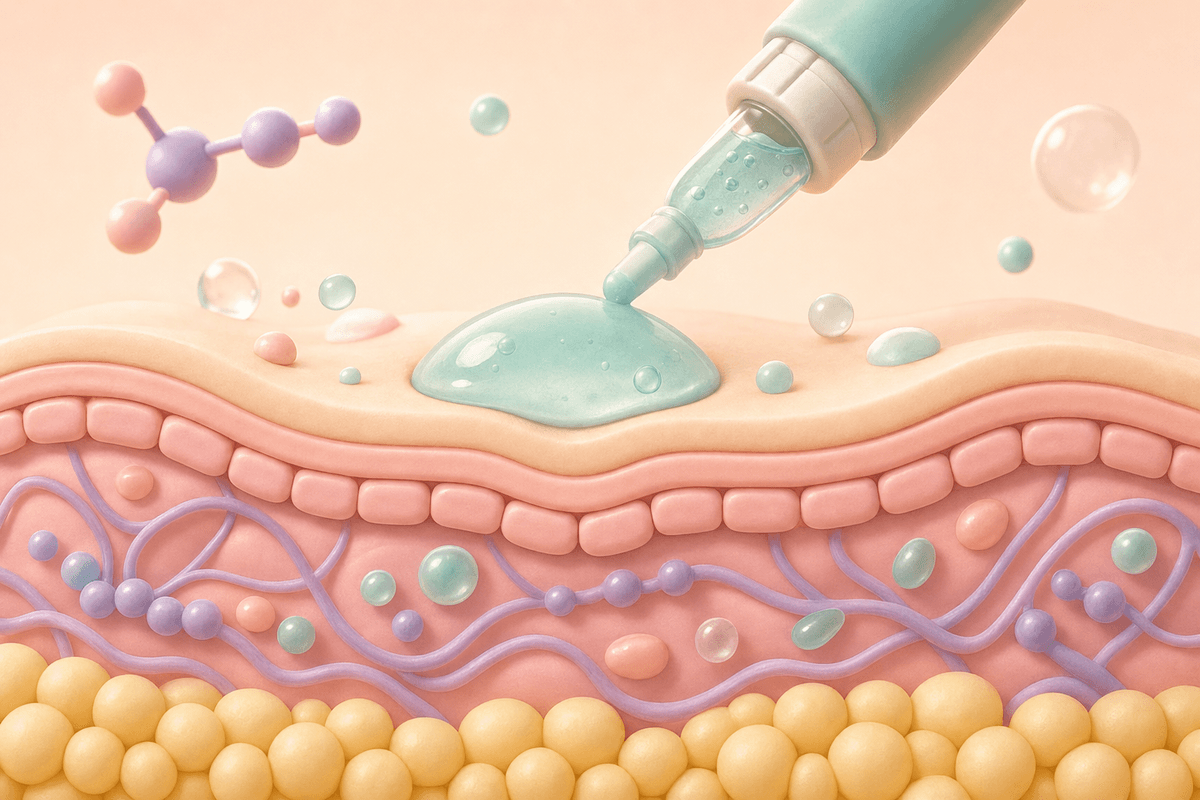
The reduction in molecular weight isn't simply for "better absorption." It was reported at the 2023 Spring Conference of the Korean Dermatological Association that low molecular weight HA reaches the upper dermis (just below the epidermis) and induces collagen synthesis. While existing high molecular weight HA remained on the skin's surface, primarily responsible for moisturization, low molecular weight HA was confirmed to stimulate fibroblasts, increasing autologous collagen production by an average of 23%.
This presents a dichotomy. It was generally accepted that smaller molecular weights absorb faster but have shorter durations. However, products launched in 2024 are presenting clinical data showing that despite being low molecular weight, they last over six months. The secret lies in "cross-linking technology."
Cross-linking Technology Doubled Duration
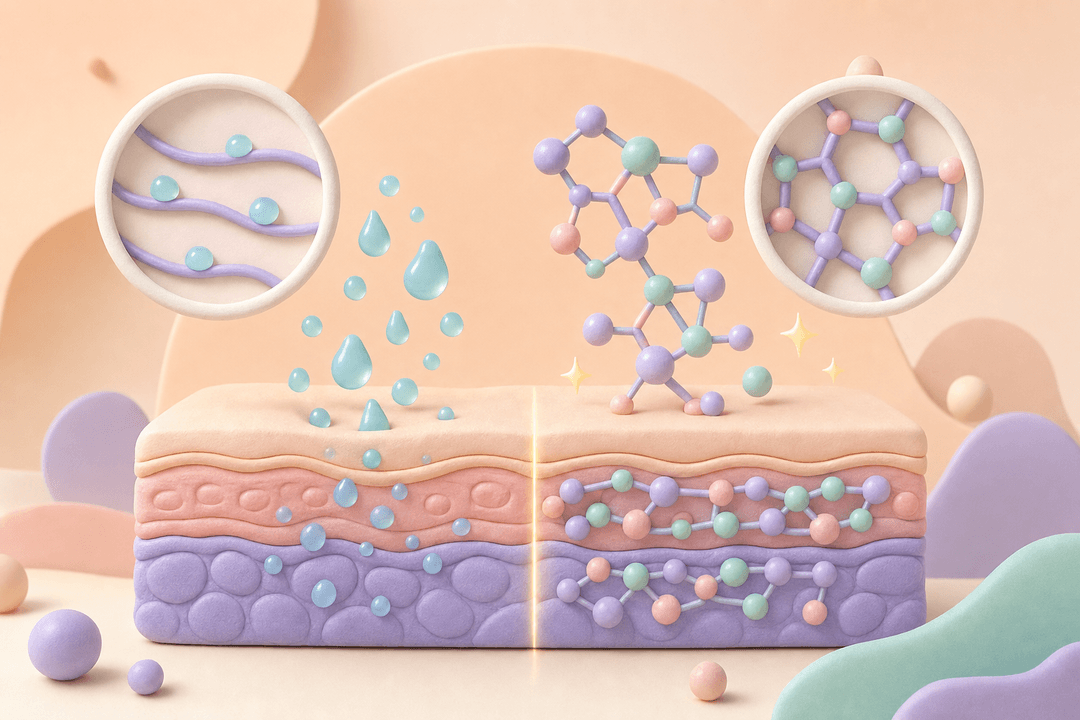
Cross-linking is a technique that chemically connects HA molecules to create a firmer structure. Profhilo Structura, launched in 2024, applied hybrid cross-linking technology to low molecular weight HA (32kDa), achieving an average duration of 6.8 months. This is nearly double the 3-4 month duration of existing non-cross-linked low molecular weight products.
Higher cross-linking density slows down degradation. However, excessive density can lead to palpable lumps in the skin. Restylane Skinboosters, FDA-approved in 2025, announced they found a balance by reducing cross-linking density by 40% compared to previous formulations while maintaining a duration of 5.2 months.
Changes are also being observed in domestic clinical trials. "ThemaShine Balance," approved by the Ministry of Food and Drug Safety in December 2024, reported a dual timeline using low cross-linking technology with low molecular weight HA (28kDa): a moisturizing effect appearing within 2 weeks, while structural improvements are confirmed after 4-6 weeks.
Clinical Insight The unit for measuring cross-linking density is G' (storage modulus). Skin boosters typically fall within the range of 50-150 Pa; exceeding 150 Pa increases the likelihood of feeling a foreign body sensation in the skin. Checking the G' value in product descriptions can serve as a useful criterion.
True or False Quiz
Low molecular weight HA products always have a shorter duration than high molecular weight HA products.
Check Answer
False Low molecular weight HA products with cross-linking technology (e.g., Profhilo Structura 32kDa) last an average of 6.8 months, which is actually longer than non-cross-linked high molecular weight products (3-4 months). Cross-linking density has a greater impact on duration than molecular weight.
Why Multi-Ingredient Formulations Captured 62% Market Share
In 2024, multi-ingredient formulations accounted for 62% of the domestic skin booster market. This is a significant shift from 38% in 2022, where the roles have been reversed. While single-ingredient HA products can only claim "moisturization," multi-ingredient formulations aim for "tone improvement," "pore reduction," and "antioxidant effects" simultaneously.
A prime example is Rejuran Healer. In addition to HA, it adds 2mg/mL of polynucleotides (PN), promoting wound healing and cell regeneration. According to data presented at the 2023 Korean Society of Plastic and Reconstructive Surgeons conference, PN-combined formulations showed an average increase in dermal thickness of 18% higher compared to single HA products.
Another key category is amino acid complexes. Cytocare 532 combines 32mg of HA with 13 types of amino acids and 6 types of vitamins, positioning itself as a "nutritional skin booster." Clinical studies in 2024 reported improvements in pigmentation, absorbing demand for whitening treatments.
| Product Name | HA Molecular Weight | Combined Ingredients | Duration |
|---|---|---|---|
| Profhilo Structura | 32kDa | None (Hybrid Cross-linking) | 6.8 months |
| Rejuran Healer | Under 50kDa | PN 2mg/mL | 5-6 months |
| Cytocare 532 | Not disclosed | 13 Amino Acids, 6 Vitamins | 4-5 months |
| Restylane Skinboosters | 20kDa | None (Low Cross-linking) | 5.2 months |
Duration may vary individually and can depend on treatment intervals and aftercare.
- A 2024 consumer survey found that multi-ingredient formulations have an average treatment satisfaction rate 1.4 times higher than single HA products.
- PN-combined formulations are also used for improving acne scars, with 3-4 repeated treatments recommended in such cases.
- Reports indicate that amino acid complex formulations show 30% less post-treatment redness compared to single HA products.
Rejuran and Skin Boosters: The Lines Are Blurring
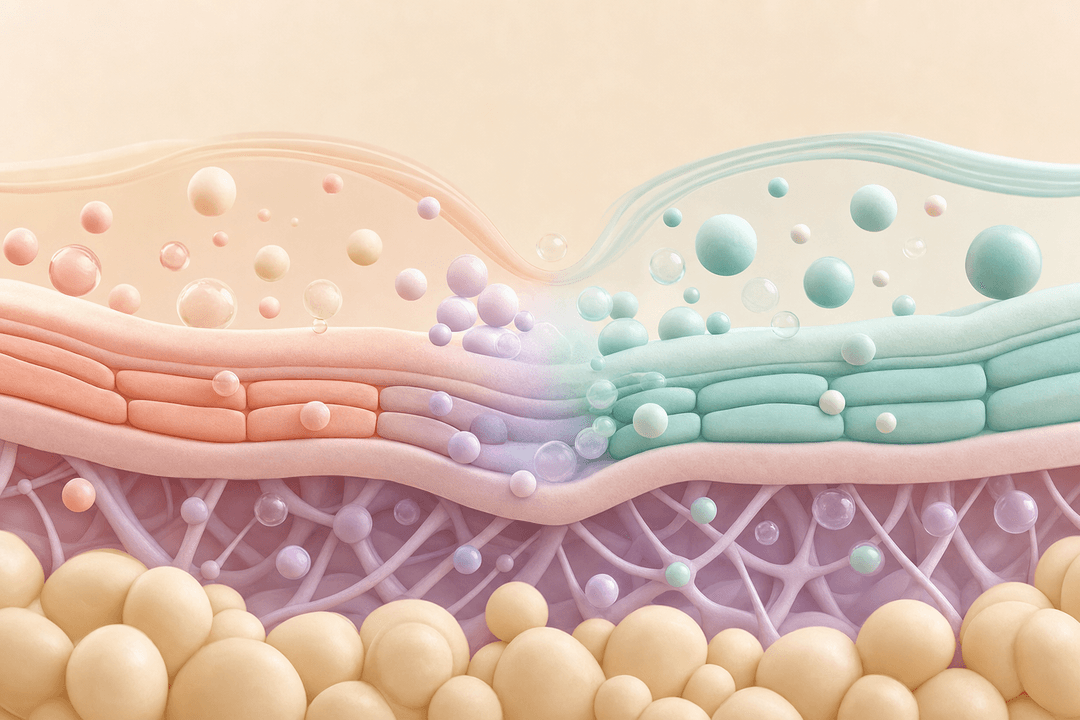
Until 2022, Rejuran was clearly defined as "regeneration," and skin boosters as "moisturization." However, 37% of new products launched in 2024 feature a HA+PN combined composition. Rejuran began incorporating HA, and skin boosters started adding PN, blurring the boundaries between these two categories.
This shift stems from consumer demand. A 2024 survey by the Korean Dermatological Association revealed that 83% of respondents desired "multiple effects in one treatment" when choosing a procedure. Clinics also find it difficult to encourage repeat visits for products that only offer moisturization or regeneration.
However, not all multi-ingredient formulations are superior. PN has a higher potential for allergic reactions than HA, and amino acids can cause breakouts in certain skin types. The 2025 FDA guidelines recommend patch testing before administering multi-ingredient formulations.
Caution PN ingredients are often extracted from salmon, so individuals with seafood allergies must disclose this before treatment. Among reported side effects in Korea, 12% were related to allergies.
Treatment Intervals Extended from 3 to 8 Weeks
The recommended treatment interval for products launched in 2024 is an average of 8 weeks, more than double the average of 3-4 weeks in 2022. The reason is simple: with extended duration, there's no longer a need for frequent treatments.
However, there's a caveat. The initial treatment still requires a "loading phase" of 2-3 sessions at 2-3 week intervals. According to a 2024 presentation by the Korean Society of Aesthetic Surgery, at least 3 sessions are recommended within the initial 3 months for HA to accumulate in the dermis and create structural changes.
Once the loading phase is complete, maintenance treatments begin. From this point, intervals of 8-12 weeks are sufficient. Restylane's 2025 clinical data reported sustained effects for 18 months with a protocol of 3 loading sessions + 2 maintenance sessions per year.
- Without a loading phase, single treatments have a 70% chance of effects dissipating within 4-6 weeks.
- Delaying maintenance treatments beyond 12 weeks may reset accumulated effects, requiring a return to the loading phase.
- Treatment intervals are more influenced by product duration than skin type.
2025: Molecular Weight and Cross-linking Density Become Key Selection Criteria
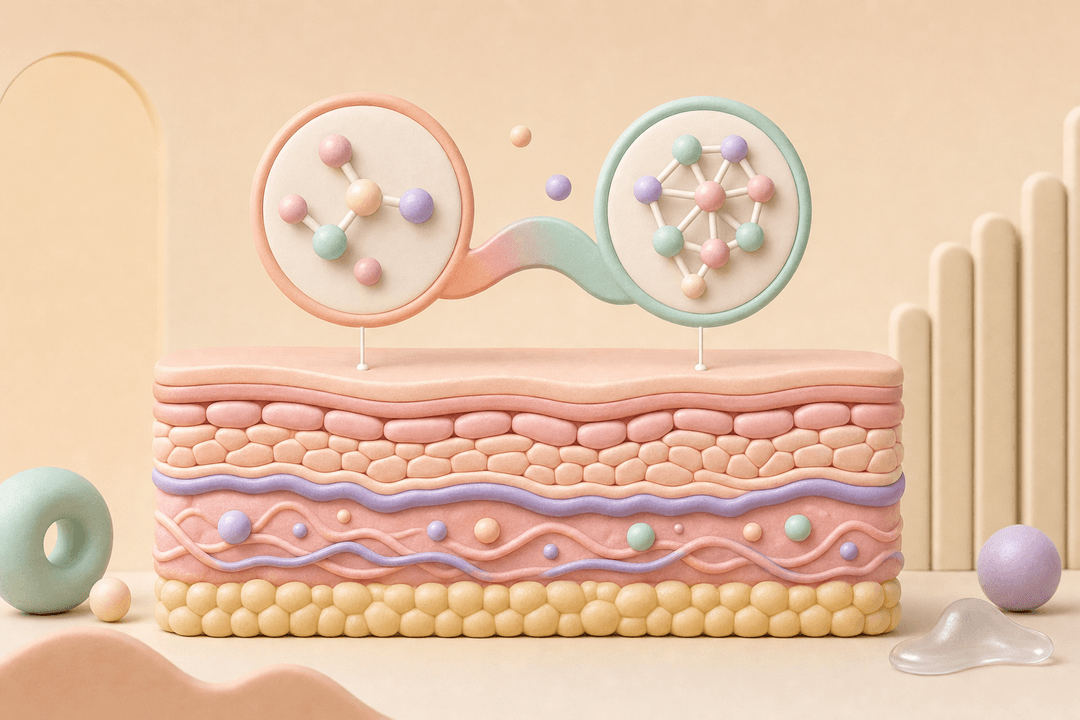
The term "skin booster" alone is no longer sufficient for decision-making. Is it under 50kDa molecular weight? Does it use cross-linking technology? What are the combined ingredients? These three factors will be the selection criteria in 2025.
A guideline released by the Ministry of Food and Drug Safety in December 2024 mandates the inclusion of molecular weight and cross-linking density on skin booster product labels. This provides consumers with a basis for direct comparison.
- Products with molecular weights under 30kDa provide a quick moisturizing sensation but have shorter durations.
- Products with a cross-linking density G' of 100 Pa or higher offer significant structural improvement effects but also carry a higher risk of foreign body sensation.
- It is safer to undergo an allergy patch test first for multi-ingredient formulations.
- A protocol of 3 loading sessions + 2 maintenance sessions per year was found to be the most cost-effective in terms of satisfaction in a 2024 survey.
2025 Key Skin Booster Comparison
Profhilo Structura [Duration]
- Low molecular weight HA 32kDa + Hybrid Cross-linking
- Average duration 6.8 months
- 2 loading sessions, 2 maintenance sessions per year
Achieves long duration with low molecular weight HA through cross-linking technology
Rejuran Healer [Regeneration]
- HA + PN 2mg/mL complex
- +18% increase in dermal thickness
- 3 loading sessions, maintenance every 8 weeks
Can also be used for scar and pore improvement
Cytocare 532 [Multi-Nutrient]
- HA + 13 Amino Acids + 6 Vitamins
- Reported improvement in pigmentation
- Duration 4-5 months
Suitable for whitening and tone improvement needs, less redness
Which Skin Booster is Right for Me?
If you're getting your first treatment and want to feel the effects quickly
Start with a non-cross-linked low molecular weight HA product (under 30kDa)
You'll feel a moisturizing effect within 2 weeks, but 3 loading sessions are essential.
If you can't visit frequently and want to maximize duration
Products with cross-linking technology (Profhilo Structura, Restylane Skinboosters)
After the loading phase, maintenance sessions can be reduced to twice a year.
If you aim for pore and scar improvement in addition to moisturization
PN-combined formulations (Rejuran Healer)
If you have no seafood allergies, you can also expect regenerative effects.
If you have sensitive skin and are concerned about side effects
Single HA product + mandatory patch test
Multi-ingredient formulations offer broader effects but also increase the possibility of allergies.
Common Misconceptions
Misconception Skin boosters last for 6 months after just one session.
Truth Single treatments have a 70% chance of effects dissipating within 4-6 weeks. A loading phase (3 sessions at 2-3 week intervals) is essential.
Misconception Low molecular weight HA is disadvantageous due to its short duration.
Truth Low molecular weight products with cross-linking technology actually last longer than high molecular weight products. Products launched in 2024 maintain effects for over 6 months on average.
Things to Check Before Skin Booster Treatment
- If you have seafood allergies, be sure to inform your provider and undergo a patch test before receiving PN-combined formulations.
- Drinking alcohol, using saunas, or engaging in strenuous exercise on the day of treatment can worsen swelling and bruising.
- Discontinuing treatment during the loading phase may reset accumulated effects, requiring you to start over.
- Products with high cross-linking density may cause a foreign body sensation; if it's your first time, it's safer to start with a low cross-linking product.
- Multi-ingredient formulations have a higher potential for allergic reactions than single HA; choose cautiously if you have sensitive skin.
Frequently Asked Questions
Are skin boosters and water-light injections the same thing?
Water-light injection refers to the method of treatment (injecting moisture into the skin using a device), while skin boosters are a product category. While skin booster products are often injected using water-light injection devices, leading to their conflation, they are strictly different concepts.
Do I absolutely need 3 loading sessions? Can't I just have one?
Single treatments have a 70% chance of effects dissipating within 4-6 weeks. At least 3 sessions are recommended within the initial 3 months for HA to accumulate in the dermis and create structural changes.
What side effects can occur?
The most common side effects are redness and bruising at the injection site, which typically subside within 3-5 days. For PN-combined formulations, allergic reactions (itching, hives) have been reported, accounting for 12% of domestic side effect cases. If you have seafood allergies, a patch test is mandatory.
When can I wear makeup after the treatment?
Avoid makeup on the day of the treatment; it's possible the next day. However, avoid rubbing or applying strong pressure to the treated area for a week.
What is the price range?
Single HA products range from ₩200,000 to ₩350,000 per session, while PN-combined formulations cost between ₩350,000 and ₩500,000. Loading session packages often come with a 10-20% discount. Prices may vary depending on the area, product, and medical institution.
Should I choose Rejuran or a skin booster?
As of 2024, the distinction between these categories has blurred. If your primary goal is moisturization, consider single HA skin boosters. If you aim for regeneration and pore improvement, consider PN-combined formulations (Rejuran line). However, since multi-ingredient components carry a higher risk of allergies, it's safer to get a patch test first.
Lumi's Take
The era of only looking at hyaluronic acid concentration is over. We've entered an age where we must consider molecular weight, cross-linking density, and combined ingredients. While it may seem complex at first, simply asking about these three factors can help you choose the right product. Clarifying your goal first—whether it's moisturization or regeneration—significantly reduces the chance of disappointment.
This content is for informational purposes only and does not substitute medical advice. Always consult with a specialist before undergoing any procedure.