5 Types of Skin Boosters: Finding the Right Product for You Based on the Skin's Internal Principles
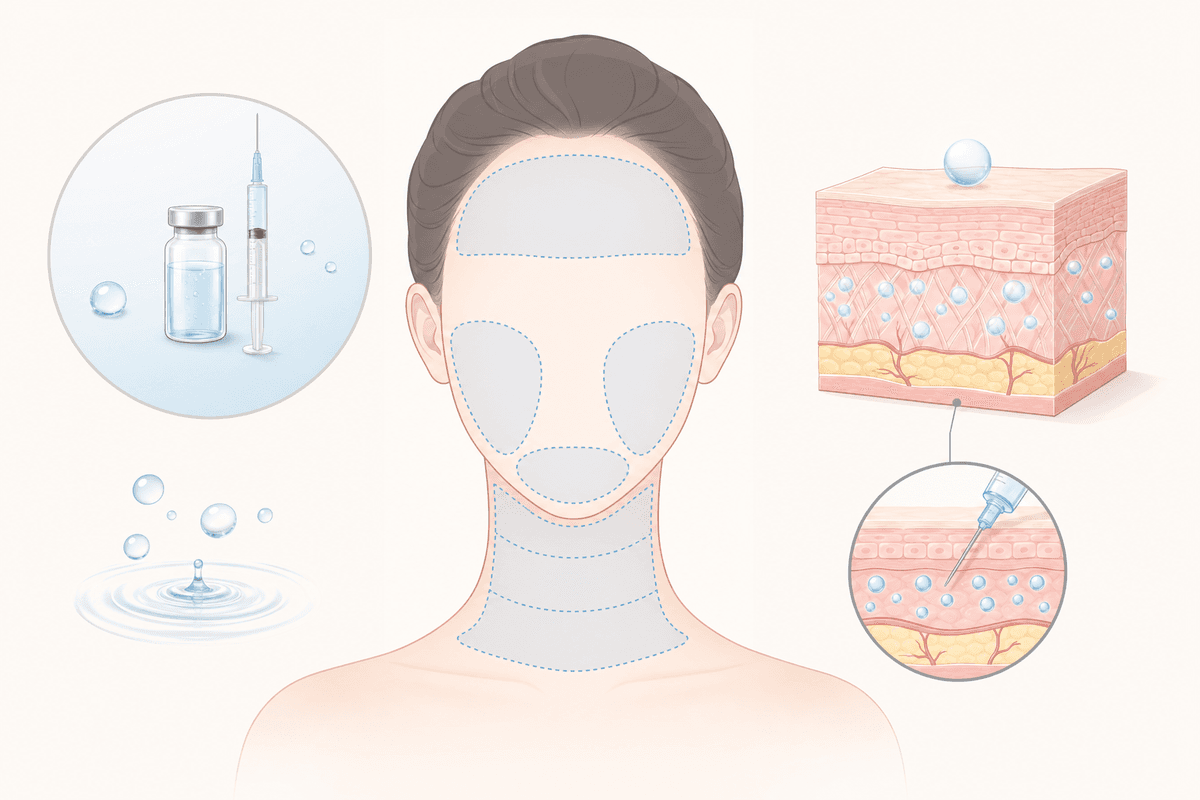
- Skin boosters vary in the depth of action and duration depending on ingredients such as hyaluronic acid, PDRN, and amino acids.
- They aim for immediate radiance in the upper dermis (0.5–1mm) and improve the elastic structure in the middle dermis (2–3mm).
- For those in their 20s, moisture-focused products are the general selection criteria, while for those in their 30s and older, combinations of regenerative ingredients are preferred.
Information as of June 2026
Comparison of Ingredients, Infusion Layer, and Duration
- 12 Domestically Approved Products
- Difference in Infusion Layer: 0.5~4mm
- Duration: 4~12 Months
Is a skin booster different from applying moisturizer?
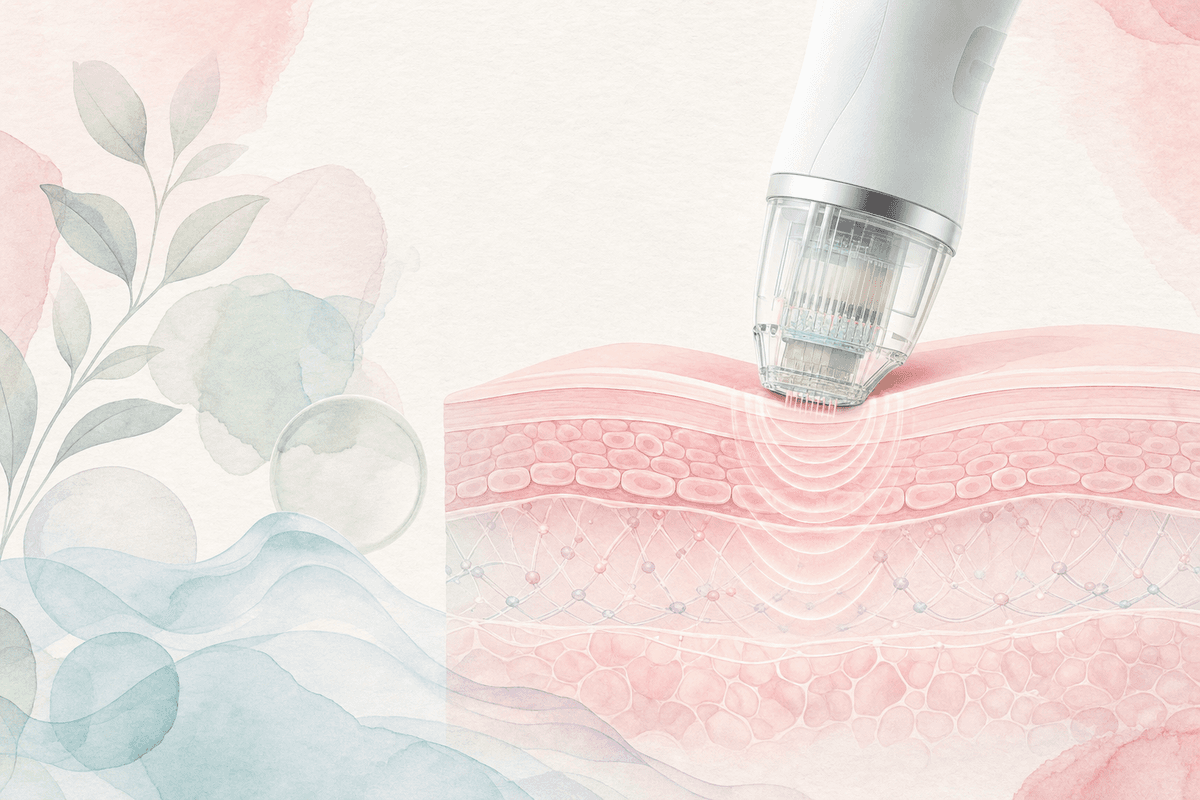
‘If my skin is dry, can’t I just apply cream diligently?’ If you thought this, you are only halfway there That is correct. Even if the epidermis is replenished, the lack of moisture in the dermis cannot be resolved with cosmetics. Skin boosters are not applied topically; they are a procedure that involves directly injecting them 1 to 3 mm deep into the skin. A representative example is the Restylane Skin Booster, which received FDA approval in 2015. It works on the principle of drawing moisture from within by injecting 20 mg/ml of hyaluronic acid into the middle layer of the dermis. While creams only reach up to 0.1 mm of the epidermis, skin boosters reach the dermis where collagen is produced. There are over 12 types of products currently in use in Korea based on KFDA approval standards. The injection depth and effect vary depending on the ingredients, concentration, and molecular size; if you do not understand these differences, you may choose a product that is not suitable for your skin. Key Point: Only cosmetic moisturizing ingredients with a molecular weight of 500 Da or less can penetrate the epidermis. Skin booster hyaluronic acid has a viscosity of over 1000 kDa, so direct dermal injection is the only route.
- Average epidermal thickness 0.1 mm, dermal 1–4 mm — Target layer for skin booster injection
- 1 g of hyaluronic acid retains 1000 times its own weight in water (Journal of Dermatological Science, 2018)
- Restylane Skin Booster clinical trials reported a 47% increase in moisture after 6 months
What actually happens inside the skin?
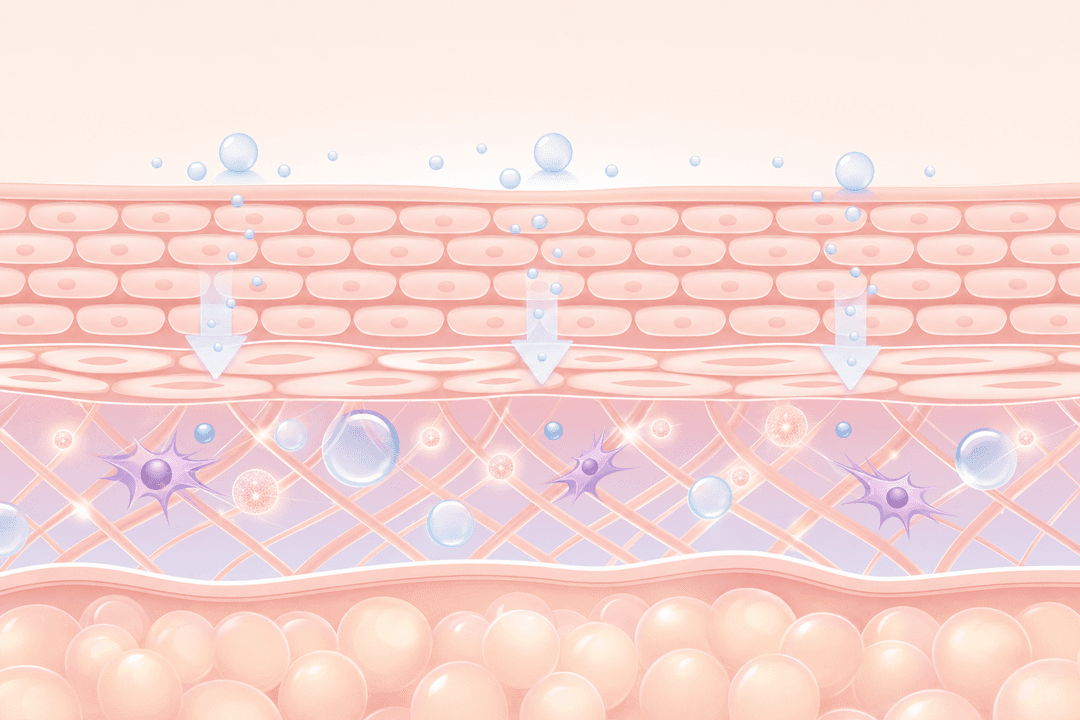
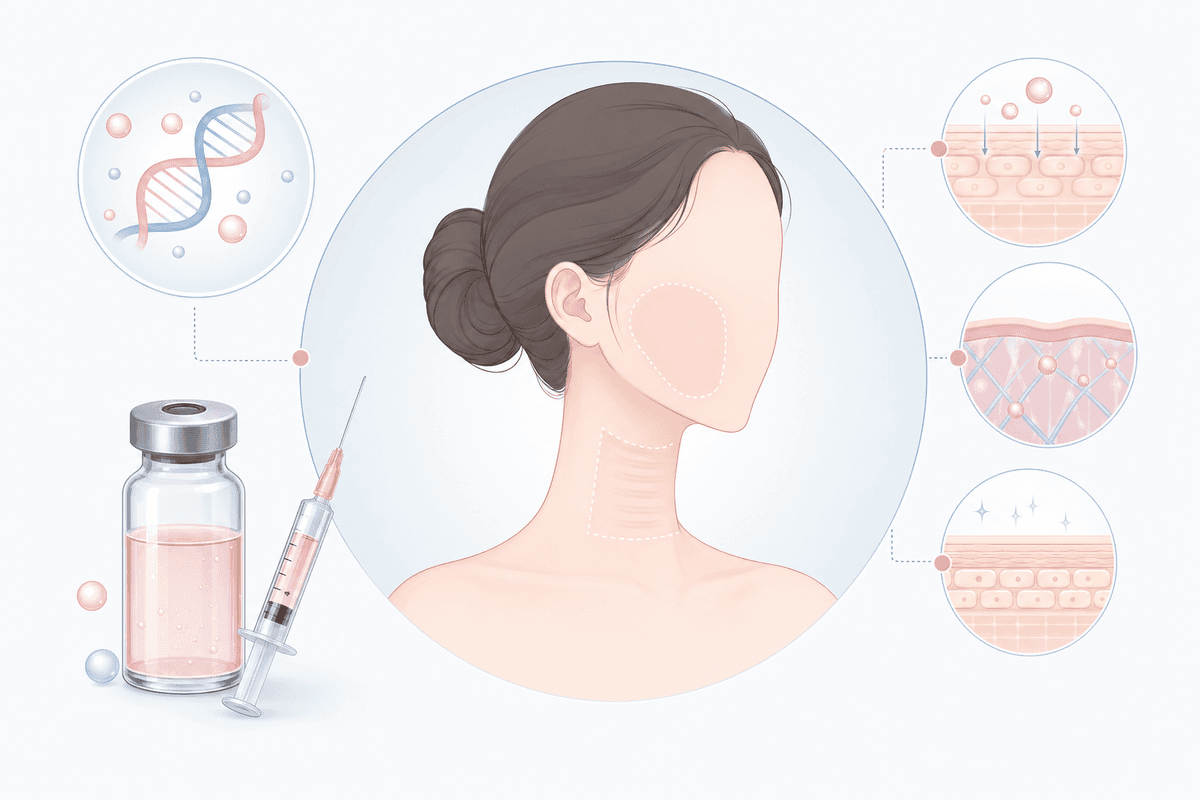
When a skin booster is injected, dermal fibroblasts begin to react. Hyaluronic acid-based products attract moisture immediately upon injection, and after 3 to 4 weeks, they stimulate the synthesis of collagen types I and III.
PDRN (Polynucleotide) products are a little different. Like Rejuran, the salmon DNA extract component works on the principle of activating VEGF (Vitamin EGF) to thicken the dermis along with regenerating microvessels. It is closer to tissue reconstruction than hydration. Unlike Botox, which temporarily blocks muscles, skin boosters alter the environment of the dermis itself, so both immediate and delayed effects appear simultaneously. The hydration immediately after the procedure is due to the injected ingredients, while the elasticity 2 to 3 weeks later is due to collagen regeneration. There is a domestic study showing that injecting 2cc of Rejuran increased dermal thickness by an average of 0.3mm (Journal of the Korean Dermatological Association, 2020). It goes beyond simple hydration; it essentially changes the structure itself.
- Collagen Type I is responsible for elasticity, while Type III is responsible for wound healing and regeneration.
- PDRN concentration of 2~5mg/ml is within the MFDS approval range.
- Moisture expansion around the hyaluronic acid begins within 24 hours of injection.
How are skin boosters classified?
They are broadly divided into three types: hyaluronic acid-based, PDRN-based, and complex ingredients. Hyaluronic acid is further subdivided by particle size and whether it is cross-linked.
Non-cross-linked hyaluronic acid (Restylane Vital, Juvederm Volite) has small particles that spread evenly in the upper dermis (0.5~1mm). If your goal is a dewy glow, this is the way to go. Although the duration is relatively short, lasting about 4 to 6 months, the advantage is the immediate radiance right after injection. PDRN products (Rejuran, Rejuran i) are injected into a deeper layer (2 to 3 mm). They are more effective at improving pores, scars, and fine lines than moisture, and last for 8 to 12 months. However, it takes 2 to 3 weeks to feel the effects. Combination types (Chaeum, Belotero) mix hyaluronic acid with amino acids and vitamins to provide both moisture and nutrition simultaneously. This is a type frequently chosen by people in their late 20s to early 30s.
| Product Group | Key Ingredients | Injection Depth | Duration | Main Target |
|---|---|---|---|---|
| Restylane Vital | Non-crosslinked HA 20mg/ml | 0.5~1mm | 4~6 months | Instant Radiance & Hydration |
| Juvederm Volite | Low-crosslinked HA 17.5mg/ml | 1~2mm | 6~9 months | Fine lines·Elasticity |
| Rejuran | PDRN 2mg/ml | 2~3mm | 8~12 months | Pores·Regeneration·Scars |
| Chaeum | HA + Amino Acids | 1~2mm | 6~8 months | Complex Nutritional Supply |
| Belotero Soft | Low-crosslinked HA + Glycerol | 0.5~1.5mm | 5~7 months | Thin skin radiance |
The duration may vary depending on individual metabolic rate and lifestyle habits, and the injection depth is adjusted at the practitioner's discretion.
- Non-crosslinked HA has a particle size of 100~300 micrometers
- Average 2~4cc injected per Rejuran treatment
- Combination products contain 5~10% Vitamin C and glutathione
What is the difference between Rejuran and Skin Booster?
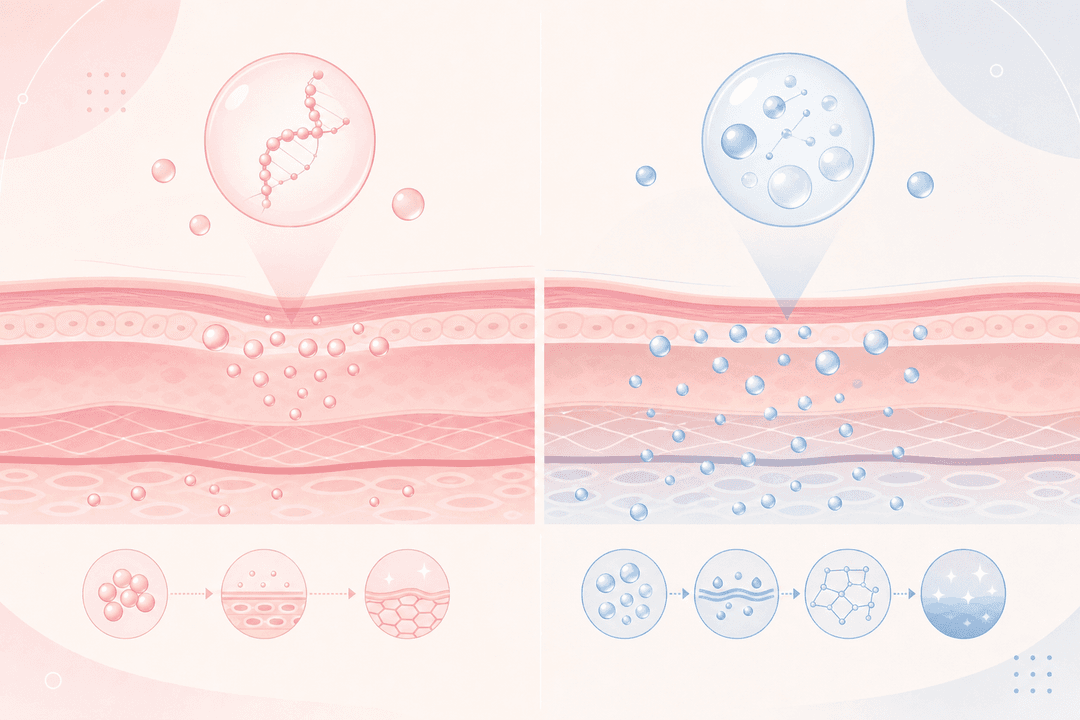
Rejuran is also a type of Skin Booster. However, it is called separately because its ingredients and purpose differ from general hyaluronic acid products.
The primary goal of hyaluronic acid Skin Boosters is hydration. You can immediately feel your skin becoming plump and glowing right after the injection. On the other hand, since Rejuran aims for regeneration and recovery, there aren't significant changes immediately after the procedure; instead, pores begin to narrow or fine lines fade starting 2 to 3 weeks later. That is why people in their early to mid-20s often choose hyaluronic acid products, while I tend to recommend Rejuran to those in their 30s or older who have concerns about scars or pores. Some people even get both—using Rejuran for base regeneration and then adding shine with hyaluronic acid. Tip: If you add a hyaluronic acid skin booster 2 weeks after the Rejuran procedure, you can maximize both the regeneration and hydration effects simultaneously. However, duplicate injections in the same area on the same day should be avoided due to the risk of inflammation.
- Rejuran contains salmon DNA-derived PDRN, while hyaluronic acid is derived from bacterial fermentation
- Average cost of Rejuran is 200,000 to 400,000 won, while hyaluronic acid products are in the 150,000 to 300,000 won range
- Regenerative effects last 8 to 12 months for Rejuran and 4 to 6 months for hyaluronic acid
How do I choose the right product for me?
It varies depending on age, skin type, and goals. If you are in your early to mid-20s and are only concerned about dryness, non-crosslinked hyaluronic acid (Restylane Vital) is sufficient. Because the goal is immediate hydration. If you are in your 30s or older, or if you are concerned about enlarged pores, loss of elasticity, and fine lines, PDRN products (Rejuran or Rejuran i) are more effective. Although it takes some time, it changes the structure itself. If you have thin and sensitive skin, look for a combination of low-crosslinked HA and moisturizing ingredients like Belotero Soft. It provides a definite radiance with minimal irritation. If you are on a tight budget, starting with a hyaluronic acid product to check the results, and then upgrading to Rejuran is also an option. You don't need to start with expensive products all at once.
- Skin booster selection ratio for 20s: Hyaluronic acid 72%, PDRN 28%
- For 30s and older: Reversal to Hyaluronic acid 45%, PDRN 55%
- Low-crosslinked products recommended for thin skin (dermis 1mm or less)
Make sure to remember this
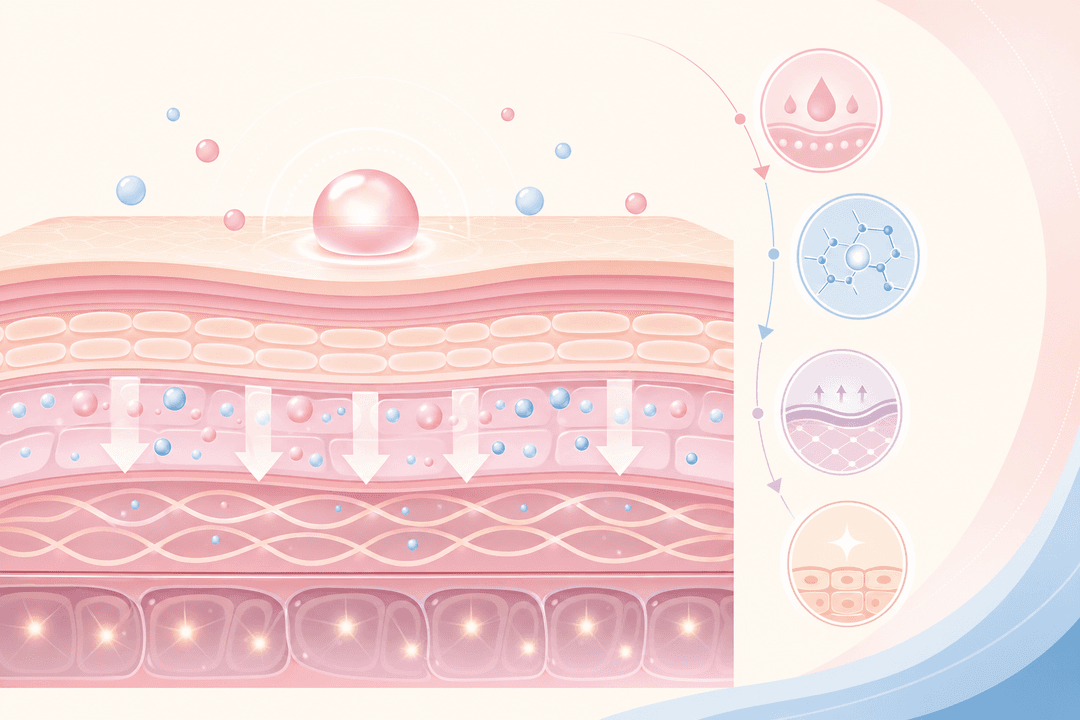
Skin Boosters are not a 'one-time finish' but a 'maintenance' concept. Since hyaluronic acid gradually breaks down after 4 to 6 months and PDRN after 8 to 12 months, regular re-treatment is necessary.
If you want to prolong the effects, 2 to 3 intensive treatments within the first 3 months followed by maintenance treatments every 6 months. If you try to last a year after receiving it just once, you might not feel even half the effect. Caution: PDRN products should be avoided if you are pregnant, breastfeeding, or have an autoimmune disease (such as lupus or rheumatism). Please consult with a specialist before deciding on hyaluronic acid products as well.
- The standard protocol is maintenance treatment following intensive treatment (2-3 sessions) during the first 3 months
- Perceived effect level is around 40% with just one session — over 80% with continuous treatment
- The typical re-treatment cycle is 4-6 months for hyaluronic acid and 6-9 months for PDRN
- Determine which product suits your skin by evaluating it 2 weeks after the first treatment — Do not judge too early
Hyaluronic Acid vs. PDRN, 3 Key Differences
Hyaluronic Acid Skin Booster [Immediate [Radiance]
- Main Ingredient: Non-crosslinked/low-crosslinked HA 17~20mg/ml
- Injection Depth: 0.5~2mm (Upper/Middle Dermis)
- Perceived Effect: Immediately after procedure~1 week
- Duration: 4~6 months
- Main Goals: Hydration, Radiance, Fine Lines
Suitable for early to mid-20s and dry skin
PDRN Skin Booster (Rejuran) [Regeneration Focus]
- Main Ingredient: Polynucleotide 2~5mg/ml
- Injection Depth: 2~3mm (Dermis) Middle/Lower Layer)
- Perceived Effect: After 2~3 weeks
- Duration: 8~12 months
- Main Goal: Regeneration of pores, scars, and elasticity
Suitable for ages 30 and older, damaged skin, and pore concerns
Combination Type (Chaeum/Belotero) [Moisture + Nutrition]
- Main Ingredients: HA + Amino Acids/Vitamins
- Injection Depth: 1~2mm
- Perceived Effect: 3~7 days
- Duration: 5~8 months
- Main Goal: Simultaneous Moisture + Nutrition Supply
Late 20s to early 30s · Complex Concerns
Product Selection Guide by Situation
Early to mid-20s, if dryness is your only concern and it is your first procedure
Non-crosslinked Hyaluronic Acid (Choose one from Restylane Vital or Juvederm Volite)
Suitable for a first procedure as immediate effects are visible and the cost is low. Upgrade decision after re-evaluation in 4~6 months.
If you are 30 or older and concerned about pores, elasticity, and fine lines
Add hyaluronic acid after 2~3 intensive sessions of PDRN products (Rejuran/Rejuran i)
The method of establishing a regenerative base first and then adding moisture and radiance maximizes long-term effects.
If you are worried about irritation because your skin is thin and sensitive
Small test of low-crosslinked complex type (Belotero Soft) followed by magnification
Minimizes irritation with small particles and contains moisturizing ingredients. It is safe to check the reaction after a single small treatment.
If you want guaranteed results on a budget of 300,000 won or less
Plan for one hyaluronic acid treatment + re-treatment after 4~6 months
Lower cost per treatment than PDRN and immediate noticeable results. Maintaining the effect is sufficient if you adhere to the re-treatment cycle.
Common Misconceptions
Misconception One skin booster treatment lasts a year
Truth Hyaluronic acid products gradually break down after 4~6 months, and PDRN also breaks down after 8~12 months. If you want long-term effects, the standard is intensive treatment 2~3 times during the first 3 months, followed by maintenance treatments every 6 months.
Misconception The more expensive the product, the better
Truth If it doesn't suit your skin condition, age, and goals, even expensive products will have their effectiveness halved. High-concentration PDRN products may be an excessive choice for dry skin in your 20s.
Precautions Before and After Procedure
- !!No drinking, sauna, or high-intensity exercise on the day of the procedure!! — Worsening bruising and swelling due to increased blood flow
- Avoid strong massage or pressure on the injection site for 3 days after the procedure — due to concerns about component migration
- Consult a specialist before deciding if you are pregnant, breastfeeding, or have an autoimmune disease
- Postpone the procedure if you have a keloid tendency or an infected skin area
- If you are taking blood circulation medications such as aspirin or Omega-3, consult a specialist to stop taking them 1 week before the procedure
Frequently Asked Questions
Can I apply makeup immediately after the procedure?
You can apply makeup after 4 to 6 hours, once the injection site has stabilized. On the day of the procedure, we recommend using only a mild sunscreen, and you may wear full makeup starting the next day. How painful is it? If you apply anesthetic cream, it feels like a needle sting. PDRN products may sting slightly more than hyaluronic acid, but it is generally bearable. How long does the bruising last? It takes 3 to 7 days, depending on the injection site and individual differences. Many people do not get bruises, and even if they do, they are mild enough to be covered with concealer. Can I receive this on the same day as Rejuran? Duplicate injections in the same area should be avoided due to the risk of inflammation. It is safer to receive Rejuran first and then add the Hyaluronic Acid Skin Booster 2 weeks later. What are the side effects? Temporary swelling, bruising, and tenderness at the injection site are common and usually disappear naturally within 3 to 7 days. Rarely, infection, allergies, or nodule formation may occur, so please visit the clinic where the procedure was performed immediately if adverse reactions persist. How often should I receive this? The standard is 2 to 3 intensive sessions during the first 3 months, followed by maintenance treatments every 4 to 6 months. You can feel the effects at a 40% level after just one treatment.
This content is for informational purposes only and does not replace medical advice. You must consult a specialist before the procedure. Suitability and the risk of side effects may vary depending on individual skin condition, medical history, and medications being taken.