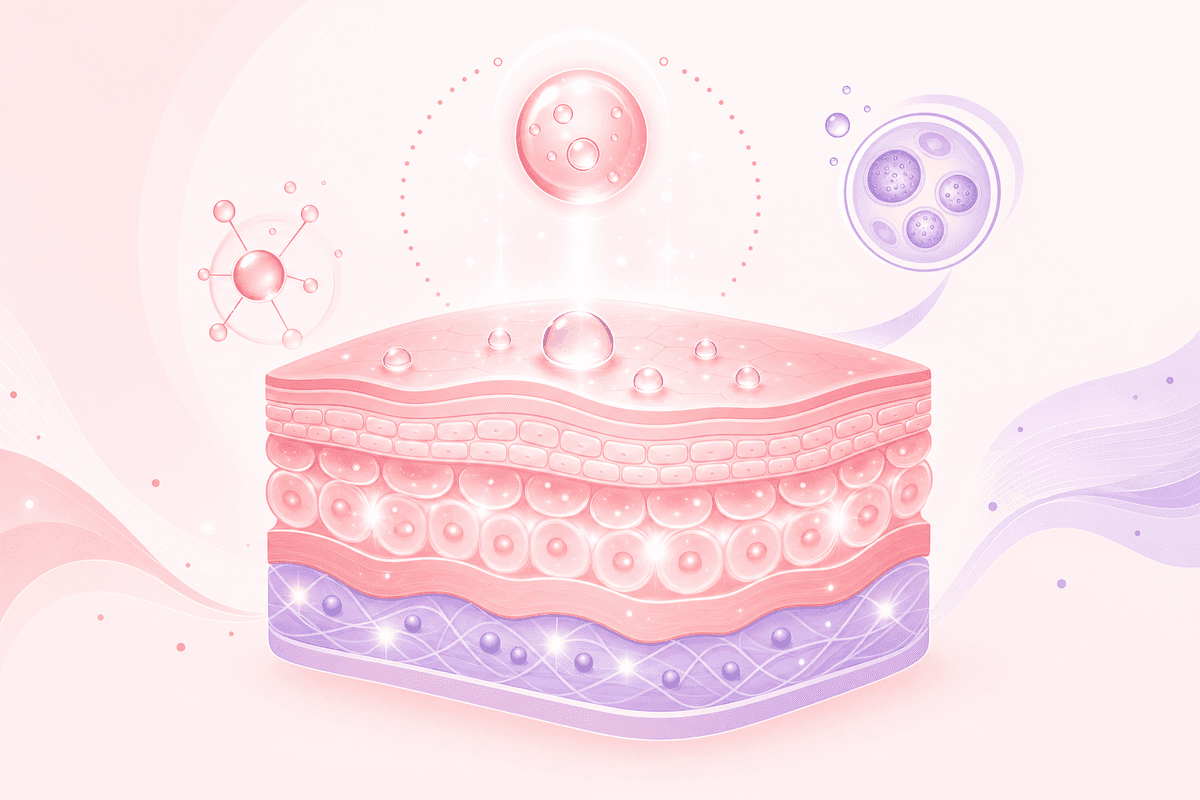
This is a next-generation skin booster treatment that induces skin regeneration and soothing using stem cell-derived nanoparticles.
Exosomes are nano-sized particles secreted by stem cells that act as messengers to transmit signals between cells. Containing various growth factors and proteins, they are attracting attention as next-generation skin boosters that broadly induce skin regeneration, anti-inflammation and soothing, barrier strengthening, and improvements in pores, elasticity, and skin tone.
The growth factors and proteins contained in exosomes induce skin cell activation and improve the skin environment. With powerful anti-inflammatory effects, it is effective in soothing acne, redness, and sensitive skin, and is also used to strengthen the skin barrier and improve pores, elasticity, and skin tone.
It is primarily absorbed using microneedles (MTS) or automatic injectors (Dermashine), or applied after laser treatments to aid absorption. It is frequently used in conjunction with other skin boosters or laser procedures.
The effects usually accumulate when repeated 3 to 5 times at one-month intervals. Consistency is important as cell regeneration takes time.
In Korea, there are no officially approved exosome products as injectables (medicines), so most procedures are performed via topical application and absorption. It is important to verify the safety of the product source and the procedure method.
Rejuran (PN) and Juvelook (PLA) stimulate regeneration and collagen with specific ingredients, while exosomes broadly induce cell activation and anti-inflammation through various growth factors. They are also used together.
Due to its strong anti-inflammatory properties, it is used to soothe acne, redness, and sensitive skin. However, safety and product verification are required.
Yes, it is possible. Many dermatology and plastic surgery clinics in Korea treat foreign patients, and there are also many hospitals that offer consultations or interpretation support in foreign languages such as English, Chinese, and Japanese. On K-Dia, you can compare hospital information and real reviews, and consult directly via chat before your visit.
You can usually return to your daily routine within 1 to 2 days, and the recovery period involves 1 to 2 days for redness. If you are traveling for a short time, it is recommended to schedule your trip with ample time to check your progress immediately after the procedure, and to discuss post-return care methods and precautions with the hospital in advance.
Costs vary significantly depending on the hospital, the scope of the procedure, the equipment and materials used, and the anesthesia method. Since Korea has a well-developed infrastructure for procedures, making consultations and price comparisons relatively easy, it is recommended to compare quotes from multiple hospitals rather than relying on just one. You can check event prices and actual reviews by hospital on K-Dia.
This information is for general understanding only and is not medical advice. Always consult a medical professional before deciding on any procedure.
