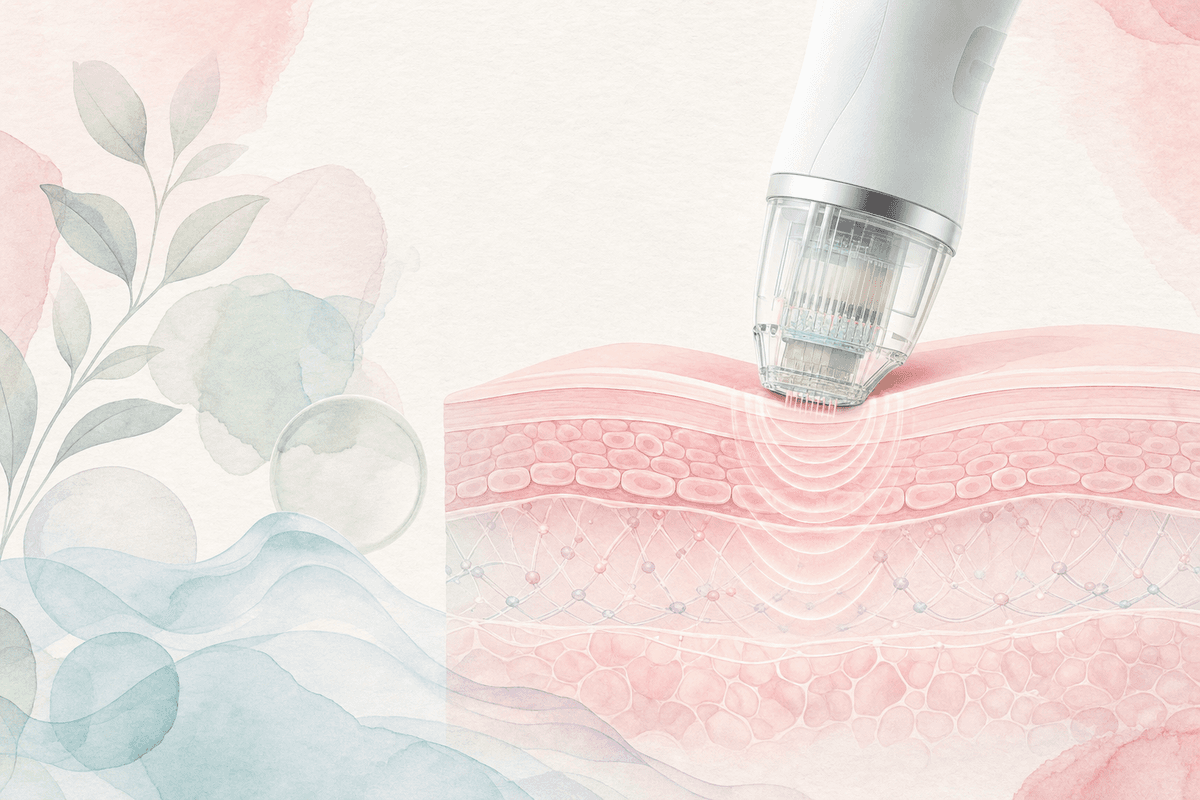
Is it okay to get a peel every day? Why is a 3-day cycle the standard?
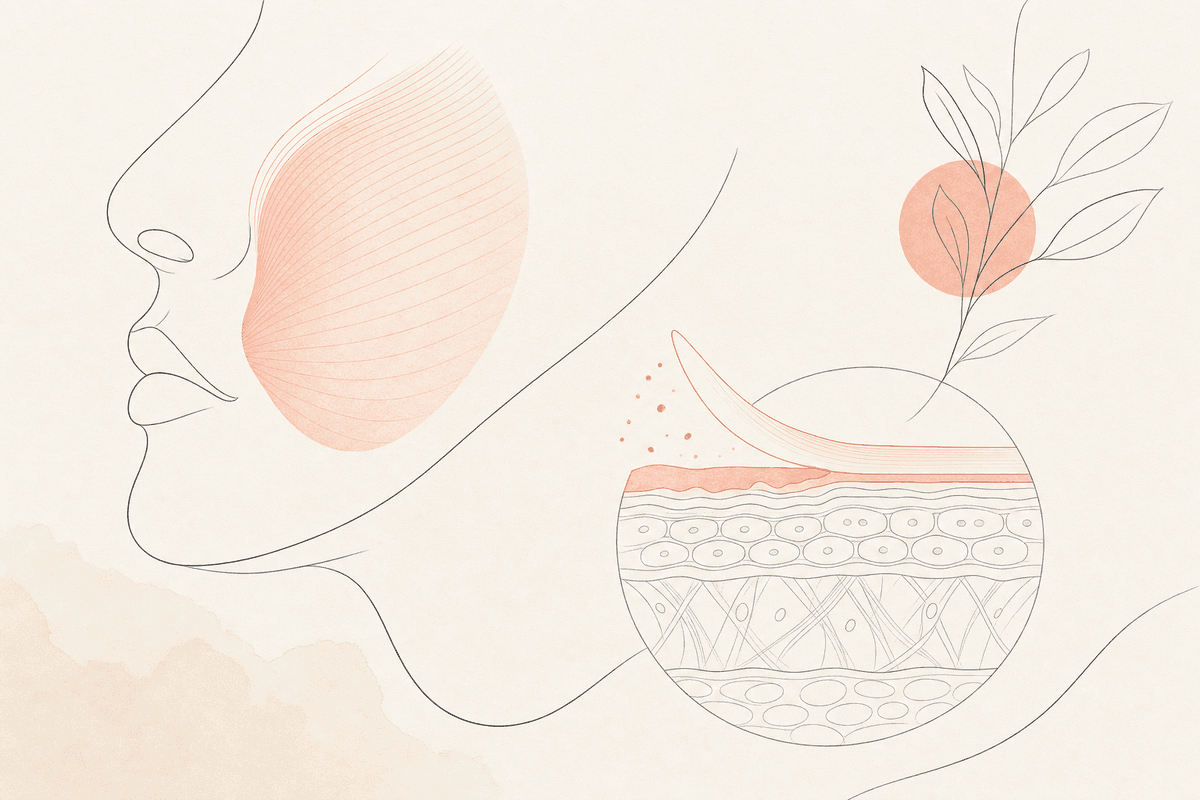
- Daily peeling is dangerous not because of concentration, but because of the regeneration cycle — scientific evidence based on a 72-hour standard
- How to align AHA, BHA, and PHA safe intervals by concentration with skin regeneration cycles
- 2024 home peeling trends and practical routines for managing dead skin cells without damaging the skin barrier
Information as of August 2026
Safe Intervals by AHA·BHA Concentration
- Skin cell turnover cycle: 72 hours
- Minimum interval for AHA 10%: 3 days
- Home peeling side effects increased by 340% compared to 2020
Home Peeling Side Effects Have Tripled in 3 Years
From 2020 to 2023, reported cases of side effects related to home peeling increased by 340% according to the Korean Dermatological Association. The increase was not in the number of products, but in usage frequency.
As daily use of peeling pads or layering serums and toners became commonplace, there was a noticeable increase in patients with abnormally thin stratum corneum. In most cases, redness and stinging were mistaken for "skin shedding."
For peeling, the interval, rather than the concentration, determines the outcome. This article outlines safe intervals by AHA·BHA·PHA concentration and skin regeneration timelines.
Why 3 Days? — The 72-Hour Skin Cell Turnover Cycle
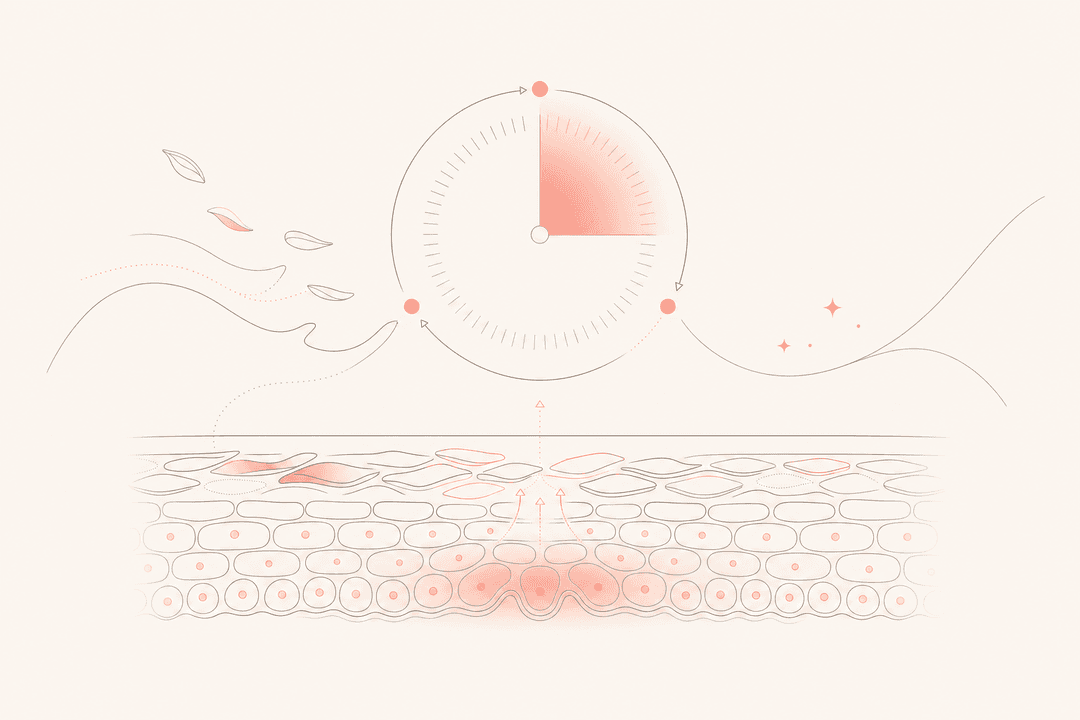
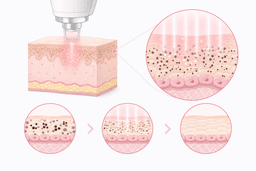
The skin's stratum corneum is composed of about 15-20 layers, and the cycle for the top 1-2 layers to naturally shed is 72 hours. Peeling artificially accelerates this process.
AHA (alpha hydroxy acid), a chemical peeling agent, weakens the bonds between keratinocytes to induce shedding. The problem is that if you peel again before new skin cells have time to surface, the skin barrier becomes thinner.
According to a 2019 study in the Journal of Cosmetic Dermatology, using AHA 10% twice a week (every 3-4 days) maintained normal stratum corneum thickness. However, daily use resulted in an average 18% thinning of the stratum corneum within two weeks.
BHA (beta hydroxy acid, salicylic acid) dissolves in oil and penetrates deep into the pores, making it more irritating than AHA. Even at a 2% concentration, a minimum interval of 3 days is recommended.
- Stratum corneum regeneration cycle: 72 hours (3 days)
- Stratum corneum thickness maintained normally with AHA 10% used twice weekly
- Average 18% reduction in stratum corneum thickness within 2 weeks with daily use
True or False Quiz
Layering AHA 10% toner and BHA 2% serum on the same night is safe as it totals 12% concentration.
Check Answer
X AHA and BHA have different mechanisms of action and are not simply additive. However, layering them on the same day causes simultaneous irritation on the epidermis and deep within pores, tripling the risk of barrier damage. These two ingredients should be used with at least one day in between.
AHA·BHA·PHA: Safe Intervals by Concentration
Even with the same peeling effect, the recommended frequency varies depending on the ingredient and concentration. I explain it to my patients based on three factors.
AHA (Glycolic Acid, Lactic Acid): Below 5% can be used daily, but concentrations above 10% should be limited to twice a week. High concentrations above 15% are for professional treatments and should be avoided in home care.
BHA (Salicylic Acid): 0.5-1% is safe up to three times a week, and 2% is safe twice a week. While those with oily or acne-prone skin want to use it daily, cumulative irritation inside the pores can actually increase sebum production.
PHA (Polyhydroxy Acid): Due to its larger molecular size, it penetrates slowly and is less irritating. Even at 10% concentration, it's safe to use every other day, though the exfoliating effect is less noticeable than AHA.
Caution Using retinol or vitamin C serums on the same day as peeling can cause overlapping irritation. Retinol should generally be used the day after peeling, and vitamin C should be used alone in the morning.
| Ingredient | Concentration | Recommended Frequency | Characteristics |
|---|---|---|---|
| AHA | Below 5% | Daily | Surface exfoliation, suitable for dry skin |
| AHA | 10% | 2-3 times/week | Improves skin tone, 3-day interval essential |
| BHA | 0.5-1% | 3 times/week | Pore care, for oily skin |
| BHA | 2% | 2 times/week | For acne-prone skin, minimum 3-day interval |
| PHA | 10% | Every other day | For sensitive skin, minimal irritation |
2024 Trend: Low Concentration, Multi-Layer Approach
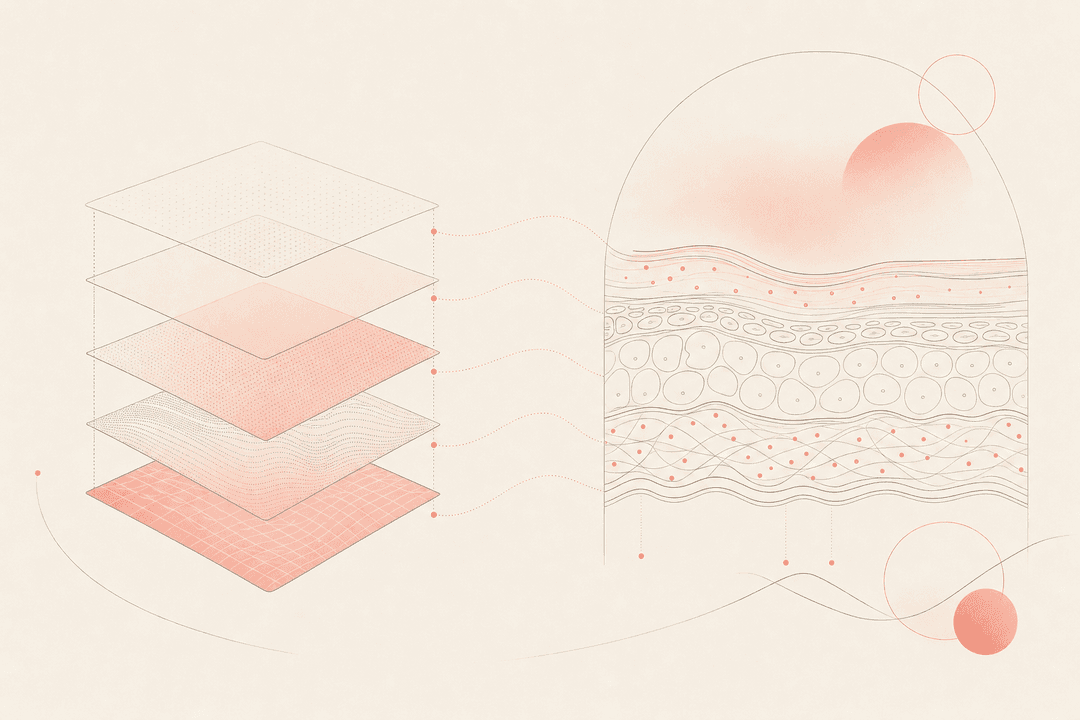
The recent trend in peeling products is applying low concentrations in multiple layers rather than a single high concentration. This involves layering different formulations, such as a 5% AHA toner followed by a 2% BHA serum and then a PHA cream.
Examples include the multi-step peeling lines launched in 2023 by global skincare brands like The Ordinary and Paula's Choice. The principle is to shed layers sequentially over 72 hours, rather than aggressively exfoliating all at once.
However, if you don't calculate the total concentration, it still amounts to over-exfoliation. A 5% toner + 10% serum has the same irritation level as a single 15% product, so it should not be used more than twice a week.
In Korea, CosRX's 'AHA/BHA Clarifying Treatment Toner' (AHA 10% + BHA 0.5%), launched in early 2024, is a prime example. This product also specifies a usage limit of 2-3 times per week.
- Multi-layer approach: Applying low-concentration ingredients in multiple steps
- Total concentration must be calculated — 5% toner + 10% serum = 15% irritation level
- The Ordinary & Paula's Choice launched sequential shedding lines in 2023
New Ingredients: How Do They Differ from Existing Ones?
New peeling ingredients that have emerged since 2022 include mandelic acid and lactobionic acid.
Mandelic acid is an AHA, but its molecular weight (152) is twice that of glycolic acid (76). It penetrates slowly, resulting in less irritation while still providing exfoliating benefits. In clinical trials on sensitive skin, 8% mandelic acid used three times a week for four weeks showed a 40% lower incidence of redness compared to glycolic acid (2021, Clinical, Cosmetic and Investigational Dermatology).
Lactobionic acid, among PHAs, has strong moisturizing properties that reduce dryness after peeling. It's safe to use every other day at a 10% concentration and can even be used on atopic skin.
However, these new ingredients do not mean they can be used "every day." Less irritation means less immediate reaction, not that the skin cell turnover cycle can be ignored.
Clinical Study Mandelic Acid 8% on Sensitive Skin (2021): 40% reduction in redness incidence compared to glycolic acid when used 3 times/week for 4 weeks. Exfoliating effect was comparable.
Key Takeaways: Peeling Frequency for Your Skin

The peeling frequency depends on the right combination of concentration, ingredient, and skin type. The "daily use possible" statement on product packaging is based on minimum concentrations, so you must first observe your skin's reaction.
Start with once a week. If your skin shows no redness or stinging and feels softer after two weeks, increase to twice a week. After another two weeks of observation, adjust to three times a week. Skipping this process and using it daily increases the risk of barrier damage threefold.
If you are combining peeling with active ingredients like retinol, vitamin C, or niacinamide, you should reduce the peeling frequency by one level. For example, even if BHA 1% is suitable for three times a week, limit it to twice a week when used with retinol.
- Starting frequency: Once a week for 2 weeks observation → Twice a week for 2 weeks → Maximum 3 times a week
- When combining with retinol/vitamin C, reduce peeling frequency by one level
- Risk of barrier damage is 3 times higher with immediate daily use
- If redness or stinging persists for over 48 hours, discontinue immediately
AHA vs BHA vs PHA Comparison
AHA (Glycolic Acid, Lactic Acid) [Surface Exfoliation]
- Water-soluble, acts on the epidermis
- Twice to thrice weekly for 10% concentration
- Improves skin tone and texture
- Suitable for dry and normal skin
High concentrations (15%+) are for professional treatments only
BHA (Salicylic Acid) [Inside Pores]
- Oil-soluble, penetrates pores
- Twice weekly for 2% concentration
- Removes sebum and blackheads
- Suitable for oily and acne-prone skin
Daily use may paradoxically increase sebum production
PHA (Polyhydroxy Acid) [Low Irritation]
- Large molecule, slow penetration
- Every other day for 10% concentration
- Combines moisturizing and antioxidant benefits
- For sensitive and atopic skin
Exfoliating effect is less noticeable than AHA
Choosing Your Peeling Frequency Based on Your Situation
If you are new to peeling or have sensitive skin
Start with PHA 10% or Mandelic Acid 5% once a week
Their larger molecular size makes it easier to observe skin reactions, and you can gradually increase to twice a week at 2-week intervals.
If you have oily skin with concerns about pores and sebum
Use BHA 2% twice a week, with at least a 3-day interval
Even if you want to use it daily, cumulative irritation inside the pores can increase sebum production, so adhering to the interval is key.
If you are already using retinol or vitamin C serums
Reduce your peeling frequency by one level to once or twice a week
When active ingredients overlap in irritation, the 72-hour regeneration cycle is disrupted, so use peeling only as a supplement.
If your goal is to improve skin tone
Use AHA 10% twice a week, with a 3-4 day interval
It has the fastest effect on surface exfoliation, but daily use can thin the stratum corneum by 18% within two weeks.
Common Misconceptions
Misconception Stinging is proof that dead skin cells are shedding.
Truth Stinging is a sign of barrier damage. Normal peeling gently removes dead skin cells and subsides within 48 hours. If irritation persists for more than two days, it's a sign of over-exfoliation, and you should stop immediately.
Misconception Low-concentration products are safe for daily use.
Truth Even 5% AHA used daily exfoliates faster than the stratum corneum regeneration cycle (72 hours). The "daily possible" claim on product descriptions is based on minimum concentrations, and usage should be adjusted based on your skin's reaction.
Actions Strictly Prohibited During Peeling
- Layering AHA·BHA·retinol on the same night (doubled irritation leading to barrier destruction)
- Using scrubs or physical exfoliants the day after peeling (excessive loss of stratum corneum due to double exfoliation)
- Continuing use while experiencing redness or stinging, believing it's an "adaptation period" (18% barrier reduction within 2 weeks)
- Daily overlapping use of peeling ingredients from toners, serums, and creams without summing their concentrations
- Going outdoors without sunscreen on the day of peeling or the next day (increased photosensitivity)
Frequently Asked Questions
How many days after peeling can I wear makeup?
With low-concentration peeling (AHA below 5%), you can wear makeup the next day. However, focus on hydration on the night of peeling and the morning after, and opt for lighter bases over high-coverage products. If redness persists for over 48 hours, postpone makeup application.
Which is more irritating, AHA or BHA?
AHA is more irritating on the surface, while BHA is more irritating deeper within. AHA is water-soluble and reacts quickly on the epidermis, while BHA is oil-soluble and penetrates deep into pores. It's safer for sensitive skin to start with low-concentration AHA, and for oily skin, to start with BHA 1%.
I heard peeling pads are okay for daily use?
The "daily possible" claim on product descriptions is based on minimum concentrations. Most peeling pads use AHA below 5% or PHA, but you must sum the total concentration if your toner or serum also contains peeling ingredients. Start with once or twice a week and observe your skin's reaction for two weeks before increasing frequency.
My skin isn't peeling after using a peeling product, does that mean it's not effective?
Even without visible peeling, epidermal cell turnover is occurring. Low-concentration peeling works by dissolving micro-exfoliation to smooth skin texture, so it's normal not to feel a "peeling sensation." Judge effectiveness by changes in skin tone and texture after 2-4 weeks.
What are the most common side effects of peeling?
Contact dermatitis and photosensitivity. Over-exfoliation can cause redness, stinging, dryness, and excessive peeling. The risk of hyperpigmentation increases threefold when exposed to UV rays with residual peeling ingredients. Apply SPF 50+ sunscreen daily the day after peeling, and discontinue use if irritation persists for over 48 hours.
Does combining retinol and peeling double the effectiveness?
It doubles the irritation rather than the effectiveness. Both ingredients promote epidermal cell turnover, so using them on the same day disrupts the skin cell turnover cycle (72 hours). The principle is to use retinol on the night after peeling, and peeling on the days you don't use retinol.
Lumi's Note
Peeling isn't about frequency, but about doing it at the 'right time.' By respecting the 72-hour cycle, you can maintain clean skin and a strong barrier. Come back anytime if you have questions about new ingredients!
This content is for informational purposes only and does not substitute medical advice. Always consult with a specialist before undergoing any procedures.