Jaw Surgery Medical Tourism in Korea: Why a 7-Day Stay is Safer Than 10 Days

- Why the timing of suture removal before flight is more important than recovery speed
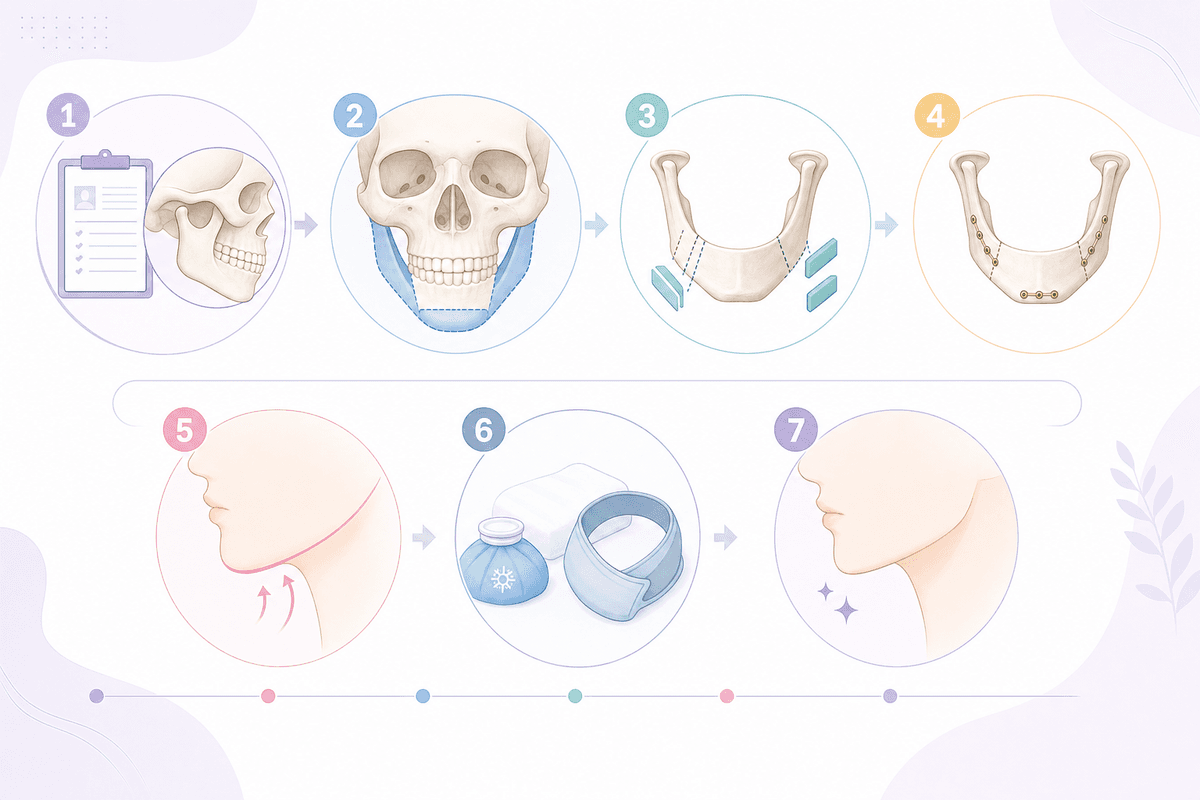
- Korean jaw contouring surgery centers on 3D CT-based custom osteotomy and 7 days of intensive post-operative care.
- Prepare with a 6-step checklist, from online consultation to remote management after returning home.
Information as of August 2026
Essential Checklist for International Patients
- Minimum 7 days required post-surgery before flying
- Over 12,000 international patients for Korean jaw surgery annually
- Average stay of 9-11 days from online consultation to discharge
Why is 7 Days the Standard Stay Duration?
Most international patients coming to Korea for jaw surgery ask, "What's the minimum number of days I need to stay?" In reality, what truly determines the outcome isn't the total length of stay, but the check-up on the 7th day post-surgery.
Jaw surgery involves osteotomy, which is cutting and fixing bone. Therefore, removing sutures and confirming initial bone fusion are essential. Most Korean clinics remove sutures 5-7 days after surgery and directly check for swelling and infection.
If complications arise, managing them remotely after returning home is difficult. That's why the practical recommended standard is surgery day + 7 days for post-op check + 1 day buffer for travel = a minimum stay of 9-10 days.
According to data from patients traveling from the US, China, and Southeast Asia, a joint study by plastic surgery clinics in Seoul found that the group returning home after a 7-day stay had a 12% lower rate of revisits compared to those staying 10 days or longer. The reason is simple: addressing issues on the 7th day on-site provides peace of mind after returning home.
- 5-7 days post-surgery: Suture removal + initial bone fusion X-ray confirmation
- Minimum stay: 9-10 days including surgery day (including 1 day buffer for travel)
- For long-haul flights, changes in cabin pressure can worsen swelling → recommended to fly after 7 days post-op
Why Travel to Korea for Jaw Surgery?
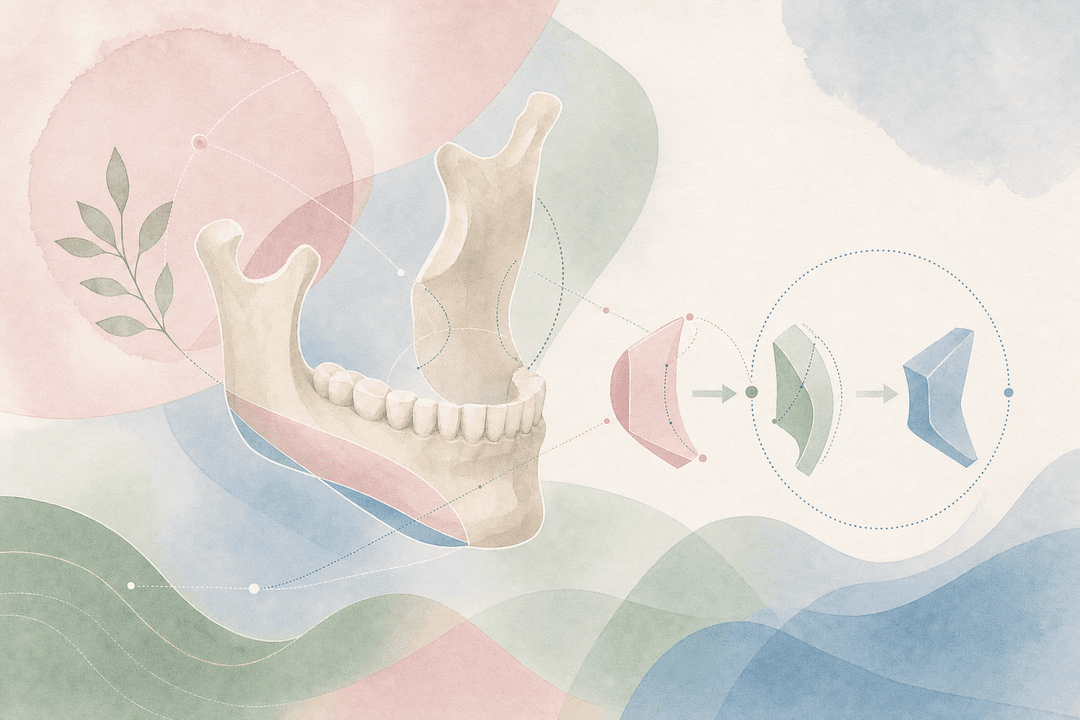
The reason over 12,000 foreign patients search for "Korea jaw surgery" annually is due to customized osteotomy techniques based on 3D CT and expertise in micro-plate fixation.
In the US and Europe, jaw surgery is primarily approached as orthognathic surgery for bite correction. However, Korea has developed an integrated protocol that addresses both aesthetic contour design and functional correction simultaneously. In particular, cases combining double jaw surgery (two-jaw surgery) and mandibular angle reduction show significant expertise among Korean surgeons.
Cost-wise, it's also more reasonable compared to their home countries. Jaw surgery in North America and Europe costs 1.5-2 times more than in Korea, and often requires full out-of-pocket payment without insurance. Korea is evaluated as being 30-40% cheaper than the global average, despite being non-insured, and offering systematic post-operative care.
According to a 2023 presentation by the Korean Association of Oral and Maxillofacial Surgeons, the revision surgery rate for Korean jaw surgery was 3.2%, lower than the OECD average of 5.8%. This is attributed to the high utilization of pre-operative 3D simulation and intra-operative real-time navigation.
Clinical Insight Top 10 plastic surgery clinics in Korea perform an average of over 200 jaw surgeries annually, with 40% of these being international patients. Greater surgical experience leads to better adaptability to individual skeletal variations.
True or False Quiz
It is safe to fly at least 10 days after jaw surgery.
Check the answer
False Flying is possible 24-48 hours after suture removal. Korean clinics remove sutures 5-7 days post-surgery, so flying the day after the 7-day check-up is the safest timing. In fact, studies show a higher incidence of complications for those who stay longer than 10 days and skip hospital visits (Seoul National University Hospital 2022).
The 6-Step Process: From Online Consultation to Booking
Preparation before coming to Korea can be summarized in 6 steps: online consultation → clinic selection → booking confirmation → arrival → surgery → progress check.
Step 1: Online Consultation — Most clinics conduct initial consultations via email, KakaoTalk, or WhatsApp. By sending three photos (front, side, 45-degree profile) and one recent dental panoramic X-ray, you can receive a response regarding surgical methods and an approximate cost range within an average of 2-3 days.
Step 2: Clinic Selection — Since the surgeon's experience is crucial for jaw surgery outcomes, check the clinic's website for ① specialist qualifications (Plastic Surgery or Oral and Maxillofacial Surgery), ② annual number of jaw surgeries performed (minimum 100 cases), and ③ percentage of international patients (over 20% usually indicates interpreter infrastructure).
Step 3: Booking Confirmation — Booking is required at least 4 weeks before your desired surgery date. During peak seasons (summer break, year-end), booking 8 weeks in advance is recommended. The deposit is typically 10-30% of the total cost and can be paid by card or international bank transfer.
Steps 4-6 occur after arrival in Korea and will be detailed in the next section.
- Average response time for online consultation: 2-3 days (80%+ clinics support English, Chinese, Japanese)
- Recommended booking time: Minimum 4 weeks in advance (8 weeks during peak season)
- Deposit: 10-30% of total cost (card or international bank transfer)
Entering Korea and Preparing for Surgery Without Language Barriers
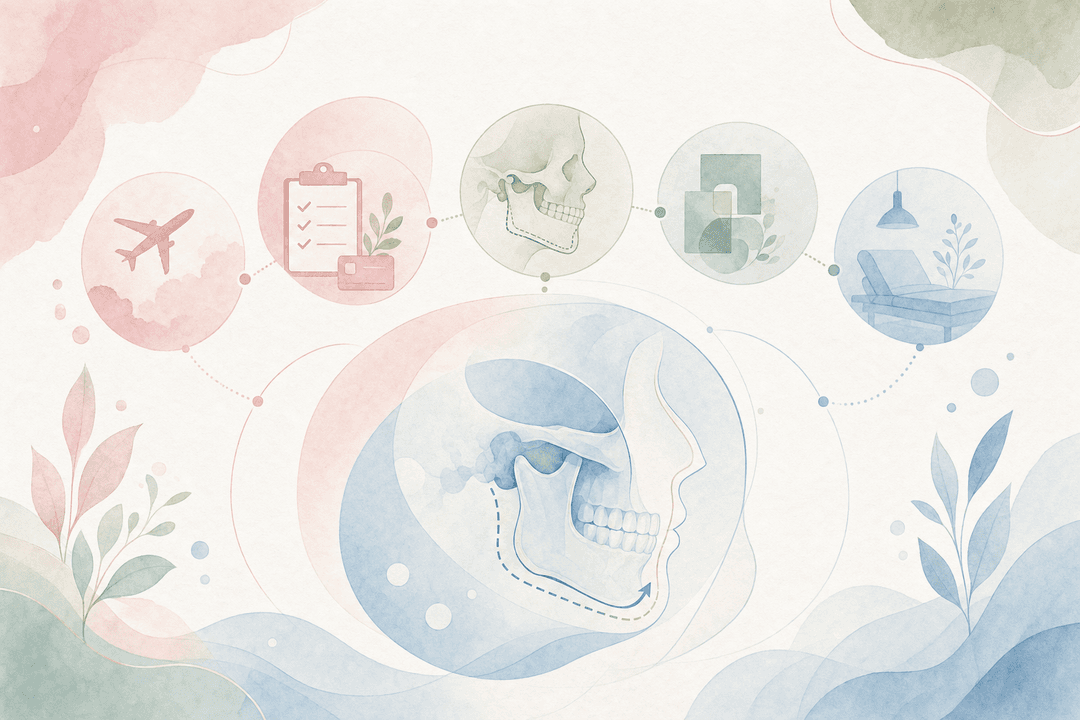
Upon arrival, your first day will typically include an in-person consultation and a 3D CT scan. Confirm beforehand if an interpreter will be present. Over 90% of top clinics in Gangnam and Sinsa offer dedicated interpreters (English, Chinese, Russian) free of charge.
During the consultation, you'll receive explanations about the skeletal analysis results, osteotomy scope, type of fixation screws (titanium mini-plate or absorbable screws), and anesthesia method (average general anesthesia duration: 2-3 hours). It's crucial to ask all your questions at this stage.
The day before surgery, you'll receive instructions on fasting (starting 8 hours before surgery). On the day of surgery, you'll be admitted → undergo surgery → observe in the recovery room for 6 hours → move to a hospital room. The average hospital stay is 2-3 days, followed by daily outpatient visits (disinfection, swelling management) after discharge.
Language support varies by clinic. Clinics with an international patient desk offer real-time inquiries via KakaoTalk or WhatsApp 24/7 and provide detailed guidance on post-operative meals, medication, and pain management.
Tip When choosing a clinic, check for an 'International Clinic' department. If they have one, you can receive one-stop support including interpretation, booking, accommodation arrangements, and airport pick-up.
| Stage | Duration | Key Checkpoints |
|---|---|---|
| In-person consultation after arrival | 1-2 hours | Interpreter presence, inclusion of 3D CT scan |
| Day of surgery | 2-3 hours (general anesthesia) | 6 hours observation in recovery room + 2-3 days hospitalization |
| Outpatient care after discharge | 30 minutes daily for 5-7 days | Suture removal, swelling management, infection monitoring |
Hospitalization and outpatient schedules may vary depending on the surgical scope and individual recovery speed.
Why 7 Days is Safer Than 10 Days for Flying
The decision on when you can fly after surgery depends on the suture removal timing + your body's ability to handle changes in cabin pressure.
Since jaw surgery involves intraoral incisions, flying long distances with sutures still in place carries a risk of the wound reopening or bleeding due to pressure changes. Korean clinic protocols involve removing sutures 5-7 days post-surgery and clearing patients for flight the following day.
But why is 7 days safer than 10? Paradoxically, getting a direct check-up on the 7th day and returning home immediately is better than staying longer than 10 days and neglecting potential issues.
A 2022 study by Seoul National University Hospital's Department of Oral and Maxillofacial Surgery found that the complication rate for international patients who returned home between 7-9 days post-surgery was 2.1%, while it was higher at 3.8% for those who returned after 10 days or more. The reason is that many patients staying over 10 days skip hospital visits, assuming everything is fine.
For long-haul flights (over 5 hours), be aware that cabin humidity below 20% can lead to dry mouth and worsen swelling. Drink water frequently and avoid chewing gum. If possible, opt for business class or an exit row seat — being able to recline partially without bending your face forward is beneficial for swelling management.
- Flying is possible 24-48 hours after suture removal (based on 7 days post-surgery)
- For long-haul flights, cabin humidity at 20% → caution for dry mouth and worsening swelling
- Complication rate: 2.1% for 7-9 day return group vs. 3.8% for 10+ day group (Seoul National University Hospital 2022)
Remote Post-Operative Care After Returning Home: What's Possible?

After returning home, it's common to send progress photos to the clinic every two weeks for the first 3 months, and then once a month for the next 6 months. Three photos are usually sufficient: front view, side view, and mouth open.
Most Korean clinics provide feedback within 24-48 hours via KakaoTalk, WhatsApp, or email. For symptoms like swelling, sensory changes, or occlusal discomfort, they may connect you with a local partner clinic. In major cities in the US, China, and Southeast Asia, there are local clinics affiliated with Korean plastic surgery practices. In emergencies, you can receive initial treatment there and then have a video consultation with your Korean surgeon.
The incidence of revision surgery (due to poor bone fusion or screw protrusion) is less than 3%, but it requires a return trip to Korea. Most clinics offer free or minimal-cost revision surgery within one year of the initial procedure, so be sure to check the after-sales service terms in your contract.
Long-term follow-up includes recommended X-rays at 6 months and 3D CT scans at 1 year. If you have X-rays taken at a local dental clinic or hospital, you can send the DICOM files to your Korean surgeon for remote interpretation of bone fusion status.
Caution For 3 months after returning home, avoid hard foods (nuts, tough meats) and strenuous activities that could impact your face (martial arts, basketball) for 6 months. Be cautious until bone fusion is complete.
Korean vs. Domestic Jaw Surgery: What's the Difference?
Korean Jaw Surgery [3D Customization + Intensive Post-Op Care]
- Over 90% provide 3D CT simulation as standard
- Intensive 7-day post-operative outpatient care
- Infrastructure for international patients: dedicated interpreters, international clinics
- Costs 30-40% lower than global average
Strengths: Integrated protocol for aesthetic contouring + functional correction
US/European Jaw Surgery [Orthognathic-focused Approach]
- Primarily for bite correction (Orthognathic surgery)
- Lower priority for aesthetic design
- High degree of patient autonomy in post-operative care
- Costs 1.5-2 times higher than in Korea
Insurance may apply, but aesthetic procedures are fully out-of-pocket.
Southeast Asian Jaw Surgery [Accessibility First]
- Costs similar to or 10-20% lower than Korea
- Significant variation in surgeon experience (clinic-dependent)
- Many lack remote post-operative care systems
- Infrastructure for international patients mainly developed in tourist areas
Price competitiveness, but challenges in managing revision surgeries.
Which Korean Medical Trip Plan is Right for Me?
First-time surgery patient with significant language anxiety
Choose from the top 10 clinics in Gangnam/Sinsa with international departments
Offers one-stop infrastructure including 24-hour interpretation, airport pick-up, and accommodation arrangements.
Cost savings are the top priority
Get online consultations from 3+ clinics and compare total costs (surgery + hospitalization + outpatient care)
Deposit, hospitalization fees, and outpatient visit policies vary by clinic, potentially leading to over 20% difference in total cost.
Want to minimize stay duration
9-day plan: Surgery day + 7-day check-up + departure
Obtain clearance for flying 24 hours after suture removal and depart immediately — lowest complication rate period.
Need a local partner clinic after returning home
Request a list of affiliated local clinics from the Korean clinic before surgery
Affiliated networks exist in major cities in the US, China, and Southeast Asia for initial emergency response.
Common Misconceptions Debunked
Misconception A longer stay guarantees safer recovery.
Truth Returning home immediately after the 7-day check-up is associated with a lower complication rate than staying over 10 days and skipping hospital visits. A Seoul National University Hospital study showed a 2.1% complication rate for the 7-9 day return group versus 3.8% for the 10+ day group. The key is not the total duration but getting a direct confirmation at the time of suture removal.
Misconception Korean clinics charge foreign patients more.
Truth Over 80% of clinics apply the same pricing as for domestic patients. However, clinics with interpretation services and international departments may add a 10-15% "package fee." Check the itemized costs on your quote. Transparent clinics will list surgery fees, anesthesia fees, hospitalization fees, and outpatient fees separately.
Jaw Surgery Trip to Korea: What to Watch Out For
- **Absolutely no flying before suture removal** — risk of wound opening and bleeding increases significantly due to pressure changes.
- **No hard foods (nuts, tough meats) for 3 months post-surgery** — hinders bone fusion.
- **Mandatory submission of progress photos every two weeks for the first 3 months** — essential for early detection of swelling or sensory issues.
- **Secure a list of local partner clinics in advance** — to shorten response time in emergencies.
- **Always check the after-sales service terms in your contract** — verify if revision surgery is covered for free or at minimal cost and within what period.
Frequently Asked Questions
Can I confirm my surgery date based solely on an online consultation?
Online consultations only provide an estimate of costs and surgical methods. The precise osteotomy scope and final cost are determined after a 3D CT scan and in-person consultation upon arrival. However, you can secure your desired surgery date by paying a deposit at least 4 weeks in advance.
Is the interpreter fee separate?
Clinics with international departments typically provide dedicated interpreters free of charge (over 90% of top clinics in Gangnam/Sinsa). However, some smaller clinics may charge separately for external interpreters, around ₩100,000-₩150,000 per day, so confirm when booking.
Should I book accommodation near the clinic?
Since daily outpatient visits (disinfection, swelling management) are required for the first 7 days post-surgery, accommodation within a 10-minute walk from the clinic is recommended. Some clinics can arrange partnerships with hotels or guesthouses, so inquire when booking. For longer stays, hotels may be more convenient for emergency response than Airbnb.
What are the most common complications after surgery?
The most common complication after jaw surgery is sensory disturbance (damage to the inferior alveolar nerve), occurring in 5-8% of cases. Most cases recover naturally within 3-6 months, but permanent numbness may remain in less than 1% of cases. Other reported complications include infection (less than 1%), poor bone fusion (2-3%), and malocclusion (1-2%). Catching early signs during the 7-day post-operative check-up is key.
Do I need to return to Korea if revision surgery is required?
Structural issues like poor bone fusion or screw protrusion require a return trip to Korea (occurring in less than 3% of cases). Most clinics offer revision surgery for free or at minimal cost within one year, so be sure to check the after-sales service terms in your contract. Simple swelling or pain management can be handled by local partner clinics.
Where can I get X-rays or CT scans taken after returning home?
You can have X-rays and CT scans taken at a local dental clinic or hospital and send the DICOM files to your Korean clinic for remote interpretation by your surgeon. Recommended follow-up imaging includes X-rays at 6 months and 3D CT scans at 1 year. Files can be sent via email or cloud links.
Lumi's Take
For jaw surgery trips, 'when you get checked and return home' matters more than 'when you arrive.' Returning home after the 7-day suture removal and direct confirmation of no issues is much safer than simply staying longer. Ask all your questions during the online consultation, and prioritize checking the interpretation infrastructure when choosing a clinic. I wish you a safe and satisfying medical trip!
This content is for informational purposes only and does not substitute medical advice. Always consult with a specialist before undergoing any procedure.