Three Lip Augmentation Surgical Methods and Criteria for Eligibility
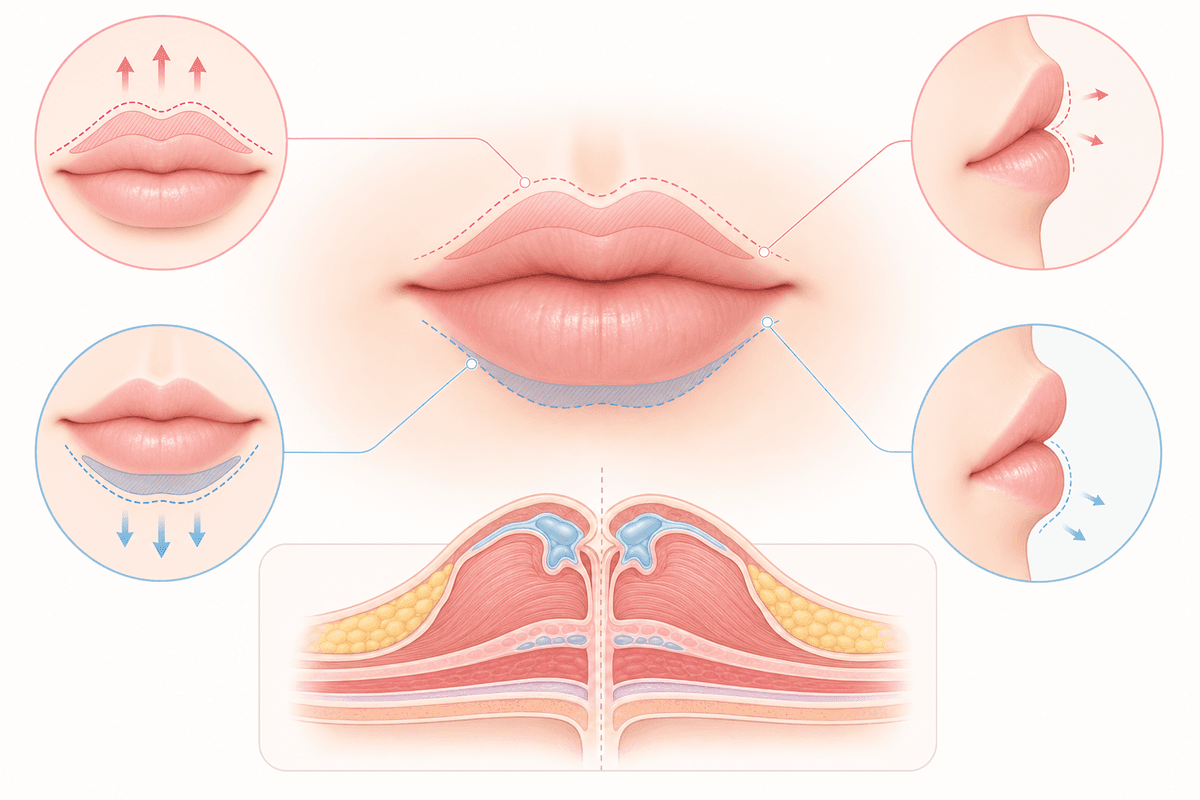
Lip augmentation is categorized into incisional surgery, fillers, and fat grafting, with recovery and duration of effects differing by more than twofold for each. Incisional surgery is the primary choice for lip thickness of 3mm or less, fillers for correcting asymmetry, and fat grafting for permanent volume. HA fillers, such as Restylane Kysse (approved by the FDA in 2023), last 6–12 months, while incisional surgery provides permanent results.
Information as of June 2026
Incision / Filler / Fat Grafting Comparison — There's a Method That's Right for You
- 3 Key Methods
- Average Recovery Period: 3-14 Days
- Duration of Effect: 6 Months - Permanent
Types of Lip Augmentation: Key Differences to Know Before Choosing
"I'll just get fillers once" — this assumption alone can cut your budget and satisfaction with the results by over 30%. Depending on the method, lip augmentation can last anywhere from 6 months to permanently, with recovery times ranging from 3 days to 2 weeks.
Lip augmentation surgical methods are broadly classified into three categories: incision surgery (V-Y advancement, vermilion advancement), filler injections (HA fillers, PLLA fillers), and fat grafting (micro-fat grafting). According to a 2023 presentation by the Korean Society of Aesthetic Plastic Surgery, fillers account for 68% of lip augmentation procedures in Korea, followed by incision surgery at 22% and fat grafting at 10%.
The criteria for choosing each method vary based on current lip thickness, degree of asymmetry, desired duration of results, and acceptable downtime. For lips thinner than 3mm, incision surgery is preferred, while for asymmetry exceeding 2mm between the left and right sides, staged filler injections are the primary choice.
To accurately determine suitability for lip augmentation, a comprehensive evaluation is necessary, considering lip thickness (standard: 8-10mm for the upper lip, 10-12mm for the lower lip), Cupid's bow shape, teeth show (2-3mm of upper incisors visible), and philtrum ratio (13-15mm from the bottom of the nose to the upper lip).
Key Takeaway If you have two or more of the following conditions: lip thickness under 3mm, loss of Cupid's bow, or a decrease in upper lip volume by over 10%, incision surgery should be considered first.
Incision Surgery — For Cases Requiring Permanent Results
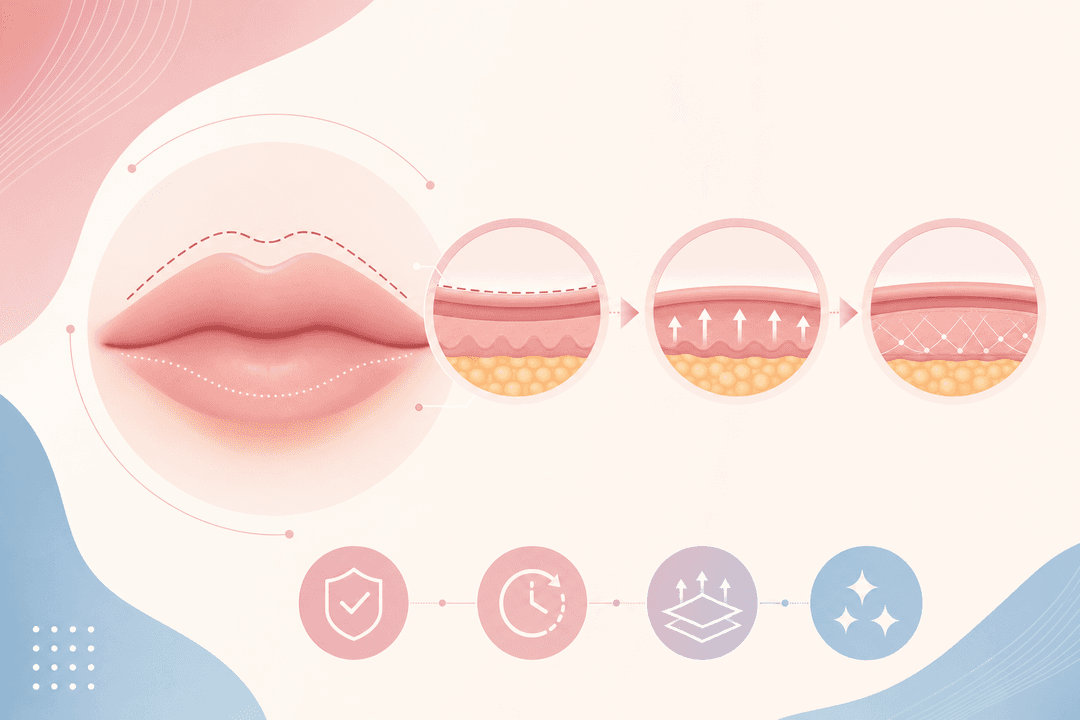
The standard method for incisional lip augmentation is the V-Y advancement technique, which involves incising the inner lip mucosa and everting the vermilion border outwards. The incision line is placed inside the lip mucosa, making it invisible externally. Absorbable sutures of 5-0 or 6-0 are used for closure.
The surgery takes 30-40 minutes per side, or about an hour for both sides simultaneously. It is performed under local or twilight anesthesia. Procedures focusing only on the upper lip account for 62%, while simultaneous upper and lower lip procedures make up 38% (data from the Korean Society of Plastic and Reconstructive Surgeons, 2022).
Suitable candidates include those with naturally thin lips (under 3mm thickness), age-related volume loss (average thickness decrease of 0.5mm per year after age 40), or dissatisfaction even after repeated filler injections. For those with a vermilion border width of less than 5mm, incision surgery can increase it by 2-3mm.
Recovery involves initial swelling for 3-5 days, a return to daily activities in 7-10 days, and complete healing in 2-3 weeks. Sutures are naturally absorbed after 7-10 days, and scars are not visible externally as they are located within the mucosa.
Clinical Insight For 2 weeks after incision surgery, excessive mouth opening (over 3cm) and consuming hot food (over 50°C) can triple the risk of the incision site reopening.
- Incision Depth: Approximately 3-4mm into the mucosal layer
- Suture Material: 5-0 Vicryl Rapide (absorbs in 7-10 days)
- Duration of Effect: Permanent (reoperation rate less than 5%)
- Increase in Upper Lip Thickness: Average of 2.5-3.5mm
Hyaluronic Acid Fillers — The Most Preferred Non-Incisional Method
Hyaluronic acid (HA) based products are the standard for lip fillers. FDA-approved options include Restylane Kysse (2020), Juvéderm Volbella (2016), and Belotero Balance (2011). In Korea, products approved by the Ministry of Food and Drug Safety, such as Yvoire, Celluvisc, and Neuramis, are also widely used.
Lip-specific fillers have a 15-20% lower HA cross-linking density compared to general fillers, providing a softer feel. The inclusion of 0.3% lidocaine minimizes discomfort during the procedure. The standard injection depth is 2-3mm into the submucosal layer, with standard volumes of 0.5-0.8cc for the upper lip and 0.7-1.0cc for the lower lip.
Suitable candidates include those seeking correction of lip asymmetry (1-3mm difference between sides), refinement of the Cupid's bow shape, and temporary volume enhancement, particularly individuals in their 20s and 30s. Compared to incision surgery, results are immediately visible, and the short downtime of 2-3 days makes it a popular choice for working professionals.
The duration of effect ranges from 6-12 months depending on the product. Restylane Kysse has reported data showing an average duration of 9 months, while Juvéderm Volbella lasts for 12 months. It can be immediately dissolved with hyaluronidase enzyme, allowing for correction of overfilling within 72 hours.
Caution Excessive lip movement (kissing, using a straw) within 6 hours after the procedure can increase the risk of filler migration, leading to asymmetrical results.
| Product Name | HA Concentration | Duration of Effect | FDA Approval Year |
|---|---|---|---|
| Restylane Kysse | 20mg/ml | 9 months | 2020 |
| Juvéderm Volbella | 15mg/ml | 12 months | 2016 |
| Belotero Balance | 22.5mg/ml | 6-9 months | 2011 |
Fat Grafting — Balancing Permanent Volume with Naturalness
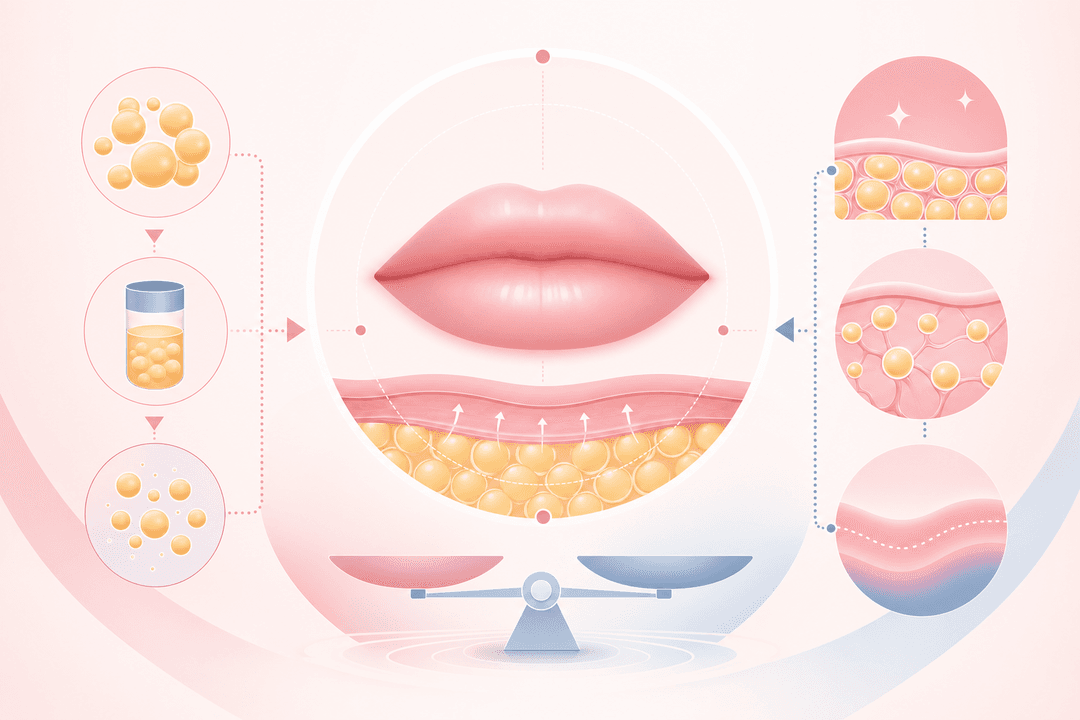
Lip fat grafting (micro-fat grafting) involves harvesting autologous fat from areas like the abdomen or thighs, purifying it, and then injecting it into the lips. The abdomen is the source in 67% of cases, and the inner thigh in 28%. Purification is done using a centrifuge (3000rpm for 3 minutes).
To account for the graft survival rate (60-70%), 130-150% of the target volume is injected. Standard volumes are 1.5-2.0cc for the upper lip and 2.0-2.5cc for the lower lip. Injection is performed using a 23-25 gauge cannula, with multi-layer dispersion between the submucosal and muscle layers.
Suitable candidates include those who find the repeated cost of fillers burdensome, individuals experiencing age-related volume loss (over 40), and patients who prefer using their own tissue. The effects are semi-permanent after fat survival, and lip volume will fluctuate within a 3-5% range with changes in body weight.
Recovery involves swelling for 5-7 days and bruising for 7-10 days, with complete engraftment taking 3 months. A volume reduction of 30-40% occurs in the first 3 months before stabilization, leading to a 35% rate of additional touch-up procedures 3-6 months after the initial treatment.
Tip When fat is harvested from the abdomen, studies suggest that abstaining from smoking and discontinuing Vitamin E supplements for 2 weeks prior to the procedure can increase fat graft survival by 15%.
- Fat Graft Survival Rate: Average 60-70%
- Initial Overcorrection Volume: 130-150% of target
- Engraftment Stabilization Period: 3 months
- Additional Procedure Rate: 35%
Criteria for Determining Suitability — Branching by Age and Lip Condition
For individuals in their 20s, fillers are the primary choice for 87% of cases, aiming for temporary volume enhancement and contour correction. Small injections of 0.5-0.8cc are preferred for natural-looking volume increase. If the goal is to emphasize the Cupid's bow and shorten the philtrum, a technique focusing on the central part of the upper lip is applied.
In their 30s, the demand for correcting lip asymmetry increases, with a 42% rate of combining fillers with Botox (for lip corner lift). Due to downtime constraints from professional life, fillers remain highly preferred, but the desire for longer-lasting results leads to a rise in fat grafting to 18%.
For those aged 40 and above, age-related volume loss and blurred lip contours are primary concerns, with incision surgery (35%) or fat grafting (28%) being popular choices. If lip thickness has decreased to below 3mm, incision surgery alone or in combination with fillers is recommended.
If two or more of the following apply: vermilion border width less than 5mm, upper lip thickness less than 7mm, or loss of Cupid's bow, incision surgery should be considered first. For asymmetry exceeding 2mm while overall thickness remains within the normal range (8-12mm), staged filler correction is effective.
Key Takeaway Your optimal method will differ based on your lip thickness, degree of asymmetry, and available downtime. Check K-Dia to find clinics offering 1:1 consultations.
Recovery Period and Precautions — Differences by Method

Fillers allow for an immediate return to daily activities, though initial swelling and bruising may occur for 2-3 days. On the day of the procedure, consuming hot food (over 50°C), using saunas, and excessive facial expressions can increase the risk of filler migration.
Incision surgery requires dietary restrictions for 7-10 days during the suture absorption period (liquid diet for 3 days, soft foods for 1 week). Mouth opening should be limited to under 3cm for 2 weeks to ensure stabilization of the incision site. Returning to work is typically possible after 10-14 days.
Fat grafting involves swelling for 5-7 days and bruising for 7-10 days, accompanied by pain at the fat harvesting site for 3-5 days. To maximize survival rates, it is essential to abstain from smoking, minimize pressure, and maintain body weight for 2 weeks post-procedure.
For all methods, consuming alcohol for one week after the procedure can double the duration of swelling, and smoking can reduce graft survival rates by 20-30% due to impaired blood flow. If you are taking anticoagulant medications (aspirin, warfarin), consult with your doctor 7-10 days prior to the procedure to determine if you should stop taking them.
Caution Rapid weight loss (over 3kg in 2 weeks) after fat grafting can reduce graft survival rates by 15-20%. Maintaining your weight for 2 weeks before and after the procedure is crucial.
Key Comparison of the 3 Lip Augmentation Methods
Incision Surgery [Permanent]
- Effect: Permanent (reoperation rate < 5%)
- Recovery: 7-10 days (full recovery 2-3 weeks)
- Cost: ₩2,000,000 - ₩4,000,000
- Suitable for: Thickness < 3mm, ages 40+
First choice for those desiring permanent results or finding repeated fillers burdensome
HA Filler [Non-Incisional]
- Effect: 6-12 months (varies by product)
- Recovery: 2-3 days (immediate return to daily activities)
- Cost: ₩400,000 - ₩800,000 (per 1cc)
- Suitable for: Asymmetry correction, ages 20-30s
Preferred by working professionals needing minimal downtime and immediate results
Fat Grafting [Autologous Tissue]
- Effect: Semi-permanent (survival rate 60-70%)
- Recovery: 7-10 days (stabilization 3 months)
- Cost: ₩1,500,000 - ₩3,000,000
- Suitable for: Burden of repeated fillers, ages 40+
Suitable for those preferring autologous tissue and long-term cost savings
Misconceptions Debunked
Myth Fillers last permanently after just one session.
Truth Hyaluronic acid fillers are naturally broken down by the body and last 6-12 months. Permanent fillers (like Artecoll, Aquamid) were withdrawn from FDA approval in the mid-2000s due to granuloma and adverse reaction side effects and are not recommended in Korea today. For long-term effects, incision surgery or fat grafting is appropriate.
Myth You can eat freely immediately after lip filler injections.
Truth Excessive lip movement (hot food, using straws, strong facial expressions) within 6 hours after filler injection can cause the filler to migrate from the injection site, leading to asymmetrical results. It is recommended to consume lukewarm liquid food on the day of the procedure and soft foods for 2-3 days. It is also safe to avoid kissing or excessive lip contact for 48 hours.
Absolute Prohibitions Before and After Lip Augmentation
- 7-10 days before procedure: Discontinue anticoagulants like aspirin/ibuprofen, and circulation aids like Vitamin E/Omega-3 (increases risk of bleeding/bruising).
- Day of procedure: Absolutely no alcohol or smoking (doubles swelling, increases infection risk).
- Within 6 hours after procedure: No hot food (over 50°C), no straw use, no excessive mouth opening (risk of filler migration).
- 1 week after procedure: No saunas, steam rooms, or exposure to high-temperature environments (prolongs swelling, accelerates filler breakdown).
- 2 weeks after incision surgery: Limit mouth opening to under 3cm, avoid hard foods (risk of incision site reopening).
Frequently Asked Questions
Can I go to work immediately after lip filler injections?
Fillers allow for an immediate return to daily activities, but initial swelling and bruising may occur for 2-3 days. If you have an important event (interview, presentation, etc.), it is safer to schedule the procedure 3-5 days in advance.
What is the cost difference between incisional lip surgery and fillers?
Incision surgery costs ₩2,000,000 - ₩4,000,000 (one-time), while fillers cost ₩400,000 - ₩800,000 (per 1cc, lasts 6-12 months). Repeating filler injections three times over two years can cost ₩1,200,000 - ₩2,400,000, making incision surgery potentially more cost-effective in the long run. However, individual variations exist, and consultation with a specialist is necessary.
If my weight changes after fat grafting, will my lips change too?
Yes, the grafted fat will fluctuate within a 3-5% range with changes in body weight. Significant weight gain (over 5kg) may make lip volume appear excessive, while rapid weight loss can reduce volume. Maintaining your weight before and after the procedure is important.
What are the potential side effects of lip augmentation?
Fillers carry risks of bruising/swelling (2-7 days), asymmetry, and vascular occlusion (rare but potentially fatal). Incision surgery can lead to infection, dehiscence, and scarring (within the mucosa). Fat grafting may result in graft failure, nodules, or asymmetry. For all methods, if swelling, pain, or fever persists for more than a week after the procedure, seek immediate medical attention.
If I don't like the results after filler injection, can it be removed immediately?
Hyaluronic acid fillers can be dissolved by 80-90% within 24-72 hours by injecting hyaluronidase enzyme. However, temporary swelling may persist for 2-3 days after enzyme injection, and it is safe to wait 1-2 weeks before re-injection after dissolution.
When can I kiss or wear makeup after lip augmentation?
Fillers allow for kissing after 48 hours, but it is safer to do so gently for the first week. Incision surgery allows kissing after suture removal (7-10 days). Makeup can be applied 24 hours after fillers and 5-7 days after incision surgery. Use gentle lip products.
This content is for informational purposes only and does not substitute for professional medical advice or diagnosis. The suitability and effectiveness of lip augmentation methods vary depending on individual lip thickness, degree of asymmetry, and health status. It is essential to have a thorough consultation with a specialist before undergoing any procedure. All procedures carry potential risks, so please familiarize yourself with safety information.