AI Treatment Recommendation vs. Specialist Consultation: What Should Come First for My Skin?

- AI filters first, and the doctor makes the final design, shortening the stay time by 23%.
- AI excels at quantifiable condition assessments, while specialists are strong in designing complex conditional priorities.
- Even with the same facial photo, AI judgment results fluctuate by 12-38% depending on lighting conditions.
Information as of October 2026
Judgment, Planning, and Role Allocation
- Average AI analysis time: 45 seconds
- Average specialist consultation: 15 minutes
- Judgment accuracy variance by condition: 12-38%
A Single Selfie is Changing Consultation for Procedures
Looking at my pores in the mirror, I suddenly wonder. What would my current skin condition be, numerically?
I open an app, take a selfie, and within 45 seconds, it tells me my elasticity is 62 points and pigmentation covers 18 areas.
The problem starts here. Should I take these numbers to a clinic for a consultation, or should I look into AI-recommended procedures first? The order is confusing.
To get straight to the point, AI judgment and specialist consultation handle different stages. It's not about superiority, but about division of labor.
What AI Excels At: Quantifiable Condition Assessment
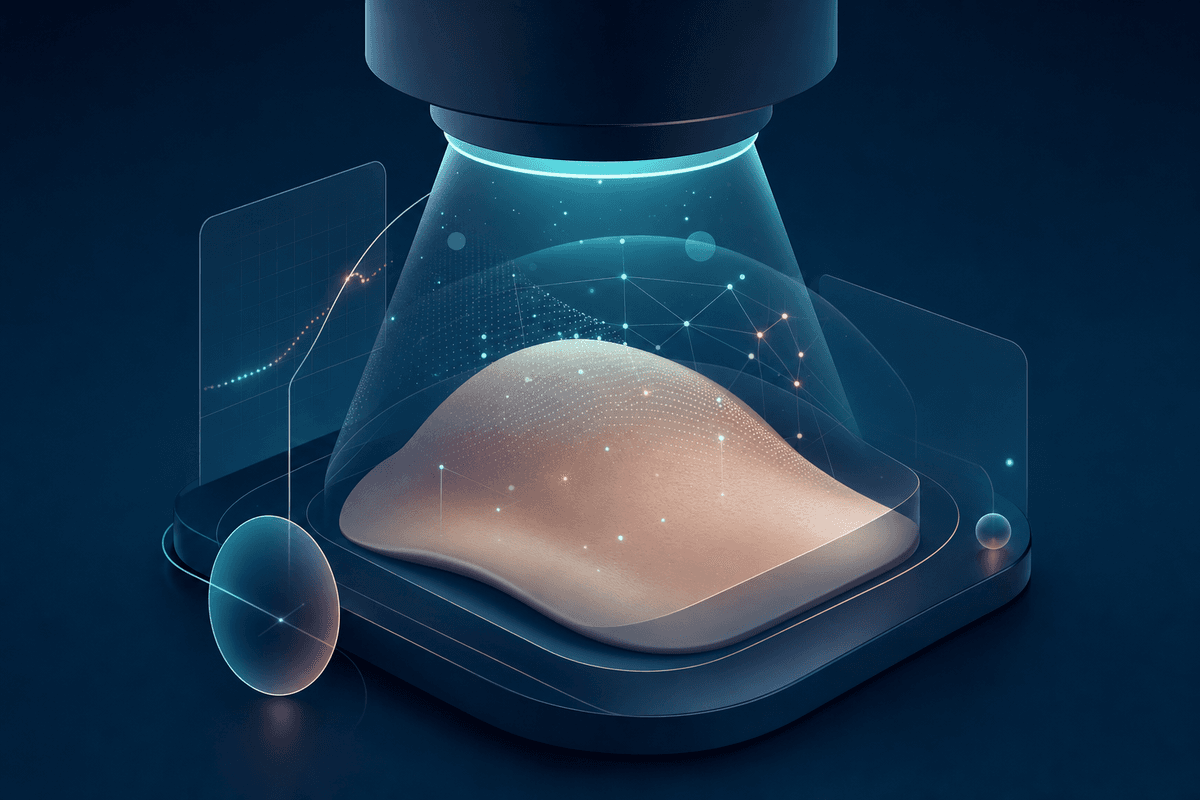
AI skin analysis reads the face using a grid coordinate system. It excels at assessing measurable items like pore size, pigmentation distribution, and wrinkle depth, down to the 0.1mm level.
As of 2023, the pore recognition accuracy of 10 commercial apps is reported to be in the range of 82-94% in environments with controlled lighting.
However, results can fluctuate when lighting changes.
The industry standard variance is typically presented as a 12-38% difference in pigmentation scores when the same face is photographed under natural light, white LED, and yellow lighting.
AI only reads the input image; it doesn't know why your skin is the way it is.
Caution The scores from a single photo are a 'snapshot of the current condition,' not a diagnosis of the cause. Even with the same score, the necessary procedure can vary significantly depending on UV exposure, hormonal changes, or past treatment history.
True or False Quiz
If AI skin analysis scores are the same, the recommended procedures are also the same.
Check the answer
X Even with the same score, the required procedure varies greatly depending on skin thickness, recovery ability, age, and previous treatment history. AI only reads current metrics and cannot assess individual context.
What Specialists Excel At: Planning Priorities and Complex Judgment
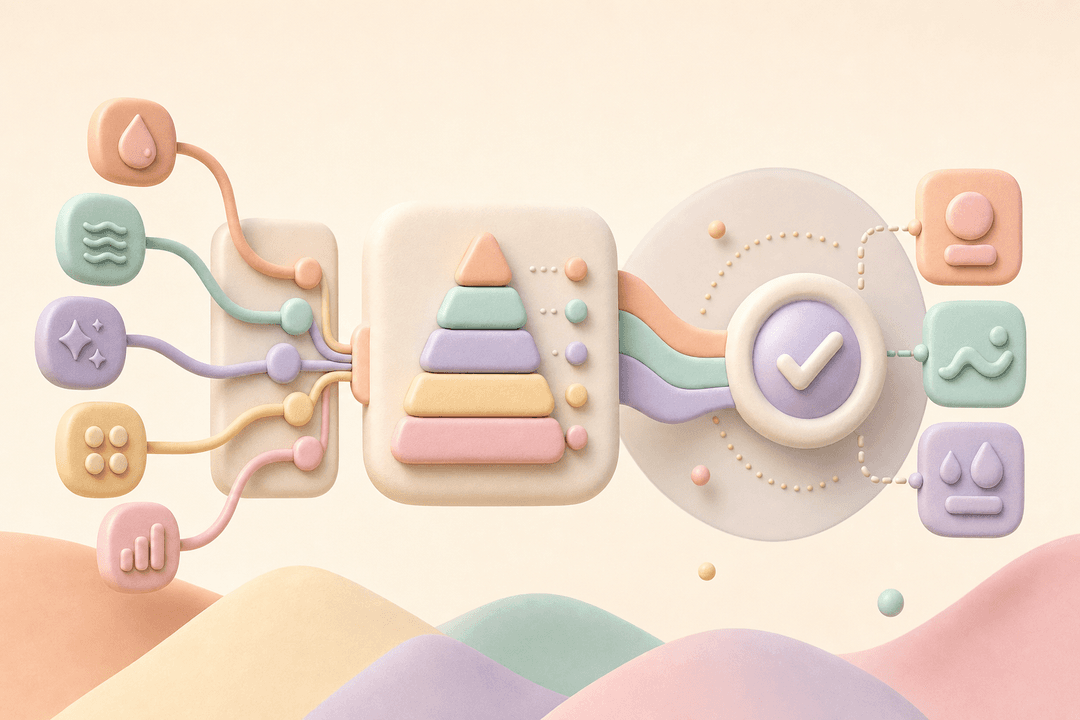
The core of a specialist consultation is determining 'what to do first.' Even if AI identifies 18 areas of pigmentation, decreased elasticity, and enlarged pores simultaneously, actual procedures must be done one by one, in sequence.
Prioritizing based on skin thickness, recovery ability, budget, and schedule is an area AI cannot handle.
For example, even with the same pigmentation score of 75 points, the laser intensity will differ for the thin skin of a 20-year-old versus the thicker skin of a 40-year-old.
If you are planning a pregnancy or have an important event next month, the type of procedure itself might change due to recovery time considerations. This kind of contextual judgment still remains a human task.
- Average AI analysis items: 12-18
- Variables considered during specialist consultation: 30+
At Which Stage Do We Use What?
It is most efficient to proceed in the order of AI assessment → specialist consultation. Using AI analysis to organize the current condition numerically can reduce consultation time by an average of 23%, allowing doctors to focus on planning rather than just assessment.
However, AI results should be used only as 'preparation material for consultation,' not as the basis for deciding on procedures.
Conversely, problems arise if procedures are decided solely based on AI recommendations. Information like allergy history, current medications, and past treatment history is unknown to AI but can determine the feasibility of a procedure.
It is crucial to adhere to the role division where AI serves as the starting point, and the specialist provides the final check for safety.
- Average consultation time reduction with AI use: 23%
- Judgment error range due to lighting, angle, or makeup: 12-38%
Comparison of Roles: AI Assessment vs. Specialist Consultation
AI Skin Analysis [Condition Assessment]
- Time required: 45 seconds - 2 minutes
- Strengths: Measuring quantifiable items
- Weaknesses: Cannot assess cause or context
- Use: Organizing current condition before consultation
Result variance of 12-38% depending on lighting and angle conditions
Specialist Consultation [Planning & Judgment]
- Time required: 15-30 minutes
- Strengths: Planning priorities, judging complex conditions
- Weaknesses: Waiting time, cost involved
- Use: Final procedure decision, safety check
Considers 30+ variables including medical history, recovery, schedule, etc.
Misconceptions
Misconception If AI scores are high, no procedure is needed.
Truth Scores only reflect the current condition and do not predict future changes. Even with an elasticity score of 80 today, preventive care might be necessary if you have significant sun exposure or are a smoker. AI only reads 'this very moment.'
Risks of Using AI Procedure Recommendations
- Do not book recommended procedures directly without consulting a specialist. AI is unaware of allergies, current medications, or past treatment history.
- Do not trust scores from a single photo as a diagnostic report. The same skin can be assessed 12-38% differently depending on lighting, angle, or makeup.
- Before uploading facial photos to an app, check the privacy policy. Be sure to verify the storage location, deletion policy, and whether data is shared with third parties.
Frequently Asked Questions
Can I trust AI analysis results to decide on a procedure?
Use AI results only as preparation material for your consultation. The final decision must be made after consulting with a specialist. Factors unknown to AI, such as allergies, medical history, and medications, can determine the feasibility of a procedure.
What should I do if the AI recommendation differs from the doctor's opinion?
Follow the specialist's judgment. AI only looks at current condition metrics, but a doctor comprehensively plans priorities considering skin thickness, recovery ability, schedule, and budget.
How are the facial photos uploaded to the app processed?
This varies by service. Check the privacy policy for storage location (domestic/international servers), retention period, and deletion policy before using the service.
References
- Trends in AI-Based Skin Analysis Technology — Korea Health Industry Development Institute, 2023
- Guidelines for Evaluating the Accuracy of Medical AI — Ministry of Food and Drug Safety, 2022
Lumi's Note
AI scores are tools that translate the vague feelings we have in front of the mirror into numbers. How we interpret those numbers is still up to us. The answer tailored to your skin emerges at the intersection of assessment and planning. Come back anytime if you discover an app you're curious about.
This content is for informational purposes only and does not substitute medical advice. AI analysis results are reference indicators, and procedure decisions must always be made after consulting with a specialist.