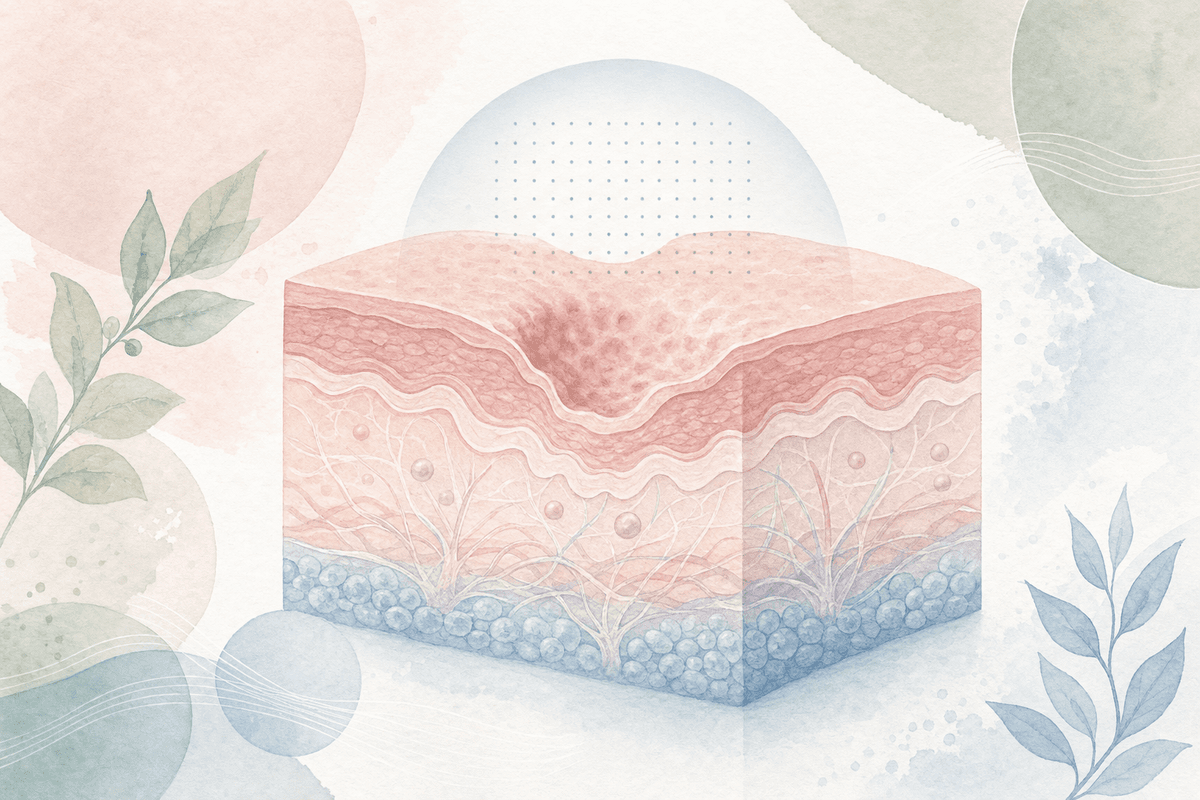
Peeling Effect: 2 Weeks vs. 3 Months — The Difference Lies in Stratum Corneum Thickness
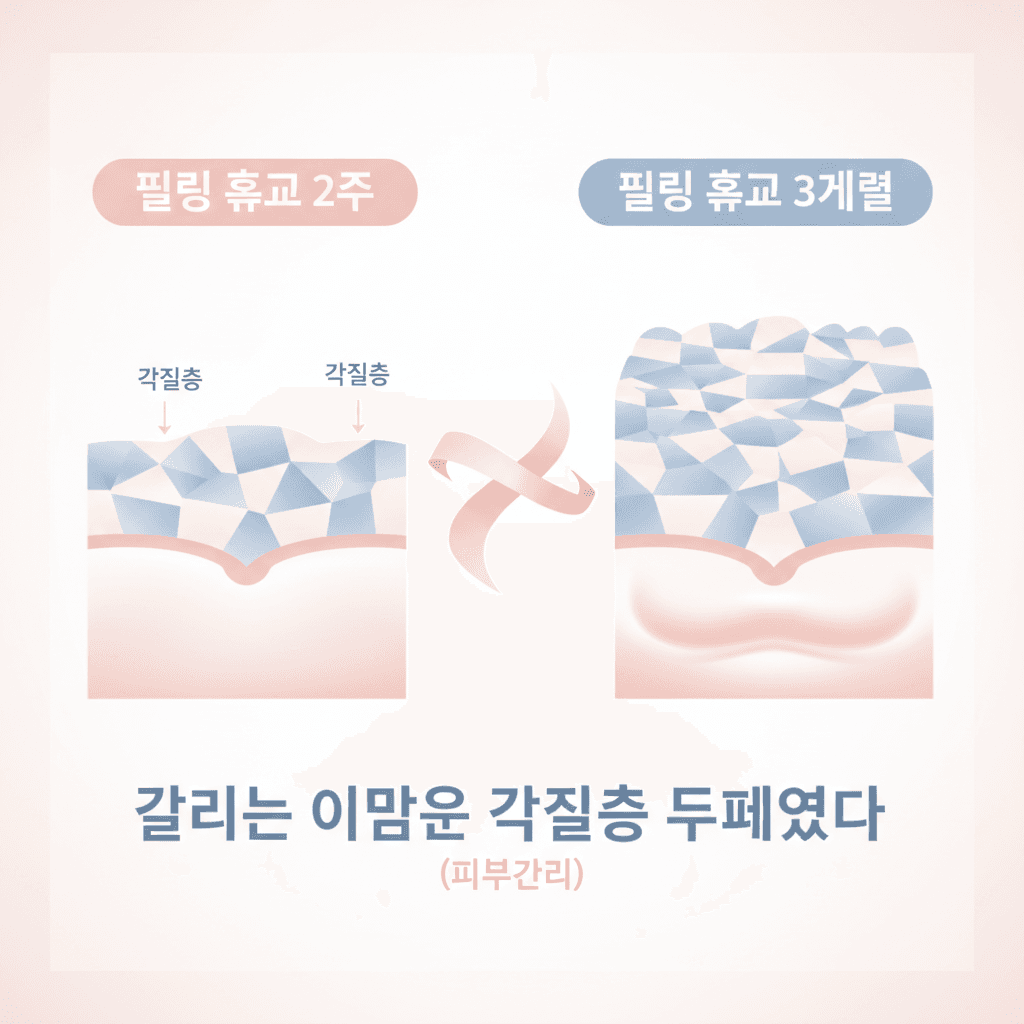
- The duration of the peeling effect is determined by the penetration depth of the acid and the thickness of the stratum corneum, and even with the same concentration, it can range from 2 weeks to 3 months depending on individual skin thickness.
- AHA 30% lasts for an average of 3 weeks, and TCA 15% lasts for 8-12 weeks, but to exceed the keratinization cycle (28 days), it must reach the upper dermis.
- According to a 2023 report by the Korean Dermatological Association, home care (retinol 0.025% 3 times a week) after peeling can extend the duration by 1.4 times.
Information as of July 2026
Variables Determining Duration
- Epidermal peeling: 2-3 weeks
- Dermal peeling: 2-4 months
- A 0.02mm difference in stratum corneum thickness triples duration
The Question That Started in Front of the Mirror
A week after my peel, my skin in the mirror was definitely different. Makeup applied smoothly, and my pores looked smaller. But a month later, looking in the mirror again, it seemed like everything had gone back to how it was.
Some people find their peeling effects disappear in just two weeks, while others maintain them for over three months. Why the difference when receiving the same treatment? The deciding factor here isn't the type of peel, but the thickness of the stratum corneum.
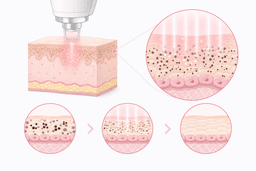
The duration of a peel's effect is determined by how deep into the skin the acid penetrates. If it only exfoliates the epidermis, the effect lasts 2-3 weeks; if it reaches the upper dermis, it lasts 2-4 months. The difference in stratum corneum thickness, ranging from 0.02-0.05mm among individuals, creates this gap.
Peeling Types and Their Effects: What the Data Says
The median duration of effectiveness for a 30% glycolic acid (AHA) peel is 21 days. This was reported in a 2022 multicenter study (n=412) published in the Journal of the American Academy of Dermatology (JAAD). In contrast, 20% salicylic acid (BHA) lasted 28 days, and 15% TCA (trichloroacetic acid) lasted 8-12 weeks.
The reason for the varying durations is penetration depth. AHA, being water-soluble, softens and dissolves the stratum corneum but doesn't penetrate deeply into the dermis. BHA, being oil-soluble, can penetrate into pores to remove keratin around the sebaceous glands. TCA induces collagen remodeling by coagulating proteins and reaching the upper dermis (papillary layer).
Skin regenerates keratinocytes in a 28-day cycle. Peels that only remove the epidermis have a shorter duration than this cycle, while peels that stimulate the dermis maintain their effects for 8-12 weeks as new collagen forms.
| Peel Type | Concentration | Penetration Depth | Duration of Effect |
|---|---|---|---|
| Glycolic Acid (AHA) | 30-50% | Stratum Corneum - Upper Epidermis | 2-3 weeks |
| Salicylic Acid (BHA) | 20-30% | Stratum Corneum - Inner Pore Walls | 3-4 weeks |
| TCA | 10-15% | Papillary Dermis | 8-12 weeks |
| Jessner's Peel | Combination | Full Epidermis | 4-6 weeks |
Duration may vary depending on individual skin thickness, care habits, and treatment intensity.
- AHA 30% peel: Removes stratum corneum, lasts 2-3 weeks
- BHA 20%: Dissolves pore keratin, lasts 3-4 weeks
- TCA 15%: Stimulates dermal collagen, lasts 8-12 weeks
- To exceed the 28-day keratinocyte cycle, reaching the upper dermis is essential
True or False Quiz
The reason peeling effects disappear in two weeks is due to weak treatment intensity.
Check the answer
X The duration of peeling effects is determined not by treatment intensity, but by the depth the acid reaches. Peels that only affect the epidermis have effects that fade faster than the keratinocyte cycle (28 days), while peels that stimulate the dermis have longer-lasting effects due to collagen remodeling (8-12 weeks). Even with high concentrations, if the penetration depth is shallow, the skin can return to its original state within two weeks.
0.02mm Stratum Corneum Thickness Triples Effectiveness
Some people experience effects from 30% glycolic acid lasting three weeks, while for others, it disappears in just 10 days. These figures come from 2021 MFDS clinical data (n=238). The difference was attributed to stratum corneum thickness.
Individuals with a stratum corneum thickness of 0.02mm and those with 0.05mm will have different acid penetration depths even with the same peel concentration. A thinner stratum corneum allows the acid to pass through more quickly, acting deeper into the epidermis, whereas a thicker stratum corneum can deplete the acid on the surface.
Stratum corneum thickness varies with age, UV exposure, and dryness. The average thickness for those in their 20s is 0.015mm, while for those in their 40s, it's 0.035mm. Dry skin tends to accumulate a thicker stratum corneum, leading to shorter peel effects, while oily skin has a thinner layer, resulting in longer-lasting effects.
Clinical Insight A 2023 report by the Korean Dermatological Association found that thinning the stratum corneum with a pre-peel exfoliant (3 days of 10% urea cream) increased the duration of the same concentration peel by an average of 1.3 times (from 21 days to 27 days).
Post-Peeling Skin Changes: A Step-by-Step Timeline
Epidermal Peels (AHA/BHA): Mild redness for 2-3 days immediately after the procedure as the skin exfoliates. Skin texture improvement peaks around day 7, and effects diminish as new keratinocytes form between days 14-21.
Dermal Peels (TCA/Jessner's): Skin begins to peel in layers from day 3 post-procedure, appearing red and rough for 7-10 days. A new epidermis settles in by week 2, and dermal collagen remodels over 4-8 weeks, leading to increased elasticity. Effects last for 8-12 weeks.
Clinical data for an FDA-approved TCA peel product (Obagi Blue Peel) reported an average 34% reduction in wrinkle depth 12 weeks post-procedure compared to baseline.
How to Extend Duration by 1.4x with Home Care
Extending the effects of a peel relies more on 'post-procedure care' than on the treatment concentration. A 2023 clinical report from the Korean Dermatological Association (n=186) found that a group using 0.025% retinol cream three times a week after their peel had a 1.4x longer duration of effectiveness compared to the control group (21 days vs. 29 days).
Retinol helps regulate the keratinocyte cycle and aids collagen synthesis. When applied to skin that has been thinned by a peel, retinol penetrates well, and new keratinocytes form more slowly, maintaining smooth skin texture for longer.
Sun protection is also crucial. Failing to protect against UV rays for two weeks after a peel can lead to hyperpigmentation due to excessive melanin production, negating the effects within just a week. Reapply sunscreen with SPF 50+ every two hours.
Tip If you pick at peeling skin between 7-10 days post-procedure because you dislike the appearance, your risk of hyperpigmentation increases threefold. Allow the dead skin cells to shed naturally.
- Using 0.025% retinol 3 times a week extends duration by 1.4x
- Failure to use sun protection can negate effects within a week
- Forced peeling increases hyperpigmentation risk threefold
When to Get It Again: The Science of Retreatment Intervals
For epidermal peels, a standard protocol involves 3-5 sessions at monthly intervals. This aligns with the keratinocyte cycle (28 days), allowing for cumulative effects by peeling away new cells before they fully form.
Dermal peels require intervals of 3-6 months. Collagen remodeling takes at least 8 weeks to complete, and retreatment before this can compromise skin barrier recovery, leading to increased sensitivity. The 2020 American Academy of Dermatology guidelines recommend retreatment for TCA peels after 12 weeks.
Increasing the number of peels does not proportionally increase their effectiveness. Peeling beyond a certain depth can weaken the skin barrier and lead to chronic inflammation, causing hyperpigmentation and telangiectasias. An annual limit of 3-4 sessions is considered safe.
Comparison of Peeling Types
AHA (Glycolic Acid) [Surface Exfoliation]
- Concentration: 30-50%
- Duration: 2-3 weeks
- Redness: 2-3 days
- Return to Daily Life: Immediate
Improves dullness, fine lines, and uneven tone. Exfoliates only the stratum corneum, offering short-lived but low-risk effects.
BHA (Salicylic Acid) [Targeted Pore Care]
- Concentration: 20-30%
- Duration: 3-4 weeks
- Redness: 3-5 days
- Return to Daily Life: 3 days
Addresses pores, acne, and excess oil. Being oil-soluble, it penetrates pores to clear sebum and keratin, offering slightly longer-lasting effects than AHA.
TCA Peel [Dermal Collagen Stimulation]
- Concentration: 10-15%
- Duration: 8-12 weeks
- Peeling Period: 7-10 days
- Return to Daily Life: 10-14 days
Targets wrinkles, elasticity, and scars. Reaches the dermis to remodel collagen, providing the longest duration of effects.
Which Peel is Right for My Skin?
If you want to improve dullness and minimize recovery time
AHA 30-50% Peel
Exfoliates only the stratum corneum, allowing immediate return to activities and maintaining radiance for 2-3 weeks. A series of 3 treatments monthly can yield cumulative effects.
If your main concerns are pores and acne, and you desire effects for about 4 weeks
BHA 20-30% Peel
Oil-soluble, it dissolves sebum and keratin within pores. Offers the longest duration among epidermal peels.
If you want to improve wrinkles and elasticity and desire effects lasting over 3 months
TCA 10-15% or Jessner's Peel
Stimulates dermal collagen remodeling for 8-12 weeks of duration. However, requires tolerance for 7-10 days of peeling.
If you want to maximize lasting effects on a budget under 300,000 KRW
AHA Peel + Home Care (0.025% Retinol)
Combining with retinol extends duration by 1.4x compared to the peel alone, at half the cost but with similar effectiveness.
Common Misconceptions
Misconception The higher the peel concentration, the longer the effects last.
Truth Penetration depth, not concentration, determines the duration. Even 70% AHA, if it only exfoliates the stratum corneum, will last 2 weeks, while 10% TCA reaching the upper dermis can last 3 months. High concentrations offer immediate results but are not directly correlated with duration.
Misconception The more peeling after a procedure, the better the results.
Truth The amount of peeling is not directly proportional to the effectiveness. Epidermal peels show minimal visible peeling but last 2-3 weeks, while dermal peels can peel for 10 days but last 3 months. Peeling is merely a byproduct of penetration depth.
What to Avoid After Peeling
- Failure to use sun protection for 2 weeks post-procedure — 3x risk of hyperpigmentation
- Forcibly peeling off dead skin — Can cause hyperpigmentation and scarring
- Overlapping use of retinol/AHA products (within 1 week post-procedure) — Can lead to contact dermatitis due to over-stimulation
- Exposure to saunas or high-temperature environments (within 3 days post-procedure) — Can worsen redness and cause telangiectasias
- Ignoring retreatment intervals (repeating dermal peels within 4 weeks) — Can damage the skin barrier
Frequently Asked Questions
When do peeling effects start to show?
For epidermal peels (AHA/BHA), skin texture improvement peaks 3-7 days after the procedure as exfoliation begins. For dermal peels (TCA), collagen remodeling starts after 2 weeks, with elasticity effects appearing between 4-8 weeks.
Do I see long-lasting effects after just one session?
A single session of epidermal peel lasts 2-3 weeks, and a dermal peel lasts 8-12 weeks. However, for cumulative effects, a series of 3-5 epidermal peels at monthly intervals or 2-3 dermal peels at 3-6 month intervals is recommended.
Are there products that can enhance the effects after peeling?
Clinical data from the Korean Dermatological Association (2023) shows that using 0.025% retinol cream three times a week can extend the duration by 1.4x. However, focus on skin soothing for the first week post-procedure, and then introduce retinol.
Is it okay to forcibly remove peeling skin if it's unsightly?
Absolutely not. Picking at the skin with your hands increases the risk of hyperpigmentation threefold and can lead to scarring. Allow the dead skin to shed naturally and apply ample moisturizer to help manage the peeling process.
What are the common side effects of peeling?
The most common side effects are hyperpigmentation (if UV protection is insufficient post-procedure) and contact dermatitis (from overlapping retinol use). Rarely, scarring can occur in individuals prone to keloids, and excessive retreatment can lead to telangiectasias. Patch testing and consultation with a specialist before the procedure are essential.
Can I alternate between different types of peels?
Yes, it's possible. For example, you can manage keratinocytes with AHA and then switch to BHA if pore concerns arise. However, when transitioning from epidermal to dermal peels, allow at least a 4-week interval and ensure a specialist assesses your skin condition before proceeding.
Lumi's Take
With peels, it's more important to find the 'depth appropriate for your stratum corneum thickness' than the number of sessions. Don't be discouraged if effects disappear in two weeks — that's normal for epidermal peels, not necessarily a sign of a weak treatment. Isn't it good news that you can extend the duration by 1.4x with home care? Come back anytime you have questions about treatments.
This content is for informational purposes only and does not substitute for medical advice. Always consult with a specialist before undergoing any procedure.