Clear Aligner Treatment Costs: Covered by Health Insurance? Summary Based on 2026 Data
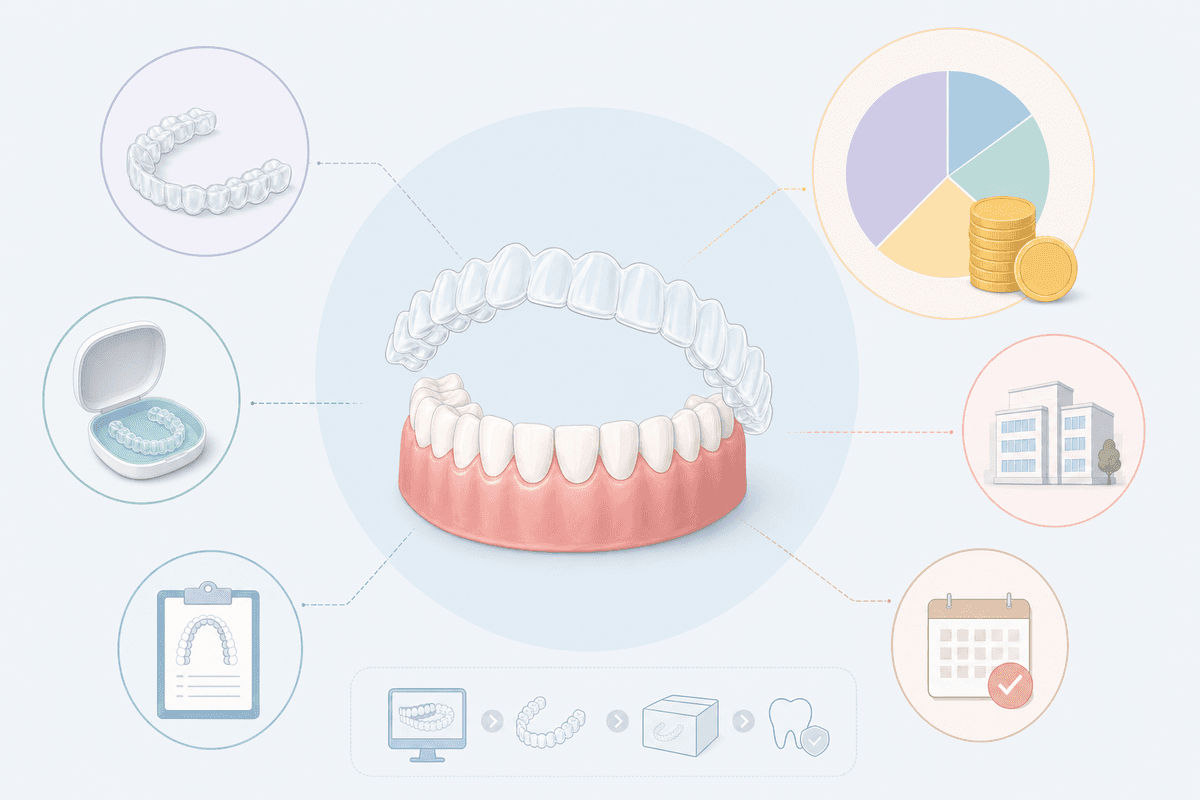
While clear aligners are mostly non-covered by health insurance, partial coverage may be available under specific conditions. Private health insurance only covers pre-treatment procedures, such as tooth extraction and gum treatment, but not the orthodontic devices themselves. The final cost is determined by the choice of brand (e.g., Invisalign or ClearCorrect) and the amount of tooth movement.
Information as of June 2026
I will explain in detail, including whether you can claim from private health insurance
- The health insurance coverage rate is less than 5%
- There are 3 cases where you can claim from private health insurance
- The cost difference between brands can be up to 2 times
The question I hear most often in the clinic—I was actually curious about it too!
"Is clear aligner treatment covered by insurance?" — This is a question that 8 out of 10 people who come for consultations ask without fail. Because of this single question, the start of treatment is often delayed by an average of 6 months. If you are unsure about whether health insurance applies, your budget plans could go awry. To start with the conclusion, it is very difficult to get health insurance coverage for clear aligners themselves. According to 2024 data from the Health Insurance Review & Assessment Service, the percentage of orthodontic treatments recognized as covered benefits is less than 5% of all orthodontic patients. However, if specific conditions are met, some items may be covered. In this article, I will summarize in detail the cases where claims are possible under health insurance and private health insurance, and I will also thoroughly cover the cost differences between brands such as Invisalign and ClearCorrect. I will explain it to you by dividing it into three scenarios—high, medium, and low—based on budget, so please find the information that fits your situation! Clear aligners are classified as aesthetic orthodontics for the purpose of becoming beautiful, so most of them are not covered by insurance. However, if jawbone surgery is performed concurrently or if a diagnosis of congenital malformation is received, health insurance may cover some of the costs.
- Health insurance coverage rate: Less than 5% of all orthodontic patients (based on 2024 HIRA data)
- Items eligible for reimbursement under private health insurance: Extraction, periodontal treatment, X-rays, etc., but the cost of orthodontic appliances is excluded
- Price range by clear aligner brand: Based on Invisalign, the cost difference for cases of moderate difficulty can be up to twice as much
Let me tell you about 3 special cases where health insurance applies
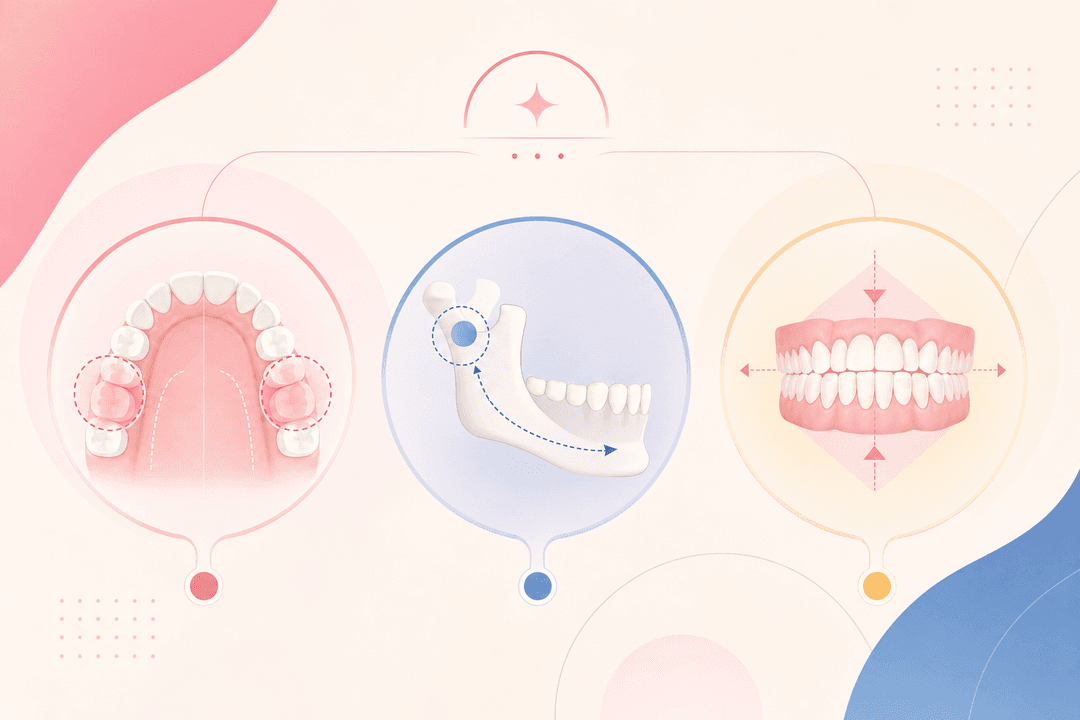
For clear aligners to be covered by health insurance, there must be clear medical evidence that it is for the 'purpose of restoring function'. The Ministry of Food and Drug Safety and the Health Insurance Review and Assessment Service only approve partial coverage under the following three conditions.
First, it is when jawbone surgery (such as orthognathic surgery) is performed concurrently due to maxillofacial deformity. In this case, a portion of the orthodontic treatment before and after surgery is covered by insurance. However, please keep in mind that this applies only to the diagnosis, X-rays, and parts of the brackets, not the clear aligner device itself. Second is when you have been diagnosed with a congenital malformation (such as cleft palate or facial asymmetry). Since the revision of the National Health Insurance Notice in 2006, it has become possible to claim insurance coverage for a portion of orthodontic treatment in such cases. However, coverage tends to be approved primarily for metal brackets rather than clear aligners. Third is when teeth or jawbones have been damaged due to an accident or trauma, and functional recovery is absolutely necessary. Even in this case, the purpose of the treatment must be clear, and you should be careful as coverage may be denied if it is determined during the review process to be for the 'purpose of becoming more beautiful.' Make sure to check this! To receive health insurance coverage, please check with the hospital in advance to see if coverage is available before starting the orthodontic treatment. It is usually difficult to file a claim after treatment is finished
| Conditions | Scope of Coverage | Inclusion of Clear Aligners |
|---|---|---|
| Accompanied by Jawbone Surgery | Diagnosis·X-ray·Partial Brackets | X (Applies only to metal brackets) |
| Diagnosis of Congenital Malformation | Partial Orthodontic Treatment | △ (Review varies by case) |
| Treatment After Trauma·Accident | Functional Recovery Items Only | X (This mainly applies to metal braces) |
How much can be claimed from medical expense insurance?
While medical expense insurance generally has a broader scope of coverage than health insurance, orthodontic devices themselves are mostly not covered. Although terms and conditions vary slightly by insurance company, the following three items are usually claimable.
First, costs for tooth extraction before orthodontics. There are cases where wisdom teeth or premolars must be extracted to create space for orthodontic treatment, and such extractions are eligible for medical expense insurance claims. However, if you specify "extraction for orthodontic purposes" exactly, it may be rejected, so it is safer to claim it as extraction of impacted teeth.
Second, gum treatment or cavity treatment received before orthodontics.
Before starting orthodontic treatment, you must first treat gums or cavities, and these costs are covered by private health insurance. You can also claim for panoramic or CT scan costs. Third is the treatment of complications that may occur during orthodontic treatment. If gum inflammation or cavities develop while wearing the appliance, the cost of this treatment can be claimed through private health insurance. However, please note that the cost of remaking the appliance is excluded. Pro Tip! When filing a claim with private health insurance, try asking the hospital to omit the phrase 'for the purpose of orthodontics'. Changing the diagnosis to 'extraction of impacted teeth' or 'treatment of periodontal disease' increases the chances of approval.- Items eligible for reimbursement under private health insurance: Extraction, gum treatment, cavity treatment, X-ray, CT, etc.
- Exclusion of orthodontic device coverage: All clear aligners, such as Invisalign and ClearCorrect, are not covered.
- Claim rate for treatment of complications: It is reported that about 15% of orthodontic patients have experienced filing claims for private health insurance due to gum inflammation, etc. (Based on 2023 data from the Korea Insurance Development Institute)
Why are costs so different by brand?
The cost of clear aligners varies significantly depending on the brand, the amount of tooth movement, and the treatment period. The most widely known Invisalign has been the most widely used worldwide since receiving FDA approval from Align Technology in the U.S. in 1998. In addition to Invisalign, there are ClearCorrect, as well as Korean brands such as Esco and Angel Aligner. Since there are differences in device materials, 3D scan precision, and orthodontic software among brands, costs may vary even for cases of the same difficulty level. Generally, light cases (10 devices or fewer) are cheaper than medium-difficulty cases (20 to 30 devices). Invisalign Lite is a product designed specifically for light cases, so it costs about half the price of the full package. In addition to the choice of brand, the type of 3D scanner equipment the hospital uses also has an impact. iTero scanners offer good compatibility with Invisalign, which helps reduce errors, but the initial cost is high, so some hospitals charge additional fees. Clinical Tip! While Invisalign comes with a brand premium, choosing ClearCorrect or a domestic brand can save you about 20–30% on costs for the same level of difficulty. However, you must check the policy regarding device remanufacturing and the scope of after-sales service. Cost Components, and Even Potential Hidden Additional Costs! The cost of clear aligners isn't just the 'device price.' It includes the costs for diagnosis, 3D scanning, device fabrication, regular check-ups, and retainers. Package compositions vary from hospital to hospital, so it is often difficult to compare them. When you receive your initial diagnosis, there are costs for panoramic X-rays, lateral cephalometric X-rays (Ceph), and 3D CT scans. While these items are covered by private health insurance, you should be careful as claims may be rejected if the hospital specifies that the diagnosis is for 'orthodontic treatment.' After the appliance is made, the cost of regular check-ups varies by hospital. Some places include it in the package, while others charge separately for each visit. Before signing a contract, be sure to check the total number of hospital visits and whether check-up costs are included. After the orthodontic treatment is finished, there is also a separate cost for the retainer. Fixed retainers are permanently attached, so there are no additional costs, but removable retainers require remaking if lost or damaged, which can incur costs. Invisalign retainers tend to be expensive per unit. Make sure to check! You must verify whether the contract specifies 'conditions that may incur additional costs.' There may be hidden costs such as the expense of remaking the device if it is lost or damaged, or additional costs if the treatment period is prolonged.
| Item | Average Cost Range | Indemnity Insurance Claim |
|---|---|---|
| Diagnosis (X-ray·CT) | 100,000-300,000 KRW | O (Excluding orthodontic purposes) |
| 3D Scan | 50,000-150,000 KRW | X |
| Device Fabrication (Medium Difficulty) | Differences by Brand Large | X |
| Regular Inspection (1 time) | 0-100,000 won | X |
| Retainer (Removable) | 200,000-500,000 won | X |
Selection Strategy to Fit My Budget — High, Medium, and Low Scenarios!
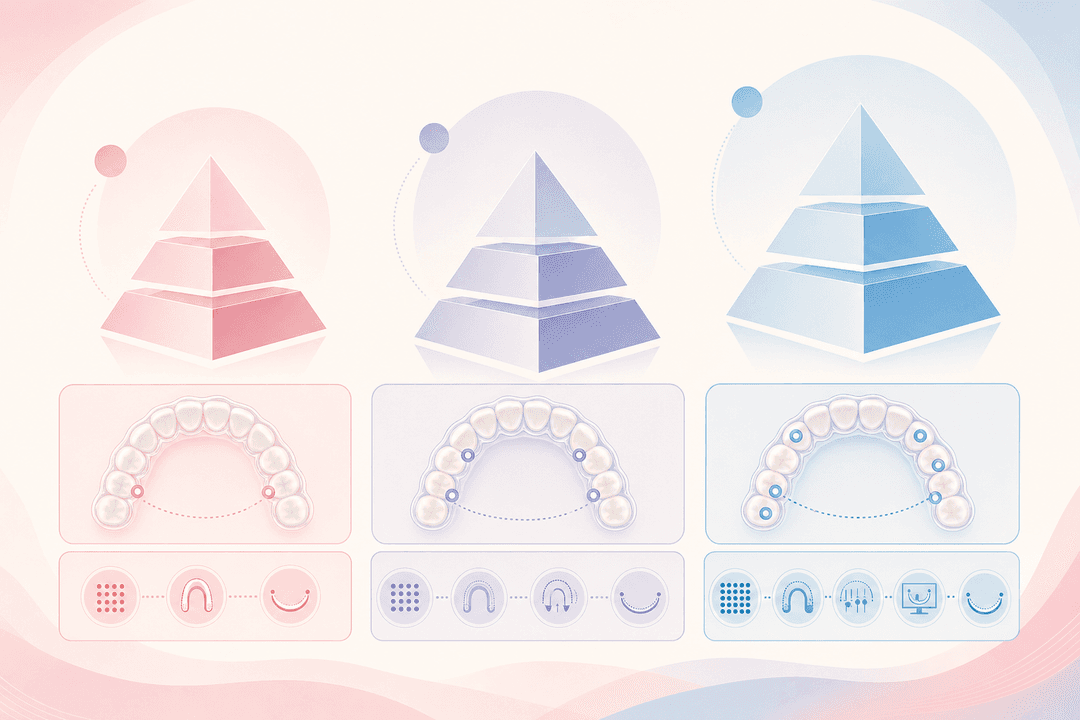
The cost of clear aligners varies significantly depending on the amount of tooth movement, the brand, and the location of the clinic. I will explain strategies divided into three scenarios based on your budget level.
High Scenario (Generous Budget): This is the case where you choose the full Invisalign package and receive treatment at a university hospital or a specialized orthodontic clinic in the Gangnam area. It is suitable for severe malocclusion or complex cases. The 3D scan precision is high, and in many cases, unlimited appliance remanufacturing is provided as part of the after-sales service. Medium Scenario (Reasonable Budget): Choose ClearCorrect or a domestic brand, and it is suitable for cases of moderate difficulty. It is performed at a general orthodontic clinic, and you can save about 20–30% on costs compared to Invisalign. However, appliance remanufacturing policies may be limited, so be sure to check before signing a contract. Low Scenario (Practical Budget): Choose a product designed for mild cases (such as Invisalign Lite) and receive treatment at a clinic in a provincial area. It is suitable when you only want to correct the alignment of your front teeth, and the treatment period can be completed quickly within 6 months. However, since the amount of tooth movement is limited, it may be difficult to resolve complex occlusal problems.
Whether your budget is large or small, the criteria for choosing a hospital are the same. You must verify the specialist's orthodontic certification (whether they are a full member of the Korean Association of Orthodontists), whether they have a 3D scanner, what their appliance remanufacturing policy is, and how extensive their post-treatment care is.
Great Tip! Compare hospitals that perfectly match your budget and case on K-Dia. You can easily check cost ranges by brand, remanufacturing policies, and whether the doctor is a board-certified orthodontist at a glance.
- High Scenario: The full Invisalign package includes unlimited after-sales service for device remanufacturing.
- Medium Scenario: You can save about 20-30% compared to Invisalign with ClearCorrect and domestic brands.
- Low Scenario: Products designed for lightweight cases, with a short treatment period of within 6 months.
Comparison of Clear Aligner Insurance Coverage Items, Easy to View at a Glance!
Health Insurance [Coverage]
- Coverage Rate: Less than 5% of all orthodontic patients.
- Conditions: Or when undergoing jawbone surgery together You need to receive a diagnosis for a congenital malformation
- Includes clear braces: X (It mainly applies to metal brackets)
You must check in advance if it is covered by insurance, as it is difficult to claim later
Indemnity Insurance [Non-covered]
- Claimable: Tooth extraction, gum treatment, X-ray, CT, etc.
- Not Claimable: Orthodontic appliances, regular check-ups, retainers are not covered
- Treatment of complications: Some, such as gum inflammation, are covered
You must remove 'for the purpose of orthodontics' from the diagnosis name to increase the chances of approval
Full cost to the patient [Non-covered]
- Device fabrication: Applies to all devices, including Invisalign and ClearCorrect
- Regular check-ups: It may cost around 0 to 100,000 won each time you visit the hospital
- Retainers: Removable retainers cost around 200,000 to 500,000 won
Costs vary greatly depending on the brand, difficulty level, and hospital
Common misconceptions, now you know the facts!
Misconception I heard that clear aligners aren't covered by health insurance at all?
Truth When jawbone surgery is performed concurrently, some diagnostic and X-ray costs may be covered by insurance. However, the clear aligner device itself is not covered, and coverage is primarily granted for metal brackets. Please check with the hospital in advance to see if coverage applies before starting orthodontic treatment.
Misconception I heard that most of the clear aligner costs can be reimbursed through private health insurance?
Truth Private health insurance considers the orthodontic device itself to be an item that is not covered. The only items that can be claimed are pre-treatments such as tooth extraction, gum treatment, and X-rays, as well as treatment for complications. Make sure to check the insurance company's terms and conditions before signing a contract.
Things to check before signing a contract for clear aligner orthodontics costs—just remember this!
- !!Make sure to check if the 'total cost' is clearly stated in the contract — make sure to check the conditions for additional costs (loss of appliance, extension of treatment period, etc.)!!
- Organization remanufacturing policy — you must check if there is unlimited after-sales service or if there is a limit on the number of times.
- Inclusion of regular check-up costs — check if they are charged separately every time you visit the hospital or if they are included in the package.
- Separate retainer costs — check whether they are fixed or removable, and how much it costs to make a replacement if lost.
- Items covered by health insurance and private health insurance — it is a good idea to request the hospital in advance to remove the phrase 'for orthodontic purposes'.
Frequently Asked Questions, I will answer them!
Is credit card installment payment available for clear aligner costs?Most hospitals support credit card installments or interest-free installments. Usually, 6 to 12 months of interest-free installments are common, and some hospitals even offer up to 18 to 24 months. However, installment fees vary by card company, so please check before signing a contract.
How much cheaper is it if I choose a brand other than Invisalign?
ClearCorrect or Korean brands (ESCO, Angel A-Liner) tend to be about 20 to 30 percent cheaper than Invisalign. However, since there may be differences in device remanufacturing policies or 3D scan precision, it is recommended to make a decision after consulting with an orthodontist. How much does it cost if I lose my aligner during clear aligner treatment? For Invisalign, the cost to remake one aligner is approximately 50,000 to 150,000 won. ClearCorrect is cheaper than this, but policies may vary by hospital. When signing a contract, check to see if conditions such as "free remanufacturing 1 to 2 times in case of loss" are included. How can I increase the chances of approval when filing a claim with private health insurance? Try requesting the hospital to list the diagnosis as "extraction of impacted teeth" or "treatment of periodontal disease" instead of "for orthodontic purposes." Since private health insurance only covers the purpose of 'disease treatment,' coverage may be rejected if it appears to be for the purpose of improving one's appearance. How much does a retainer cost after orthodontic treatment? Fixed retainers are permanently attached, so there are no additional costs, but removable retainers cost around 200,000 to 500,000 won. Invisalign retainers can be more expensive, so please check if coverage is included when signing the contract. Are there additional costs if side effects occur during clear aligner treatment? If complications such as gum inflammation or cavities occur during treatment, separate treatment costs will be incurred. While these costs can be claimed through private health insurance, you must bear the cost of remaking the appliance yourself. It is really important not to skip regular checkups and to maintain thorough oral hygiene.
This article is for informational purposes only and cannot replace medical advice. The cost of clear aligners varies significantly depending on the individual's dental condition, brand, and clinic, and whether health insurance or private health insurance applies also differs on a case-by-case basis. Before starting treatment, be sure to consult with an orthodontist and carefully review the contract details.