7-Day Nose Job Trip to Korea: What Foreigners Should Know to Avoid Disappointment
- Korean rhinoplasty boasts over 40 years of clinical experience with Asian nasal structures, resulting in higher precision in cartilage grafting and osteotomy compared to Western techniques.
- For international patients, minimizing the risk of failure requires simultaneous planning of language, schedule, and flight timing, from online consultations to remote post-operative care after returning home.
- A 7-day stay is the standard for surgery plus discharge; actual swelling and bruising stabilization occurs from 10-14 days post-op — a schedule that accounts for airplane cabin pressure and swelling rebound is crucial.
Information as of July 2026
International Patient Stay, Language, and Return Timing
- Recommended minimum stay: 7-10 days
- Post-surgery flight eligibility: 10-14 days
- Over 40,000 rhinoplasty surgeries performed annually in Korea
Why Korean Rhinoplasty Attracts International Patients
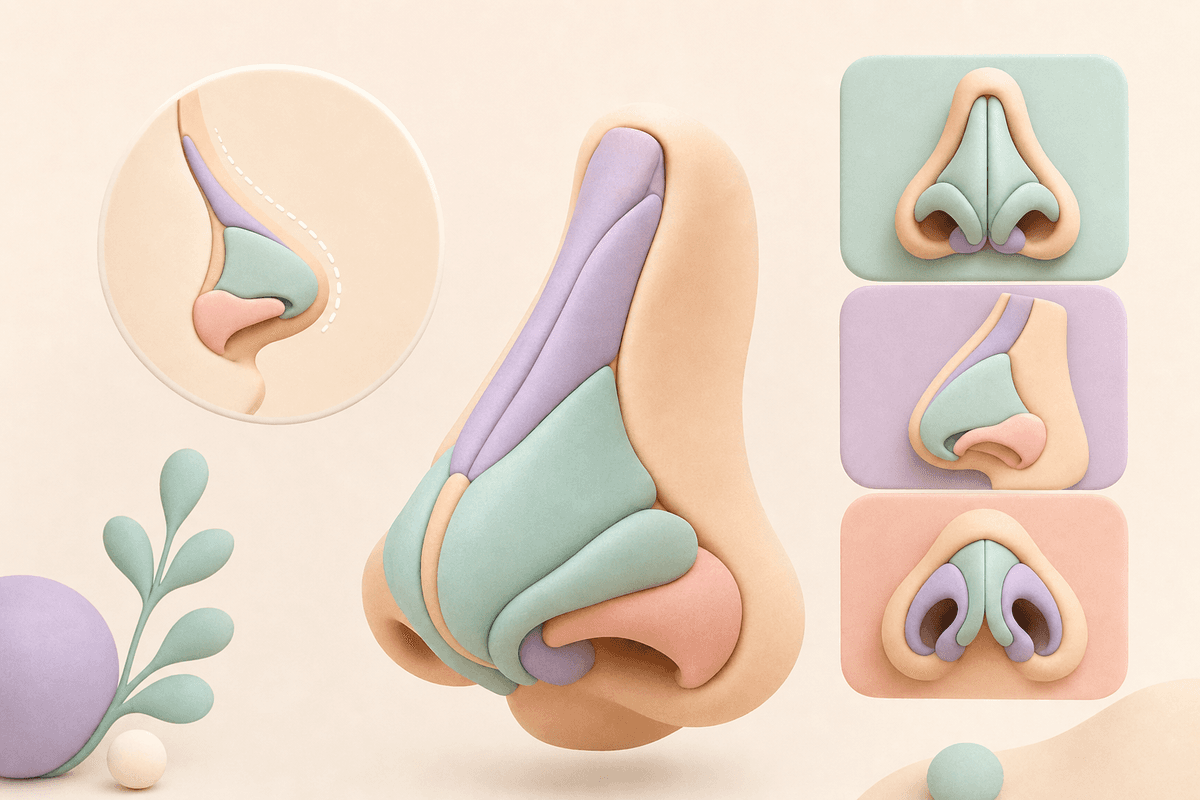
"Isn't Korean rhinoplasty just cheaper?" If you thought so, you're only half right. In reality, the biggest differentiator is the over 40 years of clinical data specialized for Asian nose structures. Western noses often require reduction surgery due to high bridges, while Asian noses need techniques to augment low bridges and lengthen short tips.
According to a 2022 report by the Korean Society of Plastic and Reconstructive Surgeons, over 70% of Korean plastic surgeons perform more than 200 rhinoplasty procedures annually, which is 3-4 times higher than the US and European average (50-80 cases per year). Complex procedures like autologous rib cartilage grafting and septal extension grafts are routinely incorporated into daily practice.
How does the cost compare to your home country? For North American and European patients, Korean rhinoplasty is reported to be around 40-60% of the cost in their home countries, and often the total cost, including flights and accommodation, is lower. However, this applies when the materials and techniques are the same; be cautious, as low-cost packages can lead to higher revision rates.
- Average of 200 rhinoplasties per year by Korean plastic surgeons (3-4 times higher than the US average of 50-80 cases)
- Autologous rib cartilage and septal extension graft usage at 35% (Higher than the Asian average of 15% in ISAPS 2023)
- Overseas patient satisfaction rate of 89% (Korean Medical Tourism Association 2023, including rhinoplasty and double jaw surgery)
Overcoming Language Barriers: From Online Consultations to Booking

The first step in undergoing rhinoplasty in Korea is an online consultation. Most clinics offer initial consultations via KakaoTalk, WhatsApp, or WeChat using photos. By sending four photos: front, side, 45-degree angle, and from below the tip, you can receive information on the surgical approach and an estimated cost.
How do you handle the language barrier? Approximately 60% of major clinics in Gangnam and Apgujeong have English-speaking coordinators on staff, and the number of clinics offering Chinese, Japanese, and Russian interpretation services is increasing. However, some clinics do not assign interpreters on the day of the consultation, so be sure to confirm 'availability of an interpreter for the surgery day' when booking.
After booking, you'll typically email a copy of your passport and a health questionnaire (English version available), and finalize your schedule 7-14 days before arrival. Since the pandemic, video consultations have become common, allowing direct communication with the surgeon within 30 minutes, provided you can match time zones.
Tip Sending 2-3 photos of your desired nose shape during the online consultation helps the surgeon understand your preferences more quickly. However, replicating celebrity noses with different ethnicities or skin tones may be structurally difficult, so references from Asian individuals are recommended.
OX Quiz
It is safe to fly immediately the day after rhinoplasty in Korea.
Check the answer
X Flying before the splint removal (7 days post-surgery) can cause internal nasal bleeding due to changes in air pressure. The minimum waiting period for flights is 10-14 days, and long-haul flights (over 8 hours) are recommended after 14 days. A JAMA Otolaryngology 2019 study reported a 15% increase in internal nasal pressure with a 1 atm change in air pressure.
Recommended Stay Duration and Post-Surgery Flight Timing
"Can I fly back the day after surgery?" This is the most common question from international patients, and honestly, it's safest to stay in Korea for at least 7-10 days. Rhinoplasty involves nasal packing (gauze packing) on the day of surgery, secured by an external splint.
The basic schedule includes packing removal on days 2-3 post-surgery, and splint and suture removal on day 7. It's essential to check for bleeding or infection during this process, and flying before splint removal can cause internal nasal bleeding due to air pressure changes.
Flight eligibility is at least 3-7 additional days after splint removal, meaning from day 10-14 post-surgery. For long-haul flights (over 8 hours), it's recommended to fly after day 14, as the low humidity and air pressure in the cabin can worsen swelling.
| Schedule | Item | Precautions |
|---|---|---|
| D-day | Surgery + Packing Insertion | 4-6 hours recovery room wait after general anesthesia |
| D+2~3 | Packing Removal | Initial check for bleeding/infection |
| D+7 | Splint & Suture Removal | Initial check of nose bridge shape; mandatory stay until this point |
| D+10~14 | Flight Eligibility | Long-haul flights recommended after day 14 |
| D+30 | 1st Follow-up (Remote) | Check swelling/asymmetry via video call or photos |
Stay duration may vary depending on the scope of surgery and individual recovery speed.
- Packing removal D+2~3, splint removal D+7 (3x increased risk of bleeding if returning before this)
- Minimum flight waiting period of 10 days (15% increase in internal nasal pressure with 1 atm air pressure change, JAMA Otolaryngology 2019)
- Long-haul flights (8+ hours) after day 14 (Cabin humidity below 20% can cause mucosal dryness and bleeding)
Clinic Selection Criteria: What Advertisements Don't Tell You

There are over 200 clinics in Gangnam, Korea, specializing in rhinoplasty, but honestly, half of them prioritize marketing over skill. The first thing international patients should check is whether the surgeon is a full member of the Korean Society of Plastic and Reconstructive Surgeons. Some procedures are performed by non-specialists.
Second, check whether revision surgery rates are disclosed. According to FDA standards, the revision rate for rhinoplasty is 10-15%. Some Korean clinics state this figure on their websites. Clinics that don't disclose it may be worth questioning.
Third, whether they have dedicated coordinators for international patients. The difference between a clinic that only communicates via KakaoTalk when issues arise post-surgery and one with a 24-hour emergency contact line is significant. Also, inquire about their after-sales service policy (remote consultations, flight support for revisits).
Caution 'International Patient Promotion Events' often involve the use of low-cost materials or are performed by junior surgeons. While a 10-15% discount from the normal price is reasonable, promotions exceeding 50% should be considered a red flag.
Remote Post-Operative Care After Returning Home: Does it Actually Work?
The biggest anxiety after returning home is, "Something feels off, who do I ask?" Most Korean clinics operate a system where they provide remote feedback upon receiving progress photos at 1, 3, and 6 months post-surgery via KakaoTalk or email.
However, if issues arise that cannot be resolved remotely (severe asymmetry, inflammation, implant displacement), re-visiting the clinic is essential. Check if the contract specifies whether the clinic offers partial support for flight and accommodation costs for such visits. Some clinics offer 'free revision surgery within one year,' but often the round-trip airfare is the patient's responsibility.
Also, check for collaboration systems with local clinics. If a Korean clinic has an MOU with a plastic surgery clinic in your country of residence, emergency situations can be handled with initial treatment locally, followed by a video conference with the Korean surgeon. Without such a system, you may have to manage issues alone after returning home.
- Average response time for remote consultations: 24-48 hours (excluding weekends)
- Percentage of clinics offering flight support for revisits: Approx. 15% (Korean Medical Tourism Association 2023)
- Percentage of clinics offering free revision surgery within one year: Approx. 30% (However, round-trip airfare is often the patient's responsibility)
Key Takeaways: 3 Conditions for Successful Rhinoplasty Abroad

To ensure success in rhinoplasty abroad, you need to plan for schedule, communication, and safety net simultaneously. First, schedule for at least 7-10 days of stay + flights after 10-14 days. Returning before splint removal triples the risk of bleeding.
Second, ensure interpreter availability, a 24-hour emergency contact, and a remote consultation system after returning home are specified in your contract. Clinics that only offer KakaoTalk may be slow to respond in case of problems. Third, verify the revision surgery policy and whether flight costs are covered. Advertisements may emphasize '1-year warranty,' but the actual cost of round-trip flights can be as high as the surgery fee.
- Minimum stay of 7-10 days, flights after 10-14 days — Failure to adhere to this timing significantly increases the risk of bleeding and infection
- Interpreter, emergency contact, remote consultation package — Without these specified in the contract, communication can be cut off after returning home
- Revision surgery policy should include flight support — Relying solely on the word 'free' can lead to unexpected flight costs
- Full membership in the Korean Society of Plastic and Reconstructive Surgeons and clinics disclosing revision rates — Without these, verifying skill is impossible
Korean vs. Domestic Rhinoplasty Comparison (North American & European Patients)
Rhinoplasty in Korea [Cost-Effective]
- Cost: 40-60% of domestic prices
- Stay: Minimum 7-10 days + flights & accommodation
- Pros: 40 years of clinical experience specialized for Asian nose structures, high precision in cartilage grafting
- Risks: Limited after-sales service upon return, language barrier
Total cost (surgery + flights + accommodation) is often lower than in home countries. However, additional costs may incur for revisits.
Domestic Rhinoplasty [Convenient Aftercare]
- Cost: 1.7-2.5 times higher than in Korea (North American/European average)
- Stay: Can return home the same day
- Pros: Easy communication, immediate access for revisits
- Risks: Limited clinical experience with Asian nose structures
Higher cost but better accessibility for aftercare. However, some reports indicate higher revision rates for Asian noses compared to Korea.
A Guide to Choosing Rhinoplasty Abroad Based on Your Situation
If you have over 2 weeks for vacation and want to minimize costs
Rhinoplasty in Korea + Minimum 10-day stay
Total cost (surgery + flights + accommodation) is often lower than domestic surgery costs, and the specialized clinical experience for Asian nose structures leads to lower revision rates.
If you only have a week for vacation or language communication is your top priority
Find a specialist for Asian nose structures within your country
Returning before splint removal triples the risk of bleeding. A stay of 7 days or less is not safe.
If you need revision surgery
Rhinoplasty abroad + Choose a clinic that covers revisit flight costs
Revision surgery is more complex than primary surgery, making extensive clinical experience advantageous. However, consider the possibility of revisits and ensure flight cost support is available.
If you need to return to work immediately after returning home
Fly after 14 days + Confirm remote consultation system
Flying in less than 10 days can result in lingering swelling and bruising, making return to work difficult. Prioritize clinics with remote consultation response times within 24 hours.
Common Misconceptions
Misconception It's okay to fly immediately the day after surgery.
Truth Flying before splint removal can cause internal nasal bleeding due to air pressure changes. Flight eligibility is at least 10-14 days post-surgery. It's safe to wait 3-7 days after packing removal (D+2~3) and splint/suture removal (D+7).
Misconception International patient promotion events are always a good deal.
Truth Promotions exceeding 50% may indicate the use of low-cost materials or procedures performed by junior surgeons. While a 10-15% discount is reasonable, excessive promotions should be viewed as a red flag.
Important Precautions for International Patients
- **Do not return home before splint removal (D+7)** — Risk of bleeding and infection increases threefold due to air pressure changes
- **Confirm interpreter availability when booking** — Lack of an interpreter on surgery day can lead to communication gaps
- **Check revision surgery policies, including flight cost support** — Relying solely on '1-year free' can lead to unexpected flight expenses
- **Specify a 24-hour emergency contact in the contract** — KakaoTalk alone is insufficient for handling issues after returning home
- **Avoid wearing glasses and touching your nose for 2 weeks after returning home** — This can displace the implant
Frequently Asked Questions
Is surgery possible with just an online consultation?
Yes. Most clinics conduct an initial consultation using four photos (front, side, 45-degree, and from below the tip), and you can communicate directly with the surgeon via video call. However, the final surgical plan is confirmed during an in-person consultation on the day of your visit.
I only speak English; is interpreter support available?
Approximately 60% of major clinics in Gangnam and Apgujeong have English-speaking coordinators, and interpretation services for Chinese, Japanese, and Russian are also provided. However, be sure to confirm interpreter availability for the surgery day when booking. Some clinics only provide interpretation for consultations and do not assign one for the surgery itself.
Isn't 7 days of stay insufficient?
7 days is the minimum requirement. This covers surgery day, packing removal (D+2~3), and splint/suture removal (D+7), but flight eligibility is 10-14 days post-surgery. For safety, a minimum of 10 days is recommended, and 14 days for long-haul flights.
What happens if I experience problems after returning home?
Most clinics provide remote feedback by receiving progress photos at 1, 3, and 6 months post-surgery via KakaoTalk or email. However, for severe asymmetry or inflammation, re-visiting the clinic is necessary. Check if the contract specifies flight cost support for revisits and MOUs with local partner clinics.
Are there any side effects or complications from the surgery?
Common side effects of rhinoplasty include swelling and bruising (lasting 2-4 weeks), infection (1-3%), implant displacement (2-5%), and asymmetry (5-8%). Key preventive measures include avoiding touching your nose, refraining from wearing glasses, and abstaining from strenuous exercise for two weeks after returning home. If any unusual symptoms occur, request a remote consultation immediately.
What is the revision surgery policy?
Approximately 30% of clinics offer a 'free revision surgery within one year' policy, but round-trip airfare is often the patient's responsibility. Some clinics (about 15%) offer partial support for revisit flights, so carefully review the terms and conditions specified in your contract.
Lumi's Note
The key to a successful rhinoplasty trip abroad is the 'schedule.' If you return home after just removing the splint on day 7, bleeding can recur on the plane. Plan for at least 10 days, preferably 14, and ensure that interpreter services, emergency contacts, and revisit policies are included in your contract. I wish you a safe and successful trip!
This content is for informational purposes only and does not substitute medical advice. Always consult with a specialist before undergoing any procedure.