Teeth Whitening: At-Home, Professional, or Laminates — Which is Right for My Teeth?
- Why results can double depending on your tooth structure, even with the same concentration
- Real-world results and cost differences by at-home, professional, and laminate methods
- Tooth sensitivity after whitening peaks at 72 hours; there are separate prevention methods
Information as of September 2026
An Honest Comparison of 3 Methods
- At-home whitening: 2-4 shades brighter
- Professional whitening: 30-60 minutes per session
- Laminates: Permanent stain blocking
The Moment You Stopped Smiling in the Mirror
As soon as one patient sat down in the consultation chair, they pulled out their phone to show me a selfie. "Can I achieve this shade?" The celebrity's teeth on the screen sparkled. But what I noticed was something else entirely.
Their teeth were translucent, with the dentin showing through. Even with the same teeth whitening treatment, the results can vary more than twofold depending on tooth structure.
Today, I'll share the honest differences between at-home whitening, professional whitening, and laminates.
At-Home vs. Professional Whitening: It's Not Just About Concentration
At-home whitening kits use 3-10% hydrogen peroxide, while dental professional whitening uses 15-35%. At first glance, it's a threefold difference in concentration, so why is the effect five times greater?
It's because heat and light sources accelerate the penetration of the agents.
The depth of penetration into the dentinal tubules (microscopic pores in teeth) differs between using a treatment daily for two weeks at home and receiving a one-hour session at the dentist.
Professional whitening uses LED light to push the agents deep into the enamel. However, this also means more sensitivity.
Caution Never sleep with at-home whitening trays in your mouth overnight. There's a risk of chemical burns to your gums, and the whitening effect plateaus after 8 hours.
| Method | Concentration | Time Per Session | Total Duration | Shade Change |
|---|---|---|---|---|
| At-home Whitening | 3-10% | 30 min - 2 hours | 2-4 weeks | 2-4 shades |
| Professional Whitening | 15-35% | 30-60 minutes | 1-3 sessions | 4-8 shades |
| Laminates | - | 2 visits | Semi-permanent | Desired shade |
Effects vary significantly by individual based on original tooth color, structure, and lifestyle habits. Shade changes represent average ranges.
True or False Quiz
Whitening is more effective on teeth that are originally yellower.
Check the answer
True Yellowish teeth with thicker enamel have more room for hydrogen peroxide penetration, showing a 4-6 shade change. Translucent, grayish-white teeth often have thinner enamel, resulting in only a 2-3 shade change.
When Does Sensitivity Peak, and When Does It Subside?
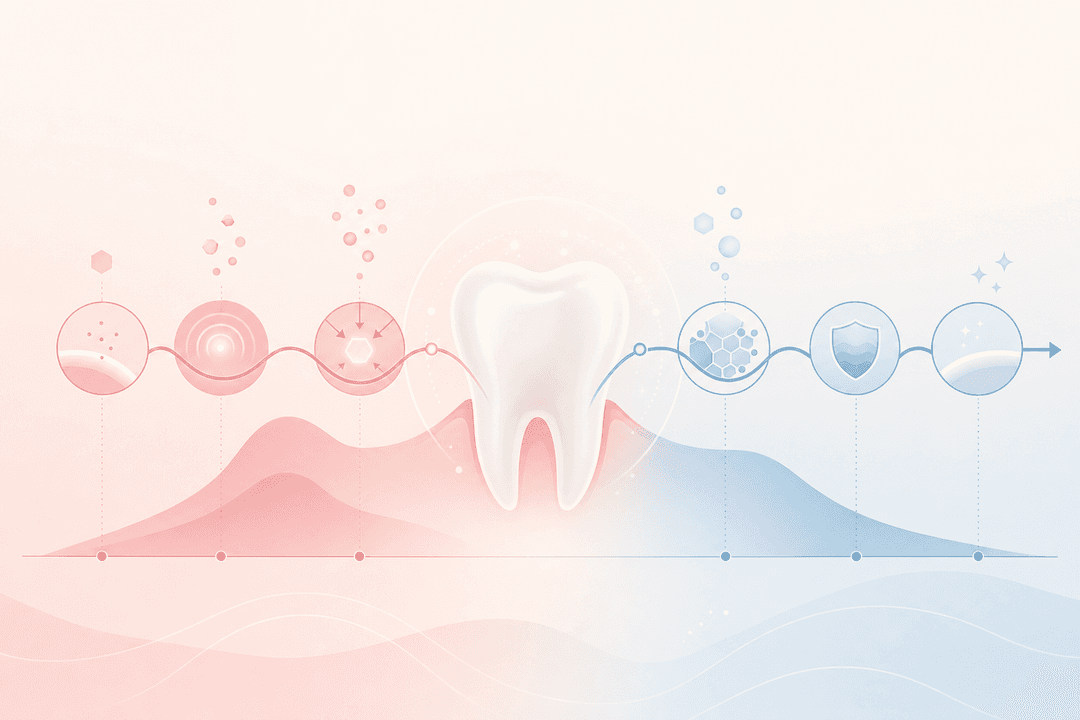
The peak of sensitivity occurs within 72 hours after whitening. This is because hydrogen peroxide opens the dentinal tubules, allowing direct stimulation to the nerves. A sharp pain from a sip of ice water is a normal reaction.
Applying fluoride coating or desensitizing agents immediately after whitening can speed up recovery by 2-3 days. Conversely, hot coffee or carbonated drinks can further open the dentinal tubules, prolonging symptoms for a week.
The first 3 days of care are crucial.
Key Things to Remember
Teeth whitening is a procedure that only brightens the enamel. Teeth that have undergone root canal treatment or have resin fillings will not change color.
Many people regret their decision after expecting their teeth to "brighten overall," only to find a tonal difference in their front teeth.
Laminates are not a whitening treatment but a surface veneer. While they can block staining agents (coffee, tobacco), they require shaving off 0.3-0.5mm of healthy tooth structure.
The cost ranges from 600,000 to 1,000,000 KRW per tooth, making it a different category of choice compared to whitening (200,000-500,000 KRW).
- Whitening effects last 6-24 months, with results doubling depending on maintenance.
- The top cause of stain recurrence is red wine and coffee; avoid consumption within 72 hours.
Choosing the Right Method for Your Situation
At-home Whitening [Low Cost, Gradual Results]
- 30 minutes - 2 hours daily for 2-4 weeks
- Cost: 100,000 - 300,000 KRW
- Mild sensitivity
- 2-4 shade improvement
Not suitable for tight schedules like weddings or job interviews.
Professional Whitening [Fastest, Maximum Results]
- 1-3 visits, 30-60 minutes per session
- Cost: 200,000 - 500,000 KRW
- Significant sensitivity (for 3 days)
- 4-8 shade improvement
Consultation is essential for those with thin enamel or sensitive gums.
Laminates [Permanent Color & Shape Correction]
- 2 visits, requires tooth reduction
- Cost: 600,000 - 1,000,000 KRW per tooth
- No sensitivity
- Choose your desired shade
Recommended for those who have had unsuccessful whitening or are unhappy with tooth shape.
Common Misconceptions Debunked
Myth Whitening weakens your teeth.
Truth Hydrogen peroxide does not alter the mineral structure of enamel. However, teeth are in a dehydrated state for 48 hours immediately after treatment, which may make them appear temporarily weaker. Once remineralized, they return to their original strength. Excessive repetition (more than 4 times a year) can pose a risk of micro-cracks.
Avoid These Before and After Whitening
- Consuming staining foods (coffee, red wine, curry, kimchi) within 72 hours after whitening — pigments penetrate twice as fast as dentinal tubules are open.
- Wearing at-home whitening trays for more than 8 consecutive hours — risk of chemical burns to gums and tooth hypersensitivity.
- Mistaking root-canaled or resin-filled teeth as candidates for whitening — these do not change color, leading to tonal discrepancies.
Frequently Asked Questions
How long does post-whitening sensitivity last?
It peaks within 72 hours and mostly subsides within a week. Fluoride coating can shorten this to 3-4 days.
Can I use at-home whitening kits daily?
Use them only as directed by the product instructions (usually 1-2 times a day). Excessive use carries a risk of gum burns and enamel demineralization.
How long do whitening results last?
They last from 6 months to 2 years. Quitting coffee and smoking, and using fluoride toothpaste can double the duration, while neglecting care can cause teeth to return to their original shade within 6 months.
Lumi's Take
Whitening is less about "making teeth white" and more about "finding the maximum brightness your natural teeth can achieve." Instead of aiming for someone else's selfie shade, achieving a tone that allows you to smile brightly in the mirror is sufficient. Proper care for the first 3 days can significantly impact both the results and recovery.
This content is for informational purposes only and does not substitute medical advice. Always consult with a specialist before undergoing any procedure.