Just in case 'If it's non-surgical, the effect would be similar, right?' Did you think about it?
Mechanism of action, how does it differ at the cellular level?
Recovery period and return to daily life, how much of a difference is there?
Cost structure, is it cheap if it's a one-time treatment?
Side effects and limitations, to be honest.
Remember this: Choosing the right choice for you.
Selection guide for your specific situation.
Frequently asked questions. Did you think, 'If it's non-surgical, the effects must be similar'?
When considering fat removal procedures, people often expect to achieve the same results without surgery. However, liposuction, fat-dissolving injections, and CoolSculpting differ completely in their mechanisms of action. Since the removal mechanisms are different, the range of effects, recovery periods, and cost structures are all different.
Liposuction is a method that physically extracts fat cells using a cannula (a thin suction tube). Up to 3,000cc can be removed at once, and the body lines change immediately. On the other hand, lipolysis injections use PPC (phosphatidylcholine) and DOC (deoxycholic acid) components to dissolve fat cell membranes and expel them through metabolism, while CoolSculpting induces natural breakdown by causing cryolipolysis of fat cells through cooling to -11 degrees Celsius.
The U.S. FDA approved liposuction in the 1980s, CoolSculpting (Zeltiq) received approval in 2010, and the lipolysis injection Cabelin received approval from the Korean Ministry of Food and Drug Safety in 2015. The selection criteria depend on 'where and how much' and 'how long it is needed'. In this article, I will summarize the three methods side by side, covering everything from their mechanisms of action to recovery and costs.
Liposuction: Physical removal via cannula, immediate line change after just one session
Fat-dissolving injection: Dissolution of fat cell membranes with PPC and DOC components → Metabolic elimination (repeat 4-6 times)
CoolSculpting: Freezing of fat cells via -11°C cooling → Natural breakdown (1-3 times)
How do they work and differ at the cellular level?
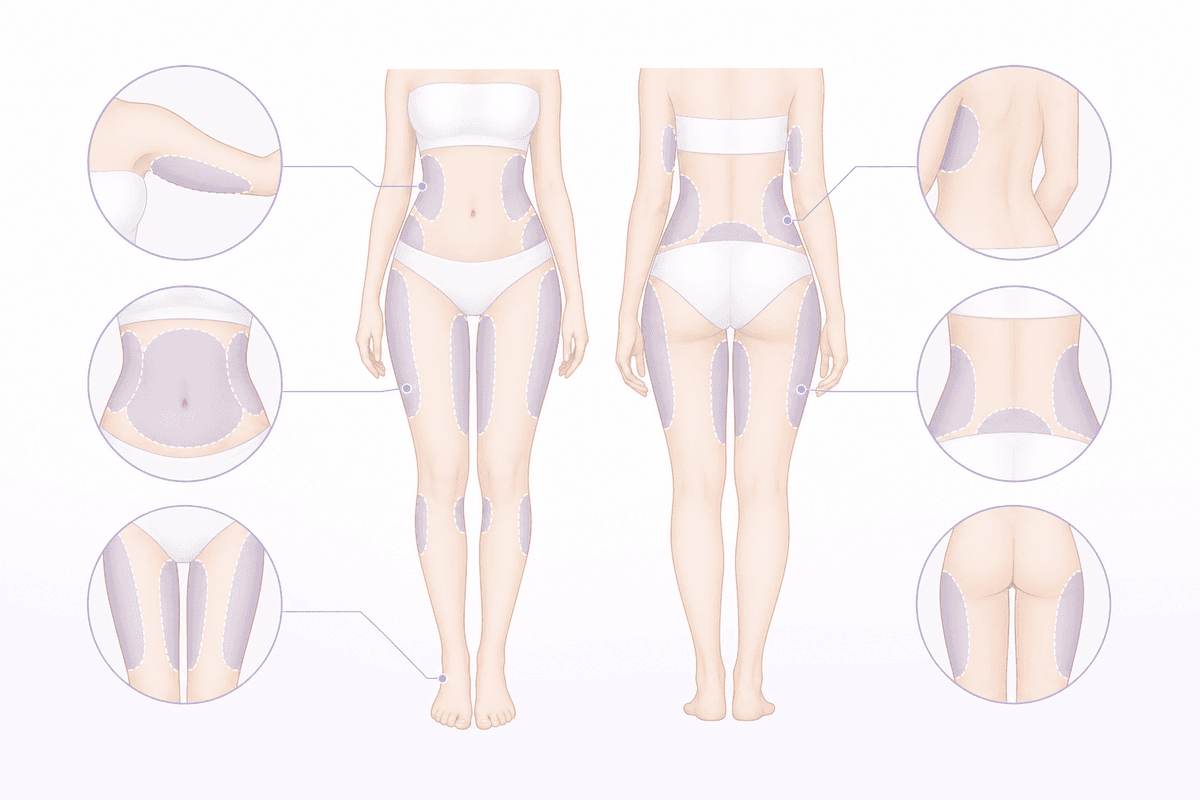
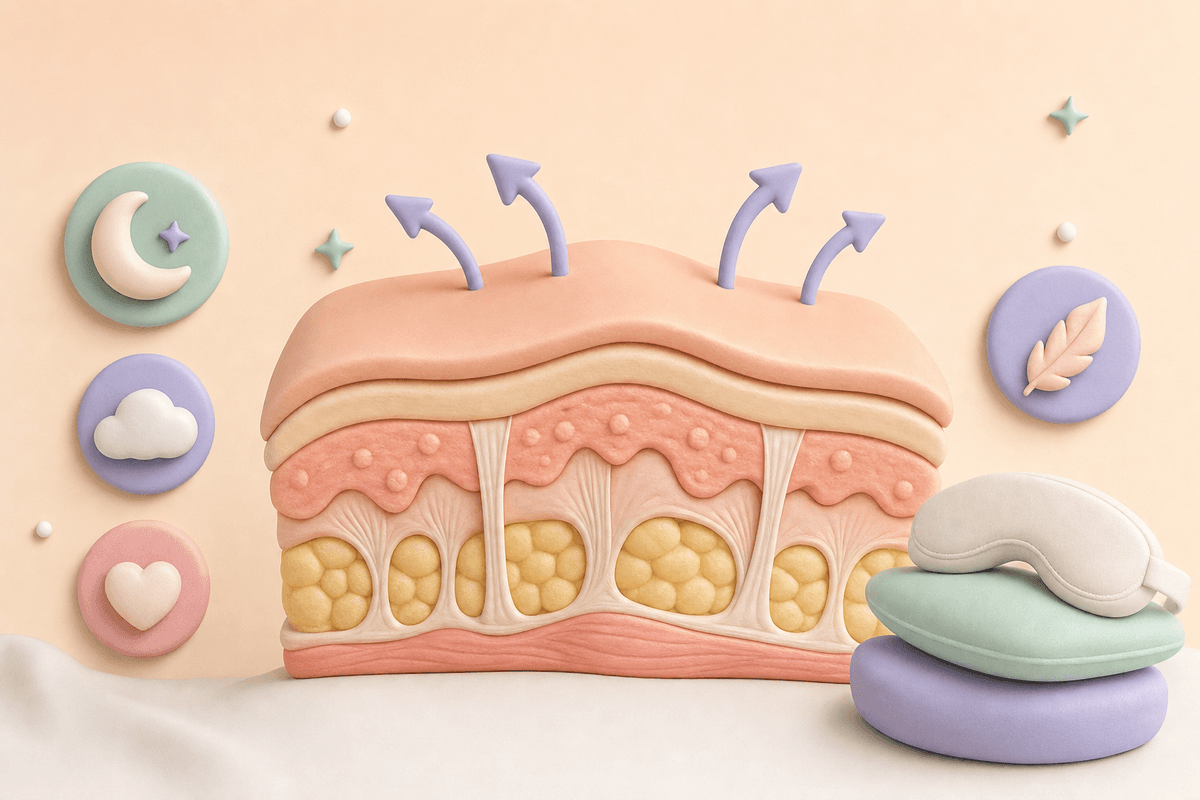
AI-generated illustration Liposuction involves making a 2-4mm incision in the fat layer beneath the skin, inserting a cannula, and sucking out fat cells under negative pressure (-0.7 to -0.9 atmospheres). Since cells that are removed do not regenerate, recurrence is rare. Because the doctor visually adjusts the lines during the procedure, it creates dramatic changes in large areas such as the waist and thighs.
Fat-dissolving injections utilize PPC (Phosphatidylcholine), which destroys the phospholipid structure of fat cell membranes to release intracellular triglycerides, while DOC (Deoxycholic acid) dissolves the cell membrane itself. The fat released in this way is eliminated over 3-4 weeks via the lymphatic system and liver. Kabelline, a leading domestic product, has a concentration of 0.5% PPC + 0.5% DOC and has a limit of 50cc per injection.
CoolSculpting vacuums the skin to -11 degrees Celsius and cools it for 45-60 minutes. Fat cells begin to crystallize at 4 degrees Celsius, and as the water inside the cells freezes, the cell membrane ruptures. The destroyed cells are phagocytosed by macrophages over a period of 2 to 4 weeks, and according to FDA clinical data, a single procedure reduces the thickness of the fat layer in the affected area by an average of 20-25%.
Clinical
According to a 2017 report by the Korean Society of Plastic and Reconstructive Surgeons, volume re-increase in the same area after liposuction is less than 15% within 5 years. However, compensatory increase in surrounding areas (such as flank gain after abdominal liposuction) depends on weight management.
Liposuction: Removal of negative pressure → Permanent reduction in cell count → Low recurrence
Fat-dissolving injection: PPC·DOC destroys cell membranes → Lymphatic and liver metabolism takes 3-4 weeks → Limited to 50cc per session
CoolSculpting: -11°C cooling → Fat cell freezing → Macrophage phagocytosis takes 2-4 weeks → 20-25% reduction per session
How much difference is there between recovery period and return to daily life?
Liposuction requires wearing a compression garment for 2 weeks starting immediately after surgery, accompanied by bruising and swelling. The average recovery period is 2 weeks, and you can resume strenuous exercise 4 to 6 weeks later. Office workers can return to work after 3 to 5 days, but we recommend a 1-week leave for professions that involve a lot of movement, such as service jobs. Recovery takes longer for large areas like the abdomen or thighs due to the large volume of fat removed.
With CoolSculpting, the cooling site becomes red and swollen immediately after the procedure, and sensation becomes dull, but most people recover within 3 to 5 days. Bruising is rare, and compression garments are not required. Many people can shower on the same day and return to work the next. However, initial tingling or stinging sensations may persist for 2 to 3 weeks.
Fat-dissolving injections have the shortest recovery period. Only injection marks remain, and you can return to your daily routine immediately on the same day. However, the injection site may swell and feel sore for 2 to 3 days. Since swelling is noticeable along the jawline, we recommend getting the injection before the weekend. 4-6 repeated procedures are required , so the total number of recovery sessions actually increases.
Procedure
Recovery Period
Compression Garment
Shower
Day Back to Work
Liposuction
2 weeks (Exercise 4-6 weeks)
Wear for 2 weeks
3 days After
3-5 days
CoolSculpting
3-5 days
Unnecessary
Same day
1-2 days
Fat-dissolving injection
2-3 days of swelling
Unnecessary
Same day
Same day
Liposuction: 2 weeks compression garment + 4-6 weeks exercise restriction → Immediate line Change
CoolSculpting: Swelling in 3-5 days → Effects appear after 2-4 weeks
Fat-dissolving injections: Return to work on the same day → 4-6 repetitions required
Cost structure, is it cheaper if it's just one session?
AI-generated illustration Liposuction costs 2-5 million won per area. If the area is large, such as the abdomen, thighs, or upper arms, it costs 3-5 million won, while for the calves or jawline, it is around 2-3 million won. Anesthesia and compression garment costs an additional 500,000 to 1 million won separately. It is completed in a single session, but the initial cost is high , and the difficulty increases due to scar tissue during revision surgery.
CoolSculpting costs 500,000-800,000 won per session (based on 1 handpiece). The abdomen usually requires 2 to 4 handpieces, so it costs 1 to 2.5 million won. Since 1 to 3 repetitions are recommended, the total cost can go up to 2 to 4 million won. However, since there is no anesthesia and the procedure time is short, there are almost no additional costs.
Fat-dissolving injections are the cheapest, costing 100,000 to 300,000 won per session. However, since 4 to 6 repetitions are standard, the total cost is 500,000 to 1.8 million won. The cumulative cost is low for small areas like the jawline, but for large areas like the abdomen, the number of sessions increases due to limitations on the injection volume, so it can become more expensive than CoolSculpting.
Tip: There are many package promotions available for CoolSculpting and fat-dissolving injections. However, due to the Medical Advertising Act, we cannot fully advertise price promotions, so it is advantageous to inquire directly during a consultation.
Procedure
Cost per session
Recommended sessions
Total cost range
Liposuction
2-5 million won
1 session
2-6 million won (including anesthesia and compression garment)
CoolSculpting
500,000-800,000 won (handpiece 1 item)
1-3 sessions
1.5-4 million won
Fat-dissolving injections
100,000-300,000 won
4-6 sessions
500,000-1.8 million won
Liposuction: 1 session 2-5 million won + Anesthesia/Compression 500,000-1 million won → Total 2.5-6 million won
CoolSculpting: 1 session 500,000-800,000 won × 1-3 sessions → Total 1.5-4 million won
Fat-dissolving injections: 100,000-300,000 won per session × 4-6 sessions → Total 500,000-1.8 million won (Reversible for large areas)
Side effects and limitations, to be honest
Liposuction carries risks of infection, bleeding, and hyperpigmentation as it is a surgical procedure. Excessive suction can cause skin contour irregularity or necrosis, and anesthesia complications must also be considered. A 2018 report by the Korean Society of Aesthetic Plastic Surgery showed that the incidence of hyperpigmentation after liposuction was 5-10%, and contour irregularity was 2-5%. The selection of a skilled physician determines the outcome.
CoolSculpting is relatively safe, but Paradoxical Adipose Hyperplasia (PAH) occurs in 0.005–0.14% of cases. It is a rare complication where the cooled area actually hardens and enlarges. Numbness and tingling during the initial cooling phase are common and can last for 2–3 weeks. It is less effective on thin fat layers (less than 2 cm) and does not work on visceral fat.
Inflammation, bruising, and swelling at the injection site are common with fat-dissolving injections. Since the DOC component non-selectively dissolves cell membranes, there is a risk of skin depression or nerve damage if injected excessively. Caution is required around the jawline as it is near the salivary glands, and individuals with weak liver function must consider the metabolic burden. Since it is repeated 4-6 times, you should also check for the accumulated inflammatory response.
Liposuction: Pigmentation 5-10%, unevenness 2-5%, risk of anesthesia and infection
CoolSculpting: PAH 0.005-0.14%, tingling for 2-3 weeks, ineffective on thin fat layers
Fat-dissolving injections: Inflammation and bruising common, depression and nerve damage if over-injected
Remember this: Make the right choice for you
AI-generated illustration Liposuction is chosen when you want to dramatically change a large area at once . It is the most certain method if you need to remove more than 2,000cc, such as from the waist, thighs, or abdomen, and if you can handle a two-week recovery period. However, please make your decision carefully, as the burden of surgery and initial costs are significant.
CoolSculpting is suitable when you want to reduce moderate fat layers without the burden of surgery. It is a good choice if you are satisfied with just a 20-25% reduction in localized areas such as the jawline, flanks, and inner thighs. With a recovery period of 3-5 days and the possibility of showering on the same day, scheduling is convenient. Many people also combine CoolSculpting with fat-dissolving injections—finishing off any remaining areas with injections after cooling. Compare the mechanisms of action, recovery, and costs summarized in this article to find the method that perfectly suits your body type and schedule.
Key Point: The three procedures have completely different mechanisms of action, so combining them can produce synergistic effects. Example: Removal of large volume via liposuction → Removal of remaining fat with CoolSculpting 3 months later. However, please be sure to consult with a specialist regarding the intervals and order.
Priority choice for liposuction: Need to remove over 2000cc + 2-week recovery possible + desire immediate line changes
Priority choice for CoolSculpting: Avoid the burden of surgery + aim for 20-25% reduction in localized areas + 3-5 days recovery possible
Priority choice for fat-dissolving injections: Small areas such as jawline and arms + mandatory return to work on the same day + no burden of repeating 4-6 times
Combination strategy: Liposuction (large volume) → CoolSculpting (residual trimming) after 3 months or CoolSculpting + injections simultaneously
Comparison of 3 types of fat removal procedures at a glance
Liposuction [Surgery]
Method: Cannula negative pressure relief
Effect: Up to 3000cc per session, immediate line change
Recovery: 2 weeks (compression garment), 4-6 weeks of exercise
Cost: 2-5 million KRW per area
Repetition: 1 session (High difficulty of reoperation)
Dramatic change over large areas, high surgical burden and initial cost
CoolSculpting [Non-surgical cooling]
Method: -11°C cooling/freezing
Effect: 1 session 20-25% reduction, onset in 2-4 weeks
Recovery: 3-5 days, shower possible on the same day
Cost: 500,000-800,000 KRW per session, total 1,500,000-4,000,000 KRW
Repetition: 1-3 sessions recommended
Moderate fat layer, no surgical burden, ineffective for thin layers
Fat Dissolving Injection [Non-surgical Injection]
Method: PPC·DOC cell membrane lysis
Effect: Gradual metabolic elimination (3-4 weeks)
Recovery: Swelling for 2-3 days, return to work on the same day
Cost: 100,000-300,000 KRW per session, total 500,000-1,800,000 KRW
Repetition: 4-6 sessions required
Suitable for small areas, consider cumulative costs and inflammation
Selection Guide by Situation
If you want to drastically change your entire abdomen and thighs within 2 weeks
Prioritize liposuction
It is most efficient when you need to remove a large amount of 2,000cc or more and want immediate line changes
Localized jawline and flanks If you only want to treat specific areas but find surgery burdensome,
CoolSculpting 1-2 sessions
A 20-25% reduction is sufficient, and scheduling is easy with a 3-5 day recovery period.
If you want to treat small areas like arms and jawline and return to work immediately,
Fat-dissolving injections 4-6 sessions
You can return to daily life immediately, and the cumulative cost is low, ranging from 500,000 to 1,800,000 KRW.
Budget of 3,000,000 KRW, and minimize the reduction of the entire abdomen If you want to
1 session of liposuction or 2-3 sessions of CoolSculpting, depending on your recovery time
Liposuction is finished in one session but requires 2 weeks of recovery, whereas CoolSculpting is administered over 3-5 days, but the total cost is similar
Common misconceptions
Misconception CoolSculpting is finished once the skin freezes and thaws, so one session is sufficient
Truth After freezing, fat cells are broken down by macrophages over 2-4 weeks, resulting in an average reduction of 20-25% per session. If you want bigger changes, you need to repeat it 2-3 times, and leave an interval of at least 6-8 weeks.
Misconception: The more you get fat-dissolving injections, the greater the effect.
Truth: There is a limit of 50cc per injection, and over-injection increases the risk of skin depression or accumulated inflammation. 4-6 sessions is the recommended range; exceeding that reduces efficiency and only increases the probability of side effects.
Must check before the procedure
!!Liposuction: Removing more than 3000cc at once increases the risk of complications — consider split surgery!!
CoolSculpting: Contraindicated in cases of cold urticaria or Raynaud's disease history
Fat-dissolving injections: Prohibited during cases of impaired liver function, pregnancy, or breastfeeding
All three procedures have limited effectiveness in severe obesity with a BMI of 30 or higher — recommended after weight loss
!!If weight is gained after the procedure, remaining fat cells enlarge and recurrence occurs — combination with diet and exercise is essential!!
Frequently Asked Questions
What happens if you gain weight again after liposuction Does it return to its original state?
The removed fat cells do not regenerate. However, the remaining cells may enlarge, or compensatory growth may occur in surrounding areas. If you do not manage your weight, your body lines will collapse.
Can I exercise immediately after getting CoolSculpting?
It is best to rest on the day of treatment as the cooled area may swell and feel numb. Light cardio is possible starting the next day, and intense strength training is recommended 3 to 5 days later.
Is 4 sessions of fat-dissolving injections sufficient, or do I need up to 6?
It depends on the size of the area and the thickness of the fat. The jawline usually requires 4 sessions, while the abdomen and thighs may require 6 or more. We decide whether to add follow-up reports after 2-3 sessions.
Which of the three has the fewest side effects?
Fat-dissolving injections have a fast recovery and only cause bruising and swelling. However, since it is repeated 4-6 times, you must consider the cumulative inflammatory response. CoolSculpting has rare complications such as PAH (0.005-0.14%), while liposuction has surgical complications (pigmentation 5-10%, unevenness 2-5%).
Can I receive CoolSculpting and fat-dissolving injections together?
Yes, many people combine them by using CoolSculpting to smooth out large areas and then finishing the remaining small areas with injections. However, you must consult with a specialist regarding the intervals and order.
Is it okay not to wear a compression garment after liposuction?
Compression garments are essential to minimize swelling and bleeding and to ensure skin adhesion. Wearing them 24 hours a day for 2 weeks is recommended, and not wearing them increases the risk of unevenness or hyperpigmentation.
This content is for informational purposes only and does not replace medical advice. You must consult with a specialist before the procedure.
Find the right hospital for you at K-Dia