Why Does the Cost of Fat Grafting Vary from Person to Person? 6 Variables
K-Dia Editor5,11637 min read
▸Even for the same body part, quotes from different hospitals can differ by nearly twofold depending on six variables: graft volume, number of harvesting sites, purification method, type of anesthesia, coverage for re-operation, and scope of post-operative care.
▸Adding SVF (stromal vascular fraction) increases the engraftment rate by 15–20% but incurs additional costs; in Korea, you must verify whether equipment approved by the Ministry of Food and Drug Safety is being used.
▸To accurately assess cost-effectiveness, comparisons should be made based on the final residual volume calculated as 'graft volume × engraftment rate,' rather than the total cost.
Information as of June 2026
Key Factors in Price Differences
6 Cost Determinants
Differences by Body Site Up to 3 Times
Impact of Graft Survival Rate on Price
The reason quotes differ by double for the same area
Every month in the clinic, patients hear stories about receiving facial fat grafting consultations at three different places, where the quotes differed by nearly double even for the same forehead, cheeks, and under-eye area You will hear this. It is difficult to simply conclude that "expensive places are good places," and the factors determining the cost of fat grafting are more complex than you might think.
The six key variables that create price differences in fat grafting are: graft volume (cc), number of harvesting sites, purification method, type of anesthesia, coverage for re-procedures, and scope of aftercare. Even for the same area, the final cost can vary significantly if these variables differ.
For example, even with forehead fat grafting, there will inevitably be differences ranging from material costs to procedure time between a minimum volume case using only 10cc and a case using 30cc or more to create distinct three-dimensionality. In addition, labor costs and anesthesia time vary depending on whether the harvesting site is used exclusively on the thigh or a combination of the abdomen and thigh.
Key When you receive a quote, do not just look at the 'total amount'; instead, carefully check the items such as planned transplant volume, harvesting site, purification method (centrifugation/stem cell addition), and type of anesthesia (sedation/general). Even with the same amount, the results can vary depending on the composition.
The factors determining the cost of fat grafting consist of a total of 6 variables: graft volume, harvesting site, purification method, anesthesia, re-procedure guarantee, and aftercare.
Even for the same area, material costs, procedure time, and anesthesia costs differ depending on whether the graft volume is 10cc or 30cc, which can result in a difference in the final estimate.
Labor costs and preparation time may be added depending on whether only one harvesting site is used or a mix of multiple sites are combined.
Structure of price variations by grafting site
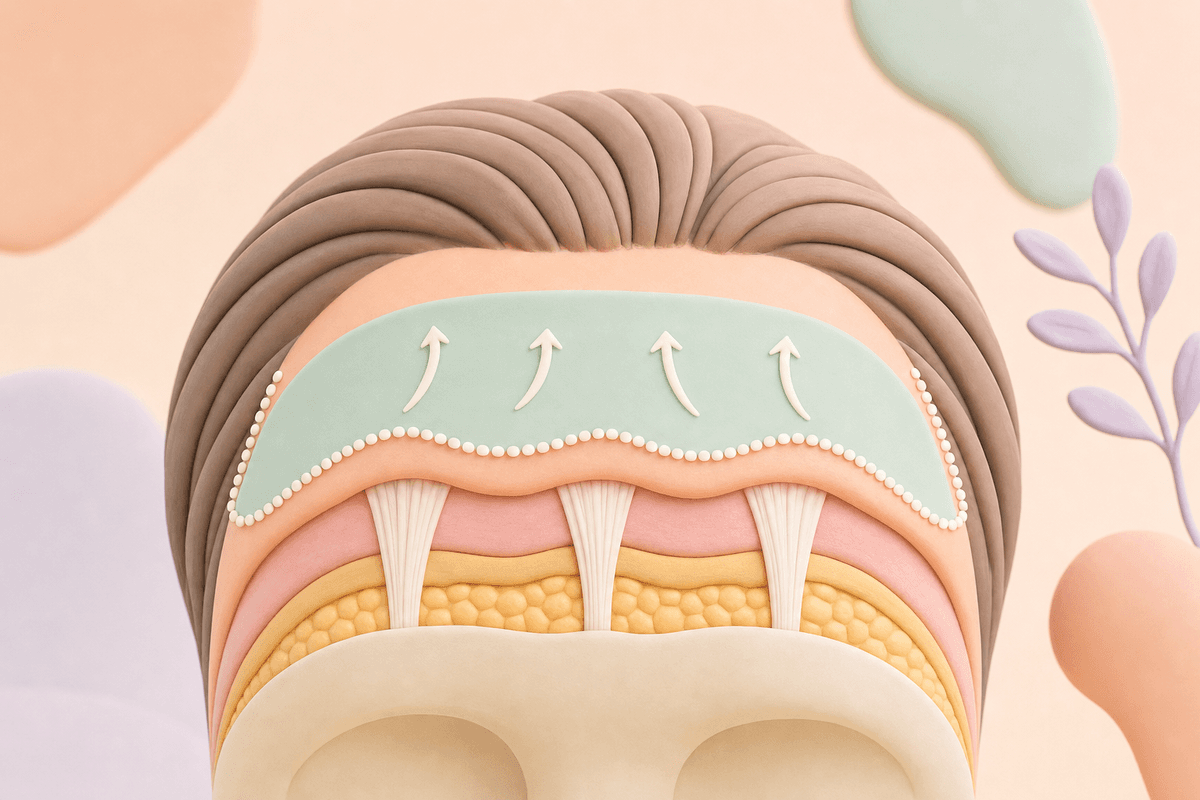
Fat Graft — Structure where prices vary by graft siteAI-generated illustration
When comparing fat graft prices, the first thing to check is where and how much is injected. The face is subdivided into the forehead, cheeks, under-eyes, nasolabial folds, and chin, and the required amount in cc and the difficulty level vary for each area.
Usually, a small amount of 5 to 10cc is sufficient for the under-eyes, but filling the entire cheek may require 20 to 30cc or more. The forehead is determined within the range of 10 to 25cc depending on the degree of flatness, and for the nasolabial folds, it is typically about 5 to 10cc combined for both sides. Even if the cost per cc is the same, the final amount will naturally differ if the total volume is different, right?
Breast fat grafting requires a much larger amount than facial fat grafting. Since more than 100 to 200cc is usually grafted into one breast, the total for both sides ranges from 200 to 400cc. The buttocks and calves are also large areas, so they are often calculated in units of 100cc or more.
The difficulty of the harvesting site also has an impact here. The abdomen has a thick layer of fat and is relatively easy to harvest, but the inner thighs and forearms have a lot of fibrous tissue, so the purification process can be more tricky. If the pure fat ratio is low, more fat must be extracted to obtain the same amount, which can increase both time and cost.
Even for the same 'facial fat grafting,' the total graft volume can differ by 2 to 3 times between performing the procedure only on the forehead and performing it on the forehead, cheeks, and under-eyes simultaneously. Additionally, some clinics offer partial package promotions for cases where multiple areas are treated at once.
Area
Average Graft Volume
Features
Forehead
10~25cc
Varies depending on flatness, wide Area
Cheeks
20~30cc
Sum of both sides, large amount needed for three-dimensional effect
Under-eyes
5~10cc
Small amount sufficient, delicate injection required
Nasolabial folds
5~10cc
Sum of left and right sides, depth control important
The amount of grafted tissue varies depending on individual condition and target volume, and costs differ depending on the area, scope, and medical institution.
The average graft volume by facial area varies significantly, with under-eyes 5–10cc, cheeks 20–30cc, and forehead 10–25cc; costs are determined by the total volume.
Since breasts and buttocks involve large-scale grafts of over 100cc, material costs and procedure time may increase significantly compared to the face.
The difficulty of the harvesting site (abdomen easy vs. arms difficult) can also affect purification time and the amount of pure fat secured.
How regarding purification methods, engraftment rates, and prices
Instead of using the harvested fat as is, it undergoes purification processes such as centrifugation or stem cell addition, and costs vary depending on the method used. Basic centrifugation involves spinning at around 3,000 rpm for 10 to 15 minutes to remove blood and oil, and if SVF (Stromal Vascular Fraction, a vascular interstitial fraction rich in stem cells) is added to this, equipment and reagent costs may increase.
Although there are reports that the engraftment rate typically increases by 15 to 20% when SVF is added, costs may increase as this process requires a separate centrifuge and enzyme treatment.
In 2019, the U.S. FDA classified SVF outside the scope of 'minimum manipulation' and tightened regulations, and in Korea as well, equipment and reagents approved by the Ministry of Food and Drug Safety must be used.
There is also a method involving mixing PRP (Platelet-Rich Plasma). The principle is that if collected blood is centrifuged to concentrate platelets and then mixed with fat, growth factors can help with engraftment. Since PRP preparation involves additional blood collection and separation processes, the procedure time and material costs may increase.
Some hospitals offer options such as 'guaranteed engraftment rate after first attempt' or 'free re-treatment.' In this case, the initial cost is high, but it can be advantageous in the long run because you can receive re-treatment without additional cost if the engraftment amount falls short of expectations after 3 to 6 months. However, it is highly recommended to check the coverage conditions (such as the minimum engraftment rate percentage recognized and whether it applies only upon a follow-up visit within a few months).
Adding purification technologies like SVF or PRP in addition to basic centrifugation can improve the engraftment rate by 15–20%, but equipment and reagent costs may increase.
SVF is subject to stricter FDA regulations in 2019, and in Korea, the use of equipment and reagents approved by the Ministry of Food and Drug Safety is required.
Although the re-treatment coverage option involves a higher initial cost, you can expect total cost savings as re-treatment is possible without additional cost in the event of engraftment failure.
The Impact of Anesthesia Method and Operating Room Grade on Costs
Fat Graft — How Anesthesia Method and Operating Room Grade Affect CostAI-generated illustration
Depending on the area and amount, you will choose one of local anesthesia, sedation, or general anesthesia. While small facial transplants can be performed under local anesthesia, large transplants, such as those on the breasts or buttocks, may require sedation or general anesthesia.
Local anesthesia is the lowest cost option because it can be administered directly by the surgeon without the need for an anesthesiologist. Sedation may incur additional costs as it requires an anesthesiologist and respiratory and blood pressure monitoring equipment. General anesthesia is the most expensive option as it includes tracheal intubation and recovery room observation time.
The operating room grade also has an impact. To meet the sterile operating room standards set by the Ministry of Health and Welfare, HEPA filters, positive pressure systems, and dedicated surgical air conditioning equipment are required, and hospitals maintaining these facilities reflect facility depreciation costs in their expenses. Some clinics use makeshift operating rooms; in this case, the risk of infection is higher, but the cost is relatively lower.
The duration of stay in the recovery room is also a variable. The labor costs are bound to differ between a hospital that monitors patients for 1 to 2 hours after general anesthesia and one that observes them for 4 to 5 hours until they go home on the same day.
Caution: If you insist on local anesthesia to save on costs, patients may move due to pain during the procedure, making accurate injection difficult, and consequently, the engraftment rate may decrease. It is important to select the appropriate anesthesia method suited to the graft site and amount.
Local anesthesia is possible without an anesthesiologist, so costs are lower, but sedation and general anesthesia can increase costs due to the involvement of specialists and the use of monitoring equipment.
Hospitals maintaining sterile operating rooms (HEPA filters and positive pressure systems) reflect facility depreciation costs in their expenses and tend to have a lower risk of infection compared to makeshift operating rooms.
The duration of stay in the recovery room (1-2 hours vs. 4-5 hours) can also make a difference in labor costs.
Check hidden costs and whether post-operative care is included.
I found that there are many cases where only the 'fat grafting cost' is specified in the estimate, and it is ambiguous whether post-operative care is included or separate. You must check whether items such as swelling management injections (steroids/antibiotics), suture removal, follow-up photos, and follow-up consultations are free or paid.
Some hospitals include high-frequency/LED care for 1 to 2 weeks after the procedure in their packages; in this case, although the initial cost is higher, the total cost can be similar because you do not need to receive this treatment separately at an external dermatology clinic. Conversely, there are places that provide only a minimum quote and separate all aftercare into paid services.
The provision of items such as compression garments and cooling packs also varies by hospital. You need to wear a special compression bra after breast fat grafting, and if this is not included, you must purchase it separately, which may incur additional costs.
The limit on the number of follow-up consultations is also a key point to check. Some hospitals allow unlimited follow-up visits for up to three months, while others offer only one free visit per month and charge fees thereafter. The scope of support for phone consultations and KakaoTalk inquiries also varies by hospital, so it is advisable to ask in advance if you can receive quick feedback during the anxious post-surgery period.
You need to check whether swelling management injections, suture removal, follow-up photos, and follow-up consultations are included in the quote or separate; if included, the initial cost may be higher, but the total cost may be similar.
Hospitals that include radiofrequency and LED treatments in their packages can help you save on external dermatology costs.
Whether compression garments and cooling packs are provided, limits on the number of follow-up visits, and the scope of support for phone and KakaoTalk inquiries are also hidden cost variables.
How to determine reasonable costs src="https://bade3yx1jext9pch.public.blob.vercel-storage.com/lumi/columns/07a75f25-5de6-40b6-836e-cb2c2943ab95/section-5.png" alt="Fat Graft — Determining Reasonable Costs, Do It This Way" loading="lazy" />
Fat Graft — Determining Reasonable Costs, Do It This WayAI-Generated Illustration
When comparing fat graft quotes, you should convert the total amount into the estimated amount of engraftment, not the total amount. For example, if Hospital A charges a fixed amount for a 30cc transplant and Hospital B charges a similar amount for a 20cc transplant, the unit price per cc is higher at B; however, if the final engraftment rate is 50% at A and 70% at B, the actual remaining fat becomes similar, with 15cc at A and 14cc at B.
Please also consider the possibility of re-procedures. If the engraftment rate drops below 40% after the first procedure, a second procedure is usually required, but at hospitals that do not guarantee re-procedures, you have to pay almost the same amount again. Even if the initial cost is 20% higher, if there is a condition for free re-procedures, it may actually be cheaper when combined over two procedures.
When choosing a hospital, the surgeon's experience and number of procedures are also indirect cost factors. Although the labor costs of specialists with over 15 years of experience are higher and reflected in the cost, they have less variability in engraftment rates and superior ability to manage complications, which can lower the probability of re-treatment. You can gauge reliability by checking whether the surgeon is a full member of the Korean Society of Plastic and Reconstructive Surgeons and their history of publishing papers and academic presentations related to fat grafting.
If you compare the results converted to 'expected graft survival volume (graft volume × survival rate)' instead of the total cost, you can accurately determine the effectiveness relative to actual costs.
For hospitals with a re-procedure guarantee option, the total cost can be lower when combined over two procedures, even if the initial cost is 20% higher.
The surgeon's experience, academic activities, and publication history influence the variation in survival rates and the probability of re-procedures, allowing you to indirectly determine cost efficiency.
Comparison of Cost Components
Basic Centrifugation [Standard]
3000rpm 10~15 min
Blood and oil removal
No additional cost
Sufficient for small volume transplants
SVF addition [High engraftment]
Stem cell fraction addition
Engraftment rate 15~20%
Additional equipment and reagent costs
Recommended for large volume transplants
PRP mixing [Recovery [Enhancement]
Autologous Platelet Concentration
Growth Factor Supply
Addition of Blood Collection and Separation Process
Utilization for Re-procedure Cases
Select Cost Option Suited to My Situation
For First-Time Attempts of Small Facial Grafts (Under-Eyes/Nasolabial Folds)
Minimum Option: Basic Centrifugation + Local Anesthesia + No Re-procedure Guarantee
Since it is difficult to predict the engraftment rate, it is advisable to test with the minimum cost for the first procedure and then decide on the second. Like
If you want to complete large-scale breast and buttock grafting in a single session
Since the survival rate of large-scale grafts varies significantly, the re-procedure guarantee can help reduce total costs even if the initial cost is high
If you are considering re-procedure due to a low survival rate after the first procedure
Package including PRP mixing + radiofrequency treatment
Since the survival conditions for re-procedures are stricter than for the first, the input of additional technology It might be necessary
If you want to minimize costs but cannot compromise on safety
Member of the Korean Society of Plastic and Reconstructive Surgeons + Sterile Operating Room + Basic Centrifugation
Because the surgeon's proficiency and facility hygiene can be more important than purification technology in preventing complications
Common Misconceptions
Misconception Hospitals with a low unit price per cc offer good value for money
Truth Even if the unit price per cc is low, if the graft survival rate is in the 40% range the actual remaining The amount of fat is small, and if you include the cost of re-treatment, it can actually be more expensive. It is recommended to calculate the cost using 'Estimated Graft Survival Amount × Unit Price' rather than the total amount.
Misconception It doesn't matter if post-treatment care isn't included in the cost since you only need to apply cold compresses at home anyway.
TruthReceiving proper swelling management injections and high-frequency care can double your recovery speed, and since receiving these services externally incurs an additional cost per session, you must check whether they are included in a package.
Things to Check During Cost Consultation
!!Check if the 'Expected Graft Volume' and 'Harvesting Site' are specified on the estimate!! — If only the total amount is provided and the items are not listed, additional costs may be incurred on the day of the procedure.
!!Please obtain the re-procedure guarantee conditions in writing (if the graft survival rate falls below a certain percentage, or if you revisit within a certain number of months)!! — Verbal agreements can lead to disputes later
Ask about the anesthesia method (local, sedation, or general) and whether an anesthesiologist is on staff; if it is sedation anesthesia but there is no anesthesiologist, it is best to refuse due to safety concerns.
Check the number of free visits for each post-operative care item (swelling injection, suture removal, follow-up photos, follow-up appointments), and ask about the cost in advance if you exceed these limits.
Check whether compression garments and cooling packs are provided, and confirm the recovery room stay time (minimum 1–2 hours) — without observation right up until you go home on the same day, it can be difficult to respond to complications in the early stages.
Frequently Asked Questions
Why do quotes differ by double between hospitals for the same area?
Planned graft size in cc, Purification method (Basic centrifugation vs. This is because the addition of SVF and PRP), the type of anesthesia, coverage for re-procedures, and the scope of aftercare included differ. When you receive a quote, do not just look at the total amount; compare these five items one by one. Even if the price is the same, the final graft survival rate and recovery speed can vary if the composition is different.
How much should I expect per cc for fat grafting costs?
While there is a significant variation depending on the area, purification method, and hospital grade, small-scale facial grafts are based on the standard centrifugation criteria, whereas large-scale breast and buttock grafts are based on the SVF addition criteria. However, to judge the effectiveness relative to the actual cost, you must convert the cost into 'estimated graft survival rate (graft volume × survival rate)' rather than the unit price per cc.
The results can differ between a hospital with a 50% engraftment rate and one with a 70% rate, even if the same amount of cc is injected.
Hospitals with re-treatment coverage have higher initial costs, but should I still choose one?
There is a 20–30% chance that the initial engraftment rate will drop below 50%, so if there is no re-treatment coverage, you may have to pay almost the same amount again. Even if the initial cost is 20% higher, if there is a condition for free re-treatment, it may actually be cheaper when combined over two sessions.
However, it is recommended to confirm the coverage conditions in writing (when the graft survival rate is below a certain percentage, or when revisiting within a certain number of months).
How do I check if aftercare is included in the quote?
Ask about each item individually, such as swelling management injections, suture removal, follow-up photos, and the number of follow-up visits, and check the free visits and the costs for exceeding them. If it only states "aftercare included" without specific details, only suture removal may be free, while the rest may be charged. Be sure to ask whether additional care, such as high-frequency and LED treatments, is included in the package or separate.
Are there additional costs if side effects occur after fat grafting?
Most complications (infection, necrosis, calcification) occurring within 3 months immediately after the procedure are treated for free by the hospital,, but there may be a fee if they are caused by patient negligence (failure to abstain from alcohol or smoking, neglecting compression management). During the consultation, it is recommended to clearly confirm the 'Post-procedure complication treatment cost policy' and, if possible, obtain the details specified in the written consent form. Most problems that occur after 6 months are subject to paid follow-up treatment.
Can't I use local anesthesia to save money?
Small facial grafts (less than 10cc for under-eyes and nasolabial folds) can be done with local anesthesia, but sedation or general anesthesia may be required for large-scale grafts of 20cc or more for the cheeks and forehead, or for the breasts and buttocks. If you proceed with local anesthesia, pain during the procedure may cause movement, making accurate injection difficult. Consequently, the graft survival rate may decrease, increasing the likelihood of needing a re-procedure. It is advisable to be cautious, as trying to save on anesthesia costs could result in higher re-procedure costs.
This content is for informational purposes only and does not replace medical advice. Always consult a specialist before the procedure.
Find the right hospital for you on K-Dia